
It was a rainy Tuesday in Midtown, and I was hunched over my laptop in the back of what was supposed to be a “premium” shared SUV, trying to finalize a pitch deck that represented eighteen months of my life. The guy next to me—a total stranger—wasn’t even trying to hide his curiosity. I could see the reflection of my proprietary spreadsheet in his glasses every time we passed a streetlamp. I snapped the lid shut, my heart hammering against my ribs. That was the moment I realized that for anyone handling sensitive corporate info, “sharing” isn’t just a minor annoyance; it’s a massive, blinking red light for security. We often prioritize efficiency or cost, but we forget that privacy is a non-negotiable part of our professional safety.
The hidden cost of letting strangers sit next to your data
I’ve learned the hard way that the reason shared mobility apps are failing corporate teams isn’t just about the occasional late driver or a route that takes the long way home. It’s about the fundamental loss of control over your immediate environment. Early in my career, I made the amateur mistake of booking a shared ride to a high-stakes acquisition meeting to keep my travel expenses looking “lean.” I thought I was being a diligent employee. Instead, I spent the entire forty-five-minute trek shielding my phone screen like I was a high schooler hiding a cheat sheet. It was an exhausting, unprofessional mess that nearly ruined my preparation. When you are an executive, your “office” needs to be mobile, but it still needs to be an office. If you can’t open your laptop to review a contract or take a confidential phone call without worrying about the person two inches to your right, you aren’t just losing time—you’re actively risking your career and your company’s intellectual property. We tend to ignore the physical proximity factor in our digital-first world, but it’s more relevant than ever. According to the latest Verizon Data Breach Investigations Report, physical access and “shoulder surfing” remain potent methods for data theft, especially in public or semi-public spaces. In a shared ride, you are essentially giving a stranger an invitation to sit in your cubicle. You wouldn’t invite a random person to watch you type passwords at a cafe, so why do we accept it in transit? I truly believe that reservation security measures are the foundation of any successful business trip. Today, I’m going to show you why business travelers prefer hourly hires for high-stakes days and how it completely changes your security posture.
Does saving thirty dollars justify a corporate data breach?
Now, you might be thinking that you’ll just keep your laptop closed and your mouth shut. But security is about more than just what’s on your screen. It’s about the safety of your location, the patterns of your travel, and even the hidden risk of using non-verified booking links that often plague discount services. Have you ever felt that sinking feeling when a stranger in a car starts asking a few too many “friendly” questions about where you’re staying or who you’re meeting with? It’s uncomfortable, and for a high-profile executive, it’s a genuine threat. I used to think the real cost of choosing the cheapest ride option was just a bit of discomfort, but the truth is, the price of a data leak or a security compromise is infinitely higher. Plus, there is the peace of mind that comes with knowing why hourly drivers provide the best security for high-value goods—and that includes the “high-value good” that is your personal safety. Let’s dive into how you can reclaim your privacy and ensure your next ride is as secure as your boardroom.
Take control of the clock and the cabin
The transition from reactive ride-hailing to proactive private transit is a shift in mindset as much as it is a shift in logistics. When you book an hourly driver, you aren’t just paying for a seat; you are leasing a secure environment. I like to think of it as moving from a crowded subway car to a private library. The first step in this execution is understanding the hidden difference between app drivers and private chauffeurs. An app driver is focused on the next fare; a private chauffeur is focused on your specific itinerary. This means they are ready for the ‘standby’ mode that high-stakes days require.
Verify the human behind the wheel
Before you even touch the door handle, you need to perform a quick, non-negotiable audit. I learned this the hard way after almost hopping into a vehicle that looked the part but lacked the paperwork. Always start by knowing how to verify commercial plates on a private hire. In many cities, the plate itself tells a story of insurance and licensing that a standard passenger plate does not. You should also be prepared to spot an unlicensed operator before getting in by looking for the subtle signs: a lack of official decals, or a driver who seems hesitant to provide their ID.  This isn’t about being paranoid; it’s about professional due diligence. I once had a driver get visibly nervous when I asked to see his commercial registration. It turns out he was using his personal car to ‘sub-contract’ for a larger firm without their knowledge. I walked away and booked a reputable service immediately. Taking thirty seconds to audit your drivers background status via digital credentials ensures that the person driving you is as vetted as the person sitting across from you in the boardroom.
Build a time wall around your meetings
Punctuality in executive travel is about more than just showing up; it’s about the mental transition time you gain. If you are rushing to the car, you are already losing. I’ve adopted a strategy where why a 20-minute buffer is the new gold standard for business travel. This isn’t dead time; it’s a security perimeter. It accounts for the unexpected—the sudden protest, the broken-down delivery truck, or the simple human error of a missed turn. If you want even more precision, consider why the 17-minute buffer outperforms the traditional 15-minute rule. That extra two minutes is often the difference between a panicked sprint to the lobby and a composed entrance. I remember a frantic Friday in London where I thought a 10-minute gap was plenty. A minor fender-bender on the A4 turned my ‘optimized’ schedule into a disaster. I missed the first twenty minutes of a partner call because I was stuck on a curb waiting for a replacement app-driver who was ‘3 minutes away’ for half an hour. Now, I never settle for anything less than a reserved, hourly professional.
Lock down your digital footprint in transit
Once you are inside the vehicle, the focus shifts to digital hygiene. Your physical security is set, but your data is still in motion. You must know how to secure your data when sharing tracking links with your team or family. Never share your full travel history or residential address through unencrypted channels. Use the chauffeur’s official tracking portal, which often has better privacy controls than generic map sharing. If your travel extends into the evening, make sure you follow the checklist for every late night private car hire to ensure you aren’t leaving digital or physical breadcrumbs behind. By treating the car as a secured node in your corporate network, you maintain the same level of integrity on the road as you do in the office.I often hear colleagues brag about how their app predicted a 14-minute arrival during Friday rush hour. They treat that number as gospel, but here is the contrarian truth: in the world of high-stakes logistics, why most arrival times are simply guesses when they come from a pure algorithm. Real-time data is fundamentally reactive, not proactive. If a water main breaks three blocks ahead, the app won’t know until several other drivers have already been stuck there for ten minutes, effectively ruining your schedule. This is why GPS lag can ruin your meeting schedule and your professional reputation. In my experience, why a human dispatcher outperforms an AI every time is because they possess local context and historical knowledge that a server in Silicon Valley lacks.
Why your GPS is lying to you about arrival times
The common “Oops” factor I see most often is an executive trusting the ETA without checking the route’s complexity or the current urban environment. I’ve witnessed peers miss multi-million dollar flights because they fell for the error in relying on app-based arrival times during construction. A study from the University of Birmingham regarding urban traffic dynamics suggests that blindly following the “shortest path” suggested by algorithms often creates more local congestion than it solves. This is why on-time arrival mastering the art of reservation and safety every hour requires a driver who knows the back roads and the physical realities of the pavement, not just the glowing green line on a dashboard. 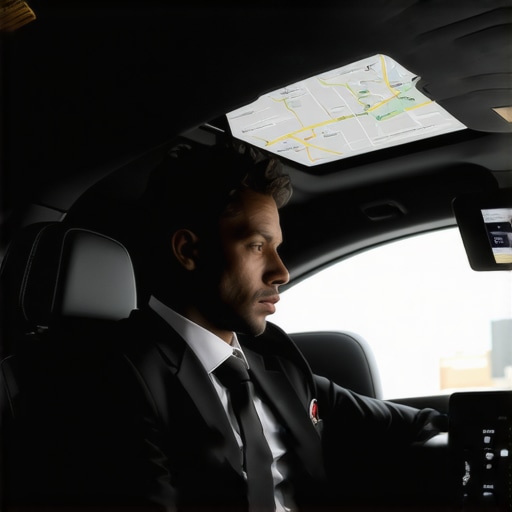
Can an algorithm really predict a 5 PM gridlock?
The short answer is no. Algorithms optimize for the average traveler, but your career and your time are anything but average. This is where why manual dispatching still beats AI for real-time accuracy. A professional human dispatcher can call the hotel bell desk or use specialized local radio to check if a street is blocked by an unrecorded event. An app simply cannot do that. Have you ever fallen into this trap where you trusted the ETA and it tripled the moment you sat in the back seat? Let me know in the comments. By focusing on safety precision the key to reliable hourly reservations for peace of mind, you move from the stress of hoping to the confidence of knowing. You stop being a passenger in your own schedule and start being the director of it.
The specific toolkit for my mobile office
To maintain this high level of operational security, I don’t just rely on a hope and a prayer; I use a very specific ‘tech stack’ that bridges the gap between my digital world and the physical road. First, I never rely on the built-in tracking of a standard ride-share app. Instead, I insist on services that provide enterprise-grade telemetry. I’ve found that why real-time vehicle tracking is more than just a convenience—it is my primary tool for verifying that the driver is following the agreed-upon, secure route. I also maintain a dedicated communication channel. This is why you need a direct line to your hourly driver that bypasses the lag of third-party platforms. I use an encrypted messaging app to send my itinerary updates directly to the chauffeur and the dispatcher simultaneously. This creates a dual-layer of accountability that an automated system simply can’t match. Researchers at the MIT Senseable City Lab have documented how ‘feedback loops’ in common navigation apps often lead to mass-congestion on side streets; having a direct line to a human professional allows me to override those algorithmic errors based on real-time feedback from the ground. 
How do I maintain this level of travel security month after month?
Consistency is the enemy of complacency. To keep this system working, I treat my transit logistics like a recurring software audit. Every Sunday, I review my upcoming week and set up a recurring weekly commute that never fails by locking in my preferred drivers in advance. This isn’t just about scheduling; it’s about relationship management. When a driver knows your security protocols and your preference for silence or specific routes, the friction of travel disappears. I also pay close attention to the administrative side. I’ve learned how to spot a professional dispatcher via email by the quality of their confirmation details and their responsiveness to ‘what-if’ scenarios. If the dispatch team is sloppy, the ride will be too. By implementing these on-time every-time strategies for safe and reliable hourly bookings, I’ve managed to turn what used to be a stressful part of my day into a period of high-focus productivity. It’s about building a fortress around your time.
Why the future of travel belongs to the human-AI hybrid
As we look toward the next few years, I predict we will see a massive shift away from ‘open’ ride platforms toward closed, verified networks for professionals. We are already seeing the early stages of smart-city corridors where reserved, commercial vehicles get priority access to reduce urban friction. However, the human element will remain the ultimate fail-safe. AI can predict traffic, but it can’t vet the person sitting in the front seat or ensure that your physical privacy is being respected during a sensitive call. This is why ensuring safety first your guide to on-time reservations at any hour will always require a mix of high-tech tracking and high-touch human service. My advice? Start today by auditing your next three bookings. Stop clicking ‘request now’ and start reserving ‘hourly.’ You’ll notice the difference in your stress levels before the car even pulls up to the curb.
The One Booking Tactic That Finally Killed My Travel Anxiety
I spent years viewing transit as a simple gap between meetings, a necessary evil to be endured. But the hardest lesson I learned is that transit is actually the most vulnerable part of a professional’s workday. I stopped leaving my safety to chance when I realized that reserving your spot ahead of time is more than just a convenience; it’s a non-negotiable security protocol. Privacy isn’t a luxury you can opt out of when you’re handling client data—it’s a duty. I now prioritize why safety and timeliness matter in hourly reservation services as a core part of my professional code of conduct. The biggest lightbulb moment for me was realizing that an hourly driver isn’t just a chauffeur; they are a mobile perimeter. When you have a dedicated professional, you aren’t just buying time—you are buying a controlled environment where your proprietary information stays exactly where it belongs.
The High-Stakes Travel Kit I Won’t Leave Home Without
I swear by a few specific frameworks that bridge the gap between digital security and physical logistics. First, I never start a heavy travel week without a blueprint. I spent years winging it until I learned how to build a custom transit schedule for your office that accounts for realistic buffer zones and rigorous driver vetting. Second, I keep a digital copy of top tips for on-time reservations at any hour on my phone as a quick-reference checklist before every boarding. These aren’t just suggestions; they are the hard-won results of navigating high-pressure environments where a five-minute delay can cost a million-dollar contract. Lastly, I’ve noticed a massive improvement in my focus because of the peace of mind that comes from knowing why reliable schedules are better for your sleep cycle. When the logistics are settled, your brain is free to do the high-level work you were hired to do.
Reclaiming the Boardroom on Wheels
Transitioning to professional, hourly hires fundamentally changed the way I view my career. I no longer feel like a guest in a stranger’s vehicle; I feel like I am in my own mobile headquarters. It is time to stop gambling with your data and your schedule on platforms that prioritize volume over verification. When you master essential hourly reservation tips for timely service, you aren’t just getting from one point to another—you are protecting your professional integrity and your personal safety. Your next high-stakes day deserves a foundation of absolute certainty, and that starts the moment you shut the car door. Have you ever had a ‘shoulder surfer’ catch a glimpse of something confidential while you were working in a shared ride? Let me know your story in the comments below.