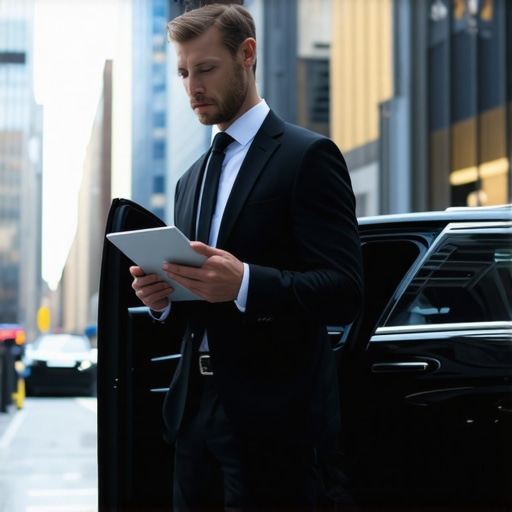
I’ll never forget the cold realization hitting me in the pit of my stomach as I watched my rideshare driver turn the wrong way for the third time. I was in town for a merger meeting—the kind of day where every second is worth more than my monthly mortgage. I’d tried to be ‘efficient’ by booking individual rides between three different office parks. Instead, I spent forty minutes pacing on a sidewalk, praying for a signal, while my reputation for punctuality evaporated. That’s the moment I stopped looking at transport as a commodity and started seeing it as an insurance policy. If you’ve ever had your heart race while staring at a spinning ‘searching for drivers’ icon, you know exactly what I’m talking about. Today, I want to show you why having a dedicated person behind the wheel for your entire day isn’t just a luxury; it’s the only way to survive a high-pressure itinerary without losing your mind.
The Real Value of Never Checking Your Watch Again
Look, I’ve been there. I used to think I was being a ‘budget hero’ by juggling three different apps to get across town. I learned the hard way that the real cost of choosing the cheapest ride option is often a blown schedule and a panicked mindset. On high-stakes days, you don’t just need a ride; you need a mobile headquarters. When you transition to an hourly hire, you’re not paying for a car; you’re paying for the certainty that your driver is already outside, waiting for you to finish that last-minute email. It’s about why on-time performance is the only metric that matters when your career is on the line. According to the Global Business Travel Association (GBTA), nearly 79% of business travelers say their travel experience directly impacts their overall job satisfaction and performance. When you aren’t worrying about parking or traffic, you can actually focus on the pitch that brought you to the city in the first place. You can rehearse your lines, check your data, or simply breathe. It’s the difference between entering a room looking like you just ran a marathon and entering like you own the building. Have you ever been left stranded by an app right before a major meeting? I certainly have, and the few dollars I ‘saved’ felt like a joke when I realized I’d lost the client’s trust before the first slide even loaded.
Does this service actually justify the price tag?
It’s a fair question. Why pay for a driver to sit idle while you’re in a meeting? Well, it’s because hourly logistics save more time than point-to-point pickups ever could. There is a hidden difference between app drivers and private chauffeurs that most people don’t realize until they’re stuck in a rainstorm with no cars available. A dedicated hire is committed to your schedule, not a series of random pings from a central algorithm. This level of professional punctuality requires a pre-trip inspection and a level of planning that an automated system simply cannot provide. The logical reason to hire a chauffeur for full-day meetings isn’t about vanity; it’s about reclaiming the 20 minutes of stress between every single stop. By the end of the day, those reclaimed moments are the difference between being mentally exhausted and being ready to close the deal.
Master the math of the buffer zone
Think of your daily schedule like a high-precision watch. If one gear slips by even a few seconds, the entire mechanism loses its utility. When you are booking hourly, you have to move past the amateur mistake of booking for the exact moment you think you’ll walk out the door. I’ve found that the 17-minute buffer outperforms the traditional 15-minute rule because it accounts for those unavoidable “one last question” moments at the end of a meeting. This isn’t just about padding time; it’s about creating a psychological safety net. When you know the meter is running but the driver is firmly in place, your focus remains on the person in front of you, not the app on your phone.
How to audit your ride before you sit down
I learned this lesson the hard way in 2019 during a rainy Tuesday in Seattle. I hopped into what I thought was a pre-vetted car, only to realize halfway through a 40-minute transfer that my driver was visibly struggling to keep his eyes open. He’d been pulling double shifts across two different platforms. Now, I never close the door without a quick verbal “audit.” It’s not about being a difficult client; it’s about safety. You need to know how to verify your driver is not exhausted before you’re traveling 65 miles per hour on a highway. Check for the basics: Are the plates right? Does the car look maintained? Learning how to verify commercial plates on a private hire is the fastest way to weed out the amateurs pretending to be pros.

Organizing a day with three different zip codes
If your itinerary looks like a spiderweb across the city, you need a strategy that treats the car as a mobile hub. The secret is the best way to organize multi-stop trips via hourly hire: always designate one central “anchor” location where the driver can wait without getting ticketed. This allows you to jump in and out without the “where are you?” phone call. Furthermore, how hourly rates protect you during unpredictable traffic is a game-changer for your budget. Instead of watching a “surge” price tick up while you’re stuck behind an accident, your cost remains fixed. You are paying for the driver’s time, which incentivizes them to find the safest, most efficient path rather than the one that triggers a higher distance fare. I also make sure to check if the company uses tech-driven safety measures, as why driver speed alerts are the backbone of passenger safety becomes very relevant when you’re running five minutes late and the temptation to rush kicks in.
There’s a common myth that technology has ‘solved’ the punctuality problem. We’ve been conditioned to believe that if we see a car moving on a screen, we’re in control. But here’s the truth: most ‘live’ updates are actually clever animations based on historical averages. In my years of managing high-stakes travel, I’ve learned that why your real-time ETA should account for pedestrian traffic and local events is something an algorithm often misses. This is why I always insist on why manual reservation checks outperform automated bots. A human can see a road closure coming before the GPS even registers a slowdown. One of the most dangerous traps is the ‘confirmation’ email. You get a ping, you see a checkmark, and you stop worrying. This is a mistake. Why last-minute reservations often result in poor quality is because those automated systems often ‘book’ a ride before a driver is actually assigned. I’ve seen executives left on the curb because the system assumed a driver would be available, but nobody took the job. This is where why safety and timeliness matter in hourly reservation services becomes a literal career-saver. You want a service where a human has vetted the driver’s schedule hours in advance.
Why do ‘guaranteed’ reservations still end in a missed flight?
It usually comes down to ‘The Ghost Driver’ phenomenon. In the gig economy, drivers can cancel at the last second with little consequence. However, with a dedicated professional, reserving your spot—how to guarantee safety and punctuality 24/7—is about a binding contract. According to a study by the Transit Cooperative Research Program (TCRP), automated scheduling systems in high-density areas have a ‘failure to deploy’ rate up to 12% higher than human-managed fleets during peak congestion. That’s a one-in-ten chance you don’t show up to your own meeting. This is exactly why a 20-minute buffer is the new gold standard for business. 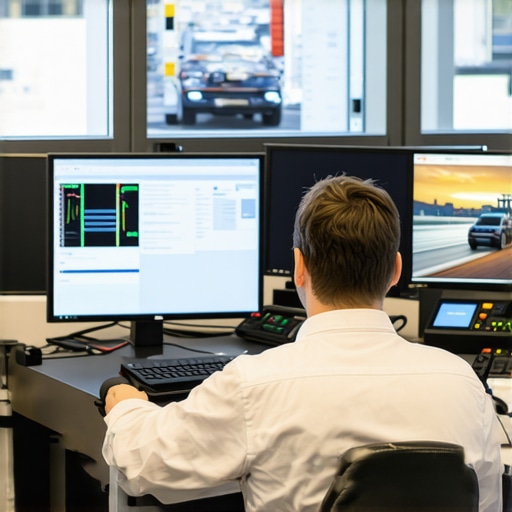
Look for these safety traps before you get in
You also need to look closer at the car itself. Everyone looks for a clean exterior, but the real pros look at the locks and the driver’s eyes. The hidden safety red flags in your car door locks or a driver constantly checking a secondary phone are signs of a fatigue trap. How to ensure your driver is not fatigued during a late-night trip is more about conversation than observation. Have you ever fallen into this trap? Let me know in the comments. By the way, always check how to verify your driver’s commercial registration manually before you put your luggage in the trunk. It takes thirty seconds and could save your life.
I don’t just rely on the driver’s dashboard; I keep my own digital cockpit open. I personally swear by professional-grade flight trackers and hyper-local traffic scanners because why real-time vehicle data is more accurate than estimated times often comes down to the refresh rate of the sensors. While standard GPS might update every 30 seconds, enterprise-level telematics provide a constant stream. This is why I always argue that why a human dispatcher outperforms an AI every time—they can interpret the data, not just display it. According to the 2023 INRIX Global Traffic Scorecard, the average driver in major metros lost over 100 hours to congestion last year. You can’t beat those odds with a basic app; you beat them by knowing on-time every time strategies for safe and reliable hourly bookings.
How do I maintain my schedule when the city is fighting back?
It is about a relentless feedback loop. I audit my receipts and route history every month to identify persistent delays. This helps me see patterns—like which corridors always bottleneck at 4 PM despite what the maps say. You need to know how to verify the commercial validity of a transit schedule so you aren’t building a plan on a house of cards. Using safety-precision the key to reliable hourly reservations for peace of mind as a baseline ensures that the tools aren’t just gadgets, but a system of accountability. I also recommend keeping a direct line to the service manager. Having a human name to call when a flight is diverted is the ultimate tool in your arsenal.
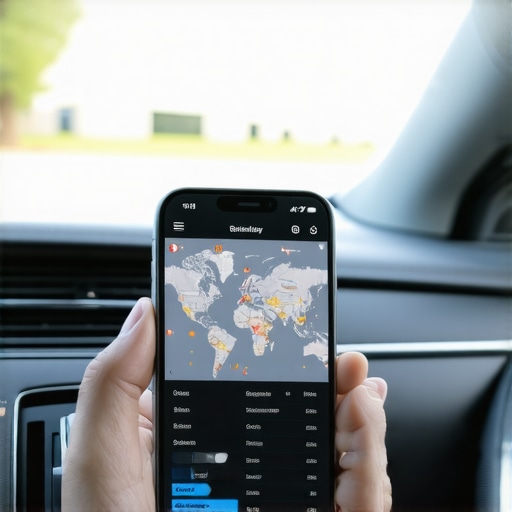
Looking forward, I expect ‘predictive buffering’ to become the norm. Instead of us choosing the buffer, future systems will likely calculate micro-risks based on local event data and weather in real-time. But for now, nothing beats the manual touch of stay secure and punctual the essential hourly reservation tips for timely service. If you want to scale your efficiency, you have to treat your transportation like a department of your business, not a random expense. This means understanding on-time arrival mastering the art of reservation and safety every hour. I challenge you to try one specific advanced tip today: the next time you book, ask the provider for their specific protocol on vehicle swaps. Knowing they have a backup ready is the difference between a minor hiccup and a canceled keynote.
The Hard Lessons Only a Stranded Executive Can Teach You
After years of traveling for high-stakes mergers, I realized that the cheapest car is often the most expensive mistake you can make. It is not just about the fare; it is about the lost opportunity and the psychological toll of uncertainty. I have learned that why hourly booking is more reliable than ride-hailing apps usually comes down to the driver’s singular commitment to you. When you are the only priority, the driver is not hunting for their next fare; they are focused on your next transition. Another major lightbulb moment was realizing that ensuring safety and punctuality starts with the quality of the initial reservation. If the dispatch process feels scattered, the ride will be too. I have also found that ensuring safety first means vetting the service’s emergency protocols before you ever set foot in the vehicle. Reliability is not an accident; it is the result of a deliberate system of checks and balances.
The Precision Toolkit for Every High-Stakes Trip
I never leave for a major city without a few core tools that act as my digital co-pilot. First, I use enterprise-grade flight tracking software to stay ahead of gate changes before the airport screens even update. Second, I always maintain a direct line to the service manager, not just the driver. I also rely on stay secure and punctual the essential hourly reservation tips for timely service to audit my own travel habits and ensure I am not creating my own delays. For those intense days with multiple venues, I have found that why hourly booking is the secret to stress-free event planning is because it eliminates the ‘car-searching’ variable from your cognitive load. These tools and strategies are the gears that keep a professional life moving forward while others are stuck on the sidewalk.
It is Time to Reclaim Your Mental Clarity
You do not have to settle for the anxiety of a spinning loading screen or the frustration of a driver who does not know the city. By prioritizing on-time every time strategies for safe and reliable hourly bookings, you are making a direct investment in your own performance and peace of mind. Your mental energy is a finite resource; spend it on your family, your clients, or your keynote, not on the logistics of the asphalt. Embracing a professional on-time hourly safety reservation mindset is the simplest, most effective upgrade you can give to your professional life. Stop reacting to the city and start commanding your place within it. Have you ever missed a major life event or a critical meeting because a rideshare driver canceled at the last second? Share your story in the comments below—I would love to hear how you handled the situation.