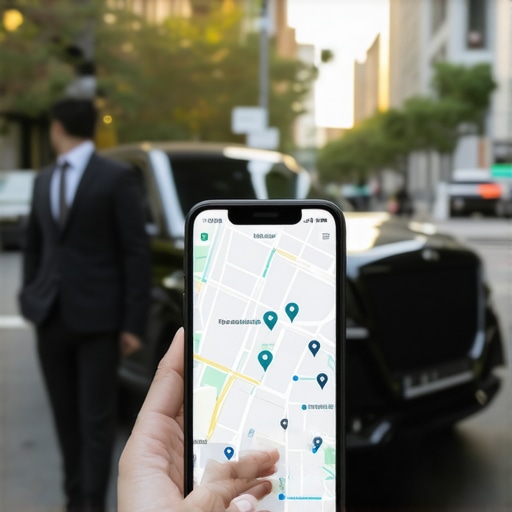
I still remember standing on a corner in Midtown, watching the rain soak through my blazer while three different ride-share drivers canceled on me in a row. I was bouncing between four different venues for a site-visit marathon, and I had foolishly assumed I could just ‘app’ my way through the day. By the third stop, I was forty minutes behind schedule, my phone battery was at 12%, and my stress levels were through the roof. It was a mess. That afternoon, soaking wet and humiliated, I realized the hard way that point-to-point transport is a gamble you eventually lose when your schedule has more than one moving part. If you are managing a complex day, you aren’t just buying a ride; you are managing a timeline. Today, I’m going to show you how to ditch that ‘finding a driver’ anxiety by switching to a model where the car waits for you, not the other way around. Have you ever felt that sinking pit in your stomach when your screen says ‘Finding a driver…’ right when you should be walking into a boardroom?
Stop Chasing Cars and Start Owning Your Time
I used to think I was being frugal by booking individual rides. I’d calculate the cost of four separate trips and think I was winning. But I ignored the ‘invisible’ costs: the 15-minute wait for each car, the surge pricing that kicks in the moment a drop of rain hits the pavement, and the sheer mental exhaustion of re-explaining my route to four different people. When I finally switched to an hourly hire, it was like someone had handed me back two hours of my life. I learned quickly that why hourly logistics save more time than point-to-point isn’t just a marketing slogan; it’s a mathematical reality for anyone with a packed calendar. According to the Texas A&M Transportation Institute, the average commuter loses 54 hours a year to congestion, a figure that sky-rockets for business travelers who are constantly entering and exiting the traffic flow. By keeping a driver on standby, you stay in the flow rather than fighting to get back into it.
Is a dedicated driver just an expensive luxury I don’t really need?
I get it. You see the hourly rate and your inner accountant flinches. I made the same mistake early on, thinking I was saving fifty bucks by booking one-way trips. What I actually did was pay double in surge fees and lose a four-figure contract because I arrived flustered and late. When you see why hourly booking is the best move for multiple site visits, you realize you’re paying for a mobile office and a guarantee. It’s about how an hourly chauffeur can save your business trip productivity by letting you focus on your notes instead of a GPS. Plus, there is a huge relief in knowing how hourly booking prevents you from being stranded in rain or stuck in a dead zone without a signal. You also gain the flexibility to pivot; if a meeting runs long or ends early, you don’t have to navigate a complex app interface because you already know how to handle a route change mid-trip without confusion simply by speaking to the human in the front seat. We aren’t just talking about a car; we are talking about a strategy for your sanity.
Build Your Logistics Around Your Life Not an App
The biggest shift in mindset comes from treating the vehicle as a persistent resource rather than a disposable commodity. When you hire by the hour, you aren’t just paying for the engine to run; you are paying for the driver’s local knowledge and their presence at your beck and call. Think of it like a mobile basecamp. While everyone else is scrambling to find a dry patch of pavement to wait for a GPS pin, your command center is already circling the block or parked exactly where you need it. I once spent a grueling day in downtown Seattle hopping between seven different office buildings for a project audit. By hour four, my laptop was dead and my phone was following suit. Because I had a dedicated car, I didn’t have to hunt for a coffee shop with an available outlet; I just charged my gear in the backseat while we moved to the next stop. This is the hidden math behind why hourly chauffeurs save executives money—it is the billable hours you claw back from the void by staying productive during transit.
Claim Your Slot Before the Surge Hits
Timing is the most critical variable in this equation. You cannot treat an hourly booking like a last-minute pizza order. To get the best results, you need to understand the precise pickup window for ensuring you never wait on the curb. I learned this the hard way during a high-stakes investor meeting in Austin. I assumed a verbal “yeah, we will be there” from a local service was enough because they had a great reputation. It was not. They overbooked due to a local festival, and I was left high and dry because I did not have a digital paper trail or a formal reservation number. That taught me that the danger of relying on verbal confirmations for important travel is a risk you simply cannot take when your reputation is on the line. Now, I always demand a physical or digital copy of the reservation at least 24 hours in advance to guarantee my spot.
The Three Minute Safety Audit Every Passenger Needs
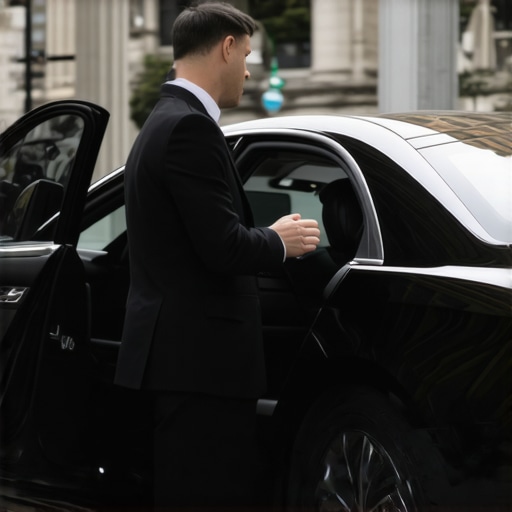
Once the car pulls up, your job is not done. You need to verify that the service matches the promise. I always start with the floor mat check: a simple way to judge driver professionalism. If the mats are caked in last week’s mud or there is clutter in the door pockets, it is a red flag that they are cutting corners on maintenance elsewhere, too. Beyond cleanliness, you have to look at the human behind the wheel. Use a quick opening conversation to gauge their alertness and how to verify your driver is not exhausted, especially for those early morning or late-night stints. A professional will be sharp, well-rested, and won’t be fumbling with a personal phone while you are speaking. Following the essential hourly reservation tips for timely service ensures that the vehicle is not just a ride, but a safe, high-performance tool at your disposal.
Pivot Without the Digital Headache
The true power of the hourly model happens when things go wrong. In a standard ride-share, a route change is a nightmare of re-entering data into an app and watching the price jump. With an hourly driver, you just lean forward and speak. However, there is a protocol to follow to keep things smooth. Knowing how to handle a route change mid-trip without confusion involves giving your driver a heads-up as early as possible so they can check traffic patterns on their hardware. This level of communication is why hourly booking is more reliable than ride-hailing apps, which often struggle to recalculate accurately in dense urban centers with tall buildings that block GPS signals. You remain the pilot of your day, while the driver handles the turbulence of the city traffic.
Let’s dig deeper into the logistics because most people think a reservation is a static ‘set it and forget it’ event. It’s not. I’ve seen countless travelers fall into the trap of believing that a digital confirmation is a guarantee of presence. In reality, the most common mistake is trusting an algorithm over a human dispatcher. Everyone says that AI-driven scheduling is the future of efficiency, but in my experience, it is the quickest way to end up stranded when a road closure happens. This is exactly why manual reservation checks outperform automated bots every single time. A bot doesn’t know that the local marathon route changed last minute; a local human dispatcher does.
Why does your driver’s navigation hardware matter more than you think?
You might think it’s fine if your driver uses their personal smartphone for directions, but that is a massive red flag. Consumer-grade apps are optimized for the ‘average’ user, often leading drivers into tight residential turns that are unsuitable for executive vehicles. I always look for a dedicated system because why we use dedicated GPS hardware instead of smartphone apps isn’t about being fancy—it’s about signal stability in urban canyons. According to the 2023 INRIX Traffic Scorecard, urban congestion has become increasingly non-linear, meaning ‘estimated’ arrival times are often off by as much as 20% in dense centers. If your driver is relying on a standard phone, they are seeing the same delayed data you are. Professionals use multi-network hardware to stay ahead of the curve.
Another nuance people overlook is the actual maintenance of the fleet. I once ignored a slight squeal during a pickup, only to have the car break down ten miles later on a bridge. Now, I perform the windshield wiper test: a quick way to check fleet maintenance the moment I step in. If the blades are ragged or the fluid is empty, it tells me the company isn’t auditing their vehicles daily. It’s a small detail that reflects a much larger safety culture. You should also be wary of payment processes; always how to verify your payment is processed via a secure gateway to ensure your data isn’t being stored on a driver’s personal device. Have you ever fallen into the trap of assuming a shiny car meant a safe trip, only to be disappointed by the service? Let me know in the comments. By focusing on safety precision and the key to reliable hourly reservations, you move from being a passenger to being a prepared traveler who knows how to spot the 3 signs of a secure online payment before the wheels even turn.
Building a long-term logistics strategy requires more than just a phone number; it requires a systematic approach to hardware and data. I have found that the most reliable way to stay ahead is to stop treating my travel like a series of disjointed events. Instead, I treat it as a continuous operation. One of my favorite methods is to keep a dedicated digital log of my trips outside of the provider’s ecosystem. Learning how to store your trip data securely away from third-party apps gives you a historical baseline of your travel times, which is essential for planning future multi-city routes. This data-driven approach is why I no longer guess how long it takes to cross town during rush hour; I know.
How do I keep my logistics system running smoothly over time?
Consistency is the byproduct of strict protocols. I make it a habit to audit my service provider every six months. This isn’t about being difficult; it is about ensuring that the strategies for safe and reliable hourly bookings they promised are still being followed. I look for updates in their fleet and ask about their latest safety tech. For example, I prioritize services that use advanced telematics. According to research by Samsara, a leader in fleet telematics, real-time data monitoring can reduce safety incidents by up to 40% by providing instant feedback to drivers. This is exactly why driver speed alerts are the backbone of passenger safety and why I refuse to ride with anyone who relies solely on their own intuition. 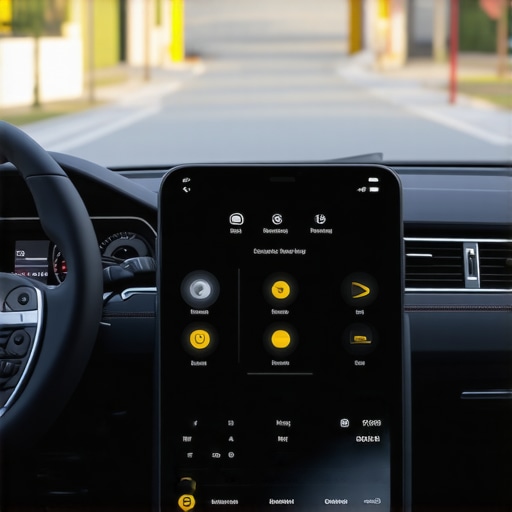 I also recommend moving away from standard messaging apps for coordination. I use encrypted channels to share my location and schedule, which is a vital part of how we protect your personal phone number during the booking process. Looking ahead, I predict we will see a massive shift toward biometric driver verification and AI-assisted fatigue detection integrated directly into the car’s headrest. We are moving toward a future where the vehicle itself acts as a guardian, not just a transport vessel. If you want to scale your productivity, start by asking your current provider for their safety audit reports. It is the quickest way to see if they are a professional outfit or just a car for hire. I challenge you to perform your next floor mat check and ask the driver about their hardware—the answer will tell you everything you need to know about your safety.
The Costly Mistakes That Changed My Travel Blueprint
Over the years, I’ve learned that the price on the screen is rarely the final cost of a trip. One major ‘lightbulb moment’ was realizing that why personal drivers offer better productivity than rideshare apps isn’t just about the legroom; it’s about the psychological safety of knowing your exit is guaranteed. I also discovered that the ‘cheapest’ hourly rate usually comes from companies that don’t enforce rest periods, which is why I now prioritize firms that can prove how to ensure your driver is not using a personal phone while driving. Another insider tip: always ask if the vehicle has been sanitized between passengers, especially during flu season. It sounds small, but a week of lost work due to a bug caught in a dirty backseat is a massive hidden expense.
Tools for the Modern Road Warrior
I don’t rely on luck anymore; I rely on a specific stack of resources to keep my travel bulletproof. First, I recommend taking five minutes to learn how to background check your private transport company in minutes before signing a long-term contract. For real-time coordination, I use encrypted messaging to maintain privacy. I also keep a physical ’emergency’ card with my driver’s name and the dispatch number in my wallet, just in case my phone dies. These aren’t just gadgets; they are part of a system that ensures safety precision and the key to reliable hourly reservations remains the standard for every journey.
Take Back the Reins of Your Calendar
Transitioning from a passive passenger to an active manager of your own logistics is the most empowering shift you can make in your professional life. You deserve a travel experience where the car is an extension of your office, not a source of stress. When you master safety precision and the key to reliable hourly reservations, you stop worrying about the ‘if’ and start focusing on the ‘what next.’ It’s time to stop letting an app decide if you’ll be on time for your next big win. Have you ever missed a high-stakes meeting because of a ride-share cancellation? Let me know your story in the comments below.