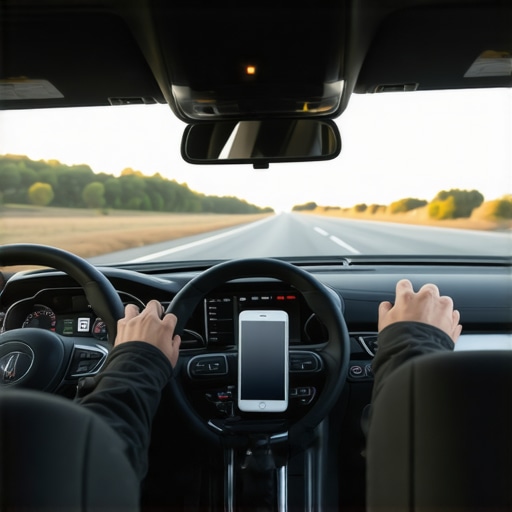
The sun was hitting the dashboard just right, and for a second, I felt like I’d finally mastered the art of the stress-free commute. My reservation was on time, the car was spotless, and I actually had a moment to breathe. Then, I saw it. A quick flick of the thumb. A blue glow reflecting in the driver’s glasses. He wasn’t just checking the route; he was caught in an endless scroll of a personal newsfeed while we were doing sixty on the highway. My stomach dropped. I realized then that a fancy car doesn’t guarantee a focused mind. We’re all trying to balance our lives on these little glass rectangles, but when you’re behind the wheel of a two-ton vehicle, that balance becomes a life-or-death gamble. Today, I want to share exactly how I learned to spot—and prevent—this behavior, because your safety shouldn’t be a secondary thought to a ‘like’ or a ‘share.’
Get Your Eyes Back on the Road
I made a massive mistake a few years back. I assumed that if I paid for a premium hourly service, the driver would automatically be a saint of concentration. I was too polite to say anything when I saw a phone propped up in a cup holder. That silence almost cost me a fender bender near the city center. Since then, I’ve learned that ensuring safety first starts with the specific tech inside the car and the boundaries you set. Have you ever looked in the rearview mirror and seen your driver’s eyes glued to a screen instead of the traffic? It’s a gut-wrenching feeling that no one should have to deal with when they’ve paid for professional service.
Is it actually possible to stop a driver from checking their notifications?
You might think it’s impossible to control someone else’s habits, especially once the door is closed and the trip starts. Skepticism is healthy here! But the truth is, professional standards exist for a reason. According to the National Safety Council, cell phone use while driving leads to 1.6 million crashes each year in the United States alone. That’s why I now exclusively look for services that use dedicated GPS hardware instead of smartphone apps. When the navigation is physically separate from the driver’s personal device, the temptation to check a text or a notification drops significantly. When you book a ride, you aren’t just paying for a seat; you’re paying for their full attention. I started asking about why driver speed alerts and real-time monitoring systems are the backbone of a safe fleet. You can even verify a driver’s safety certification before you even sit down. It’s about setting the expectation the moment you step off the curb that your life is worth more than a social media update.
Demand a Clear Visual Audit Before You Sit Down
You don’t have to be a mechanic to know if a ride is safe. I used to feel like a jerk for looking at the tires or checking the plates, but a close call in Seattle changed that. I watched a car pull up with a tire so bald it looked like a bowling ball. I told the driver ‘No thanks’ and walked away. It was a fifteen-minute delay for my meeting, but it beats a blowout on the I-5. You should background check your private transport company in minutes before the car even arrives. Once it is there, do a quick lap. Check the license plate—it is easier than you think to spot a genuine commercial license plate instantly. If those numbers do not match your booking, the trip should not happen.
The Hardware Test for Better Focus
Distraction usually lives in the palm of the hand. When you get into the car, look at the center console. Is there a maze of charging cables and three different smartphones? That is a red flag. Professional operations use dedicated GPS hardware instead of smartphone apps because it keeps the driver’s eyes on a fixed, professional interface rather than a vibrating social media hub. 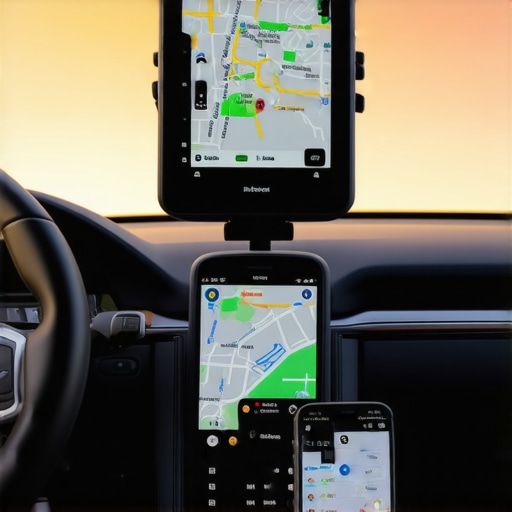
Why Real-Time Data Beats Your Intuition
It is tempting to stare at your own phone to see where you are, but you should actually be asking the driver about their own tracking systems. I have found that real-time vehicle data is more accurate than estimated times provided by generic maps. If a company uses a centralized dispatch, they are monitoring the driver’s speed and location for you. This is why I always check how to ensure your hourly driver stays within safe speed limits by looking for ‘black box’ tech or fleet management stickers.
Speak Up Early to Set the Tone
Silence is the enemy of safety. When I first get in, I make it a point to say something like, ‘I have some calls to make, so I would appreciate a quiet, focused ride with the phone away.’ It is polite but sets a firm boundary. If you hear a weird noise, do not ignore it either. The brake pad squeal you should never ignore is often the first sign that the fleet maintenance isn’t up to par. Trusting your ears is just as important as trusting the reservation app. I once sat through a forty-minute ride with a grinding noise in the rear axle because I didn’t want to be ‘that guy.’ By the time we arrived, the smell of burning metal was everywhere. Now, I would rather handle a route change mid-trip or even end a ride early than risk a mechanical failure.Most travelers obsess over the vehicle’s model year, thinking a new leather interior equals a safer ride. That is a rookie move. In my experience, a slightly older sedan managed by a dedicated team with strict oversight is infinitely safer than a brand-new car on an unvetted platform. We need to dig deeper into the mechanics of why some professional drivers seem to move slower but arrive sooner. One of the biggest traps is assuming that a simple five-star rating on a generic app replaces a rigorous vetting process. I have found that why on-demand apps often struggle with prompt airport pickups is usually due to an algorithm that values proximity over a driver’s actual remaining hours of service.
Why do professional drivers often ignore the “fastest” route on their GPS?
It sounds counterintuitive, but the shortest line on a digital map is not always the safest or even the most punctual. Standard algorithms prioritize distance, but they often ignore the stop-and-go fatigue that comes with aggressive city shortcuts. Why professional drivers avoid the shortest routes on GPS is actually a strategic decision to maintain a steady, predictable pace that reduces the risk of collisions. They understand the specific way local knowledge beats GPS algorithm timing, choosing roads with better visibility and fewer hazardous intersections. 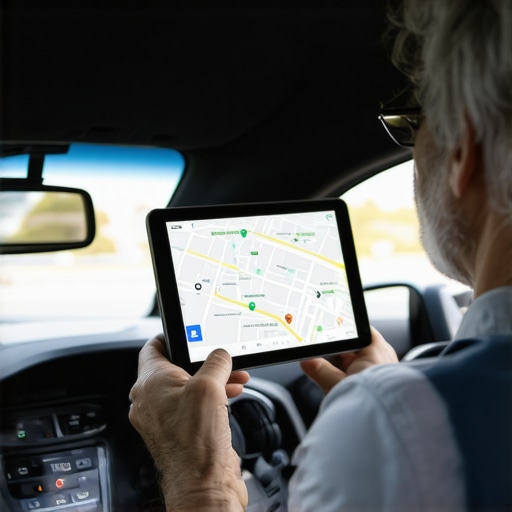
The Fixed Rate Advantage You Probably Overlook
There is a common myth that metered fares are more transparent because you only pay for what you use. I challenge that. In the world of high-stakes travel, why fixed hourly rates are smarter than metered fares becomes clear when you realize it removes the driver’s incentive to rush. When a driver is paid by the hour, their only priority is your comfort and safety, not how quickly they can dump you at the curb to catch the next surge-priced fare. This shift in motivation is the hidden math of passenger safety. However, a major oops factor I see frequently is travelers failing to account for the human element of fatigue. According to the AAA Foundation for Traffic Safety, a driver who has slept for less than five hours has a crash risk comparable to someone driving over the legal limit for alcohol. This is why you must know how to tell if your driver is properly rested for the trip before you even close the door. Look for subtle signs like slow verbal responses or frequent shifting in the seat.
Don’t Let Your Guard Down After the Booking
Even with a confirmed reservation, your involvement does not end at the payment screen. You should always verify the administrative side; reserving your spot with a company that performs manual audits of every trip is non-negotiable for high-profile travel. I always double-check the reservation security measures before I step inside the car. If the driver’s name or vehicle description does not match the digital confirmation exactly, the trip should not happen. For those traveling for work, why having a dedicated driver is better for confidential business talks is not just about privacy—it is about having an environment where the professional decorum is as high as the safety standards. Remember that why driver speed alerts and fleet monitoring systems exist to protect the passenger, so do not be afraid to ask if the vehicle is equipped with them. Have you ever fallen into the trap of booking the fastest looking ride only to end up in a stressful, high-speed dash to the terminal? Let me know in the comments.Maintaining this level of control over your travel isn’t a one-time event; it’s a lifestyle of preparedness. I used to think I could just ‘wing it’ once I found a good company, but true reliability comes from the tools you use to audit the service every single time. My first recommendation is to stop relying on the estimated arrival times shown on consumer-grade apps. Instead, I look for services that provide real-time vehicle data directly from the fleet’s telemetry. This is why I obsess over how to spot a professional dispatch center. A real dispatcher isn’t just looking at a map; they are looking at live engine diagnostics and driver fatigue logs.
How do I maintain these high safety standards over time?
Consistency is the hardest part of travel. To keep things working, I use a simple three-step audit for every long-term reservation. First, I verify the hardware. If a driver is using a smartphone for navigation in a ‘premium’ car, I know they haven’t invested in the dedicated GPS hardware that separates personal notifications from professional duties. Second, I perform the windshield wiper test the moment I see the car; it’s a tiny detail that reveals everything about the company’s maintenance culture. Finally, I always apply the buffer time formula to my bookings to ensure that even a literal roadblock won’t make me late. 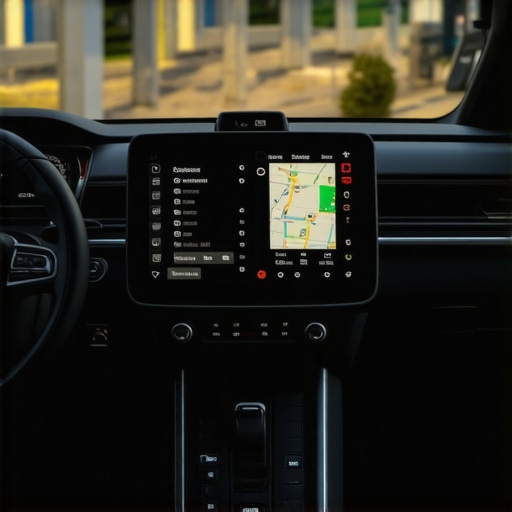
The Technical Edge That Separates Pros from Amateurs
Most people don’t realize that standard GPS can have an error margin of up to 30 feet in dense urban areas. For pinpoint accuracy, I look for providers whose hardware supports the L5 frequency band. According to official technical specs from GPS.gov, the L5 signal is specifically designed to reduce interference in ‘urban canyons,’ providing the precision needed for on-time reservations at complex airport terminals. If your driver is just using a basic smartphone app, they are missing this layer of technical redundancy. This is also why we prioritize human dispatchers who can interpret this data when the AI gets confused by a sudden road closure.
Why Geofencing Is the Future of Your Commute
Looking ahead, I predict that ‘passive safety’ will become the standard. We are moving toward a world where geofencing is the best way to keep your family safe. Imagine a system where the car automatically slows down when it enters a school zone or alerts a central office if the vehicle deviates even one block from the planned route. This isn’t science fiction; it’s the scaling of safety. For now, you can get ahead of the curve by reserving your spot with companies that already use early versions of this monitoring tech. I challenge you: next time you book, ask the dispatcher if they use geofencing for their routes. Their answer will tell you immediately if you are in professional hands.
Hard Truths About Paying for Your Driver’s Undivided Attention
After years of navigating city streets, I’ve realized that on-time arrival is a product of discipline, not luck. Why safety and timeliness matter in hourly reservation services becomes obvious the moment you see a driver ignore a notification to focus on a difficult merge. First, remember that your silence is permission; if you do not set boundaries the moment you sit down, you are essentially co-signing the driver’s potential distractions. Second, always prioritize companies that emphasize why safety and timeliness matter in hourly reservation services. Finally, the true value of an hourly rate isn’t just the leather interior—it is the luxury of a driver who is not incentivized to speed to the next fare. This shift in motivation is what keeps you alive on the highway.
My Personal Safety Checklist Before Closing the Door
To ensure I stay secure and punctual, I rely on a few specific habits that have saved me from countless headaches. I highly recommend reading up on the essential hourly reservation tips for timely service to build your own routine. I never leave home without a printed backup of my itinerary because technology can fail in a dead zone, but paper remains reliable. This is why you must demand a physical copy of your trip reservation before you depart. I also cross-reference my driver’s ID with the agency’s portal to ensure I am not stepping into a security vulnerability. For those who travel for work, mastering the art of on-time arrival and safety every hour is the difference between a successful meeting and a logistical nightmare.
Reclaim Your Peace of Mind on the Road
Your safety is the only metric that truly matters at the end of the day. We often get caught up in the convenience of modern apps, but on-time reservations should never come at the cost of your physical security or a driver’s focus. By demanding dedicated hardware, verified rest logs, and transparent monitoring systems, you aren’t being a difficult passenger—you are being a responsible traveler who values professional standards. You deserve a ride where the only thing you have to worry about is your own schedule. Have you ever felt the urge to jump out of a car because the driver wouldn’t put their phone down? Let me know in the comments below!