
I was standing on the corner of 5th and 42nd, sweating through my best suit while a digital map told me my ride was ‘approaching.’ That ‘approach’ took twelve minutes because of a sudden delivery truck blockage. I walked into my presentation mid-sentence, looking frazzled and unprofessional. It was a wake-up call. I realized that in the world of high-stakes business, the traditional definition of ‘on time’ is a recipe for disaster. [IMAGE_PLACEHOLDER]
Stop Playing Punctuality Roulette with Your Career
I used to be the guy who timed everything to the second. I thought I was being efficient, maximizing every billable hour, but I was actually just playing a dangerous game with my reputation. Early on, my biggest mistake was treating a 9:00 AM meeting as the goal for my arrival, rather than the goal for being seated, hydrated, and mentally present. I’ve learned the hard way that on-time performance is the only metric that matters when your reputation is on the line. If you are not fifteen minutes early, you are already behind. Most apps provide an ETA that is essentially a best-case scenario—it assumes no double-parked cars, no construction, and no slow-moving pedestrians. But we know better. This is why most arrival times are simply guesses that don’t account for the chaotic reality of city transit. Today, I’m going to show you why a 20-minute buffer isn’t just a safety net; it’s a strategic advantage that gives you back your mental clarity.
Is this extra time actually worth the cost?
You might be thinking that paying for a driver to sit for twenty minutes is a waste of company resources or personal funds. I thought so too, until I looked at the ROI of a successful meeting versus the cost of a missed opportunity. According to research from the University of California, Berkeley, the stress of rushing significantly impairs executive function and long-term decision-making. When you are frantically checking your watch, you aren’t thinking about your strategy; you are in survival mode. By choosing hourly rates that protect you during unpredictable traffic, you aren’t just buying time; you’re buying a professional insurance policy. Have you ever lost a deal because a ‘five-minute’ delay turned into twenty? It’s a gut-wrenching feeling that I never want to experience again. This buffer allows you to handle the unexpected—a coffee spill, a lost badge, or a sudden route change—without breaking a sweat. It sets the stage for a version of you that is ready to lead, not one that is catching their breath in the elevator. We are going to look at exactly how to implement this without feeling like you’re wasting your life in the back of a car.
Build Your Buffer Around Real-World Chaos
To start, you have to stop trusting the blue line on your phone. Most GPS apps ignore the ‘last mile’ reality—the time it takes to navigate a complex lobby or wait for a slow elevator in a high-rise. I’ve learned that your real-time ETA should account for pedestrian traffic and construction zones that haven’t hit the map yet. I once had a 5:00 AM flight out of JFK where I cut it too close. I booked my car for 3:30 AM, but the driver was clearly drowsy and missed the bridge entrance. I sprinted through the terminal and made the gate just as they were closing it. Since then, I’ve refined a protocol that eliminates the gamble. It starts with knowing exactly when to book; for instance, understanding the precise time to book your ride for major sporting events or high-stakes meetings is the difference between leading the room and apologizing for your entrance.
Why Hourly Booking Crushes Ride-Hailing Apps
The biggest shift I made was moving away from transactional, point-to-point rides. When you hire by the hour, the driver isn’t looking to dump you at the curb and find the next fare; they are your dedicated partner for that block of time. This is why hourly booking is more reliable than ride-hailing apps. It creates a dedicated standby environment where the car is waiting for you, not the other way around. This eliminates the ‘searching for driver’ spinning wheel of death that happens exactly when you need to leave. If you are doing multiple site visits, hourly booking is the best move because it maintains a consistent pace for your day without the constant stress of re-booking. 
Verify Your Driver Before You Step Inside
Safety and punctuality are two sides of the same coin. You cannot be on time if you are stuck in a vehicle that hasn’t been properly vetted. I make it a habit to check the small details that signal a professional operation. This includes checking for commercial plates and ensuring the interior is pristine. Part of my routine involves a quick check to ensure your driver is not using a personal phone while driving, which is a major red flag for both safety and route accuracy. I also look for the ‘floor mat check’—if the car is clean and the driver is alert, the service usually follows suit. For late-night or early-morning trips, I use the 3-am-pickup-blueprint ensuring your driver is awake and ready. This involves a confirmation text thirty minutes prior to the arrival window. By taking these active steps, you move from being a passenger to being a manager of your own logistics, ensuring that on-time arrival and safety become your new baseline, not a lucky accident.
Most professionals believe that booking an hourly car is simply about ensuring a vehicle is parked outside. In my experience, that is only half the battle. The real nuance lies in the psychology of the driver. When a driver is working a point-to-point gig, their incentive is to finish your ride as quickly as possible to catch the next surge. This creates a subtle, often unconscious, pressure to speed or take risks. By contrast, when you commit to a dedicated block, you change the incentive structure entirely. You are buying the driver’s patience, which is the most underrated safety feature in the industry. These essential hourly reservation tips for timely service aren’t just about the clock; they are about setting a tone of calm professionalism that prevents the ‘rush’ mentality from ever taking root.
The Low-Ball Quote Trap Can Cost Your Career
Here is a hard truth I learned after a disastrous trip in Chicago: the cheapest hourly rate is often subsidized by driver fatigue. I used to look for the best deal, until I realized that those bottom-tier prices often require drivers to pull 12-to-16-hour shifts just to break even. It is vital to how to verify your driver is not exhausted before you settle into the backseat. According to the National Safety Council, driving while drowsy can be just as dangerous as driving under the influence, impairing reaction times and situational awareness. When you pay a fair professional rate, you are ensuring that your driver has had adequate rest and that the vehicle has undergone a real how to verify the commercial validity of a transit schedule and maintenance check. Choosing the bargain option is a gamble where your safety is the stake. 
Does an Hourly Rate Actually Reduce My Liability Risk?
For the sophisticated traveler or executive assistant, this is the million-dollar question. The answer is a resounding yes. When you use a standard ride-hailing app, the insurance coverage can be a ‘gray zone’ depending on the app’s current state. However, a dedicated hourly hire through a professional service typically involves high-limit commercial policies that stay active the entire time you are in the vehicle. You should also look for providers where why driver speed alerts are the backbone of passenger safety, as this data-driven approach proves the company prioritizes compliance over speed. This level of oversight is the real cost of choosing the cheapest ride option—you lose the paper trail and the protection of a professional fleet. Have you ever fallen into this trap? Let me know in the comments. I’ve found that spending an extra 15% on a vetted service pays for itself the first time you hit a major traffic jam and your driver remains perfectly calm while the rest of the city is panicking.
Transitioning from a casual traveler to a master of logistics requires more than just a calendar—it requires a tech stack that works for you. I stopped blindly trusting my phone’s default maps and started using tools that allow me to track your drivers real-time progress without an app. This might sound like overkill, but when you realize why real-time vehicle data is more accurate than estimated times, you’ll never go back. Consumer apps often ‘snap’ the vehicle icon to the nearest road, which can hide the fact that your driver is actually stuck in a parking garage or navigating a complex alleyway. Real-time data gives you the raw truth. 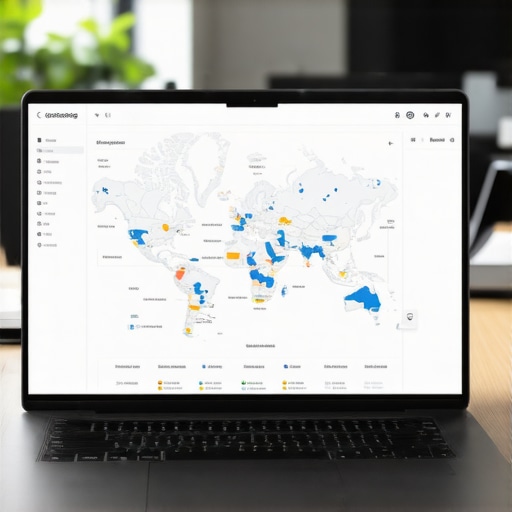
How do I keep my travel logistics running smoothly every week?
The key is shifting from one-off bookings to a comprehensive system. I’ve found that the best way to maintain my sanity and my reputation for punctuality is to set up a recurring weekly commute that never fails. This doesn’t just guarantee a car; it guarantees the same driver who eventually learns my preferences, my favorite routes, and exactly where I like to be dropped off to avoid the morning rush. To verify the safety side of this scaling, I look for companies that adhere to the Federal Motor Carrier Safety Administration (FMCSA) ‘Hours of Service’ (HOS) regulations. These technical standards are the gold standard for preventing driver fatigue by strictly limiting the number of driving hours allowed in a 24-hour period. If your service doesn’t know what HOS is, they aren’t professional enough for your business. I personally use a simple spreadsheet to track my monthly travel, and I recommend you audit your monthly travel spend without stress to see where your money is actually going. Often, we overpay for ‘on-demand’ urgency when a scheduled hourly reservation would have been cheaper and safer.
Why a Human Dispatcher Still Beats Your Smartest App
We often hear that AI is taking over, but in the world of high-stakes timing, why a human dispatcher outperforms an AI every time becomes obvious during a crisis. An AI doesn’t know there’s an unmapped parade or a local water main break; a human dispatcher does. They have the ‘ground truth’ that silicon chips often miss. I predict that the future of elite travel won’t be purely autonomous, but a ‘Centaur’ model: elite human drivers supported by hyper-local, real-time data overlays. This allows for safety and precision that a computer simply cannot replicate in a chaotic urban environment. Scaling this for a team is the final boss of logistics. When I have to coordinate for others, how to coordinate a 10-vehicle convoy without losing anyone became my handbook. It’s about centralized communication—using one point of contact instead of ten different app notifications. My advice for your next big trip? Don’t just book a ride; commit to an hourly block and see how much more productive you are when you aren’t staring at a tracking screen. If you want to take your professional presence to the next level, start by mastering your arrival using these advanced protocols.[IMAGE_PLACEHOLDER]
The Hard Truths About What Really Keeps You on Schedule
Reflecting on a decade of high-stakes travel, I’ve realized that punctuality is less about the clock and more about the systems you put in place before the engine even starts. One of the biggest shifts I made was acknowledging that on-time performance is the only metric that matters when you are the one the room is waiting for. Here are a few lightbulb moments from my journey:
- The Curb-to-Chair Gap: Most people time their arrival to the building’s front door. I’ve learned to add ten minutes specifically for lobby security and elevator wait times in metropolitan high-rises.
- Weather is a Performance Variable: I never assume a clear sky. Using a service that knows how to get an on-time pickup during a summer storm is non-negotiable for maintaining a professional appearance.
- The Rain Shield: There is nothing more unprofessional than arriving at a gala or meeting soaked through. This is why how hourly booking prevents you from being stranded in rain has become a permanent part of my logistical strategy.
The Toolset That Protects My Productivity
I don’t leave my schedule to chance, and neither should you. I rely on a specific set of resources to ensure that every trip meets my personal standards for security. First, I always keep the checklist for every late-night private car hire saved on my phone to verify the vehicle and driver before I even touch the door handle. Second, I recommend that everyone audit your monthly travel spend without stress using a simple spreadsheet; it quickly reveals how much billable time you’ve gained by switching from volatile ride-hailing apps to dedicated hourly services. Finally, I regularly check the FMCSA’s official database to ensure my providers respect ‘Hours of Service’ regulations, because a rested driver is your best safety feature.
Build a Reputation for Flawless Punctuality
Your arrival is the very first impression you make, often before you even speak a word. By choosing a logistics partner that prioritizes safety and precision, you are investing in your own peace of mind and professional standing. Don’t let a poorly timed ride be the thing that stands between you and your next big win. Start implementing a 20-minute buffer today and watch how it transforms your executive presence and mental clarity. Have you ever had a travel mishap that taught you a valuable lesson about arrival times? Let me know in the comments below!