I will never forget the feeling of standing on a humid street corner, three blocks from the stadium, watching the literal fireworks go off overhead while my phone screen blinked ‘Searching for Drivers.’ It was the playoffs, the energy was electric, and I was stuck. I had made the classic rookie mistake: I figured a fifteen-minute head start was plenty. I was wrong. My ‘quick’ ride turned into a forty-minute game of cat and mouse with a GPS that could not handle the road closures. That night, missing the opening kickoff was not just a bummer; it was a wake-up call about how we handle safety and precision when thousands of people are all trying to occupy the same square mile of asphalt. My wife was frustrated, the kids were disappointed, and I felt like I had failed the simplest part of the day: getting there.
I Learned the Hard Way That Twenty Minutes Is Not Enough
The reality is that major sporting events create a localized gravity well of traffic that traditional apps simply are not built to handle. If you have ever tried to book safely and arrive on time during a championship game, you know the panic of seeing your driver get stuck three blocks away for twenty minutes while the meter (or the surge) keeps climbing. My biggest mistake early on was trusting the ‘Estimated Time of Arrival’ on my phone. These algorithms are great for a Tuesday grocery run, but they fail miserably when the city shuts down three main arteries for security perimeters. I once spent double the fare because I did not realize how an hourly rate protects you from those idling minutes in gridlock. Today, I am going to share the exact window you need to secure your spot so you are the one in the seat when the anthem starts, not the one shouting at a smartphone.
Is This Level of Planning Actually Necessary?
You might think, ‘Hey, neighbor, cannot I just walk a few blocks away from the crowd and call a car when the game is over?’ I used to think that too. But according to data from the Inrix Global Traffic Scorecard, congestion near massive venues can spike travel times by over 250% compared to a normal day, making the ‘walk away’ strategy a recipe for exhaustion and disappointment. Have you ever found yourself stranded after a game, watching the surge pricing climb higher than the stadium lights? It is a gut-punch. That is why I moved toward reliable hourly reservations. It is not just about luxury; it is about the peace of mind that comes from knowing your ride is legally parked and waiting, rather than circling a block they cannot even enter.
The Timing Window That Beats the Crowd
The secret is not just booking early; it is booking with the right strategy. For a major game, the ‘Sweet Spot’ for the reservation itself is at least 48 hours out, but your actual pickup needs to be calculated using a specific buffer time formula. You have to account for the ‘Last Mile’—that grueling stretch where the police lines start and the crowd density peaks. I have found that setting your arrival for 45 minutes before you actually need to be at the gate is the only way to stay sane. We are going to dive into how to maximize your safety and satisfaction by picking the right vehicle and the right entry point. But first, let me ask: have you ever had a driver cancel on you right as the game was ending, leaving you in a sea of thousands? It is the ultimate stress test, and today we are going to make sure it never happens to you again.
Lock Your Slot Early to Avoid the Surge Panic
Waiting until the day of the event to find a ride is essentially gambling with your schedule. I learned this the hard way during a championship parade where every car in a five-mile radius was ‘busy.’ Now, I follow a strict 48-hour rule. You need to distinguish the difference between a reservation and a confirmed booking. A reservation is an intent; a confirmation means a specific vehicle and driver have been assigned to your itinerary. When I booked my last trip for the season opener, I didn’t just check the app; I ensured the company sent a digital receipt that explicitly listed my pickup window. This simple step prevents that sinking feeling when an on-demand app tells you no drivers are available while you are standing in a tuxedo or a jersey.
Why Fixed Rates Beat the Meter Every Time
During that same Chicago trip, the traffic was so dense it took forty minutes to move three blocks. If I had been on a standard meter, I would have watched my dinner budget evaporate in idling fumes. Instead, I opted for a service where fixed hourly rates are smarter than metered fares. This shifts the risk of traffic from your wallet to the service provider, ensuring the driver is focused on the safest route rather than the most expensive one.
Apply the Buffer Formula to Beat the Last Mile Crawl
Most people look at a map and think, ‘It takes 20 minutes to get there.’ On game day, that logic is a fantasy. I use a 2X+15 formula: take the standard travel time, double it, and add 15 minutes for the ‘curb-to-gate’ walk. This is the buffer time formula for city travel that actually works because it accounts for the unexpected road closures that GPS often misses. 
Trust Local Knowledge Over the Algorithm
I once had a driver take a route that looked three miles longer on my phone. I almost spoke up, but then I realized he was dodging a massive security checkpoint that wasn’t on the digital map yet. It turns out why professional drivers avoid the shortest routes on GPS is often due to real-time obstacles like crowd overflows or pedestrian-only zones. Relying on someone who knows the local ‘back doors’ to the stadium is the only way to guarantee a smooth drop-off.
Verify Your Ride Before You Step Inside
Safety is not just about the driver; it is about the machine. Before I ever get into a car, I perform a five-second visual audit. I look at the tires and the general cleanliness. If the car looks neglected, the maintenance likely is too. I always recommend the windshield wiper test or a quick glance at the brake rotors. If you see rust or hear a squeal, it is a red flag.
Perform the Pavement Test at the Curb
Before you even touch the door handle, look at the ground beneath the vehicle. Are there fresh fluid leaks? Does the driver greet you professionally? I call this the pavement test every passenger should use to ensure the vehicle is mechanically sound. Taking these few seconds to verify the quality of the service protects your family and ensures that your ‘safe’ ride doesn’t end up on the side of the highway with a blown radiator while the game starts without you.
We often assume that once we see a ‘confirmed’ status on a screen, the job is done. But after a decade of navigating high-stakes game days and corporate summits, I have realized that the most common belief—that the shortest route on a map is the best route—is a complete fallacy. In fact, why professional drivers avoid the shortest routes on GPS is often the difference between making the opening ceremony and sitting in a dead-lock. A study by the MIT Senseable City Lab has highlighted that ‘selfish’ routing by individual drivers using apps often leads to a ‘Price of Anarchy,’ where total congestion actually increases because everyone is funneling into the same narrow side streets. When you are on an hourly reservation for peace of mind, your driver is not just looking for the shortest line; they are looking for the most reliable flow.
Your Smartphone Map Is Probably Lying to You
Here is the ‘oops’ factor that catches even the most prepared travelers: the lag. I have seen clients get frustrated because their app shows the car is still three minutes away, only for the vehicle to pull up right then. This happens because why refreshing your tracking app might give you false arrival times is tied to data latency in high-density areas. If you wait for the ‘car has arrived’ notification before heading to the door, you have already missed the window. At a stadium, a thirty-second delay at the curb can mean three other cars have pulled in, blocking your driver and forcing them to circle the block for another ten minutes. You need to time your exit perfectly to ensure the hand-off is seamless. 
How do you know if your driver is truly ready for a long-haul trip?
Beyond just looking at the car, you should be looking at the person behind the wheel. I always take a quick moment to tell if my driver is properly rested. It is not just about politeness; it is about safety. A driver who is leaning heavily on caffeine or struggling to maintain eye contact is a red flag. This is why I advocate for services that prioritize human dispatchers over pure AI scheduling. A human dispatcher knows if a driver has been on the road for twelve hours; an algorithm often does not care. I also check for the danger of relying on verbal confirmations. If it is not in a digital contract or a physical receipt, it basically does not exist in the eyes of the law or insurance. Take the extra thirty seconds to verify a driver’s safety certification. It might feel awkward for a moment, but it ensures your family is in professional hands. Have you ever fallen into the trap of assuming a ride-share app’s safety ‘shield’ icon was enough protection? Let me know in the comments below.
The pavement test is an excellent immediate check, but keeping a travel schedule running like clockwork over months or years requires a look behind the curtain at the actual equipment. I have transitioned away from services that rely solely on consumer-grade mobile devices. The reason is simple: why we use dedicated GPS hardware instead of smartphone apps comes down to reliability in ‘urban canyons’ where tall buildings scatter cellular signals. Dedicated units have high-gain antennas that maintain a lock on multiple satellite constellations (GPS, GLONASS, and Galileo) simultaneously, providing sub-meter accuracy that a standard phone simply cannot match. According to technical specifications from GPS.gov, the global positioning system’s ‘Standard Positioning Service’ provides a certain level of predictable accuracy, but professional-grade receivers significantly reduce the ‘multipath’ errors common in dense city centers.
Ditch the phone apps for dedicated navigation hardware
When you are serious about ensuring safety first, you need to know that your driver isn’t looking at a screen that might freeze or lag during a critical lane change. This is the reason your real-time map sometimes lags in the city, and it is a risk I no longer take for high-priority airport runs. Beyond navigation, I have also started requesting proof of how to verify a private vehicle’s maintenance history fast. A truly professional service will have digital logs ready to show you, proving that the oil, brakes, and tires are serviced on a mileage-based schedule, not just when something breaks. 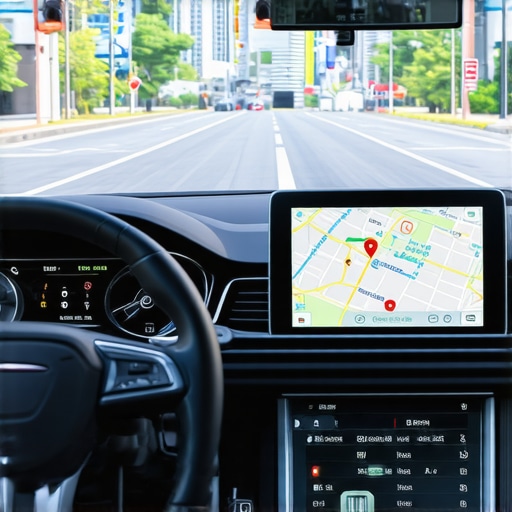
How can I maintain this level of safety over the long haul?
Consistency is the hallmark of a pro. To keep your results high, you must move from one-off bookings to a system of stay-secure-and-punctual-the-essential-hourly-reservation-tips-for-timely-service. I recommend auditing your travel history every quarter. Look at the ETAs versus actual arrival times. If you see a pattern of ‘just-in-time’ arrivals, you are cutting it too close. I now specifically look for providers that prioritize human dispatchers over pure AI scheduling. An algorithm cannot predict that a local protest is forming or that a water main broke on 5th Avenue, but a human dispatcher who has been monitoring the local news for six hours certainly can. This human element is your ultimate insurance policy against the ‘unforeseen.’
Secure a vehicle that sticks by your side all day
As my needs grew, I stopped booking point-to-point transfers for busy days. I realized that how to book a vehicle that stays with you all day is the only way to scale your productivity without the stress of ‘where is my next driver?’ Having a dedicated car waiting at the curb—regardless of how long your meeting runs—eliminates the ‘re-booking’ friction that causes most delays. Looking toward the future, I expect to see even more integration of geofencing and real-time telematics. We are moving toward a world where your driver’s speed and braking patterns are monitored in real-time to ensure your hourly driver stays within safe speed limits automatically. If you want to level up your travel game today, I challenge you to try this one advanced tip: the next time you book, ask the dispatcher for the vehicle’s last inspection date. A company that answers you in under sixty seconds is one that actually cares about your safety. It is time to stop being a passenger and start being an informed traveler who demands safety and precision as the standard, not a luxury.
The Hardest Lessons I Learned From Missing the Opening Kickoff
Over the years, I have realized that the most expensive ride is the one that doesn’t show up. My biggest ‘lightbulb moment’ came when I understood the difference between a reservation and a confirmed booking. A generic app might let you ‘reserve,’ but a pro service assigns a human to your schedule. I also stopped trying to ‘time the market’ with surge prices. Now, I know that how an hourly rate protects you is far more valuable than saving five dollars on a fare that might triple the moment the buzzer sounds. Lastly, I learned that local intuition beats code every time; the specific way local knowledge beats GPS algorithm timing is by knowing which side streets the police close during the fourth quarter.
Tools That Keep My Game Day Schedule From Falling Apart
To stay ahead of the crowd, I rely on a few specific resources. First, I always check the INRIX Global Traffic Scorecard to understand city-wide congestion patterns before I even book. Second, I only use platforms where I can verify how they secured our booking portal, because my personal data is just as important as my physical safety. I also highly recommend keeping a digital folder of your travel documents; why you must demand a physical copy of your trip reservation becomes clear the moment your phone battery dies in a sea of thirty thousand people. These aren’t just ‘extras’—they are the infrastructure of a stress-free day.
#IMAGE_PLACEHOLDER_E#
Take the Lead on Your Next Big Journey
You deserve to enjoy the thrill of the game or the importance of your business meeting without the looming anxiety of ‘will I make it?’ By shifting your mindset from a passive passenger to an informed traveler, you regain control over your most precious resource: your time. When you focus on safety and precision, you aren’t just booking a car; you are investing in a seamless experience. The next time the crowds gather, you won’t be the one frantically refreshing an app. You will be the one already in your seat, enjoying the moment. Start by reserving your spot with a strategy that prioritizes your peace of mind. Have you ever missed a major life event or the start of a big game because of a ride-share glitch or a traffic jam you didn’t see coming? Let me know in the comments below!