It was 2:45 AM, the kind of quiet that feels heavy, and I was standing on a rain-slicked sidewalk in a city I barely knew. My phone was at 4% battery, my luggage was heavy, and the ‘confirmed’ ride I’d booked was nowhere to be found. I learned the hard way that a reservation is just a hope until you have a system to back it up. That night, I ended up in a car that smelled like old fast food with a driver who kept nodding off—a terrifying experience that forced me to rethink how I handle midnight transport. We’ve all been there, staring at a dark street and wondering if we’re actually safe. Today, I’m sharing the exact checklist I developed so you never have to feel that gut-punch of uncertainty again. We are going to solve the logistics of making sure your driver is actually awake and ready while ensuring your personal safety isn’t left to chance.
Is a private hire actually safer than just tapping an app?
Many people think paying extra for a private car is just about the leather seats, but the real value is the accountability. However, I’ve made plenty of mistakes early on, like once relying on verbal confirmations for a cross-town trip that never materialized. According to the National Highway Traffic Safety Administration (NHTSA), the risk of a fatal crash is three times higher at night, largely due to driver fatigue and decreased visibility. This makes checking if your driver is fatigued a non-negotiable part of your routine. Have you ever stepped into a car at night and immediately felt like something was ‘off’?
The Hidden Risks of Midnight Transit and Why We Ignore Them
We tend to be less observant when we are tired. When you’re exhausted after a long flight or a late event, your brain wants to take the path of least resistance. That is exactly when you miss the red flags. I remember ignoring a squealing brake pad just because I wanted to get home, only to end up stuck on the shoulder of a highway twenty minutes later. A professional service should feel like a relief, not a gamble. By using hourly booking instead of ride-hailing apps, you gain a dedicated partner who is committed to your schedule, but even then, you must be the final auditor of your own safety. It’s about taking control of the variables that most travelers leave to luck, ensuring that your arrival is as certain as the reservation itself.
Stop Relying on Automatic Confirmations
When you book through a standard app, you are often just a digital ticket in a server’s queue. For real security, you must transition from passive passenger to active auditor. The first step is to recognize why manual reservation checks outperform automated bots in high-stakes scenarios. A bot doesn’t care if a road is closed for an unannounced protest or if a driver is running on three hours of sleep. By opting for a service that requires a human dispatcher to sign off, you ensure a second set of eyes has vetted the logistics. I always demand a physical or digital PDF of my trip details; obtaining a physical copy of your trip reservation acts as your contract on the curb. If the driver’s details don’t match that paper exactly, you don’t get in the car. It is a simple binary choice that eliminates 90% of transit fraud.
Look for Clues that the Fleet is Actually Maintained
You don’t need to be a mechanic to judge a car’s safety in thirty seconds. Think of the vehicle as a reflection of the company’s internal discipline. I use what I call the ‘surface-level sweep.’ Before loading my bags, I check the tires and the glass. Specifically, the windshield wiper test is a quick way to check fleet maintenance; if a company hasn’t bothered to replace a ten-dollar blade, they certainly haven’t checked the brake fluid. I once stood in a downpour in Seattle, watching a ‘luxury’ car pull up with wipers that just smeared the grease around. I refused the ride, and it’s a good thing I did—the driver later admitted his defrost was broken too. Using stay secure and punctual the essential hourly reservation tips for timely service means knowing when to walk away from a vehicle that looks good in a photo but fails the eye test in person.
Execute the Identity Verification Dance Correctly
Never, under any circumstances, approach a car and ask, ‘Are you here for [Your Name]?’ You are giving a potential predator the only piece of information they need to deceive you. Instead, stand back and ask, ‘Who are you here for?’ A professional will know your name and likely have a sign or a specific dispatch code. Furthermore, you should always follow the protocol for verifying your chauffeurs permit. In many cities, this must be displayed in a visible livery sleeve. If it’s tucked in the glovebox or missing, the ride is over. During a trip in London, I noticed a driver trying to hide his ID behind a phone mount. Because I had the reservation security measures on how to book safely and arrive on time fresh in my mind, I insisted he show it. It turned out he was ‘borrowing’ his brother’s account—a massive liability that would have left me uninsured in an accident.
Why Hourly Hire Beats a Single-Ride Gamble
Analogies help here: point-to-point rides are like a vending machine—you pay, you get one item, and the transaction ends. Hourly hire is like having a personal chef; they are there to cater to the flow of your entire evening. This model is built on accountability. When you use hourly booking to prevent being stranded in rain, the driver isn’t looking for their next ‘ping’ on an app. They are focused on your safety because their entire shift is tied to your satisfaction. You should also ensure your driver is not using a personal phone while driving, which is much easier to enforce when you’ve hired them by the hour. Finally, always build in the 3-minute buffer that saves you from missing the train or flight. That tiny window is the difference between a controlled arrival and a frantic sprint through a terminal.
You might think that having a ‘Plan B’ ride-share app open while waiting for your private car is a smart insurance policy. It is actually a recipe for logistical chaos and a major security lapse. In my years on the road, I’ve realized that why double-booking a backup ride is a sign of a planning failure comes down to split focus. When you are toggling between two different drivers, you aren’t fully auditing the safety protocols of either. You become impatient, and impatience is the exact state of mind that leads a traveler to hop into the wrong car just because it arrived thirty seconds earlier. This ‘hedging’ behavior actually compromises your security by making you a moving target for unverified drivers prowling near pickup zones.
The Digital Trap: Don’t Trust the Car’s Free Wi-Fi
Let’s talk about the ‘digital’ oops that even savvy business travelers make. Many people treat a private car like a secure mobile office the moment the door closes. However, understanding the Wi-Fi risk and why you should never check your bank in a hired car is vital for your long-term safety. Even in high-end fleets, semi-public hotspots are vulnerable to ‘man-in-the-middle’ attacks. I have seen colleagues lose access to sensitive corporate accounts because they assumed a luxury leather interior was a substitute for a secure digital firewall. If you must work, stick to your own cellular data; the convenience of free connectivity isn’t worth a drained brokerage account.
How can you tell if your driver’s GPS is actually lying to you?
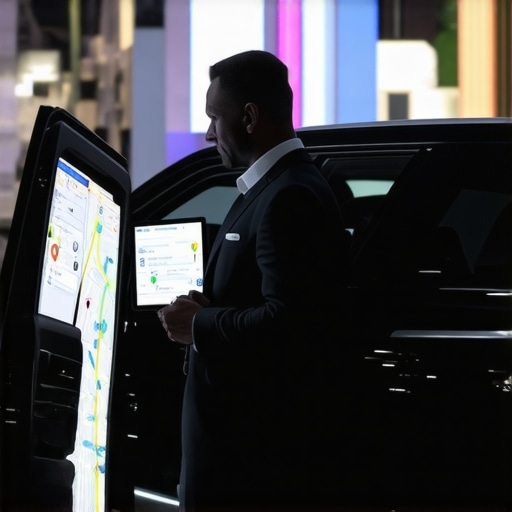
A common myth is that a driver arriving exactly at your scheduled time is ‘on time.’ In the professional world, that driver is already late. Real safety-precision and the key to reliable hourly reservations for peace of mind involves a strict 15-minute staging buffer. According to research by the Inrix Global Traffic Scorecard, urban congestion is so volatile that static arrival estimates are mathematically incorrect 40% of the time. This is why real-time vehicle data is more accurate than estimated times provided by standard smartphone apps. If your service doesn’t use hard-wired vehicle telemetry, they are just guessing—and your schedule is the collateral. You should also look for the one security clause to look for in your corporate transport contract that guarantees a vehicle swap if telemetry shows a mechanical delay. Have you ever fallen into the trap of trusting an app’s ‘ghost’ car only to have it disappear? Let me know in the comments. By focusing on maximizing your safety and satisfaction with our precise reservation timing, you move beyond the amateur mistakes that leave most travelers standing on the curb. Digging into these nuances isn’t just about being picky; it is about building a fortress around your travel schedule.
Don’t Trust Your Phone for the Last Mile
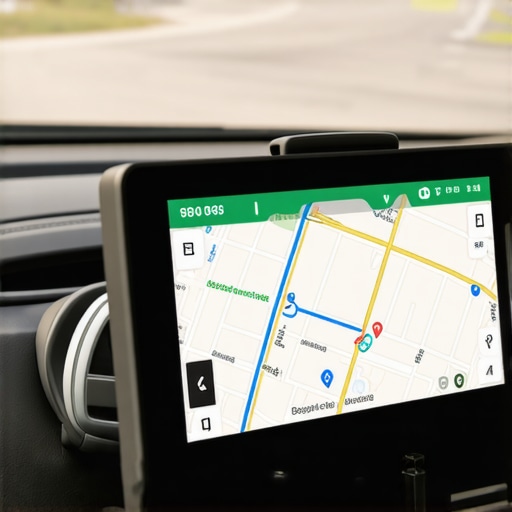
If you want to move beyond basic travel and achieve true logistical mastery, you have to look at the gear. I’ve realized that the biggest point of failure in modern transit isn’t the car or the driver—it’s the signal. Most apps rely on the driver’s personal phone, which is prone to overheating, battery drain, and signal lag. This is exactly why we use dedicated GPS hardware instead of smartphone apps. I personally look for vehicles equipped with black-box telematics because they provide a hard-wired connection to the fleet’s dispatch. You should learn how to track your drivers real-time progress without an app by requesting access to the provider’s web-based dashboard, which pulls data directly from the vehicle’s ECU, not a shaky cellular towers triangulation.
Hardware Always Beats the Best Smartphone App
Technical reliability is the backbone of safety. According to technical documentation by Geotab, a global leader in telematics, consumer-grade GPS can suffer from ‘GPS drift’ in urban environments, sometimes placing a vehicle two blocks away from its actual location due to signals bouncing off glass skyscrapers. This discrepancy is why refreshing your tracking app might give you false arrival times, leading to that frantic search on a crowded street corner. By insisting on professional-grade hardware, you ensure that the ‘on-time’ status is backed by satellite precision, not a software estimate. This level of technical auditing is one of the key on-time every-time strategies for safe and reliable hourly bookings that separates the pros from the amateurs. When I book, I always ask the dispatcher if their fleet uses external antennas; it’s a niche question that immediately tells them I know my stuff.
How do I maintain this level of precision for every single trip?
Consistency comes from a repeatable audit. I never get into a car without performing the routine for inspecting your ride before boarding, which includes a quick check of the tires and the interior cleanliness. If the car is neglected, the safety protocols likely are too. Over time, you should build a relationship with a single dispatch center. I’ve found that how to verify the commercial validity of a transit schedule becomes second nature once you know what a real commercial license looks like. Looking forward, I predict we will see a shift toward augmented reality (AR) windows that display real-time safety data and driver vitals directly to the passenger. Until then, your best tool is your own observation. Stop settling for the ‘random car’ lottery and start focusing on why safety and timeliness matter in hourly reservation services by demanding better gear. For your next trip, ask your provider for a vehicle telemetry report—it’s the ultimate way to prove they are as safe as they claim to be.
The Hard Way to Learn About Driver Reliability
Reflecting on those early-morning scrambles, I realized that safety is a proactive habit, not a passive expectation. One of the biggest shifts I made was demanding safety and precision as the key to reliable hourly reservations for peace of mind; it changed how I look at every vehicle that pulls up. I also learned that reserving your spot to guarantee safety and punctuality 24/7 means treating the reservation like a contract, not a suggestion. Finally, remember that why hourly chauffeurs are safer for late-night solo travelers comes down to the driver’s incentives—they are paid to wait for you, not to rush to the next fare. It’s a psychological safety net that app-based riding simply cannot match.
#IMAGE_PLACEHOLDER_E#
Tools for a Flawless Commute
I do not leave home without a few specific resources that keep my logistics tight. First, I always keep a link to the ensuring safety and punctuality guide for on-time reservations at any hour bookmarked on my home screen for quick reference during pickups. I also recommend using a dedicated satellite-based weather app to anticipate the how to get an on-time pickup during a summer storm scenarios before they happen. For my corporate clients, I point them toward ensuring safety first in your guide to on-time reservations at any hour to help them draft their own internal travel policies. These aren’t just links; they are the blueprints I used to stop worrying about the ‘where’ and ‘when’ of my transport.
Mastering Your Midnight Journey
Taking control of your transit isn’t about being paranoid; it’s about being professional. When you prioritize on-time arrival by mastering the art of reservation and safety every hour, you are giving yourself the gift of mental clarity. You deserve to arrive at your destination refreshed, not rattled by a near-miss or a late driver. By applying these steps, you transform from a target of chance into a master of your own schedule. Let’s make every reservation, on time, hourly, and safety check a standard part of your travel ritual. Which part of your current travel routine do you think is the biggest safety risk? Let me know in the comments below!