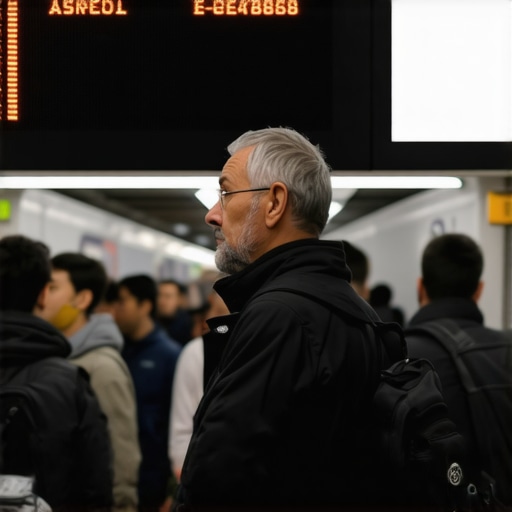
I will never forget the rainy Tuesday I spent shivering under a bus shelter that smelled like wet asphalt and broken promises. I had a 6:00 PM dinner reservation, and I had checked the hourly schedule three times before leaving the office. The app said the bus was two minutes away. Then four. Then, suddenly, it disappeared from the screen entirely. I was not a daily rider; I was a casual commuter who trusted the system to work when I needed it most. That night, I did not just miss my table—I lost my faith in public peak-hour logic. If you have ever felt that sinking pit in your stomach when a guaranteed ride vanishes, you know exactly what I am talking about. Today, I am going to show you why these systems are designed to fail you and how to take back control of your schedule.
The Scheduling Gap That Leaves You Stranded
Most metropolitan transit authorities design their peak hour flows for the standard commuter—the person going from Point A to Point B every single day at 8:05 AM. But for those of us who only use these services occasionally, the system feels like a trap. I made the classic rookie mistake of assuming that more frequent service during rush hour meant more reliability. It is actually the opposite. According to research from the American Public Transportation Association, transit reliability often dips during peak congestion due to cascading delays, where a single delay at the start of a route creates a massive ripple effect. I learned the hard way that the error in relying on app-based arrival times during construction or heavy traffic is that they rarely account for the human element of boarding delays. When I finally started prioritizing on-time every time strategies for safe and reliable hourly bookings, my daily stress levels plummeted. We are going to look at why the safety of a confirmed seat and the certainty of a professional schedule are the only ways to reclaim your evening.
Is Public Transit Actually Worth the Constant Stress?
You might be thinking that public options are the only way to save money. Is that really true? When you factor in the cost of a missed reservation, the safety risks of standing in a dim station, and the pure mental exhaustion of wondering if you will ever get home, the savings evaporate. I used to think I was being frugal, but I was actually just being a martyr for a system that did not care about my time. I eventually realized why fixed schedules beat real-time AI during rush hour every single time. It comes down to accountability. Have you ever stood on a platform watching three full buses cruise right past you while you are already ten minutes late? If so, was the five dollars you saved worth the hour of your life you lost? Let us talk about how to ensure your next trip happens on your terms instead of theirs.
Shift the Risk with the 12-Minute Buffer
Stop treating your pickup time like a suggestion. When I first started booking professional services, I assumed the driver would appear exactly when the clock hit the hour. I was wrong. The real secret to a seamless experience is realizing that why most on-time drop-offs start with a 10-minute early arrival is built into the service’s DNA. Think of your driver as a pre-deployed asset; they should be on-site and ready before you even step out of your door. I once tried to cut it close for a 4:00 AM flight using a standard on-demand app, and three drivers cancelled because they didn’t want a long haul so early. I barely made the gate as the doors were closing. Now, I rely on the only way to ensure your 4 am ride actually shows up, which is a pre-scheduled hourly commitment. By utilizing the buffer rule that actually prevents tardy starts, you eliminate the frantic ‘where is my ride?’ text messages.
Stop Traffic from Ruining Your Budget
If you are moving between multiple meetings, booking single trips is a recipe for financial and mental disaster. Every time you close a door, you start the clock on a new variable. Instead, use hourly rates to lock in your peace of mind. The math behind why hourly bookings save money during peak hours is simple: you aren’t paying for the distance; you are paying for the driver’s availability. This effectively means that how hourly rates eliminate the stress of traffic jams is by removing the surge pricing and ‘wait time’ fees that accumulate when you’re stuck on the freeway. It is like having a mobile office that stays with you, rather than a taxi you have to hunt down in the rain.
Verify the Person Behind the Wheel
Safety isn’t just about a seatbelt; it is about knowing exactly who is operating the vehicle. One of the biggest security risks of booking a ride through a third-party broker is the lack of direct oversight. Before you enter any vehicle, perform a quick digital audit. I always use 7 tactics to verify your drivers commercial license in seconds to ensure they aren’t just a casual driver with a borrowed account. Check the physical condition of the car as well. The checklist for verifying a luxury sedan before boarding should include checking for commercial plates and the driver’s professional credentials. If the vehicle looks neglected or the driver cannot produce their commercial permit, do not get in. Your safety is non-negotiable, and a professional will always respect your need for verification.We tend to treat the little blue dot on our screens as an absolute truth, but that is the first mistake of a casual traveler. In my years of navigating complex city layouts, I have learned that **relying solely on a GPS signal is the quickest way to miss a flight.** Everyone says tech is the answer, but in my experience, technology is just a tool that requires human oversight. A study published in the Journal of Navigation highlights how ‘urban canyons’—those corridors created by skyscrapers—frequently cause GPS signals to bounce, creating a positioning lag of up to 60 seconds. This is precisely why on-time performance depends on local knowledge over GPS. When you are on a tight schedule, that one-minute discrepancy is the difference between catching your driver and watching them turn the corner as you exit the lobby.
How Do You Spot a Driver Who Is Actually Fatigued Before You Get In?
It is one thing to check a license, but it is another to check the person. Fatigue is the silent killer of professional transport, often cited by the National Safety Council as being just as dangerous as driving under the influence. I always use the stealth way to confirm your driver is not fatigued: look for slow eye-tracking or a lack of immediate verbal clarity when you confirm your name. Furthermore, look at the car itself. Beyond the shine, the one physical marker that proves a vehicle is well-maintained is the condition of the tire sidewalls; if they are scuffed and neglected, the internal safety systems likely are too. The biggest “trap” for the uninitiated is the third-party broker shell game. You think you are booking a premium service because the website is sleek, but you are actually just paying a middle-man to find the cheapest sub-contractor available. Understanding the security risks of booking a ride through a third-party broker is vital for anyone traveling with high-value assets or family. These brokers often lack direct oversight of the fleet, which is the logic behind choosing a professional chauffeur over on-demand apps or anonymous platforms. Always ensure your payment is handled via the truth about secure payment gateways for luxury transport to avoid identity theft. I once lost three hours of my life fighting a ‘double-charge’ from a broker who didn’t even have a physical office. Have you ever fallen into this trap? Let me know in the comments. Ultimately, why manual dispatching still beats AI for real-time accuracy comes down to accountability—a real person knows the bridge is closed before the algorithm does.I have realized that keeping a schedule intact isn’t about luck; it is about the architecture of your logistics. For me, that architecture relies on a few non-negotiable tools. I personally swear by professional-grade flight trackers and dedicated dispatching interfaces because they provide the raw data that standard apps hide. By on-time arrival mastering the art of reservation and safety every hour, I have turned what used to be a gamble into a repeatable science. You have to remember that why real-time vehicle tracking is more than just a convenience is fundamentally about visibility into the driver’s environment.
The Digital Toolkit for Zero-Delay Travel
I don’t just look at the ‘estimated arrival’ time. I look at the route telemetry. According to a white paper by the Mineta Transportation Institute, ‘Reliability in urban transit is increasingly dependent on the synchronization of human dispatchers who can interpret non-linear event data—like parades or unmapped accidents—better than static algorithms.’ This is exactly why I prioritize services that use manual overrides. If you aren’t checking why real-time tracking apps need constant manual overrides, you are flying blind. 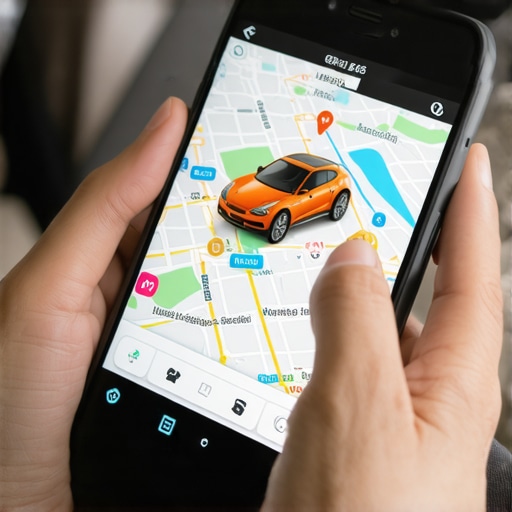
How I Keep My Logistics Scalable Without the Burnout
When your day involves four meetings across three zip codes, booking individual rides is financial suicide. I scaled my travel strategy by switching to hourly commitments. I found that how to save money on full-day multi-stop transportation needs is all about minimizing the ‘dead time’ between bookings. It is about safety precision the key to reliable hourly reservations for peace of mind. You want a driver who stays in the orbit of your location, not one who is finishing a grocery delivery three miles away when you need to leave.
Can You Actually Automate Peace of Mind?
The future of this industry isn’t just in better apps; it is in the fusion of AI-driven traffic prediction and human intuition. However, until that tech is perfect, I maintain my results by auditing my own bookings. I always double-check the credentials of the person assigned to me. I strongly encourage you to take thirty seconds before your next ride and learn how to read a drivers commercial badge for authentic credentials. It is the single most effective way to ensure you are in a legitimate, insured, and professional environment. Don’t just take the system’s word for it; verify it yourself and see how much safer you feel.
The Hardest Lesson I Learned About Urban Transit Logic
Reflecting on that rainy Tuesday, I realized that the biggest mistake wasn’t trusting the app—it was failing to understand that public infrastructure isn’t built for individual precision. One lightbulb moment for me was realizing that proactive planning is cheaper than reactive recovery. I now live by the 12-minute rule for international airport pickups, which guarantees that the vehicle is there before I even land. I also stopped assuming every car with a sticker was safe; learning how to identify a genuine commercial chauffeur permit on sight changed how I vet my environment. Finally, I discovered that why the best drivers prefer fixed schedules over on-demand pings is because it allows them to focus on your safety rather than their next fare. These small shifts in perspective transformed my travel from a source of anxiety into a period of rest.
My Essential Logistics Toolkit for Stress-Free Travel
When you want to truly master your schedule, you need more than just a smartphone. I personally rely on professional flight tracking software and direct communication lines with dispatchers. To keep my peace of mind, I always perform a quick check to verify your drivers commercial policy without the friction before the trip begins. This ensures that every mile is covered by legitimate protection. I also recommend keeping a dedicated folder for your confirmations; you can maximize your safety and satisfaction with our precise reservation timing by having your booking ID ready for the driver to confirm, rather than the other way around. This two-way verification is the hallmark of a professional traveler.
Your Move Toward Predictable Evenings
You don’t have to be at the mercy of a disappearing blue dot on a screen. By choosing to prioritize quality over the lowest possible price, you are investing in your own mental health and physical security. I want you to feel the relief of knowing your ride is waiting for you, not the other way around. Once you experience on-time arrival mastering the art of reservation and safety every hour, you will never want to go back to the gamble of on-demand apps. Have you ever been ghosted by a ride-share app right before a big event? Let me know your story in the comments below!