
I stood on my frozen driveway at 4:15 AM, luggage in hand, watching a cold ‘Payment Declined’ notification pulse on my phone. The driver was already ten miles away, and the reservation I’d made weeks ago evaporated into the dark morning air. It wasn’t a lack of funds; it was a cheap, outdated payment gateway that flagged a legitimate business travel charge as a security risk. That moment changed how I look at the logistics of luxury travel forever. I realized that your safety and punctuality don’t start when the car pulls up; they start the second you hit ‘Book Now’. If the digital handshake fails, the physical ride never happens. Today, I want to share exactly why a robust payment system is the silent backbone of any reliable service and how you can spot a secure setup before you give them your card details. Have you ever had a perfect plan fall apart because of a simple billing glitch?
Don’t Let a Billing Error Leave You on the Curb
One of the biggest mistakes I made early on was assuming that every ‘luxury’ transport company used the same high-end tech. I once booked a high-stakes trip through a provider that looked fancy but used a third-party checkout that looked like it was from 1998. The result? A mess of hidden fees in my ride confirmation that took three weeks of emails to resolve. When you are booking an hourly reservation that needs extra planning, the payment gateway is your first line of defense. According to a recent study by Juniper Research, payment fraud in the travel sector is projected to reach over $25 billion annually, which explains why top-tier services are now investing so heavily in end-to-end encryption. It isn’t just about the money; it is about ensuring the system trusts your booking so the driver actually shows up.
Is your credit card data actually safe with these guys?
The skepticism is healthy. Many people worry that their personal info is sitting in a plain-text file on a random server. The truth is, the risk of using non-verified booking links is real, especially with smaller operators who cut corners on IT. When I vet a service now, I look for PCI-DSS compliance and multi-factor authentication. These aren’t just buzzwords; they are the reasons I can sleep soundly before a big meeting. We are going to dive into the practical steps you can take to verify these systems yourself, so you never have to experience that 4 AM sinking feeling that I did.First, treat the payment screen like a digital border crossing. You wouldn’t hand your passport to someone standing in an alley; don’t hand your credit card to a website without a ‘lock’ icon and a verified domain. I have learned that the safest providers use third-party processors where the company itself never even sees your full card number. This setup is like a vault within a vault, ensuring your financial data is isolated from the company’s internal records. Once that payment clears, you should receive an immediate response. You need to know the signs of a professional booking confirmation email. This isn’t just a simple receipt; it is a digital contract that should specify your vehicle type, a reservation ID, and a direct line to support. 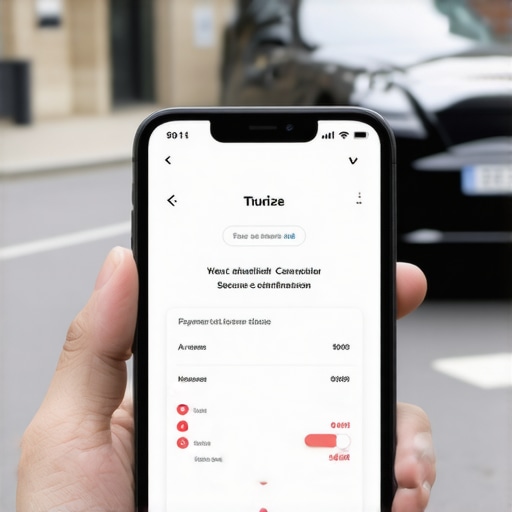
Ensure the Fleet is More Than a Website
I once made the mistake of booking a premium SUV for a tight 6:00 AM airport run through a site that looked incredible. When the time came, a beat-up sedan with no commercial markings arrived. The driver was an independent gig worker who had no idea I had paid for a luxury vehicle. He had simply picked up a lead from a broker site. This taught me to always look deeper and learn how to verify your drivers commercial policy without the friction. If a service cannot provide proof of their commercial status, you are not just risking a bad ride; you are risking your safety. This is a vital step in reserving your spot how to guarantee safety and punctuality 24-7.
Why Most Arrival Times Are Simply Guesses
Punctuality is not a matter of luck; it is a matter of physics and real-time data management. Many apps give you a ‘best-case scenario’ time, but the reality is that why most arrival times are simply guesses when they don’t account for real-world variables. A professional service manages the clock differently. This is why a 20-minute buffer is the new gold standard for business travel. This buffer acts as a shock absorber against sudden accidents or road closures. It is also important that the dispatcher understands city-specific nuances, such as why your real-time eta should account for pedestrian traffic in dense metropolitan areas where foot traffic can delay a vehicle just as much as cars.
Protect Your Personal Data During the Ride
Finally, the interaction with your driver should be professional and filtered to protect your privacy. I always check if a company provides the security benefit of masking your phone number with your driver. You should never have to share your personal cell number just to coordinate a pickup. If you are ever unsure about the vehicle that pulls up, do not hesitate to ask how to verify commercial plates on a private hire. A real professional chauffeur expects these questions and will have their credentials ready. To keep track of the logistics without the stress, look for providers that allow you to track your drivers real-time progress without an app, ensuring you stay informed without draining your phone battery.Most travelers operate under the delusion that ‘on time’ is a fixed point. It isn’t; it is a probability game. Everyone says point-to-point transfers are the most cost-effective way to move through a city, but in my experience, why hourly rates are the only way to handle multiple client meetings becomes clear the moment your first meeting runs ten minutes over. If you rely on separate bookings, you are at the mercy of the next available driver’s proximity. This is exactly why hourly booking is more reliable than ride-hailing apps; the car is yours, the driver is dedicated, and the logistical gap is zero. A study by the Texas A&M Transportation Institute on urban mobility found that ‘buffer time’—the extra time needed to ensure on-time arrival—has increased significantly in the last decade due to unpredictable congestion patterns, proving that simple point-to-point apps often fail the professional traveler.
Why a human dispatcher outperforms an AI every time
Algorithms are great at calculating the shortest distance between two points, but they are terrible at anticipating human behavior. I have seen AI-driven apps send drivers into the heart of a marathon route simply because it was the ‘fastest’ path on paper. This is where the human element becomes a safety and punctuality feature. When you look at on time every time strategies for safe and reliable hourly bookings, you’ll find that a professional dispatcher is monitoring local news, police scanners, and even weather patterns in real-time. They can pivot a driver three streets over before the traffic jam even appears on a digital map. 
The ‘Oops’ factor of the eleventh-hour booking
Here is a trap I see even seasoned executives fall into: the last-minute reservation. We live in an ‘on-demand’ culture, but in the luxury sector, why last-minute reservations often result in poor quality is a hard reality. When you book at the very last second, you aren’t getting the best-vetted driver or the car that just finished its 50-point inspection; you’re getting whoever is left over. To truly master the art of reservation and safety every hour, you need to provide the service provider with enough lead time to assign their ‘A-Team.’
The math behind the 17-minute buffer
You might have heard of the 15-minute rule, but in the world of high-stakes logistics, that’s often insufficient. I’ve found why the 17-minute buffer outperforms the traditional 15-minute rule 2 to be a game-changer. Those extra 120 seconds provide the margin of error needed for the driver to find the exact gate or for you to grab that last-minute coffee without derailing the entire schedule. At the end of the day, why on-time performance is the only metric that matters comes down to one thing: your peace of mind. Have you ever fallen into this trap where you thought a quick app booking would be ‘fine,’ only to have it blow up your schedule? Let me know in the comments.
I’ve spent years refining my own personal travel stack, and I have learned that the highest levels of service aren’t accidental; they are maintained through rigorous, repetitive habits. It is one thing to get lucky with a single ride, but ensuring safety first with on-time reservations at any hour requires a commitment to the ‘unseen’ logistics. For me, the most important tool is the pre-trip checklist. I no longer just assume the car is ready. I’ve learned that why professional punctuality requires a pre-trip inspection is about more than just checking the oil; it is about verifying that the GPS is synced, the tires are at the correct PSI for the load, and the cabin is sanitized. According to Geotab’s technical fleet analysis, vehicles that undergo digitized pre-trip inspections are 20% less likely to experience a critical roadside failure during active service. This is the kind of data I look for when vetting a provider.
The tools I use to audit my own transit
I don’t just take the company’s word for it anymore. I use a handful of specific methods to ensure my day won’t fall apart. First, I always take a moment to how to verify the commercial validity of a transit schedule before I commit to a full week of meetings. This involves checking the carrier’s DOT number and ensuring their operating authority is active. If the schedule looks too good to be true, it usually is. I also keep a close eye on the vehicle when it arrives. I’ve developed the routine for inspecting your ride before boarding that takes exactly thirty seconds: check the tread, look for current registration stickers, and ensure the door handles operate smoothly from the inside. It sounds paranoid until you’re the one stuck in a car with a faulty latch during a 5 PM rush.
Maintain your peace of mind when things break
Even with the best maintenance, machines fail. The difference between a pro and an amateur is the contingency plan. You need to know the protocol for handling a car breakdown mid-reservation. A high-end service will have a ‘chase car’ or a sister fleet ready to intercept you within minutes. If your provider’s only solution is ‘call an Uber,’ you are with the wrong company. This level of reliability is exactly why business travelers prefer hourly hires for high-stakes days. When you have a dedicated driver, they are responsible for the entire logistical chain, not just the segment from A to B. If you are planning a complex day, consider the logic behind booking one driver for three separate errands. It creates a single point of accountability that apps simply can’t match.
How do I maintain a reliable schedule for months?
If you have a recurring need, don’t re-book every week. The best move is to how to set up a recurring weekly commute that never fails by requesting the same driver and vehicle. This builds a rapport where the driver learns your preferred routes and those specific ‘shortcuts’ that only locals know. Looking toward the future, I expect to see more ‘predictive dispatching’ where AI doesn’t just react to traffic, but anticipates it based on historical city-wide data patterns. However, until that tech is perfect, I’m sticking with the human-led 17-minute buffer. My challenge to you: next time you book, ask the dispatcher for the vehicle’s last inspection date. A truly professional service will have that answer ready in seconds. It’s a simple move that immediately sets the tone for the level of safety you expect.
The Hard Truths About Precision Travel I Had to Learn the Hard Way
After years of navigating global transit, I’ve realized that the most expensive ride is the one that never shows up. I stopped trusting ‘cheap and easy’ when I realized that the reason shared mobility apps are failing corporate teams is a fundamental lack of accountability. A professional driver isn’t just someone with a car; they are a logistical partner who understands that your time is your most valuable asset. I also learned that why safety and timeliness matter in hourly reservation services goes beyond the ride—it’s about protecting your professional reputation and your peace of mind. Finally, never underestimate the power of the human touch; an algorithm won’t call you to say there’s a local parade blocking your street, but a professional dispatcher will already have a detour planned.
The Logistics Toolkit I Keep in My Pocket
I don’t leave my schedule to chance, and neither should you. I regularly check the Texas A&M Transportation Institute reports to understand shifting traffic density patterns across major hubs. For real-world fleet reliability data, I look at technical insights from Geotab, which highlights the critical impact of proactive maintenance on vehicle uptime. When I’m setting up a complex itinerary, I use these essential hourly reservation tips for timely service to audit my providers before I ever provide a credit card. If you’re ever in doubt about how to structure a high-stakes day, you can always reach out through a direct line to a travel specialist to verify the commercial credentials of your fleet.
Take Back Control of Your 4 AM Morning
Travel should never be a gamble. By vetting your payment systems, insisting on human dispatchers, and utilizing the reliable way to time your commute during peak hours, you transform from a passive passenger into a savvy strategist. You deserve the peace of mind that comes with a guaranteed on-time arrival and the security of a verified, professionally-driven vehicle. Don’t wait for a ‘Payment Declined’ notice or a missing driver to start caring about the silent backbone of your trip. Have you ever had a travel provider save your day with a last-minute contingency plan when everything went wrong? Let me know in the comments below.