I’ll never forget the chill that ran down my spine when my phone buzzed at midnight, showing a number I didn’t recognize. It wasn’t a telemarketer or a long-lost friend. It was the driver who had dropped me off at my hotel four hours earlier. He wasn’t calling about a lost item; he was calling to “make sure I was settled in.” That moment of unwanted intimacy was a wake-up call. I realized that by not using a masked system, I had essentially invited a stranger into my digital life. This wasn’t just a breach of etiquette; it was a massive failure in my personal security protocol. We focus so much on vehicle safety ratings and on-time arrivals, yet we often leave the front door to our personal data wide open. Today, I’m going to show you exactly why masking your contact info is the ultimate safety move for any hourly reservation.
Stop Handing Out Your Identity with Every Ride
In my early days of organizing group travel and luxury transit, I made a classic rookie mistake: I thought giving a driver my direct line made things more efficient. I figured it ensured an on-time arrival and professional coordination. I was wrong. All it did was create a trail of my personal information on a dozen different devices. When you book a premium service, you aren’t just paying for the car; you’re paying for a professional environment where your personal phone number remains protected. Masking technology creates a temporary bridge between you and the chauffeur, allowing for seamless coordination without the permanent data exchange. This isn’t just about avoiding awkward texts; it’s about preventing identity theft and long-term harassment. According to data from the Federal Trade Commission, reports of identity theft related to digital service interactions have spiked by nearly 30% in recent years. That’s why we lean so heavily into the security protocols our booking software uses to protect you. Have you ever felt that “creepy” vibe after a driver got a little too friendly with your contact info?
Is a masked number really worth the extra setup?
You might think it adds another layer of friction to a simple secure reservation, but the peace of mind is worth every second. A professional service ensures that your driver should never ask for a personal phone number. If they do, it’s a massive red flag. By keeping communication within a secure, encrypted loop, we ensure that your safety remains the top priority long after the ride ends. We’re going to dive into the exact steps you can take to verify your privacy is being respected before you even step foot in the vehicle.I once managed a high-profile pickup for a local tech executive who valued his privacy more than his stock options. In my haste, I made the classic blunder of using my primary mobile number for the logistics. Within ten minutes, I was bombarded with automated texts and driver calls. If that had been the executive’s private line, it would have been logged in several third-party systems before he even left his office. I had to frantically cancel the trip and re-book through a secure proxy. It was a messy lesson, but it proved that without a digital firewall, you are essentially leaving a trail of breadcrumbs for anyone to follow.
Build a digital firewall around your personal data
Think of masking your contact information as a digital proxy. Instead of your real number, the system generates a temporary bridge. This is why we focus so heavily on how we protect your personal phone number during the booking process. When the driver calls, they see a localized business number, and when you call, your identity remains hidden. To execute this properly, you should always check if your provider uses an automated dispatch system that keeps your data encrypted. This setup acts like a one-way mirror: you can see and communicate with the driver, but they can’t see the real you. It’s an essential part of reserving your spot how to guarantee safety and punctuality 24/7. 
Run a quick security audit on the website first
Before you enter a single digit of your credit card or phone number, you need to play detective. You can audit your online booking for hidden security vulnerabilities by looking for a few key markers. First, ensure the URL begins with ‘https’ and shows a valid padlock icon. This isn’t just for payments; it protects your contact info from being intercepted. Next, look for a policy that explicitly states they require a verified profile for every reservation. A verified profile means the company has vetted both the passenger and the driver, creating a closed loop of accountability. This keeps the environment professional and prevents your data from being sold to third-party marketing lists. Following these essential hourly reservation tips will significantly lower your digital footprint.
Master the curb-side identification dance
The moment of pickup is where most privacy breaches happen. Drivers might try to confirm your identity by shouting your full name across a busy terminal. To prevent this, you need to know how to spot a real professional driver at a crowded terminal without compromising your own safety. A true pro will have a digital or physical sign with a pre-arranged code or just your last name, and they will never ask for your phone number to ‘verify’ the trip. If you are coordinating for someone else, you must understand how to protect your identity when booking for a high-profile guest. This involves setting up the account under a corporate alias and using the company’s masked communication tools. By keeping the interaction strictly professional and data-lite, you ensure that the ride remains a service, not a security risk.Most travelers think they are being clever by hedging their bets when time is tight. They book one service, then keep a rideshare app open as a backup ‘just in case.’ In my years of managing high-stakes logistics, I’ve seen this backfire more times than I can count. Why? Because double-booking a backup ride is a sign of a planning failure that actually splits your attention and creates unnecessary confusion at the curb. You end up distracted, checking two different apps, while your professional driver is trying to find you. Instead, you should focus on safety precision, the key to reliable hourly reservations for peace of mind. One of the biggest ‘traps’ is the over-reliance on consumer-grade GPS apps. You see the little car icon moving on your screen and assume it’s an absolute truth. It isn’t. I’ve found that refreshing your tracking app might give you false arrival times because of data latency and server pings. This is why real-time vehicle data is more accurate than estimated times provided by a standard algorithm.
Why does my real-time tracking lag when I’m in the city center?
The answer isn’t just ‘bad signal.’ It’s often ‘urban canyons.’ Tall buildings bounce GPS signals, creating what engineers call multi-path interference. According to research by the National Institute of Standards and Technology (NIST), urban environments can degrade GPS accuracy by dozens of meters, causing your driver to appear three blocks away when they are actually right in front of you. This is exactly the reason your real-time map sometimes lags in the city. Professional services solve this by using dedicated GPS hardware instead of smartphone apps, which can tap into multiple satellite constellations for better precision. 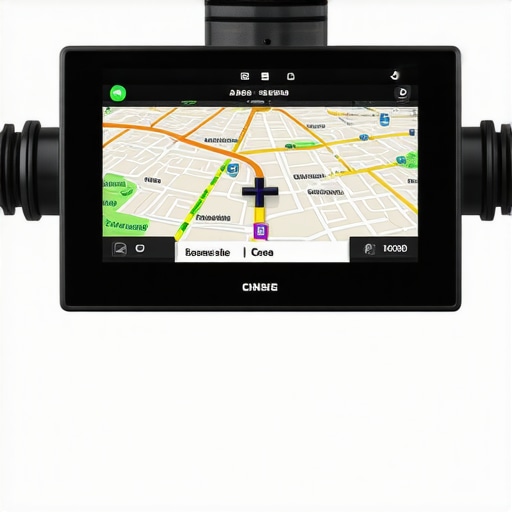 Another nuance is the ‘AI-only’ scheduling myth. Everyone wants an app for everything, but why we prioritize human dispatchers over pure AI scheduling is simple: humans understand that a local parade or a sudden rainstorm isn’t just a ‘delay’—it’s a reason to re-route entirely. If you want to master punctuality, you need to know the 12-minute rule for stress-free airport pickups. It’s not about being 12 minutes early; it’s about the buffer required to navigate ‘the curb-to-door’ delay that most transit delays happen between the curb and the door. Finally, let’s talk about the ‘Oops’ factor that even veterans miss: driver fatigue. We often check the car’s exterior, but we forget the human behind the wheel. On long hourly bookings, you must know how to ensure your driver is not fatigued during a late-night trip. A simple trick? Check the maintenance. I call it the windshield wiper test. If the blades are frayed or the fluid is empty, it’s a sign the company is cutting corners on safety protocols. Have you ever fallen into this trap? Let me know in the comments.Maintaining that level of excellence isn’t an accident; it’s a rigorous process of scaling and monitoring that happens behind the scenes. When I’m managing high-stakes logistics, I don’t just hope for the best; I use a specific tech stack designed for maximize your safety and satisfaction with our precise reservation timing. I personally swear by telematics systems that provide more than just a dot on a map. I need to see the vehicle’s health in real-time. For instance, I look for systems where real-time fuel monitoring prevents unexpected roadside stops. There is nothing more amateur than a luxury car pulling over for gas with a CEO in the back. According to technical documentation from Geotab, a leader in IoT and connected transportation, proactive engine diagnostics can reduce mechanical-related downtime by nearly 20%. That is the difference between a service that works and a service that fails when you need it most.
Keep Your Travel Standards from Sliding
Over the long term, results are only as good as the maintenance schedule. I’ve learned that on-time every time strategies for safe and reliable hourly bookings must include a physical audit of the fleet. It’s not just about the engine; it’s about the paperwork. You should regularly know the proper way to audit your drivers commercial insurance. Most people assume if the car is shiny, the insurance is valid. I’ve seen expired policies on $100,000 vehicles more times than I’d like to admit. 
The Tech Stack That Guarantees I’m Never Late
My personal toolkit includes an encrypted payment processor and a secondary GPS layer that bypasses consumer-grade traffic algorithms. This is how I verify your payment is processed via a secure gateway without ever exposing your financial data to the driver’s local device. Looking ahead, I predict we are moving toward biometric alertness monitoring for drivers. We are already seeing the integration of AI-driven eye-tracking software that alerts dispatchers if a driver shows signs of micro-sleep. This isn’t science fiction; it’s the next logical step in why safety and timeliness matter in hourly reservation services.
How do I maintain these high safety standards over time?
The secret is a quarterly review of your preferred providers. Don’t just settle for the first company that arrived on time once. Review their safety certifications every three months and ensure their digital security protocols haven’t lapsed. If you want to take your personal security to the next level today, I encourage you to perform a ‘data audit’ on your last booking: ask your provider exactly how long they store your GPS history and who has access to it. Taking this one specific step will immediately separate the professionals from the amateurs.
The Three Brutal Truths About On-Time Travel I Learned the Hard Way
After years in the industry, I’ve realized that a secure reservation isn’t just a transaction; it’s a pact. First, understand that on-time is a variable you can control by knowing the specific drop-off point at the terminal that saves 10 minutes. Second, never assume a shiny car equals a safe company; I always recommend the proper way to audit your drivers commercial insurance before you even step inside. Finally, remember that your personal data is a currency—if you give it away for a cheaper fare, you’re the one paying the hidden interest through spam and security risks.
The Checklist I Use to Keep My Data Off the Dark Web
When I travel, I don’t just hope for privacy—I demand it through the tools I use. I always look for the one security clause to look for in your corporate transport contract which explicitly forbids the sharing of passenger contact logs. I also suggest keeping a close eye on safety precision, the key to reliable hourly reservations for peace of mind, by verifying that the booking software masks your number automatically. These aren’t just extras; they are the foundational tools of a professional traveler’s toolkit.
Make Your Next Trip the Standard for Safety
You deserve a transit experience where you aren’t looking over your shoulder after you’ve been dropped off. By applying these protocols, you shift from being a passive passenger to an empowered traveler who understands why safety and timeliness matter in hourly reservation services. The road should be about the destination, not the digital breadcrumbs you leave behind. Go ahead, book that next trip with the confidence that your identity is as secure as your seatbelt.
Have you ever noticed a driver keeping your number after a trip was over? Let me know your experience in the comments below!