I’ll never forget the sound of the sudden silence. One minute, I was reclining in the back of a sleek sedan, rehearsing my pitch and feeling like I’d finally mastered the art of the hourly reservation. The next, the hum of the engine vanished, replaced by the rhythmic clicking of hazard lights and the sight of my driver pulling onto a dusty shoulder. My heart didn’t just sink; it plummeted. I had forty minutes to get to the venue, and I was staring at a dead alternator. That afternoon taught me a painful, expensive lesson: assuming “everything will be fine” is the fastest way to fail when your schedule is on the line.
The Day I Realized My Backup Plan Was Non-Existent
We often book these services for the peace of mind, believing that safety and precision are the backbone of reliable hourly reservations. But what happens when the machine fails? In my early days, I made the amateur mistake of not asking about a company’s recovery protocol. I assumed that if the car died, another would just magically appear. It didn’t. I spent an hour on the side of the road, sweating through my suit, because I hadn’t verified how they handle mid-trip emergencies. Today, I want to make sure you never find yourself in that position. We’re going to walk through the exact steps to take the moment the engine sputters, ensuring that your on-time performance remains the only metric that matters even when the hardware fails.
Is This Level of Preparation Overkill for a Short Trip?
You might be thinking, “It’s a twenty-minute ride, what are the odds?” Surprisingly, they are higher than you think. According to data from AAA, roadside assistance calls remain a constant reality of travel, and even professional fleets aren’t immune to sudden mechanical gremlins. If you are relying on strategies for safe and reliable hourly bookings, you have to account for the unexpected. Have you ever been stranded mid-reservation? I’d love to hear how you handled it in the comments below.
Why You Need a Direct Line to Dispatch
One thing I’ve learned is that why you need a direct line to your hourly driver—and their office—cannot be overstated. When the car stops, the clock doesn’t. You need to know immediately if a replacement vehicle is being dispatched or if you need to pivot to another solution. In the following sections, we will dive into the specific communication habits and Plan B triggers that keep your day moving, even when the wheels aren’t.
How to Pivot When the Engine Quits
The moment you feel that first stutter or hear the dreaded silence of a stalled motor, your priority shifts from relaxation to logistics. You aren’t just a passenger anymore; you’re the coordinator of your own recovery. I remember a freezing Tuesday in Chicago where my driver’s car simply refused to turn back over after a quick coffee stop. Instead of waiting for him to tinker under the hood, I immediately pulled up my confirmation email. I knew that on-time arrival depends on mastering the art of reservation and safety every hour, not just when things are going well. I called the dispatch office before the driver even had the tools out. That fifteen-minute lead time was the exact reason I made my board meeting while the original car was still being winched onto a flatbed. Speed of communication is the only thing that saves a schedule once the hardware fails.
Get the Dispatcher on the Phone Immediately
Don’t rely solely on the driver to relay information to the home office. Drivers are often stressed and naturally inclined to try and fix the mechanical issue themselves, which can lead to optimistic—and often wrong—ETAs for your arrival. By calling the office directly, you can verify if there is another vehicle in the vicinity. This is why maximizing your safety and satisfaction with precise reservation timing requires knowing the company’s fleet density in your area. Ask the dispatcher for a hard arrival time for a replacement. If they cannot have a new car to you in under twenty minutes, you need to know immediately so you can trigger your own backup plan without wasting another second.

Know When to Bail and Order a Backup
There is a dangerous psychological trap called the sunk cost fallacy, where we wait for a failing service because we’ve already paid the deposit. In high-stakes travel, your time is worth exponentially more than the reservation fee. If the replacement car is too far out, use a secondary service or hail a local cab. You can sort out the refunds and credits later, but you can’t get back a missed keynote or a closed gate at the airport. I always suggest that hourly booking is the best move for multiple site visits precisely because it usually includes a dedicated human dispatcher who can reroute resources faster than an automated app. But if the logistics aren’t lining up, you must be the one to make the call to pivot.
Run a Fast Quality Check on Your Replacement
When the rescue vehicle finally pulls up, the temptation is to throw your bags in and scream at the driver to floor it. Stop for ten seconds. A rushed replacement is sometimes a vehicle that wasn’t properly vetted or was pulled from a lower-tier partner just to fill a gap in the schedule. I’ve learned that professional punctuality requires a pre-trip inspection, and even in a crisis, you should follow the routine for inspecting your ride before boarding. Quickly check the tire condition and ensure the driver’s ID matches the company profile. Arriving late is frustrating, but compromising your safety to make up for lost time is a mistake you can’t undo. Ensure the driver is prepared and that drivers never use unverified navigation apps which could lead you into traffic jams that further delay your arrival.
Most travelers assume that if they can see a vehicle moving on a digital map, they are in safe hands. This is one of the most dangerous myths in the high-stakes transit industry. A GPS coordinate transmission does not tell you if the brakes were serviced last week or if the driver has been behind the wheel for fourteen hours straight. In my years of booking specialized transit, I’ve learned that the difference between live tracking and estimated progress is exactly where most professional schedules fall apart. Real safety isn’t a digital icon; it’s a physical reality that requires a deeper look into a company’s actual operations.
Stop Trusting the Little Moving Dot on Your Map
We are conditioned to believe the ‘estimated time of arrival’ provided by algorithms, but the reality of why most arrival times are simply guesses comes down to the lack of human nuance in automated systems. An app doesn’t know about the local parade, the sudden double-parking on a narrow street, or the driver’s immediate need for a rest break. This is why I always insist on why real-time vehicle data is more accurate than estimated times when it is paired with a human dispatcher who can interpret the context of the movement. Have you ever fallen into the trap of believing a ‘5-minute’ ETA that turned into twenty? Let me know in the comments.
How Can You Spot a Fatigued Driver Before Pulling Out of the Driveway?
One of the most overlooked risks in hourly reservations is driver exhaustion. According to data from the National Safety Council, driving while drowsy can be just as dangerous as driving under the influence, significantly slowing reaction times. When your replacement car arrives, look for the subtle signs. Is the driver leaning heavily on the center console? Are their responses delayed or their eyes bloodshot? Knowing how to ensure your driver is not fatigued during a late night trip is a skill every executive traveler needs. If something feels off, it probably is. 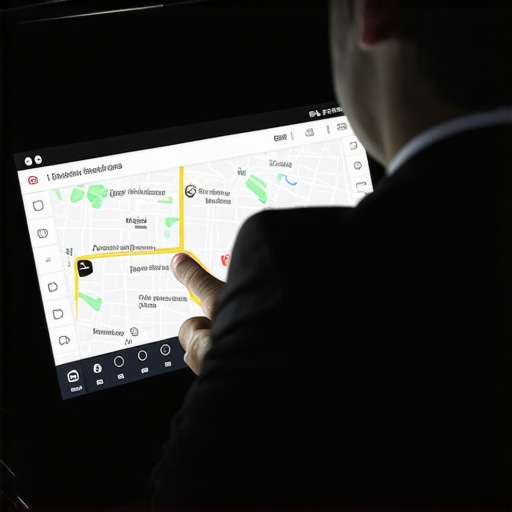
The Real Cost of the Lowest Bidder
The biggest mistake I see people make is equating ‘luxury vehicle’ with ‘professional service.’ You can put a suit on a driver and wash a sedan, but that doesn’t mean the insurance is valid or the maintenance is up to date. I’ve found that the real cost of choosing the cheapest ride option usually manifests as a lack of mechanical redundancy. If the price is too good to be true, the provider is likely cutting corners on things you can’t see—like commercial-grade insurance or comprehensive background checks.
Simple Habits That Reveal a Pro from a Pretender
You don’t need to be a mechanic to vet your ride in under sixty seconds. I always use what I call the ‘surface-level audit.’ For instance, the floor mat check is a simple way to judge driver professionalism; if the interior is neglected, the engine likely is too. Furthermore, never be afraid to ask for paperwork. Taking ten seconds for how to verify your drivers commercial registration manually can save you from a legal and logistical nightmare. High-level safety isn’t about being paranoid; it’s about being prepared for the one percent of the time when things go wrong.
Build a Redundant Travel Rig That Never Fails
After years of being burned by glitches and ‘service outages,’ I’ve moved away from total reliance on generic, automated platforms. My personal travel ‘rig’ involves a redundant communication layer that I recommend to everyone booking high-stakes transit. I insist that my providers use an encrypted, direct-message thread for every trip. This allows for instant photo verification of the pickup spot and ensures that sensitive itineraries aren’t floating around in a vulnerable, generic database. It’s a key part of how to store your trip data securely away from third-party apps. I also keep a ‘Shadow Schedule’—a secondary, earlier timeline that I share only with my personal dispatcher. This ensures that reserving your spot how to guarantee safety and punctuality 24-7 isn’t just a marketing slogan, but a lived reality based on real-time human oversight.
How do I maintain a high-stakes travel schedule over time?
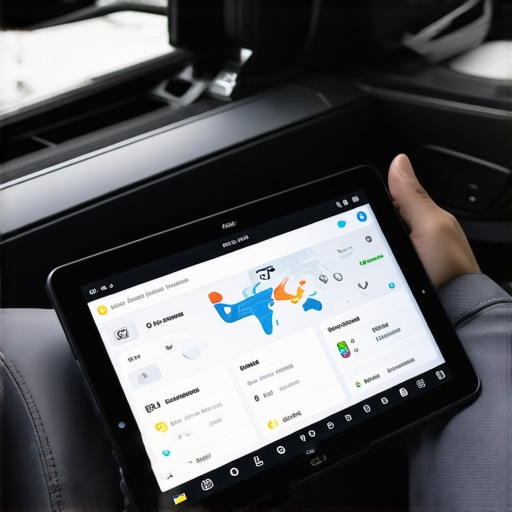
The secret to long-term results is a monthly review process. I spend twenty minutes at the end of every month reviewing my trip logs and comparing the estimated time of arrival with the actual wheels-up time. This habit is exactly how to audit your monthly travel spend without stress while also identifying which providers are slipping on their maintenance or punctuality. If a service provider falls below a 98% on-time rate, they are off the list. Maintaining this standard requires tools that go beyond basic maps; I use specialized flight and traffic telemetry to verify what my driver is seeing on their dashboard.
The Tools That Make a Logistics Pro
I personally recommend using tail-number tracking rather than just flight numbers. Apps like FlightAware allow you to see where the physical aircraft is located before the airline even announces a delay. When you pair this data with a professional car service, you create a fail-safe loop. This is precisely why a human dispatcher outperforms an AI every time—they can interpret that tail-number delay and proactively adjust your pickup window before you’ve even reached cruising altitude. Furthermore, using why real-time links save families peace of mind ensures that my emergency contacts know my location without me having to send a single text while I’m focused on work.
Stop Storing Itineraries in Unsafe Clouds
We often forget that our travel plans are a roadmap for our personal security. As noted by the experts at the Global Business Travel Association (GBTA), ‘Duty of Care’ is no longer just about insurance; it’s about the proactive management of the traveler’s entire environmental context. This includes digital security. Using why hourly booking is the secret to stress-free event planning allows you to keep a single, consistent point of contact rather than juggling multiple different drivers who all have access to your personal data. In the next five years, I expect the industry to shift toward predictive telematics. We won’t just see where the car is; we’ll see a ‘health score’ for the vehicle in real-time, preventing the very mechanical breakdowns that can ruin a career-defining day. Try this today: Ask your next provider for their specific driver-to-dispatch backup protocol. If they don’t have a clear, documented answer, you’ve found a weak link in your schedule.
Hard Truths from a Decade of High-Stakes Transit
One of the most important things I realized late in my career was that professional drivers are human partners, not just automated assets. If you treat your dispatcher like a collaborator rather than a vendor, they will move mountains for you when a car breaks down. This relationship-first approach is the true secret to reserving your spot how to guarantee safety and punctuality 24-7. Another lightbulb moment? Always have a physical backup of your itinerary. Digital apps can fail, batteries die, and cell towers go dark. Keeping a hard copy of your confirmation ensures you aren’t reliant on a screen for ensuring safety first your guide to on-time reservations at any hour.
#IMAGE_PLACEHOLDER_E#
The Gear That Keeps My Schedule from Collapsing
I never leave for a multi-city tour without my toolkit of essential hourly reservation tips for timely service. First, FlightAware is non-negotiable for tail-number tracking to see delays before they are even announced. Second, I use encrypted messaging apps to communicate with my dispatch team to keep my precise location private from generic cloud storage. Finally, I rely on reservation security measures how to book safely and arrive on time by vetting companies that use physically redundant servers for their dispatch logs.
Take Back Control of Your Time
Travel shouldn’t be a source of anxiety; it should be the quiet, productive space between your big wins. By applying these proactive strategies, you’re not just booking a ride—you’re building a system that respects your professional value. When you prioritize ensuring safety and punctuality, you free yourself to focus on the work that actually matters. What’s the closest call you’ve ever had with a mechanical failure during a professional booking, and how did you handle it? Let me know in the comments below!