
I remember standing on my porch at 4:15 AM, staring at a frozen blue dot on my phone screen while the minutes ticked toward a door-closing time at the airport. I had booked a ride, but I had not booked a buffer. That morning cost me a $400 rebooking fee and a massive hit to my professional pride. It was a visceral lesson in the difference between a reservation and a guaranteed arrival. Today, I am going to show you the exact math I use now to ensure I am never the one sprinting through a terminal or sweating through a dress shirt because of a late pickup. This is not about being paranoid; it is about mastering the art of the hourly reservation to protect your time and your safety.
Why Your Apps ETA is Usually a Bold Faced Lie
I used to be a slave to the estimated arrival time. I made the classic mistake of thinking that if the app said ten minutes, I had ten minutes. In reality, that number does not account for the driver finding your specific gate or the sudden lane closure three blocks away. This is why the only way to ensure your 4 am ride actually shows up is to bake a specific buffer into the booking itself. I learned the hard way that on-time every time strategies require looking past the digital clock and looking at real-world friction. According to a study by the Texas A&M Transportation Institute, the average commuter loses dozens of hours a year to unpredictable delays, proves that ‘average’ travel times are a myth when you have a hard deadline.
Is an Extra 20 Minutes Really Worth the Boredom
You might think sitting at your destination early is a waste of life. I get it. But let me ask you this: have you ever watched your driver circle the wrong block while your heart rate hit 120 beats per minute? That stress is a high price to pay for 15 minutes of scrolling on your phone at home. When you use hourly reservation services, you are paying for the peace of mind that comes with a driver who is already in position. I once missed a keynote speech because I refused to book a 15-minute buffer, thinking I was being ‘efficient.’ Now, I prioritize safety and precision over the ego of a tight schedule. Have you ever had a perfectly planned day fall apart because of a five-minute delay? I would love to hear your story in the comments so we can all learn from those close calls.
The 15 Minute Rule That Saves Your Sanity
Booking a ride is like cooking a steak; if you pull it off the heat exactly when it hits your target temperature, the carryover heat will overcook it. In travel, the ‘heat’ is traffic, and your target is the terminal gate. You must pull the trigger early. To maintain safety and precision, I now calculate a mandatory 15-minute ‘dead zone’ for every booking. This is not for the drive itself, but for the transition. I remember a rainy Tuesday in Chicago where my driver was technically ‘on the block,’ but a construction crew had turned the one-way street into a maze. Because I had used the exact buffer you need for friday afternoon traffic, I spent those twelve minutes of him circling the block calmly checking my emails instead of screaming into a support chat.
Stop Trusting the Estimated Arrival Time
The math inside most apps is designed for optimism, not reality. They see an open road; they don’t see the double-parked delivery truck or the school bus stop. When you transition to the logic behind choosing a professional chauffeur over on-demand apps, you are moving away from an algorithm that guesses and toward a human who knows. Real punctuality requires a buffer that accounts for the ‘last mile’ friction. If you are booking for a high-stakes meeting, you need the buffer you need for friday afternoon transit schedules even if it is a Tuesday, because the city never truly follows a script. 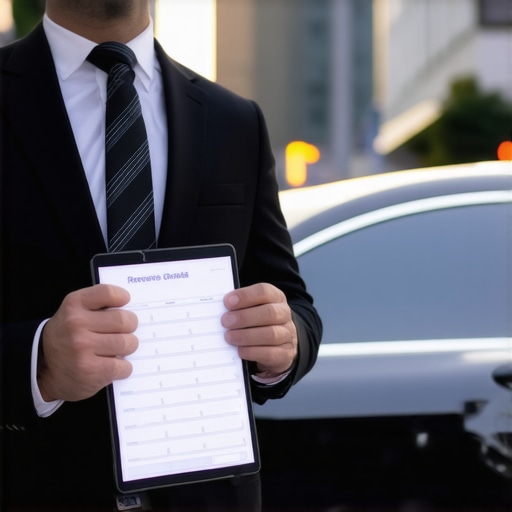
Spot the Credentials Before You Open the Door
Safety is not a feeling; it is a verification process. Before I even reach for the handle, I perform what I call the ‘visual audit.’ I have seen people jump into random black cars just because the hazard lights were on. Don’t be that person. You need to know how to read a drivers commercial badge for authentic credentials before you settle into the seat. In many cities, a genuine chauffeur will have a specific permit visible in the window or on their person. This is your first line of defense against ‘ghost’ drivers.
Perform the Three Point Physical Check
Once the vehicle stops, your focus shifts to the hardware. I always advocate for the 3 point door handle check every passenger must perform which includes verifying the child locks are off and the handle is functional from the inside. It sounds clinical, but it ensures you are a passenger, not a prisoner. If a vehicle looks neglected on the outside, the mechanics are likely neglected too. Reliability is a holistic trait; a driver who keeps a spotless cabin is the same driver who maintains their brake pads and follows on-time every time strategies.
Why Local Shortcuts Still Beat the Algorithm
We have become overly reliant on blue lines on a screen. However, why real-time tracking apps need constant manual overrides becomes obvious the moment a sudden accident happens. A professional driver with ‘the knowledge’ knows that when the main artery is clogged, the third side street after the bridge is the only way out. This is where why on-time performance depends on local knowledge over gps becomes your greatest asset. I’ve sat in the back of cars where the GPS was screaming to turn left into a literal parade, while my driver calmly navigated a back alley he’d used for twenty years. That is the difference between a ride and a reservation.
The Punctuality Trap Most Travelers Fall Into
Most people assume that if they book a ride for 8:00 AM, the driver should pull up at exactly 8:00 AM. In the world of high-stakes travel, that is a dangerous misconception. If your driver is not there ten minutes early, they are effectively late. This is why most on-time drop-offs start with a 10-minute early arrival. When you aim for the exact minute, you leave zero room for the driver to handle ‘the luggage shuffle’ or for you to perform a final sweep of your house for your passport. I have seen too many travelers lose their composure because they treated their pickup time as a starting gun rather than a window of opportunity. To truly maximize your safety and satisfaction with our precise reservation timing, you must treat that reservation as the latest possible moment the wheels should be turning, not the earliest.
Why does your real-time tracking link sometimes lag by 30 seconds?
It is a common frustration: you look at your screen and the car seems stuck at a red light two blocks away, but then it suddenly appears at your curb. This happens because why your real-time tracking link might have a 30-second lag is often due to the way GPS pings are batched to save battery on driver devices. Relying solely on that little blue dot can give you a false sense of security or unnecessary panic. This is where why real-time tracking is your best defense against missed meetings only if you use it as a general guide rather than an absolute truth. A study by the Mineta Transportation Institute found that even a 5% increase in urban traffic density can lead to a 25% increase in travel time unpredictability. This mathematical volatility is exactly why static, pre-planned buffers are superior to the ‘dynamic’ math used by standard ride-hailing apps. 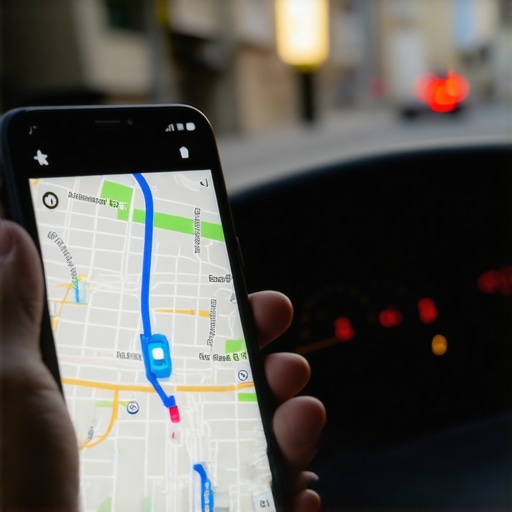
The Dangerous Myth of the Dynamic ETA
We have been conditioned to believe that an algorithm can predict the future. However, why your estimated arrival time is not a guarantee of service becomes painfully clear when a local event or unmapped roadwork occurs. The ‘oops’ factor usually hits when a passenger assumes the app’s optimism is reality. I once worked with an executive who missed a private jet because he trusted a ‘6-minute ETA’ that didn’t account for a sudden protest downtown. Now, he uses ensuring safety first your guide to on-time reservations at any hour to build a hard wall between his schedule and the city’s chaos. Advanced travelers know that a professional reservation is a contract for a result, not just a hope for a car. Have you ever fallen into this trap where a ‘short’ ETA turned into a long-distance headache? Let me know in the comments so we can dissect what went wrong.
The Digital Toolkit That Keeps Me on Schedule
It is one thing to get lucky with a single ride; it is quite another to build a system that works every single time without fail. My secret weapon isn’t just a fancy app—it is a rigorous audit trail. Every quarter, I sit down and look back at my trip logs to find the friction points. I look for patterns: did a specific route fail twice during rain? Was a particular dispatch service consistently hitting that 30-second lag? I personally use a combination of FlightAware for my inbound arrivals and a dedicated tracking link shared with my emergency contact. This is how I ensure that on-time arrival mastering the art of reservation and safety every hour becomes a repeatable habit rather than a roll of the dice.
How do I maintain a zero-fail punctuality record over years of travel?
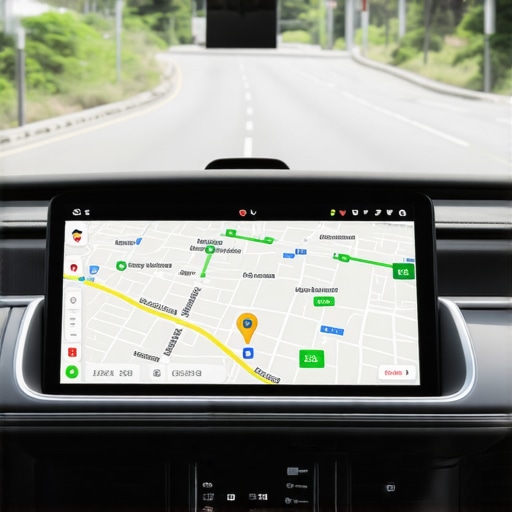
Consistency comes from vetting the underlying infrastructure, not just the individual driver. I always check if the service uses encrypted scheduling platforms rather than insecure spreadsheets. To keep things running smoothly, you should periodically how to audit your drivers route history for accuracy and safety. It tells you immediately if they are taking unnecessary risks or sticking to the pre-vetted plan. I also make it a habit to how to vet your drivers commercial insurance without the friction because even the most talented driver is a massive liability without the correct paper trail. I suspect the future of this industry lies in ‘Predictive Punctuality’—AI models that do not just look at traffic, but at the probability of a driver’s fatigue based on their previous shift length. Until that becomes standard, I rely on technical hardware standards like the Wide Area Augmentation System (WAAS). According to the Federal Aviation Administration (FAA), WAAS provides GPS signal corrections that allow for sub-meter positioning accuracy, which is essential for picking up passengers in dense urban canyons where standard GPS might bounce off skyscrapers.
I also swear by a quick ‘Equipment Audit’ the moment the car arrives. Before I get comfortable or open my laptop, I perform the 4 point mirror check every executive traveler should perform. It is a incredibly fast way to see if the driver is actually paying attention to their surroundings or if they are relying too heavily on sensors. If you are managing complex logistics for others, such as a large corporate retreat, remember that why hourly rates provide better value for wedding day logistics and events because it keeps the driver in a constant ‘ready’ state on-site. If you want to level up your travel game today, I challenge you to try one specific advanced tip: the next time you book, ask the dispatcher what their protocol is if the primary vehicle has a mechanical failure. A true pro will have a ‘hot standby’ or a partner network ready to jump in. Mastering these stay secure and punctual the essential hourly reservation tips for timely service is what separates the stressed-out commuter from the professional traveler.
What the Pro Drivers Know About Your 10-Minute Window
Over a decade of high-stakes travel, I have realized that the ’10-minute early’ rule isn’t just a suggestion—it is a professional baseline. When you finally understand that on-time arrival mastering the art of reservation and safety every hour is about protecting your mental focus, everything changes. First, recognize that the first five minutes of any ride are the highest risk for navigation errors; being early gives your driver time to recalibrate without the pressure of a ticking clock. Second, stop equating the lowest price with the best value. Often, the real cost of choosing the cheapest reservation available is a driver who is overbooked, rushing from another job, and has zero incentive to wait for you if things get complicated. Finally, remember that punctuality is a two-way street; your readiness encourages a driver’s precision.
The Digital Toolkit That Keeps My Calendar Calibrated
I don’t leave my schedule to chance, and neither should you. My personal ‘Punctuality Stack’ includes FlightAware for monitoring incoming aircraft tail numbers before the airline even updates their app, giving me a head start on timing my airport exit. I also rely on Google Maps Historical Data to see what traffic looked like on this specific Tuesday last year, rather than just trusting today’s live feed. Most importantly, I prioritize reserving your spot how to guarantee safety and punctuality 24/7 to ensure I have a human dispatcher who can override an algorithm if a bridge closes unexpectedly. These tools aren’t just for ‘techies’—they are for anyone who values their time enough to guard it fiercely.
#IMAGE_PLACEHOLDER_E#
Your Schedule Deserves a Hard Wall Against Chaos
Mastering your travel logistics is about more than just getting from point A to point B; it is about reclaiming the mental space you usually lose to travel anxiety. By following ensuring safety and punctuality top tips for on-time reservations at any hour, you shift from being a reactive passenger to a proactive traveler who controls the narrative of their day. Don’t let a poorly timed pickup ruin your next big opportunity or flight. You now have the math, the visual audit rules, and the professional mindset to ensure every journey begins with a calm breath rather than a frantic sprint. Have you ever missed a major event because of a ‘guaranteed’ ride that never showed up? I want to hear your stories in the comments below so we can keep building this community of savvy, secure travelers.