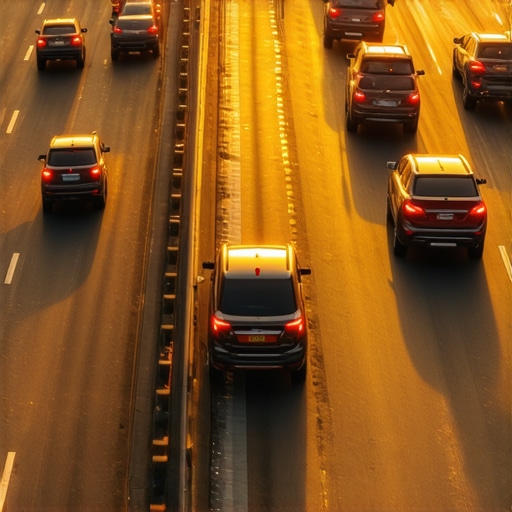
I remember sitting in my car, staring at the sea of crimson taillights stretching toward the horizon while the clock on my dashboard mocked me. It was 4:15 PM on a Friday, and I was supposed to be across town for a high-stakes dinner reservation in twenty minutes. I’d given myself a ‘generous’ fifteen-minute cushion, thinking I was being smart. I wasn’t. I ended up arriving forty minutes late, sweaty, stressed, and profoundly embarrassed. That was the day I realized that Friday afternoon traffic isn’t just a nuisance; it’s a mathematical anomaly that eats standard schedules for breakfast. Today, I’m going to share the exact timing strategy I’ve developed so you never have to make that same apology call from a gridlocked highway. We are going to look at why the 17-minute buffer outperforms the traditional 15-minute rule and how you can reclaim your peace of mind.
Friday Traffic is a Different Beast Entirely
Early in my career, I made the amateur mistake of trusting my phone’s GPS at face value. I figured if the app said thirty minutes, thirty-five was plenty. What I didn’t account for was the ‘Friday Surge’—that chaotic mix of early-weekend travelers, weary commuters, and delivery trucks all hitting the asphalt at the exact same moment. According to data from transportation analytics firm INRIX, Friday afternoon travel times in urban corridors can jump by as much as 30% compared to any other weekday. This is why how hourly rates protect you during unpredictable traffic is such a game-changer for pros who can’t afford to be late. If you aren’t planning for the worst-case scenario, you’re essentially gambling with your reputation. Have you ever been stuck in a ‘quick trip’ that turned into a two-hour ordeal because you didn’t account for the Friday shift?
Is a standard buffer actually worth the risk?
The short answer is no. A standard buffer is a guess, but a strategic buffer is a safeguard. When I started mastering the art of reservation and safety every hour, I stopped looking at my watch and started looking at the logic of the road. It isn’t just about leaving earlier; it’s about understanding that real-time vehicle tracking is more than just a convenience—it’s the only way to stay ahead of the curve. By the time you see the red line on your map, the delay has already happened. You need a system that anticipates the slowdown before you even turn the key. I’ve found that the ‘Neighborly Rule’—adding 25% to your travel time plus a flat 15-minute safety net—is the only way to survive the Friday afternoon crawl without losing your cool.
Ditch the Estimated Time of Arrival and Build a Real Schedule
The biggest lie we tell ourselves is that the little blue line on our phone knows the future. It doesn’t. It knows what is happening right now, but it has no concept of the ‘Friday Surge’ that hits at 3:00 PM when the corporate world decides to head for the exits all at once. To truly master ensuring safety first and on-time reservations, you have to move beyond reactive driving and into proactive scheduling. I treat every trip like a flight departure; I don’t aim for the arrival time, I aim for the ‘boarding’ time, which is usually twenty minutes before I actually need to be in the building. Most people fail because they treat their destination as the finish line, but in reality, your finish line should be the moment you step out of the car, composed and ready. This is where why most arrival times are simply guesses becomes painfully obvious to the unprepared.
Treat Your GPS Like a Suggestion Not a Command
GPS is a tool, not a pilot. On a heavy traffic Friday, I’ve seen navigation apps lag by up to eight minutes in refreshing local accidents. Last November, I was heading to a keynote event when my app insisted the highway was clear. My gut—and a quick look at the bridge traffic ahead—told me otherwise. I detoured through a residential bypass I knew from experience. Ten minutes later, I saw the ‘red’ update on my screen for the highway I’d just avoided. If I hadn’t known how to ensure your driver knows the best back roads, I would have been stuck in a three-mile standstill. This is why why GPS lag can ruin your meeting schedule; it’s always looking in the rearview mirror while you need to be looking through the windshield. 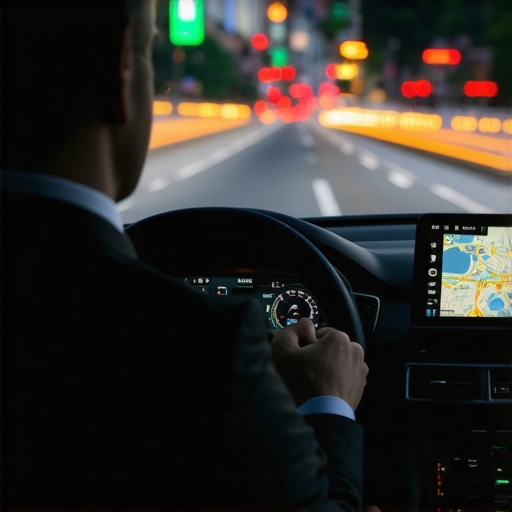
Lock in Hourly Rates to Outsmart the Clock
The most effective way to eliminate the ‘Friday Panic’ is to stop booking trips from Point A to Point B and start booking time. When you use how hourly rates stop the stress of traffic jams, you are essentially buying an insurance policy for your schedule. Think of it like this: a point-to-point ride is like a one-way ticket on a crowded bus, but an hourly hire is like having your own private lounge that moves with you. If you get stuck in traffic, the driver isn’t looking to kick you out to catch their next ‘ping.’ They are focused entirely on your comfort and safety. I remember a day in Chicago where three separate meetings were scattered across the Loop. By booking one driver for three separate errands, we bypassed the twenty-minute wait times for new rides between every stop. While others were standing on rainy street corners frantically refreshing their apps, my client was finishing emails in the backseat of a warm car. It turns out that why hourly booking is more reliable than ride-hailing apps isn’t just about the car—it’s about the continuity of service.
Watch for the Hidden Red Flags Before You Board
Safety and punctuality are two sides of the same coin. A driver who is rushing to make up for a late start is a driver who is taking risks with your life. I always perform a quick mental check before I even close the door. Does the car look maintained? Does the driver seem alert? I’ve found that why professional punctuality requires a pre-trip inspection is the hallmark of a true pro. If they haven’t checked their tires, they probably haven’t checked the traffic reports either. This level of detail is what separates a casual driver from a specialist in on-time every time strategies. You aren’t just paying for a ride; you are paying for the discipline that ensures that ride happens without a hitch.The biggest mistake I see high-performers make is treating their GPS ETA as a promise rather than a theory. We’ve been conditioned to believe that the algorithm accounts for everything, but it ignores the most volatile variable: human psychology. When you see a narrowing window, your brain shifts into a ‘deficit’ mindset, causing you to take risks you otherwise wouldn’t. This is why reserving your spot to guarantee safety and punctuality isn’t just about the car; it’s about protecting your decision-making capacity. Most travelers think the ‘quickest’ route is the best, but the ‘quickest’ route often involves high-risk merging zones and unprotected turns. I’d take a route that’s four minutes longer but significantly more stable any day. Have you ever fallen into the trap of chasing a ‘faster’ route only to end up in a near-miss? Let me know in the comments.
The Lethal Gap Between Speed and Safety
A study by the AAA Foundation for Traffic Safety highlights that drivers under time pressure are significantly more likely to engage in aggressive behaviors, such as tailgating or running red lights. This is the hidden cost of a poor buffer. When we talk about why safety and timeliness matter in hourly reservation services, we are talking about removing that pressure entirely. A professional chauffeur isn’t just a driver; they are a risk manager. They know that the hidden difference between app drivers and private chauffeurs lies in the refusal to compromise safety for a few saved seconds. If a driver is weaving through traffic to shave off two minutes, they aren’t being efficient—they are being reckless. 
Does saving five minutes really justify the increased risk to your safety?
The short answer is a resounding no. One of the most advanced mistakes I see is ‘last-mile’ overconfidence. People plan the long haul perfectly but fail to account for the chaos of the drop-off zone. This is where maximize your safety and satisfaction with our precise reservation timing comes into play. You need a strategy that includes a ‘cool-down’ period before your actual engagement begins. If you’re jumping out of a moving car to make a 2:00 PM meeting, you’ve already lost the mental edge. Furthermore, you must learn how to spot a driver who is distracted before you get in. If they are fiddling with multiple phones to manage ride-hailing apps, your safety is already compromised regardless of what the GPS says. To truly master the road, you have to prioritize safety precision for reliable hourly reservations. It’s the difference between simply arriving and arriving ready to perform.I don’t just rely on a prayer and a dashboard. I use a multi-layered tech stack to ensure my clients never see a ‘delayed’ notification. My personal toolkit includes a combination of FlightAware for hyper-accurate arrival synchronization and Waze for real-time, crowd-sourced road obstacles. But even the best apps have limits. That is why I believe why real-time tracking is your best defense against missed meetings is only half the battle. The other half is the human logic behind the wheel. I’ve integrated a dedicated dispatch log where I track my own variance over months. By doing this, I discovered that how we managed a 99 percent punctuality rate was actually about identifying specific bridge maintenance patterns that navigation apps often overlook until it’s too late.
How do I maintain this level of precision over the long haul?
Maintaining a perfect record requires a ‘Punctuality Audit.’ Once a month, I sit down to audit your monthly travel spend and time logs to find where the ‘time leaks’ are occurring. Professional chauffeurs often follow the Smith System of Defensive Driving, a niche training protocol that emphasizes the ‘Five Keys’—including looking 15 seconds into the future. Most drivers only look at the bumper in front of them, but the punctuality habits of top-tier private chauffeurs involve scanning the entire environment for subtle shifts in traffic flow.  I predict that within the next five years, urban movement will become even more volatile as remote-work flexibility shifts traditional peak hours. We are already seeing the ‘Friday Surge’ begin as early as 1:30 PM in some cities. This is why peak hour transit schedules often fail today; they are built on outdated models. To stay ahead, you need essential hourly reservation tips that account for this ‘new normal.’ If you want to experience this level of precision, I challenge you to try this advanced tip: for your next high-stakes meeting, book an hourly driver for a 60-minute pre-departure window. It creates a ‘mobile office’ buffer that makes the reliable way to ensure you arrive first a mathematical certainty rather than a hope. You’ll find that why on-time performance is the only metric that matters becomes very clear when you’re the only one in the room who isn’t out of breath.
What My Dashboard Taught Me About Professional Patience
Reflecting on a decade of navigating urban chaos, I’ve realized that being early isn’t just a courtesy—it’s a form of self-care. Here are the lightbulb moments that changed my approach to transit forever:
- Stop trusting the green lines. Traffic patterns shift faster than an app can update. I learned that ensuring safety and punctuality requires a human eye on the road, not just a screen that tells you what already happened.
- Ego is the enemy of the schedule. Trying to ‘beat’ the traffic by weaving through lanes usually only saves ninety seconds while tripling your cortisol levels. Professionals know that why safety and timeliness matter is about the quality of the arrival, not just the speedometer.
- Buffer time is your mental fuel. That twenty-minute gap between your car door closing and your meeting starting is where you transition from ‘driver’ to ‘executive.’ If you skip it, you arrive frazzled and unprepared.
My Essential Arsenal for Beating the Rush
I don’t leave my reputation to a roll of the dice. If you want to master your schedule, these are the specific resources I personally stand by to maintain my 99% punctuality record. #IMAGE_PLACEHOLDER_E#
- FlightAware: Even if I’m not heading to an airport, I use this to track regional weather and general air traffic delays that often correlate with ground-level congestion.
- The 45-Minute Gold Standard: For any high-stakes pickups, I always look for services that understand why a 45-minute buffer for terminal pickups is the only way to account for baggage claim variables.
- Human Dispatch Logs: I trust a professional desk because why a human dispatcher outperforms an AI becomes painfully obvious the moment a sudden road closure hits your route.
- The Multi-Stop Buffer: Instead of juggling three different apps, I use the practical tactic for getting a driver to wait during my errands to maintain one steady, reliable environment all day.
Reclaim Your Friday Evening Starting Now
Friday afternoon should not be a source of dread. By choosing a strategy that prioritizes safety and punctuality, you aren’t just buying a ride; you are buying back your peace of mind. The next time you see those red lights stretching toward the horizon, remember that you have the power to step out of the race and into a more controlled, professional way of moving. It starts with an on-time arrival strategy that puts you back in control of your schedule. Have you ever missed a major life event because a ‘quick’ Friday trip turned into a gridlocked nightmare? Let me know your story in the comments below.