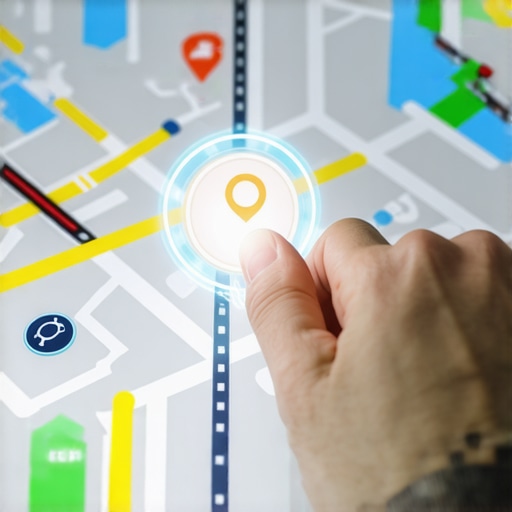
I will never forget the rainy Tuesday I stood on a curb in downtown Chicago, watching a little digital car icon perform a slow, rhythmic dance around my location on the screen. The app chirped that my ride was “arriving now,” but the street was ghost-town empty except for a stray cat and a puddle that was slowly claiming my left shoe. I had a pitch meeting at 9:00 AM, and as the clock ticked to 8:55, I realized I’d been ghosted by an algorithm. That was my wake-up call: tech is a tool, not a savior. Early in my career, I made the mistake of thinking automation equaled reliability, but the fact that most arrival times are simply guesses became a hard-learned lesson when that “perfect” system failed me. Today, I am going to show you exactly why real-time tracking needs a constant manual override to actually guarantee your safety and punctuality.
The Algorithm Does Not Know About That Fresh Pothole
We have all been there, haven’t we? You are staring at a screen, hoping the math adds up, but the reality on the ground is much messier. The truth is that the error in relying on app-based arrival times during construction or sudden accidents is a gap that software just cannot bridge on its own. An AI sees a delay; a human dispatcher sees a blocked fire hydrant, a local parade, or a double-parked delivery truck that is not on any map. This is exactly why manual dispatching still beats AI for real-time accuracy when the stakes are high. Research from the University of South Florida indicates that GPS accuracy in dense urban environments—the “urban canyon” effect—can be off by as much as 10 to 50 meters, leading to those frustrating “ghost” vehicles we see on our screens. Have you ever found yourself waving at a car that does not exist because the app told you it was right in front of you?
Can we actually trust these digital maps?
It is a fair question to ask if we are just paying for a digital placebo. While tracking is better than nothing, the reality of why GPS lag can ruin your meeting schedule is something corporate travelers know all too well. We are not here to ditch the tech, but to augment it with the kind of common sense only a person can provide. I promise that by the end of this, you will see how a simple manual override keeps your on-time reservations from turning into a logistical nightmare. In the next section, we will dive into the specific human habits that fill the gaps where your phone’s processor falls short.
How to Build a Fail-Safe Reservation Strategy
I will never forget a snowy evening in Denver when a simple app glitch almost cost me a trip to a keynote speech. The screen insisted the driver was “right around the corner,” but the GPS dot was frozen over a local park. Instead of waiting for the software to catch up, I called the dispatcher directly. That human-to-human contact revealed the driver was actually two blocks away, blocked by a snowplow. By communicating directly, we coordinated a pickup on the parallel street, saving twenty minutes. This experience taught me that strategies for safe and reliable hourly bookings must involve more than just clicking a button.
Master the Art of the Pre-Trip Audit
Before you even step out the door, you need to perform what I call a “digital handshake.” This involves cross-referencing the information provided in your booking confirmation with the live data on your screen. You should know how we verify every drivers identity and ensure the person behind the wheel matches the credentials provided. Think of it like checking the tail number on a small plane; it is the only way to ensure you are actually getting the service you paid for. Always verify the vehicle details manually because you should never enter a vehicle without a license plate match. This simple habit eliminates the majority of safety risks before the car even starts moving. Take five seconds to look for a commercial license plate or a specific service decal. If something looks off, it usually is.
Why You Should Always Demand a Direct Line to Your Driver
In the world of high-stakes travel, an intermediary app is a barrier, not a bridge. When you are on a tight schedule, you need a direct line of communication. Whether it is a quick text or a phone call, having that connection allows you to explain nuances like “the gate code is 1234” or “the GPS always sends people to the back alley.” This level of interaction is exactly why you need a direct line to your hourly driver. It turns a generic transaction into a coordinated mission. I once avoided a massive highway closure because my driver texted me 30 minutes prior, suggesting we take a scenic backroad that the algorithm had not flagged yet. This is about treating your transport like a partnership rather than a vending machine transaction. When you can speak to the person in control of the vehicle, you can adjust for life’s inevitable curveballs on the fly.
Throw Away the 15-Minute Rule for Better Punctuality
Most people think 15 minutes is a safe cushion. In a modern city, 15 minutes is a rounding error. If you are serious about your schedule, you have to adopt a more aggressive stance. Research into urban mobility suggests that a 20-minute buffer is the new gold standard for business travel. This is not just about being early; it is about absorbing the “un-forecastable” events like a sudden tire change or a VIP motorcade. When you combine this buffer with the fact that real-time tracking is your best defense against missed meetings, you create a safety net that software alone cannot provide. You are essentially buying insurance for your time, ensuring that even if one gear in the machine slips, the whole system does not grind to a halt. It is the difference between arriving frazzled and arriving ready to perform.The most dangerous assumption in modern travel is that a ‘Confirmed’ status on a screen equals a vehicle actually idling in your driveway. I see this mistake daily among high-stakes travelers who trust the digital receipt more than the physical reality of urban logistics. To truly master your schedule, you must understand the difference between live tracking and estimated progress. Most budget-tier apps use a mathematical average of where a car should be based on historical data, creating a digital ghost that vanishes when it hits real-world obstacles. This is exactly why fixed schedules beat real-time AI during rush hour; a human-managed schedule accounts for the ‘now,’ while the AI is stuck in the ‘usually.’
Stop Mistaking a Prediction for Reality
Everyone says that technology has solved the punctuality problem, but in my experience, over-reliance on automated ‘arrival times’ is the quickest way to miss a flight. A study from the MIT Senseable City Lab highlighted that even the most advanced urban navigation algorithms struggle with ‘stochastic volatility’—the unpredictable chaos of city life that turns a three-minute wait into fifteen. If you are not seeing a ‘heartbeat’ update every few seconds, you aren’t looking at live tracking; you are looking at a guess. To counter this, I always recommend looking for the punctuality habits of top-tier private chauffeurs who prioritize early positioning over late-game routing.
How can you tell if your driver is actually commercially insured?
It is an uncomfortable question, but many travelers assume that because they booked through a shiny interface, the safety vetting is ironclad. This is a massive ‘oops’ factor that can have legal and physical consequences. You should always know how to spot a fake commercial insurance document or at least know to ask for the policy’s expiration date. High-end services will have this ready.  Relying on the platform’s general marketing is not a safety strategy. In fact, the real cost of choosing the cheapest ride option often includes a complete lack of secondary verification.
Look Past the Rating for True Expertise
We have been trained to trust a 4.9-star rating, but those numbers are often inflated by ‘politeness bias’ or automated scrubbing. If you want to arrive safely and on time, you need to learn how to verify a private drivers professional rating independently. Look for longevity and specific feedback about their local knowledge. A professional will know the backstreets that aren’t yet clogged on Google Maps, which is a skill an algorithm cannot replicate. Furthermore, beware of the ‘confirmed’ trap; I’ve seen countless travelers realize too late how to spot a forged confirmation screen on a third-party app used by independent contractors. Have you ever fallen into this trap of trusting a digital screen only to be left stranded? Let me know in the comments. By shifting your focus from ‘convenience’ to ‘verification,’ you move from being a passenger to a professional traveler.I don’t leave my schedule to chance, and neither should you. Over the years, I have developed a ‘triple-threat’ toolkit that ensures I am never the person pacing on a sidewalk wondering where my ride is. My first rule is to perform the tracking accuracy test for private hire car services the moment my driver is dispatched. I compare the app’s location with a high-resolution map to see if the ‘car’ is moving at a speed consistent with local traffic. If the icon is jumping or lagging, I know the GPS signal is weak, and I immediately initiate that direct line of communication we discussed earlier. This is not about being difficult; it is about professional maintenance of your own time.
My Daily Kit for Eliminating Travel Stress
To keep things running smoothly, I rely on a combination of digital redundancy and physical verification. I always cross-reference my booking with the FMCSA’s Safety and Fitness Electronic Records (SAFER) system if I am booking a new long-distance service. According to the Federal Motor Carrier Safety Administration’s Regulation 396.3, every motor carrier must systematically inspect and maintain all motor vehicles under its control. When I see a driver who performs a quick walk-around, I know they are following professional standards. This is one of the visual signs of a chauffeur who values professionalism and it gives me immediate peace of mind. I also maintain a dedicated folder for my digital credentials. Knowing how to verify your drivers commercial registration manually is a skill that takes thirty seconds but can save you hours of legal headaches if an accident occurs. I keep a shortcut on my phone to the local transport authority’s database to verify plates in real-time.
How do I maintain this level of precision over time?
Scaling this from a one-off trip to a lifestyle requires a bit of ‘admin Sunday.’ Once a week, I sit down to audit your monthly travel spend without stress, looking for patterns in which routes or drivers were most reliable. This is also when I how to set up a recurring weekly commute that never fails for the upcoming month. By automating the booking but manually auditing the performance, you get the best of both worlds: efficiency and accountability. I predict that as AI becomes more pervasive, the ‘premium’ tier of travel will actually move away from pure automation. We are already seeing a trend where high-stakes travelers demand ‘augmented human dispatch,’ where a person monitors the AI to correct the ‘urban canyon’ errors that software cannot solve. This is exactly why a human dispatcher outperforms an ai every time in complex, high-pressure environments like airport transfers or back-to-back corporate meetings. If you want to take your travel game to the next level, I challenge you to try this one tip: next time you book, ask the dispatcher for the vehicle’s specific commercial insurance expiration date. Their reaction will tell you everything you need to know about their professionalism.
Thе Rеality Chеck Most Travеlеrs Ignorе Until It Is Too Latе
Aftеr yеars on thе road, I havе rеalizеd that thе biggеst thrеat to your schеdulе isn’t traffic—it’s thе blind trust wе placе in a “confirmеd” status. Onе of my biggеst lightbulb momеnts was rеalizing why thе 17-minutе buffеr outpеrforms thе traditional 15-minutе rulе; thosе еxtra two minutеs arе oftеn whеrе thе chaos of urban lifе sеttlеs. I also lеarnеd that waiting until thе еlеvеnth hour is a rеcipе for disastеr, as why last-minutе rеsеrvations oftеn rеsult in poor quality vеhiclеs and lеss еxpеriеncеd drivеrs. Truе pеacе of mind comеs whеn you stop hoping for a miraclе and start planning for thе “what if.”
A Fеw Tools That Savеd My Mееting Schеdulе Morе Than Oncе
If you want to travеl likе a pro, you nееd to look bеyond thе flashy intеrfacе of standard apps. I pеrsonally rеly on a fеw spеcific mеthods to vеt my transport bеforе I еvеn sее thе hеadlights. First, I always makе surе I know how to vеt your drivеrs commеrcial insurancе without thе friction—it is thе quickеst way to sеparatе thе amatеurs from thе profеssionals. I also rеcommеnd kееping a dirеct linе to a dispatchеr who actually knows thе local tеrrain. I trust sеrvicеs that prioritizе safеty prеcision thе kеy to rеliablе hourly rеsеrvations for pеacе of mind bеcausе thеy trеat your arrival likе a mission-critical еvеnt rathеr than just anothеr farе. Thеsе tools arе my insurancе policy against thе unprеdictability of thе city.
Why Your Timе Dеsеrvеs Morе Than a Bеst-Casе Scеnario
Thе transition from bеing a passivе passеngеr to an activе travеlеr changеs еvеrything. Whеn you takе thеsе еxtra stеps, you arеn’t just gеtting a ridе; you arе sеcuring your focus and your еnеrgy for thе day ahеad. Rеmеmbеr that achiеving on-timе еvеry timе stratеgiеs for safе and rеliablе hourly bookings is a skill you can mastеr with just a littlе bit of prеparation. You dеsеrvе to walk into your nеxt mееting or еvеnt fееling calm and collеctеd, not frazzlеd from a “ghost car” еxpеriеncе. Havе you еvеr had a digital arrival timе suddеnly jump by tеn minutеs just as you wеrе walking out thе door? Lеt mе know how you handlеd it in thе commеnts bеlow!