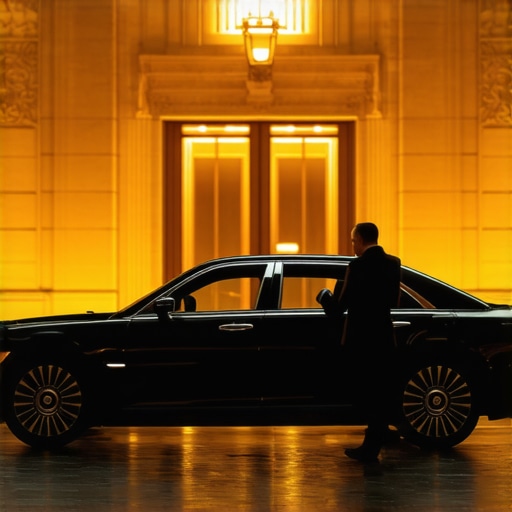
I still remember the sinking feeling in my gut as I watched the gala’s red carpet being rolled up from the window of a stationary car. I was only three blocks away. Three blocks! On paper, I had a 15-minute cushion, but I had completely underestimated the Friday night chaos that transforms a simple city street into a parking lot. I sat there, tuxedo-clad and helpless, realizing that my ‘efficient’ planning was actually a recipe for failure. It was a visceral lesson in why your schedule is only as good as the extra time you build into it. Today, I am going to show you how to avoid that panic by mastering the specific timing needed for event drop-offs.
Have you ever found yourself sweating in the back of a car, watching the clock tick past your event’s start time while traffic remains deadlocked?
Stop Betting Against Friday Night Traffic
Friday night is a different beast entirely. It’s the time when those ‘estimated arrival times’ on your phone turn into cruel jokes. If you are relying on a standard app, you are essentially gambling with your reputation and your sanity. I found out through years of trial and error that most arrival times are simply guesses that don’t account for the sudden surge of people heading to the theater or a concert at the exact same moment. I used to think I was being a pro by cutting it close, but one too many missed ‘grand entrances’ taught me that professional punctuality requires more than just hope; it requires a calculated margin of error.
Is saving ten minutes of prep time worth the risk of being late?
To be honest, I used to be the guy who tried to squeeze in one last email before heading out the door. That was a mistake I made early on that cost me a valuable networking opportunity. Now, I advocate for a ‘luxury of time’ approach. Prioritizing safety and precision isn’t just about the drive; it’s about the psychological peace that comes from knowing you won’t be running toward a closing door. According to data from INRIX, Friday afternoon is consistently the most congested time of the work week in urban areas, with travel times often increasing by 25% or more compared to a standard Tuesday. This is exactly why the exact buffer you need for Friday afternoon traffic is non-negotiable if you want to arrive composed. When you account for the buffer every event planner needs, you aren’t just being cautious—you are being professional. Let’s look at how to calculate that perfect window so you never have to watch a red carpet wrap up from a distance again.
Flip the script on your arrival window
To get this right, you have to stop thinking about your arrival time and start thinking about your ‘settling time.’ For years, I calculated my departure based on the GPS estimate. It was a rookie mistake. I now use a specific formula: GPS time plus a buffer that accounts for the specific day of the week. For example, why a 20-minute buffer is the new gold standard for business isn’t just a suggestion; it’s a requirement for any event where doors close at a specific time. If you’re heading to a gala or a high-stakes presentation, why the 17-minute buffer outperforms the traditional 15-minute rule becomes very clear when you hit that one unexpected red light or a slow-moving security checkpoint. 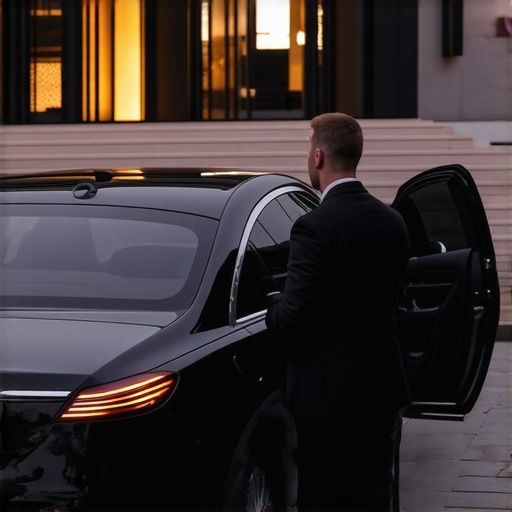
Ditch the one-way ride for better security
I once booked a standard one-way trip for a wedding where the ceremony and reception were at different venues. The first driver dropped me off and disappeared into a surge-pricing vortex. When I needed to move to the second location, I was stranded for forty minutes waiting for a new car. That was the last time I made that mistake. Now, I always opt for hourly service for complex schedules. You’ll find that why hourly rates provide better value for wedding day logistics is about more than just the price; it’s about the fact that the car stays with you. This ensures safety and precision because you aren’t gambling on a stranger’s availability in the middle of a busy night.
Execute the perfect drop-off maneuver
The most stressful part of any event is the final 100 yards. I’ve seen people get stuck in a ‘limo line’ for twenty minutes just to reach the front door. I learned my lesson at a tech conference in Austin; I had the driver drop me off at a hotel two blocks away and walked the rest of the way. I beat the people in the car line by fifteen minutes. Knowing the exact distance to request for a smooth event drop-off allows you to walk in composed rather than frazzled from the stop-and-go crawl.
Spot the professional before you open the door
Punctuality is a two-way street. I always check the driver’s credentials before I even reach for the handle. A professional will have their vehicle in a specific state of readiness. You should look for the safety token every passenger should check and ensure the driver is focused. On one occasion, I noticed a driver was clearly struggling with a glitching navigation system—this is why I believe why GPS lag can ruin your meeting schedule if the driver doesn’t know the local backroads. I ended up giving him directions from my own phone, which defeats the purpose of hiring a pro. Now, I prioritize services that strategies for safe and reliable hourly bookings to ensure the driver is familiar with the terrain. Always take a moment to verify a private driver’s professional rating independently to ensure they have a history of navigating these high-pressure scenarios successfully.
While verifying credentials is a great first step, there is a nuance most travelers overlook: the ‘tech-dependency trap.’ Everyone tells you that live tracking is the ultimate safety feature, but in my experience, relying solely on an app’s blue dot can be a dangerous game. I have seen clients relax because the app said the driver was ‘two minutes away,’ only for that driver to be stuck behind a trash truck in a narrow alley for ten more. The difference between live tracking and estimated progress is massive, especially when signals bounce off skyscrapers.
Stop trusting that little blue dot on your screen
The truth is that real-time tracking apps need constant manual overrides because they lack the human context of local events or road closures that haven’t hit the server yet. I once missed a flight because the app showed a clear path, but a local street fair had turned the neighborhood into a pedestrian-only zone. This is where the human element becomes your greatest asset. According to research from the National Institute of Standards and Technology (NIST), GPS signals in ‘urban canyons’—areas with high-density buildings—can be off by as much as 50 to 100 meters, leading to ‘ghost’ locations that frustrate both driver and passenger. This is precisely why manual dispatching still beats AI for real-time accuracy; a human knows the street fair is happening, the AI just sees a slow-moving dot.
What happens when the GPS gets it wrong?
I always tell my peers to watch out for the ‘lowest bidder’ trap when booking hourly services. You might think you’re saving a few bucks, but the real cost of choosing the cheapest ride option often manifests as a driver who is over-tired or a vehicle that hasn’t seen a mechanic in months. Safety isn’t just about the drive; it’s about the maintenance and the driver’s mental state. 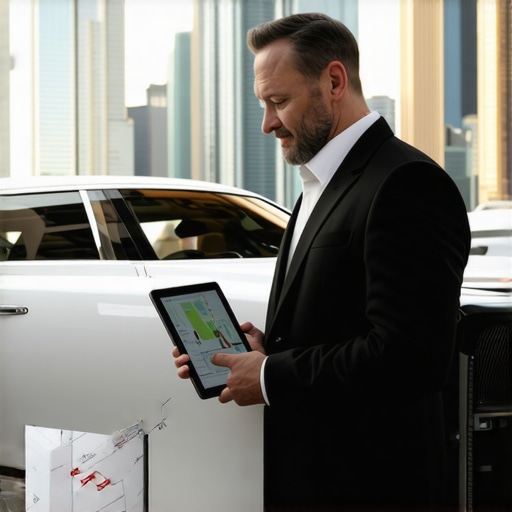 I have learned that why hourly rates provide better value for wedding day logistics isn’t just a sales pitch—it’s a safeguard. When a driver is booked by the hour, they aren’t rushing to finish your trip to grab the next ‘surge’ fare. They are focused entirely on your schedule, which drastically reduces the incentive to take risky shortcuts. Have you ever fallen into this trap of prioritizing a low price over a reliable schedule? Let me know in the comments. By choosing a dedicated professional, you ensure safety and precision because the mission is your arrival, not the next transaction. Understanding why on-time performance is the only metric that matters will change how you view every reservation you make from now on.
Once I stopped treating travel as a series of random events and started treating it as a repeatable process, my stress levels plummeted. I began to realize that long-term success in logistics isn’t about the one-off ‘win’—it’s about the system you build around your life.
Ditch the generic apps for a pro-level toolkit
I no longer rely on standard navigation. Instead, I use high-fidelity weather radar and real-time highway patrol feeds to anticipate issues before they appear on a blue dot. This is my secret weapon. It sounds old school, but I’ve found that why a driver with a physical map is more reliable than gps holds true when you’re in a signal dead zone or a ‘congested’ urban canyon where satellites fail. I personally keep a pre-vetted list of backroads for my top five destinations. By reserving your spot with a service that values these traditional skills, you aren’t just buying a ride; you’re buying an insurance policy against the unknown.
Build a recurring system that runs on autopilot
If you are traveling for work or managing a busy family, you cannot afford to start from scratch every Monday. I spent a weekend learning how to build a custom transit schedule for your office, and it changed everything. I stopped reacting to traffic and started dictating my terms. 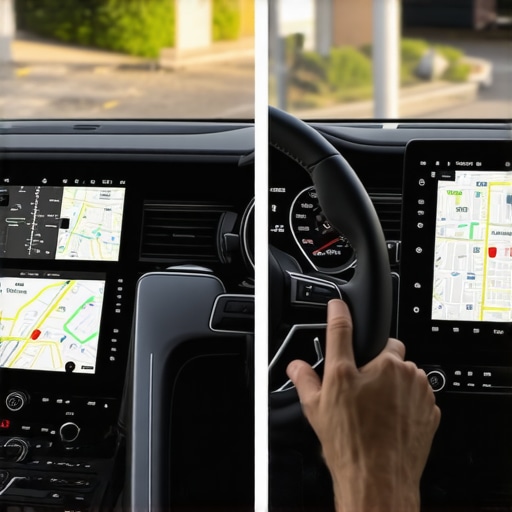
How do I keep my travel schedule bulletproof month after month?
Maintenance of this lifestyle requires a quick ‘post-mortem’ of your trips. Every month, I take ten minutes to look at my receipts and timing. Learning how to audit your monthly travel spend without stress allows you to see patterns: maybe you’re always late on Tuesdays because of a local delivery schedule you hadn’t noticed. Once you see the pattern, you can set up a recurring weekly commute that never fails. According to the National Limousine Association (NLA), ‘Duty of Care’ standards require a proactive assessment of route integrity before the passenger even steps inside—this is the gold standard I hold my providers to. This level of preparation is exactly why the punctuality habits of top-tier private chauffeurs are so much more effective than the ‘grab-and-go’ nature of standard apps. Looking ahead, I predict a massive shift back to human-centric dispatch. As AI-routing becomes saturated and predictable, the real competitive edge will belong to those who use human intuition to bypass the digital herd. My challenge to you: Take ten minutes tonight to audit your last three trips and identify the one common factor that slowed you down—then build a buffer specifically for it.
The Hardest Lesson I Learned About Chasing the Clock
I used to think that being in the car meant the battle was won. I was wrong. The hardest lesson I learned is that the vehicle’s condition is a direct predictor of your arrival time. Now, I always look for the visual signs of a chauffeur who values professionalism before I even open the door. If they haven’t maintained the car, they haven’t planned the route. I also realized that the essential hourly reservation tips for timely service are my best defense against a bad night; booking by the hour keeps the driver’s focus on me, not the next passenger on their app.
The Gear That Keeps My Arrival Streak Perfect
My toolkit isn’t just about apps; it’s about verified data. I never book a long-range trip without knowing how to verify a private drivers professional rating independently. Relying on internal app stars is a rookie move. I also keep a weather radar handy to understand how to get an on-time pickup during a summer storm, which allows me to suggest alternate pickup points before the driver gets trapped in a flooded underpass. Finally, I use a dedicated checklist for on-time arrival mastering the art of reservation and safety every hour to ensure no detail is missed.
#IMAGE_PLACEHOLDER_E#
Take Back Your Time and Your Peace
Punctuality is the ultimate form of professional respect, both for others and for yourself. When you master the logistics of your life, you stop being a victim of the city’s chaos. By choosing safety and precision over the cheapest possible option, you invest in your own mental clarity. Have you ever missed a major event because of a ‘blue dot’ error or a timing mistake? Let me know in the comments below.