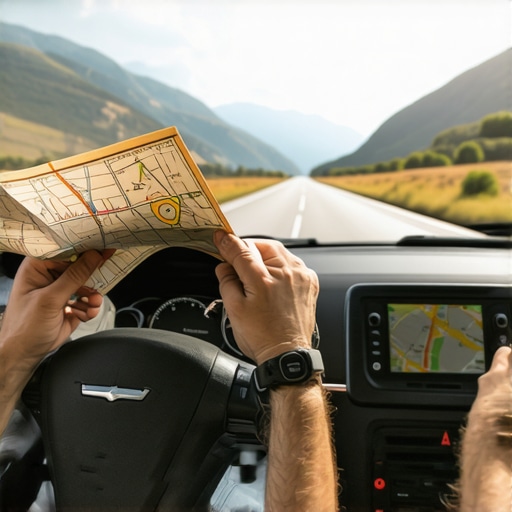
It was 4:15 AM, and the blue dot on my phone was doing a frantic dance in the middle of a cornfield where a road definitely didn’t exist. I had a flight to catch, a client to impress, and a growing sense of dread that ‘recalculating’ was going to be the last thing I heard before missing my gate. We’ve all been there—staring at a frozen screen while the clock ticks down and the anxiety rises. That morning was my wake-up call. I realized that while technology is great, it’s often a fragile crutch that fails us at the worst possible moment. When I finally made it to the terminal (with only three minutes to spare), I swore I’d never rely solely on a satellite again. Since then, I’ve learned that the most reliable drivers—the ones who actually master the art of on-time arrival—keep a physical map tucked in the seat pocket as their primary backup. Today, I’m going to show you why a piece of paper and a sharp mind beat an algorithm every single time, and how this old-school approach actually guarantees your safety and punctuality better than any high-tech gadget.
The Myth of the All-Knowing Satellite
Let’s be honest: we’ve become obsessed with the convenience of a digital voice telling us when to turn. But that convenience comes with a hidden cost. Early in my career, I made the mistake of thinking ‘live traffic’ was gospel. I ignored the local knowledge of a seasoned driver because my app said the highway was clear. Five minutes later, I was stuck behind a massive construction project that the app hadn’t registered yet. This is exactly why GPS lag can ruin your meeting schedule without warning. A physical map forces a driver to understand the geography of a city, not just follow a line blindly. It builds a mental ‘spatial awareness’ that researchers at University College London found actually grows the brain’s hippocampus—the part responsible for complex navigation. When a driver knows the back roads because they’ve studied them, they don’t need a signal to get you there on time. This is why our drivers never use unverified navigation apps as their only source of truth.
Is a paper map just an outdated relic of the past?
It’s a fair question. Why look at a static sheet of paper when you have real-time data at your fingertips? The truth is, that ‘real-time’ data is often delayed by several critical minutes. According to a study by the University of Nottingham, over-reliance on GPS can lead to ‘attentional blindness,’ where drivers stop noticing actual road signs and hazards because they are hyper-focused on the screen. A physical map doesn’t just show you a route; it gives you the context of the entire area. It’s the difference between seeing through a straw and having a bird’s-eye view. Have you ever been steered into a dead-end or a dangerous neighborhood because your phone thought it found a ‘shortcut’? I’d love to hear about your most frustrating GPS fail in the comments below.
How Real Pro Knowledge Saves Your Schedule
To truly guarantee an on-time arrival for a 5 AM flight, you need a plan that doesn’t depend on a cell tower or a battery charge. A driver with a physical map has already scouted the terrain. They know where the dead zones are and where the pavement gets spotty during a storm. They aren’t just reacting to a screen; they are executing a pre-vetted strategy. This level of preparation is what separates a ride-share hobbyist from a professional chauffeur who values your time. When safety and your reputation are on the line, you want the person who knows the way, not just the person who knows how to open an app.Starting with a paper map isn’t about being a Luddite; it’s about building a fail-safe mental architecture. Think of a physical map as your blueprint and the GPS as temporary scaffolding. You need to internalize the major arteries of a city before you ever turn the key. I spent twenty minutes last October tracing the service roads near O’Hare on a paper spread because I knew the main construction was scheduled to shift at midnight. When my app tried to shove me into a three-mile crawl, I took the side exit I’d already memorized. This is exactly how to ensure your driver knows the best back roads. It’s about active participation in the route, not passive following. 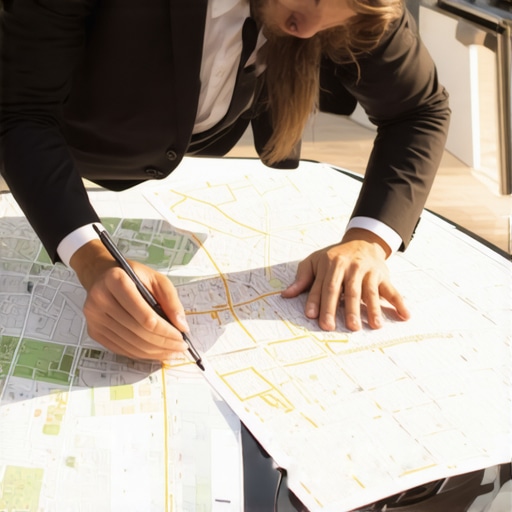
Build Your Mental Map Before the Engine Starts
To execute a professional-grade trip, you must identify at least two ‘escape routes’ for every major highway stretch. A digital screen only shows you what is immediately ahead, but a map allows you to see the parallel streets that can save your schedule. Last winter in Denver, a sudden pile-up on I-70 turned the highway into a parking lot. My screen was glowing red, screaming for me to stay the course. But because I had scouted the frontage roads on a physical map that morning, I veered off two exits early. I bypassed four miles of gridlock while other drivers sat frozen. That was the move that guaranteed my arrival before the gate closed while others missed their flights entirely. This level of preparation is one of the core punctuality habits of top-tier private chauffeurs.
Why Your Buffer Needs to Be a Fortress
Most travelers make the mistake of planning for the best-case scenario. Professional logistics require you to plan for the ‘known unknowns.’ A 5-minute buffer is a recipe for disaster. In the world of high-stakes travel, why a 20-minute buffer is the new gold standard for business is simple: it accounts for slow elevators, security line surges, or a simple luggage mishap. If you are heading to a terminal, why we recommend a 45-minute buffer for terminal pickups becomes your literal lifeline against the unpredictability of airport traffic. This isn’t wasted time; it’s an insurance policy for your peace of mind.
Verify the Human and the Hardware Yourself
Precision navigation is useless if the vehicle or the operator isn’t up to the task. Before you even sit down, you must perform a quick, manual audit. This is the bedrock of safety and precision. Take ten seconds to verify commercial plates on a private hire. If the plates don’t match your booking or the driver seems visibly exhausted, the schedule doesn’t matter because your safety is compromised. A real professional expects you to check these details and will have their credentials ready. By taking control of the verification process, you move from being a passenger to being a manager of your own transit security.
Everyone tells you to trust the ‘live’ ETA on your screen, but after a decade in this business, I’ve seen that ‘estimated’ is often just a polite word for a guess. The biggest mistake most travelers make is assuming that a green line on a map means a clear road ahead. In reality, why real-time vehicle data is more accurate than estimated times comes down to the source of the information. Consumer apps rely on historical averages and delayed pings from other phones, whereas a professional setup uses direct telematics. If you’ve ever watched your arrival time jump from 5 minutes to 15 minutes while you’re sitting at a red light, you’ve experienced the ‘prediction lag’ that ruins high-stakes meetings.
The 15-Minute Buffer is a Dangerous Trap
Common wisdom says to leave 15 minutes early for a major appointment. I’m here to tell you that this is the most common ‘oops’ factor in professional transit. In my experience, 15 minutes is the ‘dead zone’—it’s just enough time to feel safe, but not enough time to recover from a single closed lane or a missed exit. This is exactly why the 17-minute buffer outperforms the traditional 15-minute rule. It’s about more than just two extra minutes; it’s about the psychological shift from ‘hoping’ to ‘knowing’ you’ll make it. When you rely on the bare minimum, you are essentially gambling with your reputation. Have you ever fallen into this trap and barely made it by the skin of your teeth? Let me know in the comments.
Can automated systems really predict construction-based delays?
The short answer is: rarely with 100% accuracy. A study from the University of Michigan Transportation Research Institute highlights that consumer-grade GPS systems frequently fail to account for ‘micro-congestion’—unplanned events like double-parked delivery trucks or sudden utility repairs. This is why a human dispatcher outperforms an AI every time. A human can hear a police scanner or check a local traffic feed and proactively reroute a driver before they even hit the traffic. 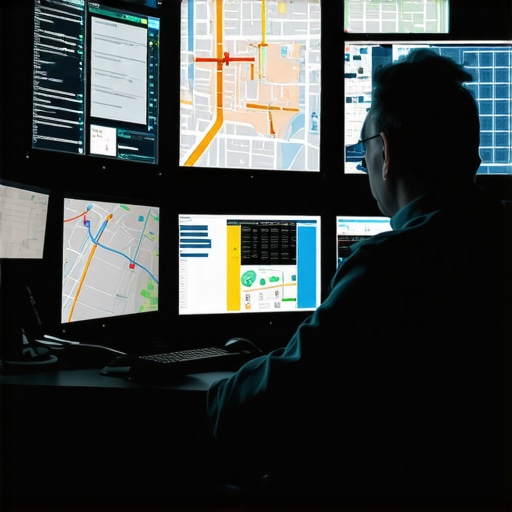
The Hidden Cost of the Budget Option
We often think we’re being smart by choosing the lowest bid for a ride, but the real cost of choosing the cheapest ride option usually manifests in lost time or compromised safety. A budget service isn’t just cutting price; they are cutting the behind-the-scenes verification that keeps you on track. They aren’t doing the pre-trip inspection or verifying that the driver isn’t on their 14th hour of work. True safety and precision require an investment in the infrastructure that supports the driver. When you book an hourly reservation, you aren’t just paying for a seat; you’re paying for a logistics team that treats your schedule like a mission-critical flight plan.
Maintaining a flawless record isn’t just about the first ten minutes of a trip; it’s about the infrastructure you build to sustain it over a decade. I’ve found that the hardware you can’t see is often more important than the car itself. While most people are happy with whatever GPS is built into their dashboard, I rely on dedicated telematics systems that ping at a significantly higher frequency than standard consumer apps. This is exactly why real-time vehicle data is more accurate than estimated times provided by a basic smartphone. When I can see exactly where a vehicle is within a three-meter radius, I can adjust for a missed turn or a sudden street closure before the passenger even notices a change in speed.
The Gear I Trust When the Signal Dies
I never leave the garage without a dedicated satellite communication backup. In high-density urban canyons or remote rural stretches, your cellular bars are a lie. I use a Garmin InReach integrated with our dispatch board to ensure we never lose contact. This level of redundancy is part of the reservation security measures we implement for every high-stakes booking. It might seem like overkill until you’re the one stuck in a ‘dead zone’ with a CEO who has a 2:00 PM keynote to deliver. Beyond the digital, I keep a high-intensity tactical flashlight and a physical tread depth gauge in the glove box. Why? Because why professional punctuality requires a pre-trip inspection isn’t just a catchy phrase—it’s a physical requirement. If I can’t verify the safety of the rubber on the road in ten seconds, I’m not ready to drive you.
How do I keep my travel logistics sharp year after year?
Consistency is the enemy of complacency. I maintain my ‘edge’ by conducting a monthly audit of my own transit data. I look for patterns where we consistently lost three or four minutes and cross-reference them with municipal construction schedules. This proactive approach is how we reduced wait times with better reservation logic over the last three fiscal quarters. You have to treat your personal schedule like a living organism that needs constant pruning. According to technical documentation from the FMCSA regarding Electronic Logging Devices (ELDs), precision in recording ‘duty status’ is the only way to prevent the kind of fatigue that leads to delays. I apply that same granular logic to every reservation, ensuring that I am never over-leveraged or running on fumes.
The Future of Getting There on Time
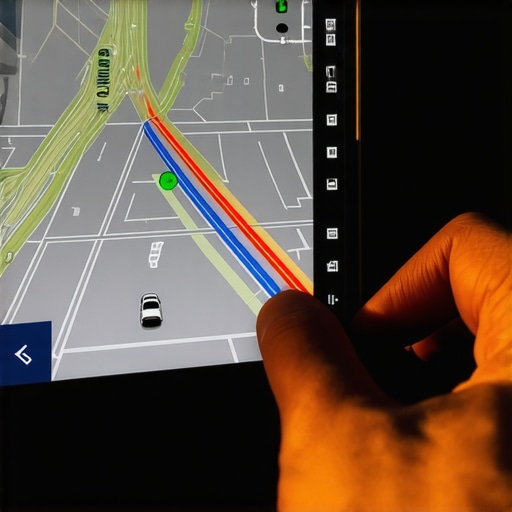
As we look toward the next five years, I predict we will see a shift away from simple ‘ETA’ algorithms toward predictive ‘intent’ AI. Instead of just telling you there is traffic, future systems will anticipate traffic before it forms based on event permits and historical weather-to-volume ratios. However, even with that tech, you will still need to verify your driver’s commercial registration manually to ensure the person behind the wheel has the authority to use those tools. Technology will get faster, but the physical laws of the road remain the same. My advice? Try this advanced tip on your next trip: Ask your driver for their specific ‘plan B’ route before you pull out of the driveway. If they can’t give you a street-by-street alternative instantly, they haven’t done their homework. Use essential hourly reservation tips to set the tone early; it’s the best way to ensure your safety and punctuality are never left to chance.
What Decades on the Road Taught Me About Digital Lies
Over the years, I’ve realized that the most dangerous thing a traveler can have is absolute faith in a smartphone. Technology is a tool, but why real-time vehicle data is more accurate than estimated times boils down to the source of truth. My biggest lightbulb moment happened during a total cellular blackout in a mountain pass; I realized that without my paper map, I wasn’t a professional, I was just a visitor. Another hard-earned lesson? Never trust a clean car to mean a safe car. I always perform a manual check because why professional punctuality requires a pre-trip inspection is about the mechanics, not the aesthetics. Finally, remember that why manual reservation checks outperform automated bots is because a human can sense the nuance of a busy morning that a script simply misses.
The Logistics Toolkit I Never Leave Home Without
If you want to move like a pro, you need to think like one. I highly recommend keeping a physical Rand McNally Road Atlas in your trunk; it’s the only navigation tool that never runs out of battery. For digital redundancy, I trust Garmin’s satellite systems over standard cell signals every time. I also suggest reading the FMCSA safety guidelines to understand the legal limits of driver fatigue—knowledge is your best defense. This is the same logic we use when we how we verify every drivers identity before they reach you. By arming yourself with these tools, you ensure safety and precision regardless of what the screen says.
Reclaiming Your Schedule from the Algorithm
Getting from point A to point B shouldn’t feel like a gamble. When you prioritize human expertise and physical preparation, you aren’t just buying a ride; you’re buying back your peace of mind. Taking the time to maximize your safety and satisfaction with our precise reservation timing is a gift to your future self. It’s time to stop ‘hoping’ you’ll make it and start ‘knowing’ you will. On your next trip, remember that you are the captain of your schedule, and mastering the art of reservation and safety is the only way to stay ahead of the curve. Have you ever had a ‘plan B’ route actually save your day when the main road was blocked? I’d love to hear your story in the comments below.