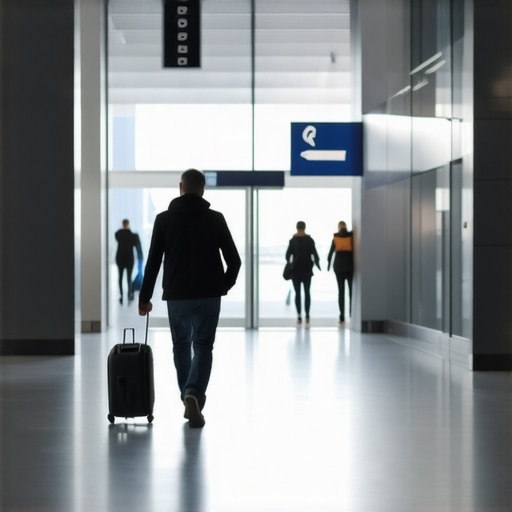
I was standing at Terminal 4, sweat dripping down my neck, watching the “Final Boarding” sign flash like a mocking neon warning. I had done everything “right”—or so I thought—but I was still three hundred yards and a very slow security line away from missing my flight. That was the day I realized that the standard way we book transportation is fundamentally broken. I spent years relying on the luck of the draw with rideshare apps, assuming a five-minute ETA actually meant five minutes. It rarely did. That specific failure cost me a six-hundred-dollar rebooking fee and a night on a terminal floor. If you have ever felt that pit in your stomach while checking your watch against a sluggish GPS, you know exactly what I am talking about. Have you ever missed a life-changing event just because your ride decided to take the long way?
Stop Gambling with Your Schedule
The move that changed everything for me was not leaving earlier; it was changing how I valued the time between my front door and the airport. I stopped booking one-off trips and started mastering the art of reservation and safety through hourly bookings. When you book a driver by the hour, you are not just buying a ride; you are buying a dedicated logistics partner. Early in my travel career, I made the mistake of thinking I was saving money by using point-to-point services. In reality, I was losing money in missed opportunities and stress. I learned the hard way that why hourly logistics save more time than point-to-point is not just marketing—it is a mathematical certainty for anyone with a tight window. According to the Texas A&M Transportation Institute, the average commuter loses 54 hours a year to traffic congestion, and a dedicated driver is the only way to claw that time back through real-time rerouting.
Is an hourly reservation actually worth the extra cost?
It is a fair question to ask if the premium is justified. Most people fear they are overpaying for “wait time,” but they forget to calculate the cost of failure. When I shifted to this model, I realized that having a 3-minute buffer that saves you from missing a train or a flight is worth every penny. It eliminates the “arrival anxiety” that ruins the first two hours of any trip. Today, I want to show you how to set up your travel so that the gate never closes on you again, focusing on the specific reservation hacks I use to guarantee I am the first person in line, not the last one running down the concourse.
Build a Schedule That Can’t Be Broken
To move from the chaos of rideshare apps to the precision of a professional chauffeur, you have to treat your transportation like a flight plan rather than a pizza delivery. The first and most critical step is understanding the difference between a ‘placeholder’ and a ‘guaranteed asset.’ When I first started booking hourly, I assumed the company had a driver waiting in a lounge just for me. The reality is more complex. You need to ensure your service uses strategies for safe and reliable hourly bookings that involve active dispatch, not just an algorithm. I now use what I call the 3 AM pickup blueprint for every high-stakes trip. This means verifying that a specific driver is assigned and the vehicle is prepped the night before, regardless of the actual pickup time. This level of preparation turns a ‘hopeful’ ride into a ‘mathematical’ arrival.
Stop Guessing and Start Verifying
The biggest mistake travelers make is hanging up the phone after a verbal agreement. The danger of relying on verbal confirmations is that there is zero accountability when a driver overs sleeps or a vehicle breaks down. I learned this the hard way during a trip to London when my ‘confirmed’ car never showed up because it was never entered into the digital log. Now, I always demand a physical copy of your trip reservation or a detailed digital receipt that includes a confirmation number. This document is your leverage; it proves the company has committed to your specific window. Without it, you are just another name on a scratchpad that can be erased if a higher-paying client calls in at the last minute.
Take Control of the Route in Real Time
Once you are in the car, the ‘hourly’ aspect becomes your greatest tactical advantage. Unlike point-to-point rides where a driver is incentivized to drop you off as quickly as possible to catch the next fare, an hourly driver is yours. This means you can—and should—dictate the flow of the trip. I remember a particularly nasty afternoon in downtown Atlanta where a sudden water main break turned the main artery to the airport into a parking lot. Because I wasn’t locked into a pre-set GPS route, I could guide my driver through a series of residential cut-throughs. Knowing the correct way to request a route change without causing confusion is vital. Since I was paying for the hour, the driver didn’t care that the mileage was slightly higher; his only goal was my punctuality. This is the core of why hourly rates protect you during unpredictable traffic. You aren’t fighting the driver’s desire to be elsewhere; you are both working toward the same finish line.
How to Spot a Professional Setup
Before you even step into the vehicle, you can tell if your reservation is going to hold up. I always perform a quick mental audit of the service’s professionalism. You should how to verify the commercial validity of their operation by looking for signs of a real dispatch center. If you call and hear kids screaming in the background or a TV blaring, you aren’t talking to a logistics pro—you’re talking to a guy with a car and a cell phone. True reliability comes from infrastructure that monitors your flight’s tail number and adjusts the pickup window automatically, ensuring you never stand on a curb wondering where your ‘guaranteed’ ride has gone.Despite what the tech giants want you to believe, more data does not always mean more reliability. The biggest myth in modern travel is that a high-resolution tracking app is a substitute for a professional logistics plan. I have seen seasoned executives glued to their phone screens, watching a digital icon crawl across a map, completely oblivious to the fact that refreshing your tracking app might give you false arrival times. This happens because of ‘data ghosting’—where the app predicts movement based on past speed rather than real-time location. A study by the Center for Transportation Studies at the University of Minnesota found that GPS-based arrival estimates in urban canyons can fluctuate by as much as twelve minutes due to signal interference. This is precisely why manual reservation checks outperform automated bots; a human dispatcher knows the difference between a signal lag and a literal traffic jam.
Stop Trusting the Ghost in the Machine
The ‘Oops’ factor often happens before you even open the car door. Most travelers are so focused on the car’s arrival time that they forget to check the driver’s ‘uptime.’ This is a dangerous oversight. You should know how to verify your driver is not exhausted, especially if you are booking a late-night or early-morning transit. I once caught a driver nodding off because he had been pulling double shifts on a gig app before starting my ‘private’ reservation. Hourly bookings solve this because professional firms monitor driver logs strictly. I also use the floor mat check as a quick diagnostic. If the car’s interior is neglected, it’s a high-probability signal that the mechanical maintenance—and the driver’s focus—is also being neglected. 
Is an early arrival actually a sign of poor planning?
Counterintuitively, I argue that a driver arriving thirty minutes early is just as bad as one arriving five minutes late. It indicates a lack of safety precision the key to reliable hourly reservations for peace of mind. Professionalism is about hitting the precise pickup window for ensuring you never wait on the curb, not just showing up whenever. If they are too early, they are burning their own legal driving hours or blocking traffic, which creates unnecessary friction. True experts focus on why on-time performance is the only metric that matters. It is about synchronization, not just presence. Have you ever fallen into this trap of thinking ‘earlier is always better’? Let me know in the comments.
Secure Your Data Before You Secure Your Seat
One thing I learned after years of corporate travel is that your physical safety is only half the battle; your digital safety is the other. Every time you connect to a car’s onboard internet, you are opening a door. I personally never log into sensitive accounts while in transit because the wi-fi risk why you should never check your bank in a hired car is a very real threat in an era of sophisticated packet-sniffing. I recommend using a dedicated VPN or sticking to your own cellular data. Furthermore, you need to be proactive about how to store your trip data securely away from third-party apps. Many budget aggregators sell your location history to brokers; I stick to private firms that have a locked-down vault for client data. Before you pay, always check how to verify your payment is processed via a secure gateway to ensure your credit card details aren’t sitting in a plaintext log on a local server.
The Quick Maintenance Check You Are Likely Skipping
Professionalism isn’t just about the suit; it is about the machine. When my driver pulls up, I do a five-second walkaround. I look at the tires and the glass. I have found that the windshield wiper test—simply checking if the blades are frayed—tells you everything you need to know about a fleet’s attention to detail. If they haven’t spent ten dollars on new wipers, they definitely haven’t checked the transmission fluid. According to the Journal of Advanced Transportation, predictive maintenance in commercial fleets reduces roadside failures by up to 35 percent, yet many gig drivers ignore this. I also listen for the brake pad squeal you should never ignore before a long trip. A high-pitched chirp isn’t just annoying; it is a sign that your safety is being compromised for the sake of a few extra hours on the road. Truly elite services use why real-time fuel monitoring prevents unexpected roadside stops, ensuring the car never has to pull over for a quick splash while you are racing toward a deadline.
How do I keep my travel logistics bulletproof every single year?
The secret to long-term success is regular auditing. I sit down once a quarter to review my transit expenses and performance logs. I have learned how to audit your final ride bill for hidden fees that can creep in, like service surcharges that were not in the original quote. If you are managing travel for a team, you will quickly see why executive assistants rely on flexible reservation changes to keep a busy calendar from imploding. Looking forward, I predict we will see a shift toward biometric dispatching, where your driver is assigned based on a real-time health and alertness scan. Until then, you have to be your own advocate. I want you to try this: the next time you book, don’t just ask for the price; ask for the specific maintenance log of the vehicle assigned to you. This one question will immediately separate the amateurs from the pros and ensure you stay secure and punctual for every mile of your journey.
The Brutal Truth About Why Some Reservations Fail
After a decade of navigating international hubs, I have realized that the most expensive ride you will ever take is the one that does not show up. Reliability is not just a buzzword; it is the result of redundant systems that amateurs often overlook. One thing the glossy brochures rarely tell you is that a great driver is only as good as the human dispatcher backing them up. I always look for services that maximize your safety and satisfaction by utilizing real-time human oversight rather than just a faceless app. Another hard-learned lesson: never assume ‘available’ means ‘ready.’ Even with an hourly booking, I perform a quick check-in 90 minutes before my window to ensure the asset is in position. This simple habit is my secret to ensuring safety first across three continents without a single missed flight in five years.
Tools That Keep My Logistics Bulletproof
To keep my schedule from fracturing under the pressure of city traffic, I rely on a small but mighty toolkit. First, I use FlightAware to track tail numbers; if my inbound plane is late, I can update my driver before the airline even sends a notification. Second, I use ExpressVPN to protect my personal data when I am confirming my itinerary on public networks. Third, I always keep a digital folder of my physical reservation receipts because why hourly booking is more reliable than ride-hailing apps often comes down to the accountability you can prove if a dispute arises. I also suggest bookmarking a list of essential hourly reservation tips so you have a quick reference guide during high-stress travel days.
Your Journey Deserves a Better Standard
It is time to stop viewing transportation as an afterthought and start seeing it as the foundation of a successful trip. When you prioritize a dedicated driver, you are not just paying for a seat in a car; you are investing in your own peace of mind and professional reputation. Every time I step into a pre-reserved vehicle, I feel the weight of the city lift off my shoulders. I want you to experience that same sense of control. By following these steps, you will stay secure and punctual regardless of what the traffic reports or the weather might throw at you. The gate is waiting, but this time, you will be there long before the final boarding call sounds. Have you ever had a travel nightmare that could have been solved with a better reservation system? Let me know your story in the comments below.