I’ll never forget the rainy Tuesday I nearly missed the biggest presentation of my career. My reservation was confirmed, the app said ‘on time,’ and the car looked pristine. But when we hit 60mph on the interstate, the steering wheel started vibrating like a jackhammer. I’d made the classic mistake of trusting a clean exterior over mechanical integrity. That day, standing on the shoulder of the highway, I realized that a shiny hood is often just a mask for neglected maintenance. Have you ever stepped into a car and immediately felt that gut-level worry that you were gambling with your morning schedule? Today, I want to show you exactly how to spot a well-maintained vehicle in less than ten seconds, so you never have to experience that roadside panic again.
Stop Looking at the Paint and Start Looking at the Tires
It’s incredibly easy to get distracted by a fresh wax job or a driver in a sharp suit. However, the real cost of choosing the cheapest ride option often surfaces at the worst possible moment—like when a bald tire meets a wet road. After my own roadside disaster, I started performing a quick 4-point check before I ever set foot in a vehicle for an hourly booking. I look specifically for matching tire brands and healthy tread depth. Why? Because a professional who invests in a matching set of premium tires isn’t just maintaining a car; they are protecting their reputation and your life. This one physical marker is the ultimate ‘tell’ for whether professional punctuality requires a pre-trip inspection in that driver’s world. If they are willing to cut corners on the only four points of contact with the asphalt, you can bet they are cutting corners on the brake pads and engine filters too.
Does a tire brand really predict my arrival time?
You might think I’m being overly dramatic. After all, a tire is just rubber, right? But the data suggests otherwise. According to the National Highway Traffic Safety Administration (NHTSA), nearly 9% of all vehicle-related crashes are linked to tire issues, many of which stem from poor maintenance. When I see four mismatched, budget-bin tires, I don’t see a ‘deal’—I see a driver who is one pothole away from a cancelled trip. This is why I always prioritize services that understand why safety and timeliness matter in every single mile. When you book a high-stakes ride, you aren’t just paying for the seat; you’re paying for the peace of mind that the equipment under you is as ready for the journey as you are. In the next section, I’ll show you the exact three-second ‘Penny Test’ I use to verify tread life without looking like a car mechanic.
Put Your Safety First With the Penny Test
I promised you a way to check a car’s health in seconds, and it starts with a simple coin. When your car pulls up, take a quick glance at the tire tread. If you have a penny, insert it into the groove with Lincoln’s head upside down. If you can see the top of his head, those tires are dangerously worn. I once did this during a snowy morning in Denver. The driver looked at me like I was crazy until I pointed out that his front-left tire was nearly bald. Because I knew on-time arrival mastering the art of reservation and safety every hour depends on traction, I refused the ride. Within twenty minutes, I watched another car from the same company slide right past a stop sign. That three-second check saved me from a potential collision and a massive insurance headache. Professional drivers who value their clients will always ensure their rubber is road-ready.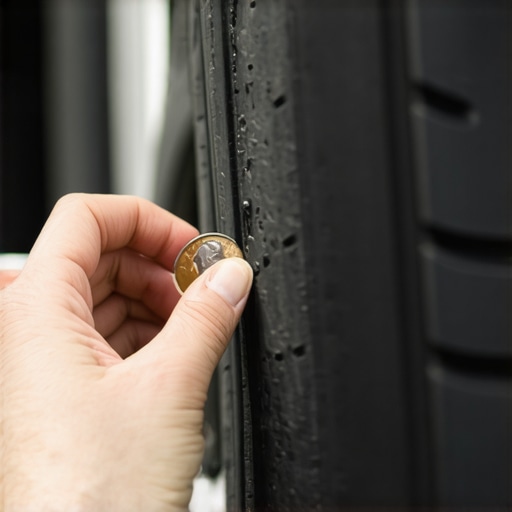
Check the Ground Before You Open the Door
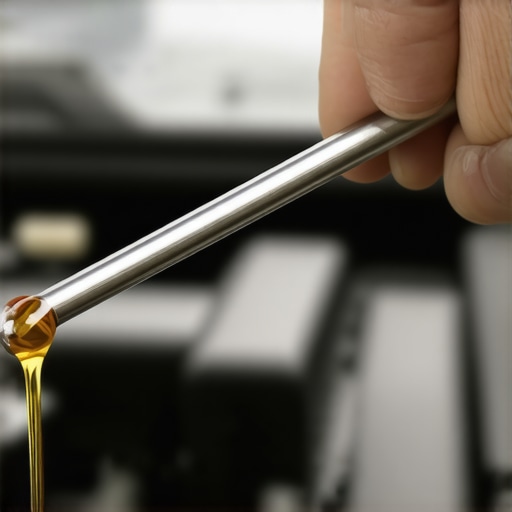
Before you let the driver load your bags, look at the pavement directly under the engine bay. A well-maintained vehicle shouldn’t be marking its territory with oily spots or neon-colored puddles. If you see a dark, viscous pool, it’s likely an oil leak; if it’s bright green or orange, it’s coolant. These aren’t just cosmetic issues—they are precursors to a breakdown that will leave you stranded. This is a core part of why professional punctuality requires a pre-trip inspection. A driver who ignores a leaking radiator is a driver who doesn’t mind if you miss your board meeting because their engine overheated on the shoulder of the FDR Drive.
What Those Dashboard Warning Lights Actually Mean for Your Schedule
As soon as you slide into the backseat, take a peek at the instrument cluster. It should be clean and dark. If the ‘Check Engine’ light is glowing like a miniature sun, or if the ABS warning is lit, you are essentially riding in a ticking clock. I’ve had drivers tell me, ‘Oh, that light is always on, don’t worry about it.’ My response? I worry. A lit-up dashboard is proof of deferred maintenance. When you are paying for an on-time every time experience, you aren’t paying for the driver’s gamble. Perform a quick 4-point mirror check and scan the dash; if the hardware is failing, the service will too.
Verify the Credentials Without the Friction
Safety isn’t just about the mechanical parts; it’s about the legal ones too. You should always how to verify commercial plates on a private hire before you even think about putting on your seatbelt. In many cities, a standard passenger plate on a car-for-hire means they aren’t properly insured for commercial work. I make it a habit to cross-reference the plate with the signs of a professional booking confirmation email I received. If they don’t match, I don’t get in. It sounds paranoid until you realize that in the event of an accident, a non-commercial policy might not cover your medical bills. Also, keep an eye out for how to spot a forged confirmation screen on the driver’s phone. If the app looks ‘off’—low resolution or strange fonts—you might be in an unlicensed ‘ghost’ car. Knowing the exact steps to take if your reserved driver is late or if the vehicle doesn’t meet these standards is the only way to stay in control of your journey.Many travelers believe that watching a blue dot move across a smartphone screen is the ultimate way to ensure they’ll be on time. It’s a comforting illusion, but in the world of executive transport, it’s often a dangerous distraction. Let’s dig deeper into the ‘GPS Fallacy.’ Most people assume that real-time tracking is infallible, yet they fail to account for signal latency and ‘ghosting’—where an app projects where a car should be rather than where it actually is. This is exactly why GPS lag can ruin your meeting schedule. I’ve been in situations where the app showed my driver at the corner, but he was actually three blocks away trapped behind a double-parked delivery truck. Why real-time vehicle tracking is more than just a convenience is a topic I discuss often, but for the advanced traveler, it serves only as a secondary confirmation, not a primary guarantee.
Why does your GPS say five minutes when the driver is miles away?
The answer lies in the technical data. A study by MIT’s Senseable City Lab found that dense urban environments cause significant ‘multipath errors’ in GPS signals, which can misplace a vehicle’s location by several hundred feet or freeze it entirely in high-rise canyons. When you combine this with the fact that the error in relying on app-based arrival times during construction is rampant, you start to see why the algorithm isn’t your friend. If you’re betting your board meeting on an AI-generated ETA, you’re gambling with a stacked deck. This is why I always look for services that employ manual oversight. Why a human dispatcher outperforms an AI every time becomes obvious when a professional can see the local parade route or emergency road closure that the software hasn’t indexed yet. 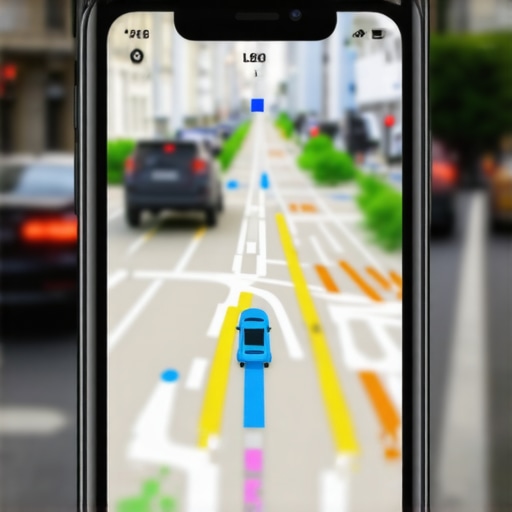
The Trap of the Fifteen Minute Rule
The most common ‘oops’ factor I see with corporate travelers is sticking to the traditional 15-minute buffer. In today’s hyper-congested cities, that’s no longer a safety net—it’s a recipe for stress. I’ve found that understanding why the 17-minute buffer outperforms the traditional 15-minute rule is just the beginning. For high-stakes events, why a 20-minute buffer is the new gold standard for business is the only way to breathe easy. You aren’t just paying for the drive; you are paying for the margin of error. If your provider isn’t discussing how to maximize your safety and satisfaction with our precise reservation timing, they aren’t treating your schedule with the respect it deserves. Another nuance most people miss is the ‘commercial shield.’ Advanced travelers know how to verify your driver’s commercial policy without the friction, ensuring they aren’t just covered by a personal policy that vanishes the moment a fare is paid. Have you ever fallen into the ‘five-minute’ trap where the car never actually moves on the map? Let me know in the comments.
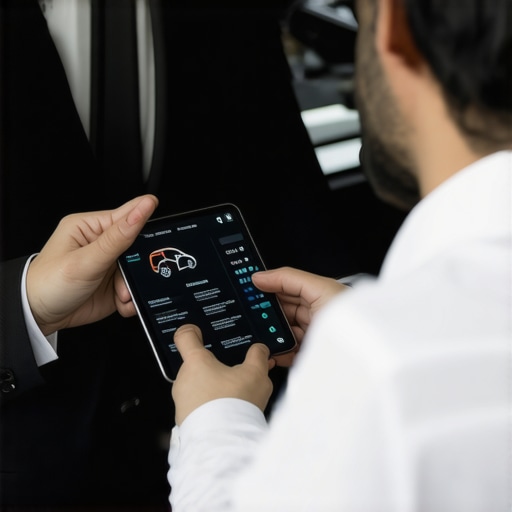
I’ve spent years analyzing the friction points of executive travel, and I’ve learned that the difference between a smooth arrival and a logistical nightmare usually comes down to the tech stack behind the wheel. While most passengers are satisfied with a clean seat, I’m looking for a driver who uses a high-end OBD-II diagnostic tool like the BlueDriver or an equivalent professional scanner. These devices monitor the vehicle’s health in real-time, catching sensor failures before they turn into a puff of smoke on the highway. According to the 2023 Telematics Industry Report by Geotab, proactive engine monitoring and predictive maintenance can reduce unexpected roadside breakdowns by up to 40%. This isn’t just geeky trivia; it’s the reason the protocol for handling a car breakdown mid-reservation should be the last thing on your mind. When a provider invests in this level of hardware, they aren’t just driving; they are managing a high-performance asset to ensure your on-time arrival mastering the art of reservation and safety every hour.
The Direct Line is Your Ultimate Safety Net
Apps are great for casual weekend trips, but for high-stakes business, they are a single point of failure. I’ve seen app servers crash in the middle of a blizzard, leaving passengers and drivers totally blind to each other’s location. This is why you need a direct line to your hourly driver. Professional chauffeurs don’t hide behind a masked VoIP number provided by a third party. They provide a direct, reliable way to communicate. This human connection allows for nuance that no algorithm can handle, like navigating a specific security gate or adjusting for a last-minute flight diversion. It’s also why I’ve found that why real-time tracking apps need constant manual overrides; a dot on a map doesn’t know that the Fourth Street bridge is closed for an unannounced film shoot, but a veteran driver with a local radio ear does.
How do I maintain a standard of excellence across multiple bookings?
If you are booking recurring travel, you cannot leave the quality to chance each time. You need to perform a periodic audit of your service provider. I recommend asking for a digital copy of their latest inspection report every six months. This ensures that professional punctuality requires a pre-trip inspection isn’t just a slogan but a practiced habit. Furthermore, take a moment to how to audit your drivers background status via digital credentials to ensure their certifications are still active. Maintenance isn’t just about the engine oil; it’s about maintaining the integrity of the entire service ecosystem. By keeping a log of your drivers and their vehicle conditions, you create a feedback loop that forces the service to keep their standards high for every on-time every time commitment.
What the Future of Private Transport Looks Like
Looking ahead, I predict we are moving toward a ‘Trust-as-a-Service’ model. Within the next five years, expect to see blockchain-verified maintenance logs where you can scan a QR code on the window to see the exact date of the last brake pad replacement and the driver’s real-time fatigue score. The days of ‘taking their word for it’ are numbered. Until that becomes the global standard, you have to be your own advocate. Don’t just settle for the default options. Before your next high-priority meeting, I challenge you to use the ‘Direct Line’ tip: call your driver 30 minutes before the pickup and ask for a specific route preference. If they can’t answer or don’t know the backroads, you know exactly where you stand. To get the most out of your next booking, make sure you maximize your safety and satisfaction with our precise reservation timing by setting those expectations early.
What 500 Rides Taught Me About the Illusion of Control
One thing I’ve learned after years on the road is that the loudest engine often carries the most neglected maintenance. I used to think a new car meant a safe car, but I’ve seen three-year-old SUVs with brakes that squeal like banshees. The hardest lesson was realizing that complacency is the real risk. Even when everything looks perfect on the app, you have to trust your senses over the software. If the cabin smells like burnt oil or the driver seems jittery, it doesn’t matter how high their rating is—it’s your right to step out. True on-time arrival mastering the art of reservation and safety every hour starts with your intuition.
Another myth is that ‘Premium’ always equals ‘Professional.’ I’ve had better experiences in well-kept mid-range sedans where the driver performed a pre-trip inspection than in luxury cars where the operator was just ‘winging it.’ The professionalism is in the preparation, not the leather seats.
The Frequent Traveler’s Go-To Survival Kit
To keep your travel standards high, I recommend keeping a few mental and digital tools ready. First, always verify the paperwork; I personally use how to verify commercial plates on a private hire as my first step for every new service. It’s a non-negotiable for my insurance peace of mind. Second, never rely solely on an app’s messaging system. I’ve found that why you need a direct line to your hourly driver is the difference between catching a flight and watching it take off without you. #IMAGE_PLACEHOLDER_E#
Finally, for those who book frequently, I suggest a ‘Three-Strike Policy’ for maintenance. If you see a dashboard light once, mention it. If it’s there next week, find a new provider. You deserve to maximize your safety and satisfaction with our precise reservation timing without having to worry if the car will actually start.
Take Back Your Schedule Starting Today
You are now equipped with more knowledge than 99% of commuters. By checking the tires, looking for leaks, and insisting on direct communication, you’ve turned a gamble into a calculated success. Remember, a safety, on time, reservation, hourly booking is a partnership between you and the driver. When you hold them to a higher standard, you aren’t just being demanding—you are ensuring everyone on the road gets home safely. Go ahead and book that next trip with the confidence that you know exactly what to look for.
Have you ever spotted a red flag in a car before getting in? Share your story in the comments below!