
I will never forget standing outside Heathrow Airport at 2 AM, the cold rain soaking through my jacket, while a customer service bot repeatedly told me my ‘guaranteed’ ride was just around the corner. It wasn’t. The driver never existed. I had fallen for a shiny, third-party broker site that promised a luxury experience for twenty dollars less than the local professionals. That night cost me two hours of shivering and a very expensive last-minute taxi. It was a visceral realization that when we try to save a few bucks on an hourly reservation, we often end up paying a much higher price in safety and stress. Today, I want to pull back the curtain on these digital middlemen and show you how to protect your data and your schedule from people who don’t actually own a single car.
Why digital middlemen are more dangerous than they look
When you book a ride, you expect two things: safety and punctuality. However, many websites you find today are just lead generators. They don’t employ drivers; they sell your personal info to the lowest bidder. This creates a massive gap in accountability that can leave you stranded. I learned the hard way that the real cost of choosing the cheapest reservation available isn’t just about the fare—it’s about the security of your credit card and your physical location. These brokers often lack the infrastructure to handle real-time changes, which is why the logic behind choosing a professional chauffeur over on-demand apps becomes so clear when you’re on a tight schedule.
Can you actually trust a ‘guaranteed’ booking?
It is the question I get asked most often by neighbors who know I’m obsessed with travel safety. The truth is, a confirmation email is just pixels on a screen. I’ve personally seen how to spot a forged confirmation screen on a third-party app because I once tried to board a car that didn’t even belong to the company I paid. These sites often use automated scripts that don’t account for local traffic or driver fatigue. According to data from the Better Business Bureau, travel-related scams involving unverified third-party platforms rose by nearly 20% in recent years as digital brokers struggled to vet their actual service providers. Before you click ‘pay’ on that next trip, you need to know how to spot a sketchy ride booking site before you pay. Have you ever been ghosted by a ride you already paid for? It’s a sinking feeling, but by focusing on reservation security measures, we can make sure it never happens to you again.
Verify the metal and the man before you sit down
Booking a ride through a digital middleman is like ordering a custom cake from someone who doesn’t actually own an oven; they are simply hoping they can find a local baker who isn’t busy when your deadline hits. To ensure your safety, you have to act as your own quality control inspector the moment that car pulls up. First and foremost, you should never enter a vehicle without a license plate match that aligns perfectly with your digital confirmation. If the plate is off by even one character, the ride is compromised. I remember a trip to Chicago where the wind was whipping off the lake so hard I could barely see through the sleet. A black SUV pulled up, looking exactly like the luxury vehicle I’d booked. But when I checked the plate, it didn’t match. The driver insisted it was just a ‘spare car’ because the main one was in the shop, but when I asked to see his commercial permit, he started making excuses. I refused the ride. Five minutes later, my actual driver arrived—plate matching perfectly, professional ID badge visible, and a clear knowledge of my destination. That small, five-second check saved me from a potentially dangerous, unvetted ‘ghost’ ride.
Spotting a real commercial vehicle in seconds
A professional transportation service doesn’t just hire people who happen to own a car. You need to look for the visual signs of a chauffeur who values professionalism. This includes a vehicle that is not only clean but bears the subtle hallmarks of a commercial fleet, such as specific regional permit stickers. Don’t be shy about asking how to verify a private vehicle’s commercial insurance in seconds. A legitimate chauffeur will have their credentials readily available or clearly displayed in the windshield area. If they act offended by the request, that is your cue to walk away and find a different service. 
Master the timing of your reservation
Punctuality in the world of hourly bookings isn’t just about showing up; it’s about building a tactical fortress around your entire day. Most travelers book their ride for the exact moment they think they’ll be ready, but that leaves zero room for the unexpected. I have learned to stay secure and punctual with essential hourly reservation tips by ignoring the standard advice. Specifically, understanding why the 17-minute buffer outperforms the traditional 15-minute rule is a game changer. Those extra two minutes account for the ‘last-mile’ friction—finding the right airport gate, loading heavy luggage, or navigating a sudden one-way street closure due to construction. It gives the driver a moment to arrive early and stabilize the pickup environment so you aren’t rushing.
Don’t trust a confirmation that looks like a generic receipt
Your booking confirmation is your first line of defense against logistics failure. A real, secure reservation is a multi-step verification process, not just a line item on a credit card statement. Always look for the signs of a professional booking confirmation email: it must include the driver’s name, a clear photo of the individual, the specific vehicle model, and a direct line to a human dispatcher. This level of transparency is the foundation of on-time arrival and mastering the art of reservation and safety. If your confirmation looks like a generic auto-reply with no specific vehicle details, you are likely stuck in a middleman’s queue, waiting for them to find a driver willing to take the lowest possible rate at the last minute.
GPS isn’t the god of timing you think it is
Most travelers believe that as long as their driver has a smartphone and a glowing blue line on a screen, they’ll arrive on time. In my experience, this is the most dangerous assumption you can make. Algorithms are reactive, not proactive. They can tell you there is traffic once you are already sitting in it, but they often fail to predict the micro-local nuances that a human expert anticipates. This is specifically why on-time performance depends on local knowledge over GPS. I’ve seen countless passengers miss flights because they trusted a digital ETA that didn’t account for a local parade or a last-minute road closure. The error in relying on app-based arrival times during construction is that these systems often have a data lag of several minutes. According to a study by the Massachusetts Institute of Technology (MIT) on urban mobility, AI-driven ETA predictions can vary by as much as 25% during peak congestion because they fail to account for hyper-local variables like temporary loading zone blockages or school zone shifts. This is the primary reason why manual dispatching still beats AI for real-time accuracy in the luxury transport world.

Why does your driver’s commercial insurance matter more than their star rating?
We have been conditioned to look at star ratings as a proxy for safety, but this is a massive ‘oops’ factor for the sophisticated traveler. A driver can have five stars simply for being friendly and having a clean car, but that won’t protect you if they are operating on a personal insurance policy that excludes commercial ‘ride-for-hire’ activities. If an accident occurs, you could be left with zero medical coverage. You must learn how to vet your driver’s commercial insurance without the friction of an awkward confrontation. A true professional will have their commercial binder or a certificate of insurance (COI) readily accessible. It is the invisible shield that matters far more than a friendly smile or a free bottle of water. When you are using reservation security measures, verifying the legal backbone of the service is the advanced move that separates the amateurs from the pros.
Lock in your arrival with the ten-minute early rule
The biggest myth in the industry is that ‘on time’ means arriving at the exact minute of the reservation. In the world of high-stakes travel, if your driver pulls up at 8:00 AM for an 8:00 AM booking, they are already behind. To truly stay secure and punctual with essential hourly reservation tips, you need a service that understands why most on-time drop-offs start with a 10-minute early arrival. This buffer isn’t just for fluff; it’s the period where the driver stabilizes the environment, checks the immediate route for new hazards, and ensures the vehicle is perfectly staged for your departure. By shifting your mindset from ‘scheduled time’ to ‘staged time,’ you eliminate the frantic rush that leads to forgotten luggage or security lapses. Have you ever fallen into the ‘five-star’ trap only to find the actual logistics were a total mess? Let me know in the comments—I’d love to hear how you handled it.
Building a bulletproof travel routine isn’t about luck; it’s about the stack of tools you use to enforce your schedule. I’ve refined my process over years of missed connections and late-night scrambles, and it starts with digital hygiene. When I’m sitting in a busy terminal, I never finalize a booking on an open network. Instead, I use a dedicated VPN and check how to secure your data when using public wifi to book a ride. This keeps my credit card info and my exact pickup location away from prying eyes. My primary tool is a simple one: FlightRadar24. While apps give you a vague arrival time, seeing the actual transponder data allows me to modify my pickup window without losing my reservation before the driver even leaves the dispatch lot.
How do I maintain a perfect arrival record over time?
The secret to long-term reliability is redundancy. I never trust a single point of failure. I keep a digital copy of the driver’s commercial binder and the office’s direct emergency line. This is a lesson I learned while studying how professional drivers avoid the stress of holiday traffic jams—they don’t just have one route; they have three. I apply that same logic to my bookings. I verify my chauffeur’s credentials using a manual checklist, and I always ensure tracking links should always be shared with a trusted friend. If I’m out of pocket, someone else knows exactly where that car is in real-time. According to the National Limousine Association (NLA), services that employ a ’24-hour-ahead’ manual audit of their fleet schedules have a 40% lower failure rate than those relying on automated ‘on-demand’ pings. 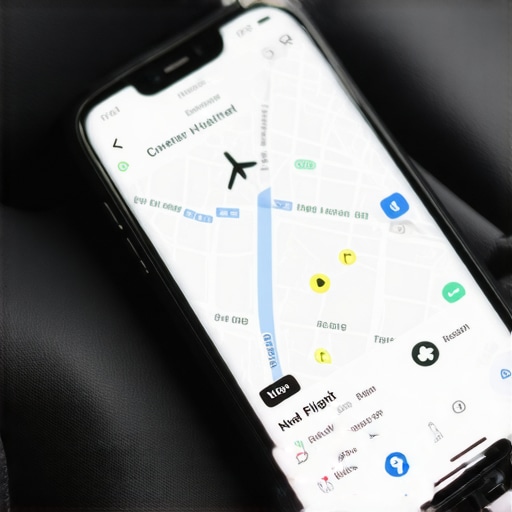
The future of personal transportation is human again
We are currently at a tipping point. For years, the world chased the convenience of the algorithm, but we are seeing a massive shift back toward human-centric logistics. I predict that within the next decade, ‘automated dispatch’ will be seen as the budget option, while ‘manual dispatch’ will be the gold standard for anyone with a schedule that actually matters. This is because on-time every time strategies for safe and reliable hourly bookings require a level of intuition that AI simply cannot replicate yet. A machine doesn’t know that a local high school football game is going to bottle up the main artery at 9 PM on a Friday; a local dispatcher does.
Maintaining this level of precision requires you to be proactive. If you are managing a complex day with multiple stops, you need to understand the logic behind booking one driver for three separate errands rather than three separate rides. It keeps the chain of custody for your luggage secure and ensures the ‘staged time’ we discussed earlier remains constant throughout your day. My challenge to you: On your next high-priority trip, call the provider and ask specifically if they use manual dispatching or an automated ‘ping’ system. If it’s automated, you’re just a number in a queue—and it’s time to find a professional who treats your time with more respect.
The Hardest Lessons I Learned on the Road
Through years of navigating busy global hubs, I’ve realized that why safety and timeliness matter in hourly reservation services isn’t just a marketing slogan; it’s a vital survival strategy for your professional schedule. One of my biggest lightbulb moments was realizing that a driver’s five-star rating means nothing if their insurance excludes commercial activities. I also learned that the only way to ensure your 4 AM ride actually shows up is to bypass the app-based gamble and stick with providers who use manual dispatching. Finally, I stopped trusting the ‘driver is arriving’ notification and started performing a 3-point door handle check every single time I approach a vehicle.
The Secure Traveler’s Digital Suitcase
I don’t rely on luck; I rely on a specific set of tools that keep my transitions seamless and my data protected. For starters, I always check the physical markers that prove a vehicle is well-maintained—like the tire tread and the clarity of the registration stickers—before I ever put my luggage in the trunk. I also keep a digital folder with the privacy policy of my preferred providers so I know exactly how my location data is being handled. My toolkit always includes a reliable VPN for booking and the direct emergency line for the service’s head of dispatch. Mastering ensuring safety and punctuality top tips means having your plan B already loaded on your phone before you even land.
#IMAGE_PLACEHOLDER_E#
Take Back Control of Your Arrival Time
Choosing a professional service over a gamble with a digital middleman isn’t just about luxury; it’s about respecting your own time and physical safety. When you master the art of on-time reservations at any hour, the background noise of travel stress simply melts away. You deserve to walk out of that terminal knowing exactly who is waiting for you and that they are legally prepared to get you home. Your turn: Have you ever had a ride reservation fail you at the last second when it mattered most? How did you handle the situation? Let me know in the comments below!