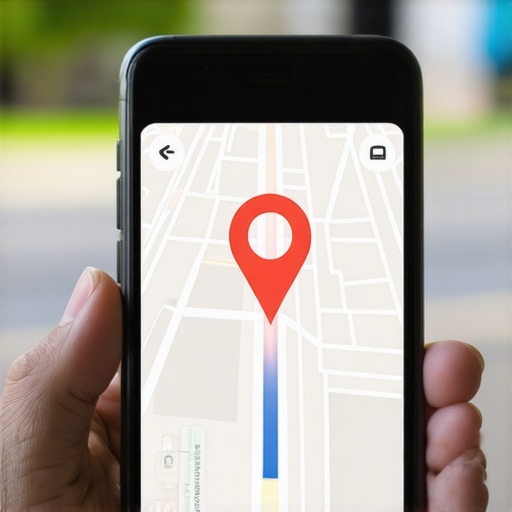
I was once twenty minutes late to a high-stakes board meeting because I trusted a little blue dot that refused to move. It was an hourly reservation I’d made weeks in advance, and I spent the whole morning feeling smug about my organization skills. Then, the tracking link arrived. It showed the driver parked at a gas station two miles away, even as the ‘arriving now’ notification pinged my phone. I stood there, sweating in my suit, realizing I had no way to know if I should wait or call a backup. That’s the problem with modern travel: we’ve traded the certainty of a phone call for the illusion of a digital map.
When the Map Lies and the Clock Ticks
Most of us treat these links as gospel. We open them, see the car moving, and breathe a sigh of relief. But early in my career as a frequent traveler, I made the mistake of assuming ‘real-time’ meant ‘instantaneous.’ I didn’t realize that your real-time tracking link might have a 30-second lag or even a minute-long delay depending on the driver’s cellular signal. That minute is the difference between catching a flight and watching it taxi away from the gate. If you are relying on strategies for safe and reliable hourly bookings, you need to know exactly how to audit that link before you’re standing on the sidewalk with three suitcases. Testing the accuracy isn’t just about punctuality; it’s a core part of why real-time vehicle tracking is more than just a convenience—it’s your primary safety net.
Do These Tracking Links Ever Really Work for Real?
It’s a fair question. You’ve likely seen a ‘ghost car’ on an app before—that phantom vehicle that arrives on the screen but never in the physical world. Skepticism is healthy here. In fact, research published in the Journal of Navigation indicates that GPS accuracy in dense ‘urban canyons’ can degrade by over 20 meters due to multipath interference from tall buildings. This isn’t just a technical glitch; it’s a gap in your personal security. If you can’t verify where your ride is, you can’t verify if you’re getting into the right car.
The Real Cost of Digital Disconnect
I learned the hard way that tracking links are your best defense against missed meetings, but only if you know how to read between the lines. I once waited for a driver who was ‘arriving’ while he was actually three blocks over, stuck behind a delivery truck. If I had known how to test the refresh rate of that link, I would have walked to the corner and saved us both ten minutes of frustration. We’re going to fix that today. I’ll show you the quick checks I use now to ensure my safety and punctuality 24/7. Have you ever stood on a street corner, watching a car on your screen that simply didn’t exist in front of you? [image_placeholder]Step one is to synchronize your expectations with digital reality. I call this the ‘Static Test.’ As soon as you receive that tracking link, open it and watch the vehicle’s icon for at least sixty seconds before you even think about grabbing your coat. You are looking for the cadence of the update. If the car jumps in large intervals, you are dealing with a significant refresh delay. I learned this the hard way in Chicago, watching a car that seemed to be three blocks away until it suddenly ‘teleported’ right in front of me while I was still finishing my coffee. This is exactly why your real-time tracking link might have a 30-second lag and why you cannot trust the first glance.
Test the Refresh Rate Before You Step Outside
If the icon isn’t moving fluidly, your strategy must change. You aren’t just looking for a car; you are auditing a data stream. When I’m managing safety and precision for hourly reservations, I count the seconds between movements. A ten-second gap is manageable; a thirty-second gap means the car is actually two to three blocks ahead of where you see it. To counteract this, I always aim to be at the curb when the app says the driver is two minutes away. It sounds paranoid until you realize that most on-time drop-offs start with a 10-minute early arrival on the passenger’s part.
Always Match the Plate to the App
Visual confirmation is your next line of defense. Never assume the black sedan pulling up is yours just because you ordered one. I once nearly hopped into a random car at a gala because I was focused on my phone instead of the plate. Now, I use the specific driver verification move that prevents identity theft: I keep the tracking screen open and match the last three digits of the plate before I even touch the door handle. This simple habit is a cornerstone of reservation security measures that keep you from becoming a statistic. 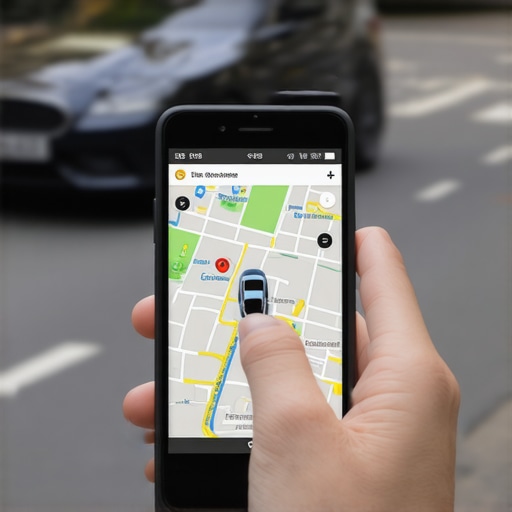
Why Local Knowledge Trumps a Digital Blue Dot
GPS is a tool, not a master. I’ve seen drivers get stuck in ‘infinite loops’ because an algorithm didn’t know about a new one-way street or a sudden construction barrier. This is why on-time performance depends on local knowledge over GPS. If you see the blue dot oscillating or taking a bizarre route, don’t just wait. Use the contact feature to provide a landmark. I once saved a pickup at a confusing airport terminal by telling the driver to ‘look for the bright yellow pillar near door 4’ rather than relying on the pin drop.
The Hard Truth About Estimated Arrival Times
Your ‘Estimated Time of Arrival’ (ETA) is a mathematical guess, not a promise. Traffic is dynamic, and software often fails to account for the minute it takes a driver to find a safe place to pull over. This is why your estimated arrival time is not a guarantee of service. To ensure you stay on schedule, you need to understand the exact buffer you need for Friday afternoon traffic or any peak period. I personally add a 15% ‘glitch tax’ to any ETA provided by an app. If it says ten minutes, I plan for fifteen. This mental shift is how you master the art of reservation and safety every hour, ensuring that even when the map lies, you still make your meeting.Let’s dig deeper into the nuance of why standard ride-hailing habits actually hurt you when the stakes are high. The biggest contrarian truth I’ve discovered is that “on-demand” is often a synonym for “unreliable” during peak hours. Most people believe that the ability to summon a car in three minutes is the peak of flexibility. It’s not. True flexibility is the hourly model. The math behind why hourly bookings save money during peak hours is simple: you aren’t paying for a ride; you are paying for the driver’s unavailability to anyone else. This is why business travelers prefer hourly hires for high-stakes days; it eliminates the 15-minute “search time” between every meeting.
The Dangerous Trap of Automated Safety
Here is the “oops” factor that catches even seasoned travelers: assuming that the green checkmark next to a driver’s name means they are safe today. Digital systems are reactive, not proactive. If a driver’s insurance lapsed six hours ago, the app might not reflect that until the next batch update. This is why you must know how to vet your driver’s commercial insurance without the friction. Don’t just trust the platform; ask to see the physical or digital insurance card if you have any doubt. It sounds like overkill until you realize that ensuring safety first is your guide to on-time reservations at any hour. Relying solely on the app’s automated vetting is a sophisticated mistake. 
Why Your Driver’s Real-Time Location is Often a Mirage
We need to talk about the “Urban Canyon” effect. Research from the University of Texas at Austin’s Radionavigation Laboratory highlights that in dense city centers, GPS signals bounce off glass and steel, creating “multipath errors” that can make a car appear to be on the next street over. This is why real-time tracking apps need constant manual overrides. If you see your driver circling the block aimlessly, they aren’t lost; their GPS is lying to them.
Can You Truly Verify a Chauffeur’s Credentials in Sixty Seconds?
Yes, but most people don’t know where to look. Beyond the app, a professional will have a physical permit or a digital badge from a local regulatory body. You should audit your driver’s background status via digital credentials to ensure the person behind the wheel matches the high standards of a reservation security measure. Finally, never forget the 3-point door handle check every passenger must perform. It’s the last line of defense against the “wrong car” scenario that haunts major transit hubs. Have you ever fallen into this trap? Let me know in the comments.To keep this system working, I don’t just rely on the driver’s app; I run my own diagnostic stack. I use a secondary mapping layer to cross-reference the driver’s route against live hazards. This mirrors the punctuality habits of top-tier private chauffeurs who never trust a single source of truth. If my driver’s app claims a clear path but a secondary live feed shows a fresh accident, I know I need to adjust my expectations immediately. This proactive stance is essential for safety and precision for hourly reservations.
Build Your Own Safety Stack
You need a toolkit that functions independently of the service provider. For instance, I always keep a tab open for local transit alerts during peak hours. This is how professional drivers avoid the stress of holiday traffic jams. They aren’t magical; they just have better data. I also recommend using an app that monitors ‘flight-to-pavement’ times if you are doing an airport pickup. Knowing that a plane has landed is useless; knowing that the taxiway is congested tells you exactly when to signal your driver. Furthermore, I always check the one physical marker that proves a vehicle is well maintained: the condition of the tires. Even the best GPS can’t save you from a blowout on the highway.
How do I maintain my travel safety standards over years of trips?
It comes down to a digital audit trail and consistent verification habits. After every ride, I briefly review the route history in the app. If a driver consistently took unvetted side streets or exhibited erratic speed changes, that is a red flag for future bookings. According to technical documentation from the Federal Motor Carrier Safety Administration (FMCSA), inconsistent driving patterns are often a leading indicator of driver fatigue or lack of commercial experience. By reviewing your history, you ensure your on-time arrival mastering the art of reservation and safety every hour isn’t just a lucky break. You want to see the visual signs of a chauffeur who values professionalism, such as smooth acceleration and adherence to primary thoroughfares. 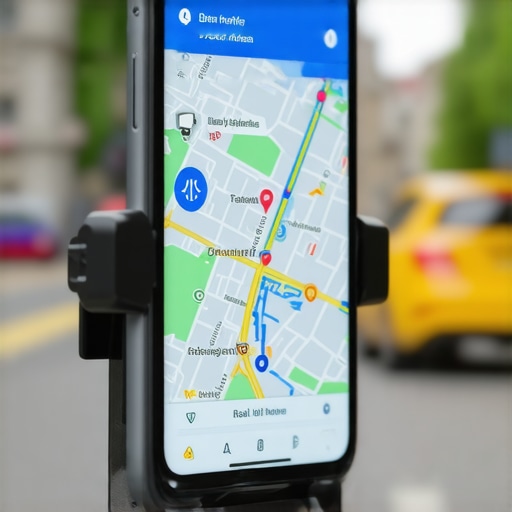
The Future of Precision Pickups
Looking ahead, I predict we will see the rise of V2X (Vehicle-to-Everything) communication in high-end transport fleets. This technology will allow cars to communicate directly with traffic infrastructure, making on-time every time strategies nearly automated. In the next five years, your tracking link won’t just show a car; it will show the car’s intent, like which lane it’s in or if it’s currently yielding to an emergency vehicle. Until then, you are the final auditor of your own journey. My advanced tip for you today: next time you book, manually add a ‘buffer event’ in your personal calendar that starts 15 minutes before the pickup. It’s the simplest way to mimic how we managed a 99 percent punctuality rate for city commutes. Use the ‘Static Test’ on your next ride to see if your tracking link is actually telling the truth. It’s the only way to stay secure and punctual when the digital world gets messy.
Hard-Won Truths from a Decade on the Road
Over the years, I’ve realized that the “arriving now” notification is often a polite fiction. In reality, the driver might still be looking for a legal place to stop. I learned to stop panicking and start auditing. One major lightbulb moment was discovering that the “Driver is Arriving” alert is usually automated by a GPS fence, not the driver’s hand. This is why you must perform the 3-point door handle check every passenger must perform before you even think about loading your bags. Another lesson? Rain or snow doesn’t just slow down traffic; it confuses the GPS sensors, making those tracking links even more erratic. Finally, I’ve found that the best way to ensure peace of mind is to verify a private driver’s professional rating independently whenever possible, rather than relying on a single app’s internal score.
My Personal Tech Stack for High-Stakes Travel
I never travel with just one source of truth. My “Safety Stack” includes Waze for real-world traffic crowd-sourcing, which often catches accidents faster than a chauffeur’s proprietary app. I also cross-reference all my pickups with the on-time every time strategies for safe and reliable hourly bookings I’ve refined over the years. For airport transfers, I use FlightView to see exactly where the plane is on the taxiway, ensuring I only signal my driver when I’m actually through customs. These tools, combined with a quick check of the essential hourly reservation tips for timely service, turn a chaotic commute into a managed process. [image_placeholder]
Take Back Control of Your Schedule
Travel shouldn’t feel like a gamble. By shifting your mindset from “hoping the car shows up” to “auditing the data stream,” you transform from a passive passenger into an empowered traveler. You have the tools, the logic, and the habits to ensure every trip is as safe as it is punctual. Mastering these on-time every time strategies is the final step in reclaiming your most valuable asset: your time. Have you ever had a tracking link lead you to the completely wrong street corner? Let me know your stories in the comments below.