
I’ll never forget that cold Tuesday night in mid-November. I had a 5:00 PM reservation for a high-stakes dinner, and I was standing on a damp Chicago sidewalk watching a little blue dot on my phone screen that refused to budge. For three agonizing minutes, the icon sat frozen three blocks away. I panicked, thinking I was being ghosted. I actually started walking toward the dot, only for the car to pull up right behind me at my original spot. I felt like a total amateur. That 30-second delay didn’t just hurt my pride; it nearly ruined my professional composure because I didn’t understand how the tech actually worked.
Why Your ETA Lies to You When You Need It Most
We’ve all been there—eyes glued to the screen, heart racing because you need to ensure safety and timeliness in your hourly reservation. You trust the technology, but then the technology decides to take a coffee break. Most people assume it is a spotty cellular connection or a driver taking an unauthorized detour. The reality is far more technical, and once you understand it, you can finally stop stressing over that static icon. Today, we are going to dive into the digital plumbing of GPS pings so you can accurately predict your ride’s arrival without the high blood pressure.
Is real-time tracking actually just a marketing gimmick?
I used to be a massive skeptic. In my early days of managing travel, I made the mistake of assuming “real-time” meant “instantaneous updates every millisecond.” I once famously cancelled a perfectly good ride because the map didn’t refresh for sixty seconds, only to find out later that the driver was right around the corner. The truth is that your real-time tracking link might have a 30-second lag by design.
The Technical Truth Behind the Refresh Rate
Most tracking systems don’t stream data like a live video; instead, they send data “pings” at set intervals to preserve the driver’s battery and reduce server strain. According to the U.S. government’s GPS performance standards, while the satellites themselves are pinpoint accurate, the translation of that data through cellular networks to your mobile browser introduces inevitable latency. This lag is the error in relying on app-based arrival times during high-traffic periods. Have you ever stood on a curb, fuming at a frozen map, only to have your driver appear out of thin air? I want to hear your most frustrating “where is my ride” stories—it helps to know we’re not alone in the tech-induced stress. [image_placeholder]
Stop Staring at the Screen and Start Cross-Referencing
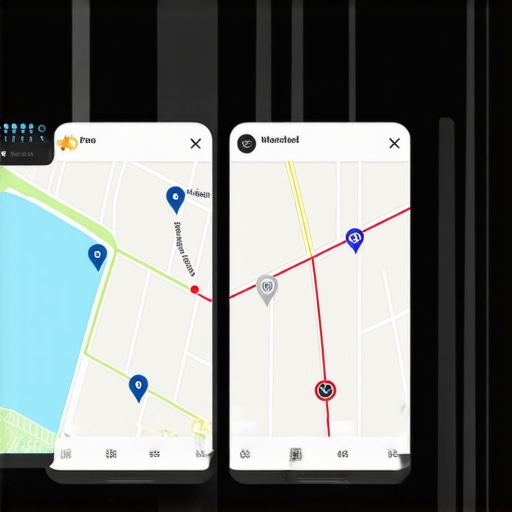
When your tracking link freezes, your first instinct is to refresh the page repeatedly. This is a waste of energy. Instead, open a standard traffic mapping tool and check for red lines on the driver’s predicted path. This tells you instantly if the lag is a network ping issue or a genuine traffic snarl. Last summer in D.C., I was coordinating a three-car pickup during a torrential downpour. Two apps showed the vehicles as completely stationary. By checking the local road closures, I realized the ‘frozen’ cars were actually rerouting around a flooded underpass. I quickly established the protocol for verifying a driver when the app fails with my clients via text, ensuring they didn’t jump into the wrong black SUV just because they were desperate to get out of the rain. Knowing how to interpret the silence of the app is the first step toward true travel mastery.
Verify Your Driver Without the Friction
You do not have to be rude to be secure. As the car pulls up, your focus should shift from the phone to the physical vehicle. Knowing how to identify a genuine commercial chauffeur permit on sight takes exactly four seconds and saves you from the potential danger of an unvetted vehicle. I make it a habit to check the rear plate against the tracking link while I am still five feet away. Before the trunk even opens, I perform the verification step that keeps your luggage safe during transfers by asking the driver who they are picking up, rather than offering my own name first. It is a professional dance that ensures reservation security measures are active habits rather than passive hopes. 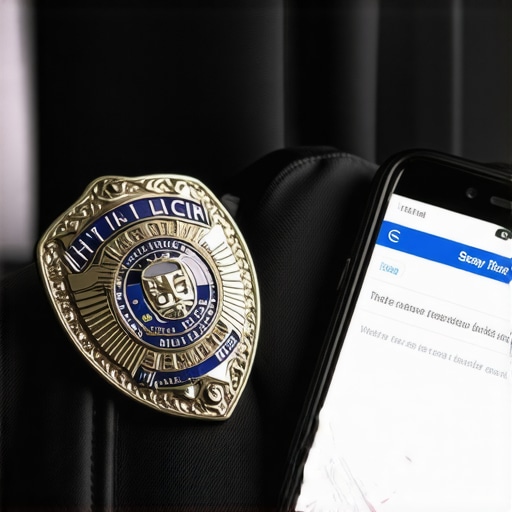
Build a Buffer That Absorbs Real-World Chaos
Most travelers book for the exact time they want to walk out the door. That is a tactical error that leads to high cortisol levels. You need to calculate the exact buffer you need for Friday afternoon traffic based on the specific urban density of your city. For any high-stakes meeting, I always implement the buffer rule that actually prevents tardy starts by scheduling the vehicle for fifteen minutes before my ‘true’ required departure. This buffer absorbs the standard 30-second GPS lag and the inevitable human delays. We often forget that why on-time performance depends on local knowledge over GPS—a professional driver knows a certain left turn is impossible at 4:00 PM, even if the algorithm insists it is the fastest route. Trusting the person over the icon is how you stay on schedule.
Algorithms Fail Where Local Knowledge Wins
Most travelers believe that more technology equals more punctuality. We’ve been conditioned to think that an AI-driven algorithm is the ultimate authority on traffic. However, I’ve found that the opposite is often true: over-reliance on automated routing is exactly the real reason your app’s ETA is often over-optimistic. Computers can calculate the distance, but they struggle to account for the nuance of a parade route change or a sudden VIP motorcade. This is why manual dispatching still beats AI for real-time accuracy in complex urban environments. In my experience, a human dispatcher who knows that a specific intersection floods during every heavy rain is worth ten ‘smart’ apps.
The Third-Party Broker Trap
One of the most dangerous ‘oops’ factors in the industry is booking through a secondary broker thinking you are dealing with the actual service provider. These platforms are often just digital middlemen with zero control over the vehicle or the driver’s vetting process. I’ve seen countless travelers realize too late that they are facing the security risks of booking a ride through a third-party broker. You might receive a sleek email, but you must know how to spot a forged confirmation screen on a third-party app before you trust it with your safety. A common myth is that a big-name platform guarantees a professional; the reality is that the logic behind choosing a professional chauffeur over on-demand apps usually comes down to the liability and training that brokers simply don’t provide.
Why does the map show a clear path when the road is actually closed?
Data latency is a silent killer of schedules. According to research from the Texas A&M Transportation Institute, predictive traffic data can lag by several minutes, which is an eternity when you are trying to maximize your safety and satisfaction with precise reservation timing. This is why why your estimated arrival time is not a guarantee of service; it is an educated guess based on potentially stale data. Professional services that prioritize safety and precision in hourly reservations will often use secondary verification methods rather than just a single GPS feed. Have you ever fallen into this trap of trusting the app over your own eyes? Let me know in the comments below.
I learned the hard way that a phone and a prayer aren’t a strategy for high-stakes arrivals. If you want to move from an amateur traveler to a logistical master, you need a toolkit that accounts for technical failure. My personal go-to is not just one app, but a layered redundancy system. I always keep a secondary, independent mapping tool open alongside the primary tracking link. This allows me to perform the tracking accuracy test for private hire car services in real-time. If the tracking link shows the car on one street but my independent traffic map shows that street is closed for a gas leak, I know I need to call the driver immediately. This level of oversight is why real-time vehicle tracking is more than just a convenience—it is your primary data source for decision-making under pressure.
Audit Your Arrival Before You Even Leave
Authority in travel logistics comes from data, not hope. Every month, I sit down and look at the telemetry of my most frequent routes. You should know how to audit your driver’s route history for accuracy and safety to see if they are consistently avoiding the ‘easy’ but congested highways in favor of smarter, vetted local paths. This habit ensures that on-time arrival becomes a repeatable result rather than a lucky break. According to the European GNSS Agency (GSA) User Technology Report, urban canyons—areas with high-rise buildings—can cause GPS ‘multipath errors’ that misplace a vehicle by up to 50 meters. Understanding this technical limitation allows you to stop panicking when the icon ‘jumps’ and instead trust the physical markers you’ve identified.
How do I keep my travel logistics sharp over the years?
Maintenance is about refining your instincts and your digital settings. I religiously update my ‘secure locations’ list and check that my reservation security measures are still active after every app update. It is also about the humans involved. I make it a point to keep a log of drivers who demonstrate superior local knowledge. When I need the only way to ensure your 4 AM ride actually shows up, I don’t leave it to a random algorithm; I request the professionals who have already proven they can handle the graveyard shift with precision. This proactive maintenance turns a chaotic service into a reliable utility.
The Future of Punctuality is Vehicle-to-Everything
Looking ahead, I predict we are moving away from simple GPS pings toward ‘V2X’ (Vehicle-to-Everything) communication. In the next five years, your private car won’t just tell the app where it is; it will communicate with the city’s traffic lights and other vehicles to provide an ETA that is accurate to the second. This will finally eliminate the real reason your app’s ETA is often over-optimistic. For now, the most advanced tip I can give you is this: always cross-reference your tracking link with a live police scanner app or local transit Twitter feed during major events. It provides the ‘why’ behind the ‘where’ that no GPS can capture. Try this during your next trip, and you’ll find you’re the only person in the lobby who isn’t surprised by a delay.
Hard Lessons from a Decade of Managing High-Stakes Arrivals
After years of coordinating executive travel, I have realized that the app is never the boss—you are. First, I learned that a driver who asks clarifying questions is often more reliable than one who stays silent; it shows they are actively calculating the best route rather than blindly following a screen. Second, I stopped viewing the 30-second GPS lag as a bug and started seeing it as mandatory breathing room for my own expectations. Finally, I realized that why real-time tracking is your best defense against missed meetings is not just about watching a dot; it is about knowing exactly when to pick up the phone to confirm the human element behind the hardware.
The Digital Stack That Keeps My Schedule Precise
I do not rely on luck; I rely on a specific set of tools that provide redundancy. I always keep Waze open in the background to see user-reported hazards that official GPS feeds often miss by several minutes. For airport-related legs, FlightAware is my go-to because their ground telemetry is frequently faster than the airline’s own notifications. For the actual booking, I prioritize platforms that allow reserving your spot for safety and punctuality 24/7 through encrypted, professional portals. If I am in a new city, I will even check local police or transit Twitter handles to see if there is a localized event that hasn’t hit the main maps yet.
Take the Wheel of Your Travel Schedule
Punctuality is not a gift; it is a discipline. When you stop being a passive passenger and start being an active participant in your logistics, the stress of the frozen dot disappears. You deserve to walk out your door with the total confidence that your on-time arrival is a mathematical certainty rather than a roll of the dice. Implementing the buffer time secret for stress-free airport arrivals is the final step in moving from travel anxiety to travel mastery. If you ever feel unsure about your next move, don’t hesitate to reach out to the pros who handle these variables every single day. Have you ever had a GPS glitch that completely changed your travel plans? Drop your story in the comments below!