I stood on the curb outside Terminal 4, the humidity clinging to my shirt like a wet blanket. My phone screen was frozen—that dreaded spinning wheel of death appeared right as my ride was supposed to arrive. When a black sedan rolled up, I did the one thing I always tell people not to do: I reached for the door handle without a second thought. It was not my driver. It was a very confused businessman. That moment of pure embarrassment and potential danger was my wake-up call. We rely so heavily on technology to keep us safe, but what happens when the digital handshake fails? Today, I am going to show you exactly how to handle that gap so you never compromise your safety or your schedule again. I will walk you through the backup steps that ensure you are getting into the right vehicle every single time.
Stop Trusting the Screen Alone
I have spent years perfecting my travel routine, mostly because I am a stickler for staying secure and punctual. But early in my journey, I made a massive mistake. I assumed that if the app said “Driver Arriving,” any car that looked the part was the one. I learned the hard way that technology is a tool, not a fail-safe. According to the International Road Transport Union, professional standards in transport require multiple layers of verification to ensure passenger security. When you have booked a high-stakes trip for business, you cannot afford a security lapse or a missed connection. I have since developed a personal habit where I verify every driver’s identity using a specific set of questions that do not rely on my phone’s 5G connection. It is about taking control of the situation before you ever touch the door handle.
Is manual verification really worth the extra effort?
You might think this sounds like overkill. You are tired, you have luggage, and you just want to get to the hotel. But think about the hidden risks in your car door locks if you enter the wrong vehicle. Once you are inside, you have handed over your personal safety to a stranger. Taking thirty seconds to check for commercial plates or asking the driver to confirm your name and destination before you get in isn’t being paranoid; it is being professional. Have you ever found yourself staring at a blank screen while a stranger beckons you into their car? It is a gut-wrenching feeling that no one should have to navigate twice. If you have faced a similar tech meltdown, how did you handle it? Let me know, because your experience might just help someone else stay safe. Now, let’s dive into the actual steps you need to take when the app goes dark.
Verify the Vehicle While the Screen is Spinning
Think of your ride-hailing app like a digital compass; it is great until you are standing in a concrete canyon and the signal starts bouncing. When your phone freezes, you have to revert to the primary security check that never requires a battery: the license plate. I once stood in a downpour in Chicago, watching three identical black SUVs pull to the curb simultaneously. My app was a brick. Instead of guessing, I walked to the rear of the first car to check for commercial plates and compared them to the reservation text I’d luckily screenshotted earlier. This is vital because you should never enter a vehicle without a license plate match. It is the only unique identifier that a driver cannot fake. If the plates don’t match your booking, the car doesn’t exist for you. Period. 
Force the Driver to Pass Your Security Test
Once you have the right car, the next hurdle is identity. Most people walk up and say, ‘Are you Mike?’ This is a massive mistake. A malicious actor will just say ‘Yes’ to get you into the car. Instead, I use what I call the ‘Reverse Password’ method. I approach the window and ask, ‘Who are you here to pick up?’ A professional driver will immediately have your name ready. This is exactly how we verify every driver’s identity in high-end services. If they hesitate or try to look at their own screen after you ask, step back. In my messy Manhattan encounter, the driver I approached actually called out a completely different name, which was my cue to walk away before I ever touched the door. It only took five seconds, but those five seconds prevented me from being in a vehicle where I had no insurance coverage and no digital trail.
Forget the 15-Minute Rule: Use This Buffer Instead
Punctuality isn’t just about showing up; it is about accounting for the ‘optimism bias’ of GPS software. We have all seen an app say ‘3 minutes away’ for ten minutes straight. This happens because GPS lag can ruin your meeting schedule by failing to account for double-parked delivery trucks or sudden lane closures. To counter this, I’ve switched to a specific timing strategy. I’ve found that the 17-minute buffer outperforms the traditional 15-minute rule because it accounts for the ‘last mile’ chaos of finding a specific terminal door or office entrance. When you are booking, especially if you realize why hourly booking is more reliable than ride-hailing apps, you aren’t just paying for the seat; you are paying for that time cushion. This buffer is your insurance policy against the anxiety of a spinning loading wheel. Using real-time tracking is your best defense against missed meetings, but only if you have the physical time to react when the blue dot on your screen stops moving.Let’s dig deeper into what happens once you are actually moving and the digital safety net of the app falls away. Many travelers assume that a low price is just a bargain, but in my years on the road, I’ve found that the real cost of choosing the cheapest ride option often manifests as a lack of proper commercial coverage or rushed, exhausted drivers. It is a dangerous myth that every car on a platform is vetted equally. In fact, professional transportation experts at the National Limousine Association emphasize that true duty of care involves rigorous background checks and specific vehicle maintenance schedules that discount apps often bypass to keep costs low. Have you ever fallen into this trap of prioritizing a few dollars over your peace of mind? Let me know in the comments. One massive ‘oops’ factor I see even seasoned pros make is the error in relying on app-based arrival times during construction. An algorithm might see a clear road, but it doesn’t see the ‘Road Closed’ sign that went up twenty minutes ago or the specific congestion patterns of a local festival. This is why I always argue that why on-time performance is the only metric that matters for high-stakes days. If your driver arrives even five minutes late, the domino effect on your schedule can be catastrophic, turning a smooth morning into a frantic sprint to the gate. 
How can you tell if your driver is a true professional within the first sixty seconds?
Look at their preparation before the car even moves. A major red flag for any sophisticated traveler is why your driver should never ask for directions. If they are asking you which highway to take or fumbling with their phone to find the entrance, they haven’t done their pre-trip homework. A top-tier chauffeur has already studied the route, identified potential bottlenecks, and checked for live traffic updates before they ever pull up to your curb. This level of detail is exactly why professional punctuality requires a pre-trip inspection of both the vehicle and the logistics. When you are traveling with loved ones, you should also know how to vet a chauffeur service for your family vacation to ensure those same standards apply to your most precious cargo. It’s about moving beyond the ‘app-first’ mindset and reclaiming the standards of professional travel where human expertise overrides a spinning loading wheel. By focusing on these nuances, you aren’t just getting a ride; you are securing a professional environment where safety and timing are guaranteed by design, not by chance.
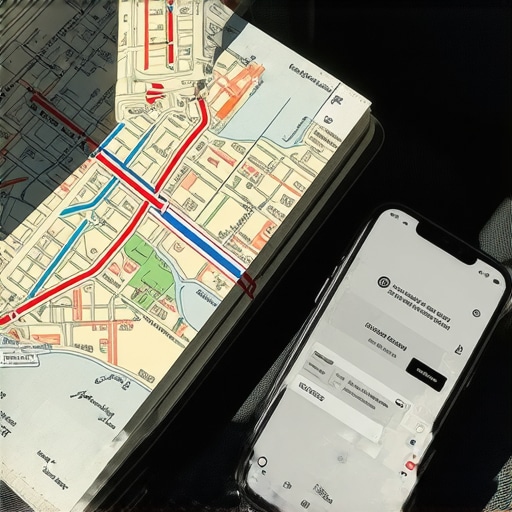
To keep this system working over the long haul, I’ve moved away from pure digital dependency. I advocate for a concept I call ‘Hybrid Navigation.’ I’ve seen GPS lead drivers into narrow alleys in London that were physically impossible for a sedan to navigate. This is exactly why a driver with a physical map is more reliable than GPS; they understand the physical geometry of the city, not just the pixels on a screen. For my own peace of mind, I always insist on a secondary communication channel. You should know why you need a direct line to your hourly driver. If the app crashes or the server goes down, that direct phone number is your only lifeline to coordinate a pickup change when your meeting runs late.
How do I maintain a foolproof travel schedule over the long term?
Consistency is the secret sauce. I treat my travel planning like a professional athlete treats their training. Every Sunday, I review my upcoming week and set up a recurring weekly commute that never fails. This removes the ‘decision fatigue’ of booking individual rides every day and ensures I am always paired with drivers who already know my preferred routes and safety requirements. I also perform a quick monthly check-in on my logistics; I’ve learned how to audit your monthly travel spend without stress to ensure the premium I’m paying for safety is actually translating into the 99% punctuality rate I demand. If the data shows a dip in performance, I pivot to a different service immediately.
When you scale your travel—perhaps you are handling a whole week of back-to-back presentations—the point-to-point model simply breaks down. I’ve found that why hourly rates are the only way to handle multiple client meetings is because it transforms the vehicle into a mobile office. You keep the same driver, the same security protocol, and a consistent environment where you can leave your laptop bag securely while you run into a building. It’s also vital to protect the digital trail you leave behind. I am very careful about how to secure your data when sharing tracking links. I only share these with my spouse or my executive assistant, never on open social channels, to ensure my real-time location isn’t a public broadcast.
Looking ahead, I see a massive divide forming in the transport industry. We are going to see ultra-cheap, fully autonomous ‘pods’ on one side, and highly specialized, human-curated safety services on the other. For those of us where time is the most expensive commodity, the human element won’t just be a luxury; it will be the only way to ensure on-time arrival remains a guarantee. Advanced defensive driving methodologies, such as the Smith System, emphasize the ‘Five Keys’ to safety—including ‘Getting the Big Picture’—a level of cognitive foresight that AI still struggles to replicate in chaotic urban construction zones. This is also why a human dispatcher outperforms an AI every time; they can hear the stress in your voice and reroute a driver before a computer even recognizes there is a delay. My advice? Try the ’17-minute buffer’ on your very next high-stakes trip and watch how your cortisol levels drop as you realize you are actually in control of your day.
The Expensive Myths About Driver Vetting I Finally Stopped Believing
Over the years, I have realized that the ‘convenience’ of a cheap app often hides a massive safety debt. If a driver isn’t treating their vehicle as a professional workplace, they aren’t treating your safety as a priority. This is why safety precision is the only way to avoid those ‘almost’ accidents that occur when standards are relaxed. One lightbulb moment for me was realizing that why safety and timeliness matter most is when you are at your most exhausted—that is precisely when your guard is down. Don’t let a low price tag trick you into skipping the basic verification steps I have outlined; professional status is something earned through consistency, not just an algorithm’s rating.
My Essential Toolkit for Perfect Punctuality
I never leave home without a few specific items that act as my analog safety net. First, I keep a physical or offline digital backup of all my booking details; never trust the cloud in an airport tunnel or a crowded convention center. I also keep a high-quality portable charger specifically to ensure I never lose access to my communication channels. For those looking for a solid starting point, this guide to on-time reservations offers a great foundation for building your own routine. Finally, always have a direct contact for a human dispatcher, because reliable hourly bookings rely on human problem-solving when technology inevitably hiccups during peak hours.
Build Your Own Protocol for Professional Travel
You don’t have to be a full-time traveler to move like one. It starts with a simple choice: prioritizing your peace of mind over a few saved dollars. By reserving your spot with a vetted professional service, you are essentially buying back the mental energy you would have spent worrying about traffic or driver identity. Reclaiming your schedule and ensuring a consistent on-time arrival is about building a system that works for you every single time, regardless of the 5G signal. Have you ever had a ride-hailing app fail you at the worst possible moment? Let me know your story in the comments below.