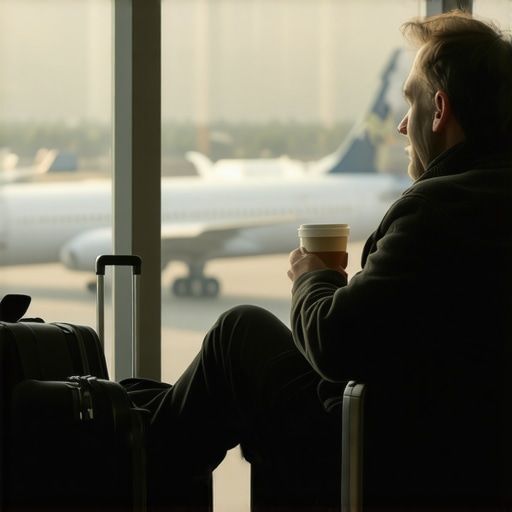
I’ve stood there, shivering in that weirdly aggressive airport air conditioning, watching the “Final Boarding” sign blink out of existence. It’s a gut-punch that stays with you. Two years ago, I thought I had it all figured out. I’d booked a ride, checked my phone, and saw the driver was “5 minutes away.” I even had time for one last coffee. But a single stalled delivery truck three blocks away turned that 5 minutes into 25, and suddenly, I was sprinting through Terminal B like a madman. I missed the flight. My non-refundable hotel deposit vanished. My vacation started with a $400 rebooking fee and a massive amount of self-loathing. That was my wake-up call. I realized that most of us treat airport timing like a math problem where the variables never change, but the reality is far more chaotic. Today, I’m going to share the buffer time secret that has saved my sanity and my wallet ever since. We’re moving past the “just leave early” advice and looking at the actual logistics of reliable hourly bookings. [image_placeholder_1]
The Day My Perfect Trip Collapsed into Airport Chaos
I used to be the guy who bragged about arriving at the gate exactly as boarding started. I thought I was being efficient. In reality, I was just gambling with my peace of mind. That failure with the stalled truck taught me that the error in relying on app-based arrival times during construction or peak hours is a recipe for disaster. The “estimated” in ETA is doing a lot of heavy lifting, and it usually doesn’t account for the human factor. Have you ever felt that sinking feeling when the TSA line looks more like a theme park queue and your flight boards in twenty minutes?
Is this extra time just a way to sit at the gate longer?
I get the skepticism. No one wants to spend three hours eating overpriced terminal sandwiches. But the secret isn’t just about arriving early; it’s about the buffer rule that actually prevents tardy starts. According to a report by the Bureau of Transportation Statistics, ground transportation remains one of the most controllable parts of your journey that travelers frequently ignore until it is too late, leading to unnecessary stress.
Why your estimated arrival time is usually a lie
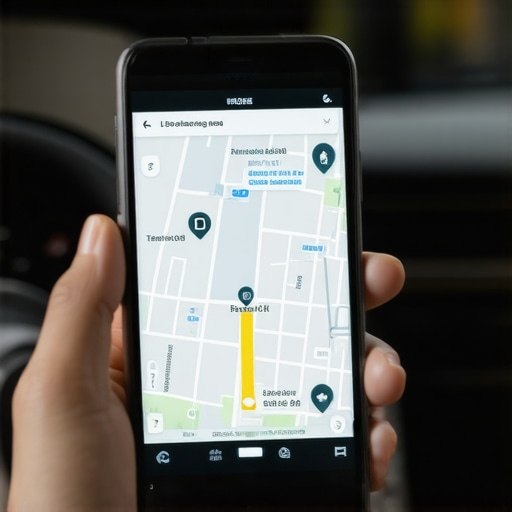
We’ve been conditioned to trust the little car icon on our screens. However, those algorithms are often optimistic. They don’t see the double-parked car or the sudden rainstorm that slows everyone to a crawl. By building a strategic cushion, you aren’t just “waiting”—you are buying insurance against the unpredictable. My mistake was thinking a 10-minute window was enough. Now, I use a specific formula for international airport pick-ups that accounts for the complexity of larger hubs. It’s the difference between starting your trip with a panic attack or starting it with a calm stroll to your gate.To stop the cycle of airport-run anxiety, you have to treat your transportation like a scheduled flight, not a pizza delivery. The first step is acknowledging that why your estimated arrival time is not a guarantee of service. Algorithms calculate speed, but they don’t calculate human error or vehicle health. I learned this the hard way last November during a rainy Friday in Chicago. The app said 8 minutes; the reality was a driver who took three wrong turns because he was chasing ‘surges’ on a different app. This is why the logic behind choosing a professional chauffeur over on-demand apps is so critical for high-stakes travel. Professionals operate on a fixed schedule, meaning they are already in your area before you even step outside.
Calculate your real departure window
Forget the ‘leave at 5 PM’ mindset. You need to work backward from the boarding time, not the departure time. If your flight boards at 6:00 PM, and the drive is 45 minutes, a standard app suggests leaving at 5:00 PM. That’s a trap. Use the buffer rule that actually prevents tardy starts by adding a 25% cushion for local traffic and a 15-minute ‘driver-at-door’ window. This ensures you aren’t pacing by the window while your driver is stuck at a red light two miles away. For heavy travel days, I specifically look at the exact buffer you need for friday afternoon traffic, which often requires an extra thirty minutes just to navigate the terminal drop-off lane.
Why fixed schedules beat real-time AI during rush hour
AI-driven apps prioritize the nearest driver, but ‘nearest’ doesn’t mean ‘ready.’ A driver on a why the best drivers prefer fixed schedules over on-demand pings has already committed their hour to you. They aren’t distracted by multiple pings or trying to maximize short-distance fares. This commitment is what makes on-time arrival mastering the art of reservation and safety every hour possible. In my experience, these dedicated drivers often check local news and radio for accidents that GPS systems haven’t flagged yet. 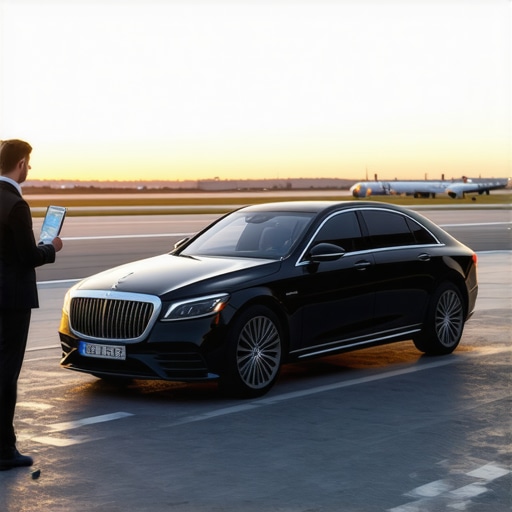
The three-step safety check before you buckle up
Once the vehicle arrives, your job isn’t done. Punctuality is worthless if the ride isn’t secure. I’ve had friends jump into ‘booked’ cars that were actually just random vehicles with a sticker. Always start with the checklist for verifying a luxury sedan before boarding. Look for the commercial plates and the driver’s ID. Then, perform the 3-point door handle check every passenger must perform to ensure the child locks aren’t engaged and the doors function correctly from the inside. This small movement takes two seconds but ensures you are in control of your exit.
Verify insurance and licensing in seconds
Never feel awkward about asking for credentials. A legitimate driver will have them displayed or readily available. Knowing how to identify a genuine commercial chauffeur permit on sight protects you if an accident occurs. It’s about more than just a ride; it’s about professional accountability. This level of detail is why why business executives prefer dedicated drivers for multi-stop days—it removes the ‘what ifs’ from the equation entirely. Using why fixed schedules beat real-time AI during rush hour ensures your driver is waiting for you, not the other way around. Furthermore, check how to verify a private vehicles commercial insurance in seconds to guarantee that the provider isn’t just using personal coverage, which often voids in commercial transport scenarios.
Most people think the height of modern travel is a sleek app interface and a ‘live’ map. We’ve been trained to believe that if we can see the little car icon moving on our screen, we are in control. But here is the contrarian truth: that little car icon is often an illusion of safety, and relying on it too heavily is the most common mistake advanced travelers make. In my experience, real reliability doesn’t come from a satellite; it comes from human oversight. While the world is obsessed with automation, I’ve found that why manual dispatching still beats ai for real-time accuracy because a human dispatcher knows that a local parade or an unmapped water main break will stall traffic in a way an algorithm won’t catch until it’s too late. Have you ever fallen into this trap? Let me know in the comments.
Local knowledge beats the satellite every time
Everyone says the shortest distance between two points is a straight line, or whatever Google Maps suggests. But if you’re trying to catch a flight during a shift change at the local hospital or during a stadium event, the ‘fastest’ route is often a trap. Professional chauffeurs know the side streets that don’t even register as ‘efficient’ to an AI, yet they save ten minutes of idling. This is why on-time performance depends on local knowledge over gps. When you book a professional, you aren’t paying for a driver; you’re paying for a navigator who has seen every possible traffic scenario in your city. 
Why does your real-time tracking link have a 30-second lag?
This is a question I get from my most detail-oriented colleagues. They see the driver is ‘at the corner’ on the phone, but the car is already pulling into the driveway. It seems like a tech failure, but understanding why your real-time tracking link might have a 30-second lag is crucial. This delay is inherent in cellular data packets being relayed through servers. If you are timing your exit from a secure building down to the second, that 30-second gap can lead to missed connections. The ‘oops’ factor here is assuming the screen is the absolute reality. Advanced travelers know to communicate directly with the driver five minutes out rather than staring at a loading bar.
The expensive reality of cheap car reservations
The biggest trap in the industry is the ‘budget’ reservation site that looks like a luxury service. These third-party brokers often take your money and then scramble to find a driver at the last minute, often neglecting the vetting process. According to the National Safety Council, professional drivers who undergo specific commercial training programs are significantly less likely to be involved in preventable accidents than standard license holders. This is why the real cost of choosing the cheapest reservation available often manifests as a ‘no-show’ or a vehicle that smells like a locker room. Real safety precision the key to reliable hourly reservations for peace of mind requires a provider who owns their fleet and employs their drivers. You should also look for why verified driver badges matter more for late night travel, as they provide a layer of physical identity verification that an app screen simply cannot replicate. Don’t let a low price tag blind you to the logistics required for a truly seamless experience.
Maintaining a perfect travel record isn’t about luck; it is about the tools you keep in your digital arsenal and the habits you build. For me, that started with moving away from the ‘hope and refresh’ method of app-tracking and into a more disciplined approach. I’ve found that why real-time vehicle tracking is more than just a convenience—it is the only way to audit a service in real-time. But even the best tech has its limits. This is why real-time tracking apps need constant manual overrides from a human dispatcher who can see the ‘big picture’ of city-wide closures. When I’m on a multi-city tour, I don’t just look at the map; I look at the route history. Knowing how to audit your drivers route history for accuracy and safety allows you to identify if a provider is taking unnecessary risks or poorly optimized paths that could cost you your next meeting.
Verify the person behind the wheel every single time
Authority in travel safety comes from verification, not assumption. I make it a point to check the driver’s physical credentials against what was sent in my confirmation email. Learning how to read a drivers commercial badge for authentic credentials changed the way I interact with car services. It’s not about being difficult; it’s about professional standards. The Federal Motor Carrier Safety Administration (FMCSA) reports that driver fatigue is a factor in roughly 13% of all commercial motor vehicle crashes, which is why I always look for the stealth way to confirm your driver is not fatigue. A quick, polite conversation during the first two minutes of the ride can tell you everything you need to know about the driver’s state of mind and readiness for the road.
How do I maintain this level of precision for every trip?
Consistency over time requires a ‘set it and forget it’ system that actually works. For those brutal 4 AM airport runs, I never rely on an on-demand ping. I’ve found the only way to ensure your 4 am ride actually shows up is to use a service that provides a dedicated confirmation at least 12 hours in advance. This long-term scaling of your personal logistics also involves financial security. I only use portals where why modern reservation systems use encryption for your credit card is a standard, not an afterthought. In the near future, I expect to see biometrics integrated into the pickup process, ensuring that the driver and passenger are exactly who they say they are before the doors even unlock.
The one marker you can’t ignore
If you want to know if a car is safe, look at the tires and the trim. It sounds simple, but the one physical marker that proves a vehicle is well-maintained is often the cleanliness of the wheels and the tread depth. A company that cares about the rubber on the road cares about your life. This level of detail is why I am so adamant that why you should never enter a vehicle without a license plate match. It is the final link in the chain of safety. My challenge to you: on your very next booking, don’t just hop in. Take five seconds to verify the plate and perform the 3-point door handle check. It’s a small habit that yields massive long-term results in your personal security and peace of mind.
Reflecting on years of travel, I’ve realized that why safety and timeliness matter in hourly reservation services goes far beyond just reaching the gate. It’s about the mental space you have when you arrive. I used to think I was winning by shaving off minutes, but the real victory is sitting at the gate with a book, knowing your luggage is safe and your driver was a vetted pro. One lightbulb moment for me was realizing that reserving your spot how to guarantee safety and punctuality 24/7 is a non-negotiable for anyone traveling for high-stakes business.
The Hardest Lesson I Learned While Watching My Flight Pull Away
Experience is a brutal teacher, but it provides the kind of wisdom no app can simulate. Here are the core shifts I made to my travel philosophy after that disastrous day in Terminal B:
- Stop treating the ‘ETA’ as a fact. It is a mathematical guess based on ideal conditions. Always assume a 15% ‘chaos factor’ for local events or sudden weather shifts.
- Human oversight is the ultimate fail-safe. I now exclusively use services where the essential hourly reservation tips for timely service include a human dispatcher who can override a GPS if they see a road closure the satellite missed.
- Professionalism pays for itself. The $400 rebooking fee I paid two years ago would have covered dozens of safe and reliable hourly bookings. Cheap on-demand apps are a gamble where the stakes are your time and peace of mind.
The Tiny Toolkit That Ensures You Never Rush Again
I don’t just rely on a driver; I rely on a system. To keep my travel record spotless, I use FlightAware to track the inbound status of my aircraft long before the airline sends an alert. I also prioritize encrypted booking portals to protect my data during the reservation process. I’ve found that why modern reservation systems use encryption for your credit card is a major indicator of a company’s overall commitment to professionalism. If they don’t care about your data, they likely don’t care about your pickup time. Finally, I keep a physical card of my chauffeur’s dispatch number in my passport holder, just in case my phone battery dies during a long flight.
Take the Panic Out of Your Next Departure
Travel should be an adventure, not a test of your cortisol levels. By shifting your mindset from “getting there” to “being there with time to spare,” you change the entire energy of your trip. The art of reservation and safety every hour is something anyone can master with a bit of discipline and the right partners. Don’t wait for a missed flight to be your wake-up call. Start building your buffer today and treat yourself to the calmest airport experience you’ve ever had. What’s the closest you’ve ever come to missing a flight because of a ride-share glitch? Let me know in the comments below.