
I still remember the cold pit in my stomach when I received that ‘Booking Canceled’ text while standing on a rainy curb in Chicago, just twenty minutes before a major gala. I had done everything right—or so I thought—but I was suddenly left stranded without a single backup plan. It was a humiliating, shivering lesson in the massive difference between a simple app ping and a truly reliable reservation that actually sticks. That disaster taught me that managing your transportation isn’t just about clicking a button; it’s about having a ironclad protocol for when the unexpected hits. We’ve all been there: an event gets scrubbed at the eleventh hour, a flight is diverted, or a driver simply doesn’t show up. If you aren’t careful, you end up paying for services you never used or, worse, compromising your safety by jumping into a random, unvetted vehicle just to make your time. My biggest mistake early on was assuming that every ‘on-demand’ service had my back. I didn’t realize that understanding the protocol for canceling a reservation without financial penalty is actually your best secret weapon.
Take Back Control of Your Schedule When Everything Goes Sideways
Today, I am going to walk you through exactly how to handle these logistical nightmares without losing your cool or your cash. My goal is to help you master on-time arrival by mastering the art of reservation and safety so that a cancellation becomes a minor footnote rather than a total day-ruiner. According to a report by the Global Business Travel Association, nearly 40% of corporate travelers have experienced significant trip disruptions, which proves that having a ‘Plan B’ is no longer just a nice-to-have luxury—it is a necessity. Have you ever been left in the lurch by a last-minute cancellation right when you needed to be at your best? Reach out through our contact page and let me know your story.
Does a Premium Booking Actually Save You Money?
I get it—you might be skeptical. You might be wondering if paying a bit more for a professional, dedicated service is just an extra expense you can skip. But when you look at the math behind why hourly bookings save money during peak times, the logic becomes clear. It’s about more than just the ride; it’s about the flexibility every business traveler needs for those late flights or sudden itinerary shifts. When you book correctly, you aren’t just buying a seat; you are buying a guarantee that your 4 AM ride actually shows up regardless of the chaos happening in the local market. Let’s dive into the specific steps to protect your time and your wallet.
Build a Protocol That Stops the No-Show Nightmare
The biggest mistake you can make is treating a reservation like a set-it-and-forget-it task. It is more like a handshake agreement that needs active verification. In London last November, I had a 4:00 AM flight out of Heathrow. Instead of rolling the dice on a ride-hail app that might keep ‘searching’ for a driver while I paced the lobby, I used a dedicated professional service. I learned that why most on-time drop-offs start with a 10-minute early arrival is not just a polite habit; it is a fundamental rule of professional transit. By having my driver arrive early, we bypassed the ‘ETA drift’ that ruins so many morning commutes. This proactive approach turned a high-stress departure into a quiet, early-morning coffee run.
The 10-Minute Buffer That Saves Your Reputation
Think of your pickup window like a bridge; if you build it exactly to the length of the gap, any minor shift in the earth causes it to collapse. You need an overhang. Using the buffer time secret for stress-free airport arrivals allows you to handle small delays—like a lost suitcase or a slow elevator—without the panic of a ticking clock. I’ve seen executives lose major contracts because they trusted a ‘real-time’ app that failed to account for a local parade. A true reservation accounts for the world’s unpredictability. 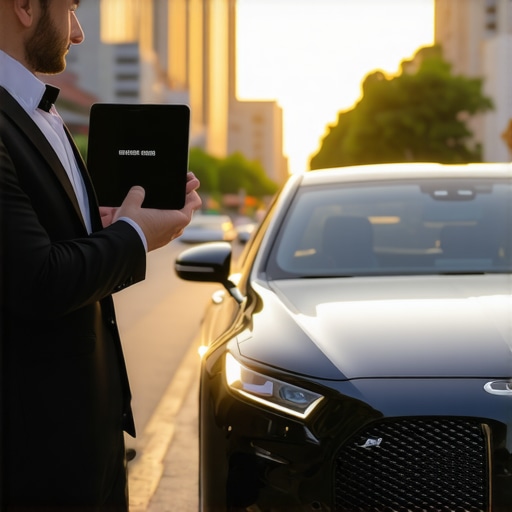
Verify the Car Before You Touch the Door
Safety isn’t just about the driving; it’s about the credentials of the person behind the wheel. Before you enter any vehicle, you must know 7 tactics to verify your drivers commercial license in seconds. I always look for the physical commercial permit in the window before even acknowledging the driver. If they don’t have it, I don’t get in. It sounds intense until you realize that your safety is non-negotiable. You should also perform the 3-point door handle check every passenger must perform to ensure the child locks aren’t engaged against your will. It is easy to learn how to verify your drivers identity without being rude; a simple ‘Who are you here for?’ is often enough to filter out opportunists.
Switch to Hourly for Ultimate Schedule Insurance
If you have multiple stops or a changing itinerary, stop booking individual rides. It is like buying a gallon of milk one cup at a time—it’s inefficient, expensive, and leaves you vulnerable. When you understand why hourly rates save more than money for business travelers, you see that you’re paying for the driver’s ‘readiness.’ This is the logic behind choosing a professional chauffeur over on-demand apps: you are buying their time so they aren’t incentivized to rush off to the next ‘ping.’ This eliminates the frustration of why your real-time tracking link might have a 30-second lag because your driver is already parked and waiting for you, not navigating through three blocks of traffic to find your pin.Let’s dig deeper into why the ‘on-demand’ culture has actually made us worse at managing our travel logistics. We’ve been conditioned to believe that a moving icon on a smartphone screen is the ultimate truth, but here is the contrarian reality: that ‘real-time’ icon is often a smoothed-out projection based on historical data, not current physical conditions. Most travelers live by the assumption that the ETA is a firm promise, but I’ve learned why your estimated arrival time is not a guarantee of service. It is an algorithmic guess that frequently ignores high-impact local nuances like unmapped construction or sudden alleyway closures.
Is the Map Actually Telling You the Truth?
The ‘Oops’ factor happens when you wait until the car is ‘one minute away’ to step outside, assuming the tech is perfect. A study by researchers at the University of South Florida highlights that GPS accuracy can drop by dozens of meters in ‘urban canyons’ with tall buildings, which creates the real reason your apps ETA is often over-optimistic. By the time the app refreshes, your driver might have already missed a crucial turn because the AI didn’t catch a temporary detour. This technical friction is exactly why your real-time tracking link might have a 30-second lag, which is an eternity when you’re trying to coordinate a tight airport transfer. 
Spot the Red Flags Before You Open the Door
Beyond the ticking clock, there is a nuance to safety that most casual riders completely overlook. We are taught to check the license plate, but an expert traveler evaluates the vehicle’s posture and the driver’s professional presence before even touching the handle. You need to know the 3 red flags to watch for when your car arrives, such as uneven tire wear which suggests poor maintenance or neglect. I also use the stealth way to confirm your driver is not fatigued by checking their reaction time during our initial greeting. If they seem sluggish or confused by a basic destination confirmation, I do not get in. Have you ever fallen into this trap where you ignored your gut because the app gave you a green checkmark? Let me know in the comments. This level of scrutiny is the logic behind choosing a professional chauffeur over on-demand apps. You aren’t just paying for the car; you’re paying for a driver whose livelihood depends on local expertise rather than just following a blue line. Most people think a 10-minute buffer is enough, but they fail to account for ‘handoff friction.’ This is where the buffer rule that actually prevents tardy starts becomes your best friend. I’ve seen travelers lose their lead because they didn’t respect the difference between gps routing and professional road knowledge. A GPS might suggest a ‘fast’ route that a local pro knows is a bottleneck during school hours. Always use the accuracy test for modern live tracking links to ensure your eyes match the screen.To keep this system working, I don’t rely on luck; I rely on a specific stack of tools that remove the “human error” factor from the driver’s side while keeping me in total control. My first move is always to automate the data handoff. I’ve found that how to sync your calendar directly with your chauffeur is the single most effective way to prevent 4:00 AM pickups from being missed due to a typo in a text message. It bridges the gap between my executive assistant’s planning and the driver’s actual dashboard. On the financial side, I never risk my data on unvetted platforms. I make sure I know how to spot a secure payment portal before you book, checking for the padlock icon and verifying the payment processor. According to the PCI Security Standards Council’s guide on Point-to-Point Encryption (P2PE), using these protocols is the only way to ensure your credit card data isn’t intercepted by third-party “middle-man” bots. This is why modern reservation systems use encryption for your credit card—it’s not a luxury; it’s the baseline for my peace of mind.
Your Eyes Are Better Than Any App’s Logic
Beyond the software, I maintain a strict “physical audit” every time a car pulls up. If you want to know if a company takes safety seriously, look at the tires. I’ve learned that the one physical marker that proves a vehicle is well-maintained is the tread depth and the absence of sidewall cracking. A driver who ignores their rubber is likely ignoring their brakes too. I also make it a point to how to identify a genuine commercial chauffeur permit on sight by looking for the city-issued holographic seal usually found on the bottom corner of the windshield. If that’s missing, the vehicle isn’t commercially insured, and you are essentially riding in an expensive “pirate” cab. 
The Future Belongs to the Human-in-the-Loop
We are seeing a massive push toward fully autonomous dispatching, but I predict we will soon see a “prestige pivot” back to human oversight. The reason is simple: why manual dispatching still beats ai for real-time accuracy comes down to local context. An AI might see a green line on a map, but a human dispatcher knows that the local marathon is starting in ten minutes and that “green” street will be a barricaded nightmare. For international hops, I always stick to the 12-minute rule for international airport pickups to account for the longer walk through customs and baggage claim. This kind of nuanced scaling is something an algorithm just can’t feel yet.
How do I maintain my travel safety across every single booking?
Consistency comes from post-ride analysis. Once the trip is over, I take thirty seconds to how to audit your drivers route history for accuracy and safety using the digital receipt. If I see erratic pathing or excessive speed, I flag it immediately. This doesn’t just protect me; it keeps the service provider on their toes. If you want to elevate your travel game today, try this: on your very next booking, ask your driver for their commercial badge before you even load your luggage. It sets a standard of professional expectation that changes the entire dynamic of the ride.
What the Proving Grounds of Chicago Taught Me About True Reliability
I used to think a reservation was just a static entry in my phone, but that rainy night in Chicago proved it is a living commitment that requires active verification. The most important realization I’ve had is that technology is a fantastic assistant but a terrible master. If you aren’t checking the protocol for verifying a driver when the app fails, you are essentially gambling with your time. I also learned that the “hidden” cost of cheap rides is the mental fatigue of uncertainty; switching to a model where I understand why the best drivers prefer fixed schedules over on-demand pings has actually bought me back hours of productive work time every month. Finally, safety isn’t a checkbox—it’s a habit. Treating your driver as a professional partner rather than a faceless utility changes the quality of the service you receive instantly.
The High-Value Toolkit I Use for Every Single Trip
To keep my logistics running like a Swiss watch, I rely on a few specific resources that go beyond the basic apps. I always run a quick mental audit of the math behind why hourly bookings save money before I authorize a trip, ensuring I’m getting the best ROI for my travel budget. For security, I never input data unless I know how to confirm your secure booking link is using https, which is my non-negotiable standard for digital privacy. I also keep a “Plan B” mindset by utilizing professional chauffeurs who prioritize regional expertise over GPS algorithms, because local knowledge is the only thing that survives a total network outage.
#IMAGE_PLACEHOLDER_E#
The Power to Fix Your Travel Schedule is Now in Your Hands
The transition from a frustrated traveler to a logistics master doesn’t happen overnight, but it starts with a single decision to stop settling for “maybe.” By implementing these protocols, you aren’t just getting from point A to point B; you are protecting your reputation and your peace of mind. It is time to fully commit to on-time arrival by mastering the art of reservation and safety and experience what it feels like to never have to apologize for being late again. Your time is too valuable to leave in the hands of a glitchy app icon.
Have you ever been left stranded because an app’s ETA was a total lie? Share your experience in the comments below—I want to hear how you handled the situation!