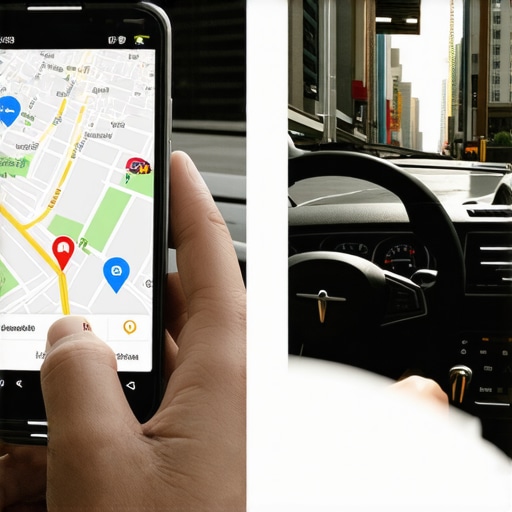
I’ll never forget the cold sweat I felt sitting in a dead-still alleyway in downtown Chicago while my phone cheerfully announced I was “on time.” I was exactly three minutes away from a career-defining presentation, but a literal brick wall of unmapped construction stood between my bumper and the lobby. I’d trusted that glowing blue line blindly, and it led me into a trap. It was a visceral lesson: an algorithm, no matter how many satellites it talks to, doesn’t actually know the rhythm of the street. Today, I want to pull back the curtain on why that little map on your dashboard is often your biggest liability when you’re on a tight schedule. We are going to fix your relationship with the clock by looking at what happens when human intuition takes the wheel. Have you ever found yourself screaming at a GPS that clearly had no idea where it was taking you? [image_placeholder]
Stop Trusting the Blue Line for Your Most Important Deadlines
Early in my career, I made the classic mistake of thinking I could outsmart the morning rush by following a “high-traffic bypass” suggested by a popular app. I ended up stuck behind a garbage truck on a one-way street for twenty minutes. That’s the difference between the real reason your app’s ETA is often over-optimistic and the seasoned reality of a pro. Professional drivers don’t just look at a map; they know that Tuesday mornings near the elementary school are a nightmare, and they know which left turns are impossible without a signal. This is exactly why on-time performance depends on local knowledge over GPS every single time. According to researchers at University College London, over-reliance on GPS can actually switch off the parts of the brain—the hippocampus and prefrontal cortex—that are responsible for simulating different routes. When we stop thinking and start following, we lose the ability to adapt when the digital map fails. That is the core logic behind choosing a professional chauffeur over on-demand apps; you aren’t just paying for a ride, you are paying for a brain that has already mapped out three ‘plan B’ routes before you even close the car door.
Is that “fastest route” actually a trap for the unwary?
Many people worry that ignoring the GPS means taking a longer way, but the truth is usually the opposite. Algorithms prioritize distance and theoretical speed limits, whereas a professional understands the flow of the city. By the end of this guide, you’ll see why the best drivers prefer fixed schedules over on-demand pings to ensure they have the time to apply this expertise. Stick with me, and I’ll show you how to stop being a slave to the satellite.
Lock in Your Schedule Before the Chaos Hits
If you want to arrive at a high-stakes board meeting or catch a flight, you cannot treat your ride like a pizza delivery. You need to shift from a ‘pull’ mindset—waiting until you are ready to call a car—to a ‘reserved’ mindset. This is the logic behind why the best drivers prefer fixed schedules over on-demand pings; it allows them to pre-calculate traffic patterns, stage in optimal locations, and monitor real-time disruptions. When you book an hourly reservation, you are buying a dedicated block of time rather than a mere point-to-point transfer. I learned this the hard way during a 5 AM airport run in Atlanta. I thought I would just ‘ping’ a ride, but three drivers canceled in a row as they chased higher surge prices elsewhere. I ended up paying triple for a frantic, unsafe dash to the terminal that nearly cost me an international flight. If I had secured an hourly booking, that driver would have been parked outside ten minutes early, focused solely on my timeline. 
Adopt the Buffer Rule That Professional Drivers Live By
Punctuality is not a matter of luck; it is a matter of proactive math. Professional transit logic suggests that why most on-time drop-offs start with a 10-minute early arrival is not just for the sake of appearances. That ten-minute window acts as a mechanical shock absorber for ‘unknown unknowns’ like a sudden fender bender on the highway, a closed off-ramp, or a slow building elevator. When you are looking at your calendar, implement the buffer rule that actually prevents tardy starts. This means if you need to be in the office lobby at 9:00 AM, your driver should be on-site by 8:50 AM. This becomes even more critical during high-volume periods where you must calculate the specific buffer for Friday night event drop-offs to ensure the city’s nightlife congestion does not swallow your schedule whole.
Verify Everything Before You Open the Door
Once the car is at the curb, your job switches from logistics to security. You should never assume the car waiting there is actually yours. You need to master the 7 tactics to verify your drivers commercial license in seconds before you even reach for the door handle. I once watched a traveler hop into a black sedan that looked exactly like their reserved vehicle, only to realize two blocks later it was an unlicensed driver who had simply intercepted the pickup spot. To avoid this danger, always perform the visual inspection every rider should do before boarding. Look for the commercial permit in the window and how to confirm your secure booking link is using https on your smartphone. This small act of friction creates a massive wall of safety between you and potential risks.
Manage Changes Without the Headache
Life is fluid, and your transportation must be equally adaptable. If your meeting runs long or a flight is diverted, you should not have to panic about losing your ride. This is where how hourly rates eliminate the stress of traffic jams or shifting timelines. Unlike on-demand apps that might charge predatory ‘wait time’ fees or cancel the ride if you are not at the curb in sixty seconds, a professional reservation gives you a dedicated asset. You can how to handle a sudden route change without stressing your driver because they are focused on your itinerary, not the next notification on their screen. This level of safety precision is the key to reliable hourly reservations for peace of mind, allowing you to breathe while the world outside stays frantic.
While most travelers think a blue blinking dot on their screen is the ultimate safety net, I’ve learned that relying solely on a tracking link is one of the most dangerous mistakes you can make for a high-priority meeting. We’ve been conditioned to believe that ‘real-time’ means ‘truth,’ but in the logistics world, that dot is often a ghost. Let’s dig deeper into the mechanics of why a professional reservation is about human oversight, not just software.
How do you spot a routing error before it kills your timeline?
The contrarian truth that most app companies won’t tell you is that why real-time tracking apps need constant manual overrides to be truly effective. Most users assume that if the map says 22 minutes, it will take 22 minutes. However, researchers at MIT have documented a phenomenon called ‘phantom traffic jams,’ where small human movements cause massive, unpredictable delays that algorithms often fail to register until you are already stuck in them. This is why your real-time tracking link might have a 30-second lag or more, which, in a fast-moving city, is the difference between catching a green light and sitting through three cycles of a left-turn signal. A seasoned driver knows that ‘on time’ isn’t a status update; it’s a constant negotiation with the environment.
One of the biggest ‘oops’ factors I see with modern travelers is the ‘Broker Trap.’ Many people believe they are booking a direct service, but they are actually engaging with a third-party lead generator. You must understand the security risks of booking a ride through a third-party broker who doesn’t actually own the cars or employ the drivers. When you use a broker, your sensitive data is passed through multiple hands, increasing the risk of miscommunication. If your flight is late, the broker might not update the driver, leaving you stranded. This is why manual dispatching still beats AI for real-time accuracy; a human dispatcher is looking at your tail number and the weather, not just a line of code.
Furthermore, an advanced traveler knows that safety isn’t just about the car; it’s about the person behind the wheel. I always look for the stealth way to confirm your driver is not fatigued by checking their alertness and the cleanliness of the cabin. Professionals don’t take risks with their rest because they follow the 12-minute rule for international airport pick-ups, ensuring they are staged and ready long before you clear customs. When you know how to verify your driver’s identity without being rude, you create a professional rapport that ensures the highest level of service. Have you ever fallen into the trap of trusting a laggy app only to miss a flight? Let me know in the comments below.
To keep this system running like a Swiss watch, I rely on a specific digital ‘handshake’ between my calendar and my driver’s dispatch. It is no longer enough to just send a confirmation email and hope for the best. I have found that the most reliable way to avoid missed connections is to how to sync your calendar directly with your chauffeur, which eliminates the risk of manual entry errors or timezone confusion. This is the cornerstone of ensuring safety first your guide to on-time reservations at any hour. If you are traveling for work, you will quickly realize that why hourly rates save more than money for business travelers; it is about maintaining a rolling workspace where the logistics are handled by a pro while you stay focused on the deal.
Sync your digital life to the curb
Every month, I perform a quick review of my transportation data to ensure my standards haven’t slipped. I make it a habit to how to audit your drivers route history for accuracy and safety to see if there are emerging patterns in city construction or traffic flow that I need to account for. According to the ISO 39001 Road Traffic Safety Management standards, systemic monitoring of travel data is the only way to reduce operational risk effectively over time. By looking at where delays happen, you can adjust your booking windows proactively. 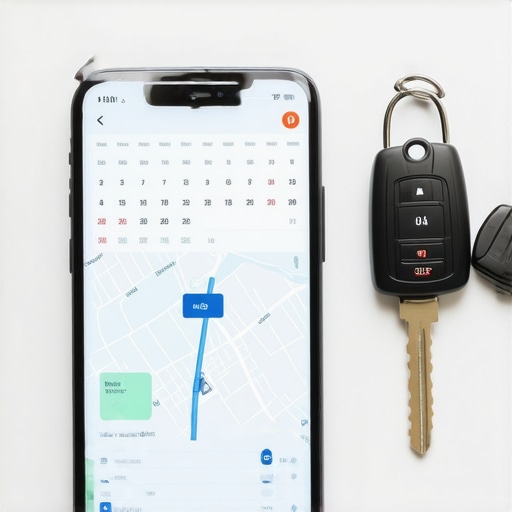
Audit your data to prevent future delays
Looking ahead, I see the industry moving toward ‘predictive dispatch’ systems that use AI to forecast traffic an hour before it happens. However, even the smartest software can’t account for a local parade or a sudden street closure that hasn’t hit the news yet. This is why I remain firm that why manual dispatching still beats AI for real-time accuracy. A human dispatcher can call a driver and say ‘take the bridge, the tunnel is flooded,’ whereas an algorithm might still be recalculating the ‘fastest’ route into a traffic jam.
How do I maintain professional-grade punctuality over the long haul?
It comes down to the tools you use and the habits you build. You should regularly use the accuracy test for modern live tracking links to ensure you aren’t being fed stale or laggy data during your trip. Punctuality is not a one-time event; it is a maintenance schedule for your life. Stop treating your rides as a series of lucky breaks and start treating them as a managed asset. My best advice? Go into your settings and sync your professional calendar with your preferred service provider today. You will be amazed at how much mental bandwidth you gain back when you stop worrying about the ‘when’ and start focusing on the ‘why’ of your journey.
Hard-Won Lessons from a Decade in the Back Seat
After years of navigating tight schedules, I’ve realized that the most expensive ride is the one that arrives five minutes late to a million-dollar meeting. First, punctuality isn’t about speed; it’s about preparation. You have to realize that the punctuality habits of the worlds best professional drivers involve studying the route hours before they pick you up. Second, silence is golden. A professional driver respects your workspace, allowing you to prep for your day rather than chatting. Finally, always have a backup for your backup. That is the only way to ensure your 4 am ride actually shows up—by moving away from the ‘hope and pray’ model of on-demand apps and into a system of accountability.
My Personal Toolkit for Stress-Free Travel
If you want to master your schedule, you need more than just a phone. I recommend keeping the checklist for verifying a luxury sedan before boarding handy on your phone’s notepad. It keeps you safe and ensures quality. I also swear by shared digital calendars that sync directly with your chauffeur’s dispatch office. This eliminates the ‘Where are you?’ text dance. Lastly, keep a physical or digital copy of the local transit authority’s emergency numbers; while a pro driver has you covered, being an informed passenger is your final layer of security. #IMAGE_PLACEHOLDER_FINAL#
Reclaim Your Time and Sanity Today
At the end of the day, transportation shouldn’t be a source of anxiety. It should be the invisible thread that connects your busy life seamlessly. By focusing on on-time arrival mastering the art of reservation and safety every hour, you aren’t just buying a ride; you are buying freedom from the chaos of the city. You deserve to walk out of your door and see a car waiting for you, every single time. It’s time to stop gambling with your schedule and start demanding the level of excellence that only a professional can provide. Have you ever had a ‘near-miss’ because of a laggy tracking app? Let me know your story in the comments below.