I remember standing outside O’Hare at 1 AM, shivering in a thin jacket while watching a beat-up sedan crawl toward the curb. I’d made an hourly reservation specifically to avoid the stress of a late-night hunt for a ride, but as the car pulled up, my gut did a somersault. The license plate was hanging by a literal thread, and the driver wouldn’t even make eye contact. I got in anyway because I was exhausted. Big mistake. I spent the next thirty minutes gripping the door handle in total silence, wondering if the suspension was about to give out. That night taught me a hard lesson: being on time is only half the battle. If the vehicle or the driver feels ‘off’ the moment they arrive, your safety is already at risk. Today, I’m going to share exactly how to spot the warning signs that I ignored, so you can stay in control of your journey. Have you ever felt that sinking feeling in your stomach the moment your ride pulled up?
The Exterior Tells a Story You Need to Hear
Before you even touch the door handle, you need to be an investigator. A professional service lives or dies by its presentation, and a car that looks like it just survived a demolition derby is a massive red flag. When I first started booking private transport, I thought a few dents were just ‘character.’ I was wrong. Major body damage or neglected maintenance usually points to a driver who is cutting corners on safety and punctuality. You should always perform a quick visual inspection every rider should do before boarding. Look for things like mismatched tires or cracked windshields. According to data from the National Highway Traffic Safety Administration, vehicle equipment failure is a significant factor in thousands of preventable accidents every year. If they aren’t fixing the visible stuff, imagine what the engine looks like.
Is a little cosmetic damage really worth the hype?
You might think I’m being picky, but the physical markers that prove a vehicle is well-maintained are your first line of defense. A clean, intact car shows that the company respects its clients and its own equipment. If the car arrives looking like a mess, it’s a sign that the reservation security measures you expected might be nonexistent. I once ignored a flickering headlight on a car I booked for a business trip, only to have the driver get pulled over ten minutes later. It ruined my schedule and left me stranded. Don’t be like me; if the car looks neglected, it probably is. You can always check the checklist for verifying a luxury sedan to know exactly what ‘good’ looks like before you commit to the seat. Before you even open the door, take ten seconds to walk around the vehicle. Does it look safe? If not, do not feel bad about refusing the ride. Your safety is worth more than a polite conversation.
Once the car stops, your focus shifts from the metal to the human behind the wheel. I remember a humid afternoon in Atlanta where a black SUV pulled up exactly where I requested. The driver waved me over, but something felt like a glitch in the matrix—the car was right, but the man didn’t match the profile. I used to be shy about questioning people, but that day I stood my ground. It turns out, knowing how to verify your driver’s identity without being rude is a survival skill. I asked him to confirm the name on the reservation rather than offering mine first. He stumbled, then admitted he was ‘subbing’ for a friend. I cancelled on the spot. If the identity doesn’t match the digital record, the insurance and reservation security measures are effectively void.
Match the Face to the Name Before You Open the Door
The first rule of a secure pickup is simple: the driver must prove they are who the system says they are. Look for a displayed livery permit or a commercial ID. A professional will often have their credentials visible on the visor or dashboard. You should know how to identify a genuine commercial chauffeur permit on sight because a fake can be spotted by the lack of holographic seals or outdated expiration dates. If they seem hesitant to show their ID, they aren’t a professional. This is about more than just a ride; it is about the safety and precision you paid for when you made the booking.
The Physical Handle Test You Should Never Skip
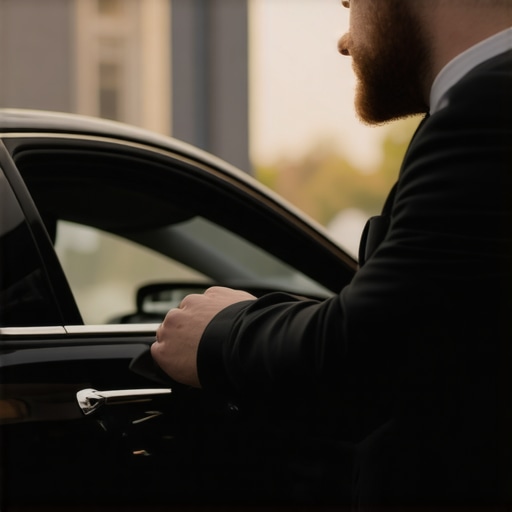
Before you commit your weight to the seat, perform the 3-point door handle check every passenger must perform. This isn’t just about making sure the door opens; it’s about checking the child locks and the interior release. I once got into a car where the interior handle was snapped off. I was essentially trapped until the driver let me out. Now, I always test the door’s resistance and look for the ‘unlocked’ icon. While you’re at it, do a quick specific seatbelt check. If the belt is frayed or the buckle is buried under a seat cover, the vehicle hasn’t been properly inspected. These small mechanical failures are the ‘tells’ of a service that is cutting corners on your life.
Check the Paperwork Without Creating Tension
You don’t need to be an auditor, but you do need to see the proof of coverage. A legitimate driver will have commercial insurance documents readily available. In many jurisdictions, you can verify a private vehicle’s commercial insurance in seconds by checking the policy dates on the card they carry. If they only have personal ‘ride-share’ insurance, you are likely not covered for an hourly professional service. This distinction is critical because on-time arrival and safety go hand-in-hand with legal compliance. A driver who hides their paperwork is usually hiding a lapse in their professional standing. Don’t be afraid to ask; a true chauffeur takes pride in their compliance and will show you their commercial license with a smile.
While checking the paperwork is a vital step, the biggest mistake I see travelers make is putting blind faith in technology. We live in an era where we assume a glowing green line on a smartphone is the absolute truth, but in the world of high-stakes transport, that’s a dangerous myth. Most riders believe that real-time tracking is the ultimate safety net. However, in my years of booking professional transit, I’ve learned that why fixed schedules beat real-time AI during rush hour is a nuance that most people completely overlook until they are standing on a curb, late for a flight.
Stop Trusting the Green Line on Your Screen
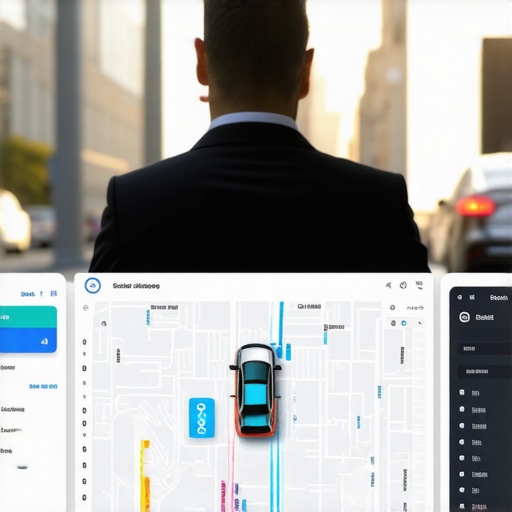
The contrarian truth? Your app is lying to you—or at least, it isn’t telling the whole story. Many passengers get a false sense of security from a tracking link. What they don’t realize is why your real-time tracking link might have a 30-second lag, or sometimes even a two-minute delay in high-density areas. If you are relying on that icon to time your exit from a building, you’re already behind. A true professional service doesn’t just watch a dot on a map; they use essential hourly reservation tips for timely service that include pre-driving the route or checking local radio dispatch for accidents that haven’t hit the GPS yet.
Why is your ETA always five minutes off?
It’s not just bad luck; it’s the math of urban mobility. Research from the INRIX Global Traffic Scorecard highlights that automated routing software often fails to account for ‘micro-congestion’—the kind of gridlock caused by double-parked delivery trucks or local event closures. This is the real reason your app’s ETA is often over-optimistic. Professionals know that why manual dispatching still beats AI for real-time accuracy comes down to human intuition and local experience. An algorithm doesn’t know that a specific intersection becomes a nightmare every Tuesday at 4 PM because of a local school release, but a seasoned driver does.
Human Logic Still Beats Artificial Intelligence
The ‘oops’ factor usually hits when you choose the cheapest service available, assuming the tech will make up for the lack of driver experience. I’ve seen it a hundred times: a client books a low-cost option, the driver gets stuck in a predictable traffic trap, and the ‘safety features’ of the app do nothing to get them to their meeting on time. You have to understand the real cost of choosing the cheapest reservation available—you aren’t just saving money; you are sacrificing the local expertise that guarantees punctuality. Genuine safety and precision come from a driver who knows the side streets better than the satellite does. Have you ever fallen into this trap of trusting the app over common sense? Let me know in the comments below.
To move beyond the limitations of basic apps, I’ve started using a few specific tools that turn a simple booking into a bulletproof logistics plan. My first rule for scaling your travel efficiency is to stop manually entering ride details. You need to learn how to sync your calendar directly with your chauffeur so that any flight delay or meeting shift automatically updates the driver’s dispatch screen. This eliminates the middleman and ensures that your strategies for safe and reliable hourly bookings are actually active, not just sitting in your inbox.
Sync Your Schedule to Stop the Guesswork
I personally use a dedicated travel management calendar that bridges my Outlook and the service provider’s API. This level of precise reservation timing means I don’t have to worry about the ‘1 AM shivering at O’Hare’ scenario ever again. If my plane touches down late, the driver is already informed before I even toggle off airplane mode. This isn’t just about convenience; it is about building a system that scales with your professional needs. According to the Transit Cooperative Research Program (TCRP) Report 163, reliability in transport is most effectively maintained when the ‘buffer’ between service segments is managed dynamically rather than through static scheduling.
How can I keep my travel logistics smooth for the long haul?
Maintenance isn’t just for the car; it’s for your habits. You have to consistently apply the buffer rule that actually prevents tardy starts. I always set my pickup for fifteen minutes earlier than I think I need, which complements the reality that most on-time drop-offs start with a 10-minute early arrival. 
Why the 10-Minute Buffer is My Secret Weapon
Long-term results in travel safety also require you to be observant of the human element over multiple trips. I’ve developed a habit of checking the stealth way to confirm your driver is not fatigued. A quick glance at the log or a casual question about their shift start can tell you more than any app rating. If you’re booking safety and punctuality 24-7, you need to know the driver is fresh. Looking forward, I predict we will see a shift where the ‘driver’ becomes more of a ‘mobility manager,’ handling complex route changes on the fly while AI manages the basic lane-keeping.
Scale Your Security with Professional Standards
As you scale your travel needs, you might be tempted to cut corners, but remember that on-time reservations at any hour depend on the infrastructure of the company you choose. Professional services invest in reservation security measures that an individual contractor simply cannot match. I encourage you to try one advanced tip today: contact your service provider and ask if they offer a direct calendar sync. It will change the way you view hourly transport forever.
The Hard Truths I Learned the Hard Way
After years of navigating terminal exits and hotel lobbies, I’ve realized that professional transport is a partnership, not just a transaction. Here are the lightbulb moments that changed how I travel:
- The ‘Gut Check’ is Science: If the driver seems disinterested or the car smells of neglect, your subconscious is picking up on a lack of professional standards that could impact your safety.
- Cheap is a Choice for Chaos: Every time I tried to save money by picking a non-vetted provider, I paid for it in stress. Real strategies for safe and reliable hourly bookings require investing in quality.
- Communication is the Ultimate Safety Feature: A driver who doesn’t confirm the details is a driver who isn’t prepared. High-value services always prioritize on-time reservations at any hour through clear, proactive contact.
#IMAGE_PLACEHOLDER_E#
The Tools That Kept Me Moving When Everything Else Failed
I don’t just hope things go well; I build a system to ensure they do. These are the specific resources I rely on to keep my schedule bulletproof:
- INRIX Global Traffic Scorecard: I use their data to understand regional congestion trends before I even book my flight. It helps me decide if I need a larger buffer for peak hour transit.
- Direct API Syncing: I never manually enter my ride times. Instead, I learned how to sync your calendar directly with your chauffeur to ensure the dispatch team sees my schedule changes in real-time.
- NHTSA Safety Portals: Before committing to a long-term contract with a fleet, I check their general safety ratings and equipment standards to ensure I am not putting my team at risk.
Take Control of Your Next Journey
Your time is the only resource you can’t buy back. By shifting your focus from simply finding a ride to securing a dedicated logistics partner, you eliminate the anxiety that usually haunts business travel. When you prioritize precise reservation timing and professional safety, you arrive at your destination ready to perform, not just relieved to be there. Don’t leave your morning meeting to chance; book with the confidence that only comes from a vetted, professional service. Have you ever had a gut feeling that saved you from a bad ride experience? Let me know in the comments below.