I was standing on a curb in Chicago, three years ago, shivering while my phone battery hit 4%. I needed an hourly car service, and I needed it right then to make a dinner meeting on time. I found a site that looked professional enough, typed in my Visa digits, and hit confirm. No confirmation email ever came. Instead, three days later, I was fighting a $242 charge for a luxury watch in a city I have never even visited. That was my wake-up call. I realized that my obsession with being on-time every time had blinded me to the basic red flags of a digital shakedown. It is a gut-wrenching feeling. You think you are being responsible by reserving your spot early, but you are actually just handing your wallet to a ghost. Today, I am going to show you exactly what I look for now so you never have to deal with a frozen bank account while you are trying to enjoy a trip.
Check for the Padlock Before You Give Away Your Paycheck
Most people think the little padlock icon in the browser bar is enough. It is not. I used to think so, but I learned the hard way that scammers can buy SSL certificates too. Now, I look for much more than just a green lock. For instance, confirming your secure booking link is using https is just the bare minimum entry fee for my trust. When you are booking high-end transportation, the truth about secure payment gateways is that they should never feel clunky or redirect you to a completely different domain name that looks like a string of random numbers. According to the FBI’s Internet Crime Complaint Center (IC3), credit card fraud and identity theft through fraudulent websites resulted in losses exceeding $10 billion in a single year, highlighting how sophisticated these clone sites have become. You need to be able to spot a sketchy ride booking site before you even think about hitting that pay button. I made the mistake of ignoring a slightly misspelled URL because I was desperate for timely service. Don’t be me. Have you ever felt that off feeling while entering your card info, only to ignore it and regret it later?
Does My Bank Not Just Protect Me From Everything?
It is easy to think your credit card company will just wave a magic wand and fix any fraud. While they often do, the headache of canceling cards, updating a dozen auto-pay subscriptions, and waiting for a new piece of plastic in the mail is a total nightmare when you are traveling. Prevention is way less stressful than a cure. We want our safety and timeliness to start at the moment of booking, not just when the car pulls up. If the portal looks like it was designed in 1998, it probably was—by someone looking to harvest your data.Once my bank accounts were finally unfrozen after that Chicago disaster, I developed a ‘trust-but-verify’ protocol that I never deviate from. It starts the second that confirmation hits your inbox. You cannot simply glance at the logo and assume it is safe. I have learned that scammers are incredibly good at cloning layouts, but they usually fail at the technical details. I always take a second to verify if a ride confirmation email is legitimate by looking at the actual ‘From’ address. If it is coming from a generic provider rather than the official company domain, that is an immediate red flag. Last year in Austin, I received a notification that looked perfect—gold logo, professional font, the works. But when I checked the metadata, I noticed the hidden red flag in your booking confirmation email header: the ‘reply-to’ address did not match the company site. I called the official dispatch number instead of the one in the email, and it turned out no driver had been assigned yet. A phisher was trying to intercept me. Now, I use reservation security measures that involve two-factor verification before I even leave my hotel room. 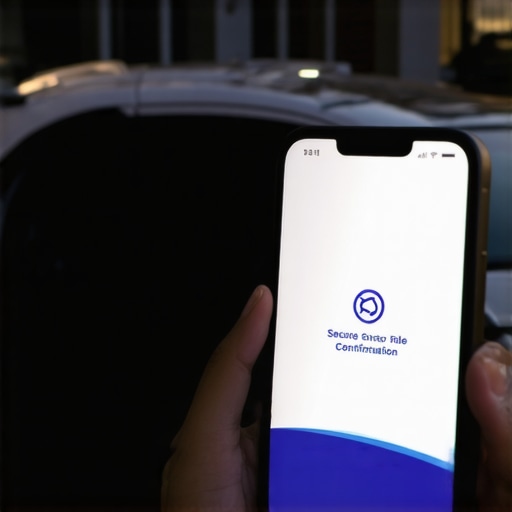
The Physical Verification Protocol at the Curb
Once the car arrives, the digital world ends and the physical world begins. This is where most people get lazy. They see a black SUV and just hop in because they are worried about being on time. Never do this. I treat every pickup like a mini-audit. You should never enter a vehicle without a license plate match, and I take it a step further by performing 7 tactics to verify your drivers commercial license in seconds. A real pro will not be offended; they will actually appreciate that you take safety seriously.
Spot the Chauffeur Permit Before You Sit Down
Look for the physical placards. In many cities, a professional driver must display a commercial permit in the window or on their person. I have found that identifying a genuine commercial chauffeur permit on sight is the fastest way to weed out unvetted freelancers. If the driver is wearing a t-shirt and cannot show me a badge, I am not getting in. It is about ensuring safety first, even if it means I am five minutes late to my appetizer.
Sit Behind the Driver for Maximum Security
Once you are inside, where you sit matters just as much as who is driving. I always choose the passenger seat behind the driver. It is the hardest spot for someone to reach if things go south, and it gives you the best vantage point of the driver’s movements. While I am back there, I make sure that real-time vehicle tracking is active on my phone and shared with a trusted contact.
How Hourly Bookings Solve Your Punctuality Problems
If you have multiple stops, the ‘on-demand’ model is your enemy. You waste time waiting for new drivers, and each new car is a new security risk. I have realized that hourly bookings save money during peak hours because you are not fighting surge pricing every time you walk out of a building. More importantly, safety and timeliness are guaranteed because the same vetted driver stays with you the whole time. This eliminates the ‘wait-and-worry’ phase and ensures you are on-time every time without having to re-vet a stranger every sixty minutes.
The Myth of the Digital God
Many travelers make the mistake of thinking that a slick app interface equals a professional operation. In reality, some of the most seemingly advanced tech platforms are just digital middle-men with zero control over the actual car. I have learned that the security risks of booking a ride through a third-party broker often outweigh the convenience. These brokers do not vet the drivers; they simply pass the lead to the lowest bidder. My contrarian take? Forget the all-in-one travel apps for high-stakes meetings. I prefer a company that uses manual dispatching because it still beats AI for real-time accuracy. A human dispatcher knows that a local marathon started an hour early, while the AI is still trying to route you through a closed street. According to the Texas A&M Transportation Institute’s Urban Mobility Report, traffic congestion creates extreme volatility that static algorithms struggle to quantify, leading to massive gaps between expected and actual arrival times. 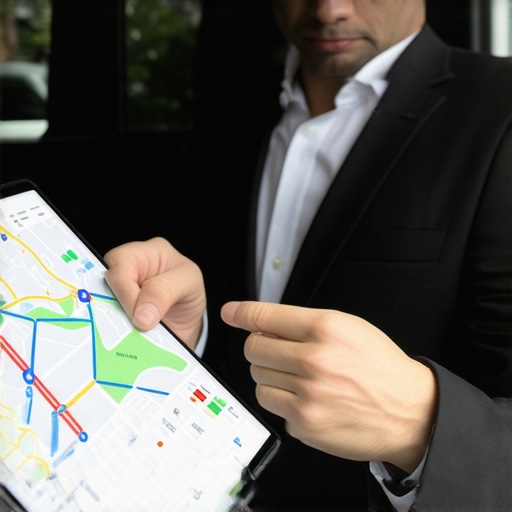
How Can You Tell if the Insurance is Legit?
This is the advanced level of safety that most people ignore until they are in an accident. A driver might show you a card, but you need to know how to vet your drivers commercial insurance without the friction. If the policy is a standard personal one, you are likely not covered during a commercial hire. It is a terrifying oops factor that can ruin your life and bank account. I always look for a commercial certificate of insurance (COI) which lists the specific vehicle. Another trap is ETA Optimism. I have seen many executives miss flights because your estimated arrival time is not a guarantee of service. The app wants to keep you happy, so it gives you the best-case scenario, not the realistic one. Instead, I always use the buffer rule that actually prevents tardy starts. For me, that means a minimum fifteen-minute padding for any city transit, regardless of what the screen says.
The Real Difference Between a Driver and a Chauffeur
It is not just the suit; it is the protocol. A driver follows a blue line on a phone; a chauffeur knows the back alleys and construction schedules. If you see your driver glued to a phone mount, you are dealing with an amateur. I have found that the best drivers prefer fixed schedules over on-demand pings because it allows them to prep the vehicle and the route ahead of time. This is why hourly rates save more than money for business travelers—they buy you the driver’s full attention and accountability. Have you ever fallen into the trap of choosing the cheapest ride only to realize the driver had no idea where they were going? Let me know in the comments below, because your horror stories help us all stay sharper.I have found that the secret to keeping this system working isn’t just about the car; it is about the digital stack you build around it. For me, that means never relying solely on the basic notifications provided by a booking site. I use secondary confirmation tools and personally prefer services that integrate with my encrypted calendar. According to the National Institute of Standards and Technology (NIST) Special Publication 800-114, managing security on user-owned devices requires strict adherence to encrypted communication protocols to prevent data interception. This is why I always check if my driver is using a secure, company-issued app rather than just texting me from a personal number. These essential hourly reservation tips for timely service only work if you treat the digital side with as much respect as the physical vehicle.
Build Your Own Travel Command Center
I personally use a dual-verification method where I cross-reference the driver’s GPS location with a separate mapping tool to account for local traffic anomalies. This level of safety precision is the only way I have found to consistently stay ahead of city-wide gridlock. I also maintain a dedicated folder for my ride history. This allows me to audit your drivers route history for accuracy and safety after every single trip. If I see a driver consistently taking unvetted shortcuts, I remove that provider from my list immediately. Accountability is the only tool that keeps the industry honest.#IMAGE_PLACE_HOLDER_D#
How do I maintain my safety and punctuality over time?
Maintenance of these standards requires a ‘trust-but-verify’ audit every three months. I call the dispatch office of my preferred providers just to check if their commercial insurance is up to date and if their driver vetting process has changed. Reliability is a moving target. You have to maximize your safety and satisfaction with our precise reservation timing by staying proactive. I also suggest periodically testing the tracking links you send to friends. I once discovered a tracking link had a two-minute lag, which is why I now know why real-time tracking is your best defense against missed meetings only when the lag is under thirty seconds.
The Next Evolution of Secure Private Transit
Looking ahead, I predict we will see the rise of blockchain-verified digital badges. Imagine a world where your phone can instantly verify a driver’s commercial insurance validity via a decentralized ledger before the car door even unlocks. This will eliminate the ‘forged badge’ problem once and for all. We are moving toward a future where your digital and physical safety are locked together by biometrics. For now, the most advanced thing you can do is be your own auditor. Try this today: Go back to your last digital receipt and perform a manual route audit to see if your driver took the most secure path or just the fastest one.
Lessons from the Curb: My Hard-Earned Safe Booking Wisdom
Over the years, I’ve realized that being truly on-time every time isn’t just about the traffic; it’s about the mental checklist you run through before the door even opens. Here are the lightbulb moments that changed how I travel:
- Silence is a Signal: If a driver is overly eager to avoid the official app or payment portal for a ‘side deal,’ it’s never about saving you money. It is the real cost of choosing the cheapest reservation available—it leaves you with zero legal or safety recourse.
- The Identity Double-Check: I never state my name first. I ask the driver who they are here for. This specific driver verification move that prevents identity theft ensures I am not jumping into a car with someone simply hovering at the curb.
- Tires Don’t Lie: I always glance at the tires as the car pulls up. It is the one physical marker that proves a vehicle is well-maintained. If the rubber is bald, the brakes or engine are likely neglected too.
The Secure Traveler’s Digital Toolbox
I don’t just rely on hope; I rely on a specific stack of digital tools to ensure my safety precision remains airtight. First, I use a dedicated virtual credit card for all travel bookings to isolate my primary accounts from potential skimmers. Second, I rely on secondary GPS apps to cross-reference the driver’s route, especially when I need to secure your data when using public wifi to book a ride in a busy airport. Finally, I always keep a digital shortcut to the company’s commercial insurance documentation. This allows me to verify coverage instantly if a driver seems hesitant or if the vehicle doesn’t match the description. #IMAGE_PLACEHOLDER_E#
Your New Standard for Stress-Free Travel
You have worked too hard to let a logistics error or a digital scam derail your progress. By ensuring safety and punctuality through these rigorous habits, you aren’t being paranoid—you are being professional. The peace of mind that comes from knowing your driver is vetted and your data is locked down is worth every extra minute of verification. Go ahead and take that next meeting or late-night flight with total confidence, knowing you have the ultimate travel protocol in your pocket. Have you ever spotted a subtle red flag just seconds before getting into a car? Let me know in the comments below so we can keep each other safe!