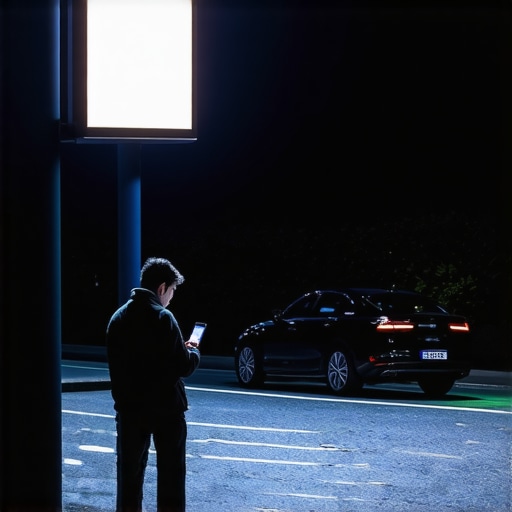
The airport terminal smells different at 2:00 AM—a mix of industrial floor cleaner and the quiet desperation of travelers whose flights were pushed back three times. I was one of them last November, standing on a curb in a city I didn’t know, watching a sedan with a faded bumper sticker slow down to a crawl in front of me. My phone battery was at a precarious 2%, and the driver gestured for me to get in. He didn’t have a sign. He didn’t know my name. In my exhaustion, I almost opened the door. That split-second of vulnerability was my lightbulb moment: hoping for the best is not a safety strategy when the sun is down. Today, I’m going to share the exact system I use to ensure every midnight arrival is as boring and safe as a Sunday morning commute.
Stop Guessing and Start Guaranteeing Your Late Night Safety
Late-night travel isn’t just daytime travel with the lights turned off; it is a completely different logistical environment. When you arrive in the small hours, the usual safety nets—crowded sidewalks, open businesses, and high-visibility police presence—evaporate. I learned the hard way that precise reservation timing is your first line of defense. Early in my career, I made the amateur mistake of assuming a ride-share app would just ‘figure it out’ at 3 AM. Instead, I ended up cancelled twice, left alone in a dark parking lot for forty minutes. You need to stop relying on algorithms that don’t care about your well-being and start ensuring safety first through pre-arranged, verified pickups. According to data from the Global Business Travel Association (GBTA), travelers feel significantly more at risk during the ‘last mile’ of their journey, with late-night windows showing the highest frequency of transit-related security incidents. This is why a secure pickup protocol isn’t a luxury; it’s a necessity for anyone who values their peace of mind. Have you ever felt that sudden spike of adrenaline when a vehicle that doesn’t match your app description pulls up to your curb?
Is a dedicated protocol really worth the extra effort?
Some might tell you that I’m being a bit too cautious, but when you are tired and alone, ‘over-prepared’ is just another word for ‘safe.’ A real protocol means knowing exactly who is behind the wheel before you even land. It involves verifying a driver when the app fails and having a direct line of communication that doesn’t rely on a glitchy third-party server. By following specific hourly reservation tips, you can ensure your driver is waiting for you, not the other way around. My goal today is to walk you through the three pillars of a secure pickup: pre-arrival verification, real-time tracking, and the physical identification of your professional chauffeur.
Secure the vehicle hours before you need it
The biggest mistake I see travelers make is waiting until they are at the luggage carousel to open an app. By then, you are at the mercy of a fickle algorithm and a pool of drivers who may or may not want to work at 3:00 AM. Instead, reserving your spot in advance locks in a dedicated professional whose sole job is to be at that curb when you emerge. I remember a particularly rainy night in Seattle where the wait times for standard apps hit sixty minutes due to a local event. While everyone else was huddled under the heat lamps looking frustrated, my driver was already pulling up because we had a fixed appointment. This isn’t just about speed; it’s about safe and reliable hourly bookings that prioritize your arrival over a surge-pricing bonus. When you pay for an hourly block, you’re buying the certainty that the car won’t cancel on you for a higher-paying fare across town. This is the only way to ensure your 4 AM ride actually shows up when the rest of the city is still asleep.
Watch the car move in real-time
A static confirmation email is just a piece of digital paper; it doesn’t tell you where the driver is *now*. You need a digital pulse. Professional services now offer live tracking that bridges the gap between ‘hope’ and ‘reality.’ This is why real-time links save families peace of mind; your spouse or partner can see exactly where you are without you needing to text every five minutes. If a driver claims to be ‘five minutes away’ but the map shows them stuck two miles back in traffic, you have the data to call the dispatcher and adjust. This transparency also ensures that the driver is following the most efficient path. 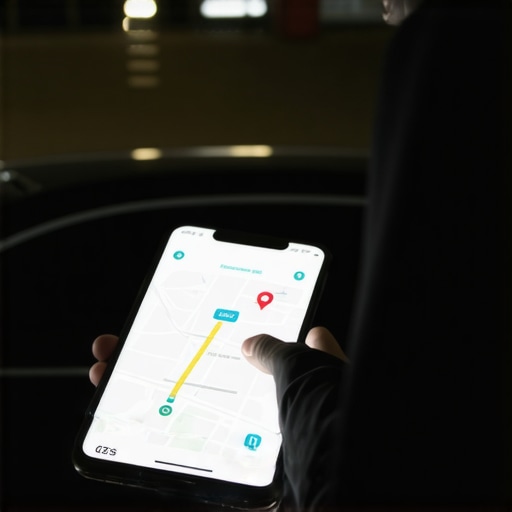
Don’t trust the car until you see the badge
Even with a map on your screen, the physical hand-off at the curb is the most critical moment for your personal security. I once almost hopped into a black SUV in Chicago because I was exhausted and it looked ‘close enough’ to the description on my phone. The driver actually looked like he was expecting someone, but he wasn’t expecting me. A professional chauffeur will always have a visible identification or a digital badge. You must understand the hidden difference between app drivers and private chauffeurs: one is an independent contractor with minimal vetting, the other is a trained professional. Check for verified driver badges and ensure they match the profile sent to your phone. It sounds paranoid until it prevents a costly mistake. You should never enter a vehicle without a license plate match, no matter how tired you are or how hard it is raining. The plate is the only unique fingerprint of that vehicle that cannot be faked on the fly.When I talk about late-night security, most people obsess over the live map. But let’s dig deeper: the map is often the first thing that fails you. Most travelers treat ‘real-time tracking’ as a security blanket, but in my experience, that digital blue dot is frequently a lagging indicator of a driver who is actually lost or stuck behind a road closure. You see, the error in relying on app-based arrival times during construction is the number one cause of late-night travel anxiety. These algorithms are programmed for optimism, not the reality of a city that shuts down lanes for maintenance at 2:00 AM. This is why I advocate for a human-centric approach; why manual dispatching still beats AI for real-time accuracy comes down to the dispatcher’s ability to communicate with the driver about local conditions that GPS hasn’t updated yet.
Why your app’s arrival time is almost always a lie
The biggest myth in the industry is that a shorter estimated arrival time equals better service. In reality, a driver ‘five minutes away’ on an app might actually be fifteen minutes away once they navigate the maze of airport arrival levels. I’ve found that the ‘oops’ factor for most travelers is the confirmation email. Just because you have a receipt doesn’t mean a specific vehicle has been dispatched. You need to look for the hidden red flag in your booking confirmation email header—specifically, the lack of a driver-direct contact number or a specific vehicle ID. Without these, your ‘reservation’ is just a high-priority request that might still be ignored by drivers during a shift change.
Does your reservation actually have a driver assigned yet?
It is a sophisticated question that most casual travelers never think to ask. Professional services assign drivers hours, sometimes days, in advance. This lead time allows for why professional punctuality requires a pre-trip inspection of both the vehicle’s safety systems and the driver’s schedule. A study by the University of California, Berkeley on urban logistics highlights that ‘micro-delays’ in ride assignment significantly increase passenger vulnerability in low-traffic hours. This is why I never trust a 15-minute window. I have found that why the 17-minute buffer outperforms the traditional 15-minute rule is the true gold standard for midnight arrivals. Those extra 120 seconds account for the ‘pax contact’ time—the time it takes for you to actually find the car and for the driver to safely pull out of the lane. 
The 17-minute secret that saves your schedule
Have you ever fallen into this trap? Let me know in the comments. Many travelers assume that if they land at 11:30 PM, an 11:45 PM pickup is plenty of time. But if you have checked bags or if the terminal is under construction, you are setting yourself up for a frantic sprint through a dark parking garage. Beyond the timing, you must audit the driver’s state of mind. Even a confirmed ride can be dangerous if the operator is fatigued. Knowing how to spot a driver who is distracted before you get in is a skill every frequent traveler must master. Look at their phone mounts; if they have three different apps running simultaneously, they aren’t focused on your safety; they are focused on their next fare. True luxury and safety come from a driver who is dedicated solely to your hourly block, ensuring that the only thing you have to worry about at 3:00 AM is whether you want the seat heater on or off.Beyond the 17-minute buffer, I have developed a digital toolkit that acts as my redundant safety net. I never travel without verifying the aircraft’s tail number on tracking software before I even think about my car. Why? Because the airline’s ‘on-time’ status is often a marketing abstraction, whereas the physical location of the plane is an objective truth. This level of why real-time vehicle tracking is more than just a convenience is the data that allows me to coordinate with my driver the second I touch down. I also use a secondary verification step by cross-referencing my booking with official fleet registries when I am in an unfamiliar city. You must know how to verify if a ride confirmation email is legitimate before you share your live location or personal details.
How do I keep my travel safety system sharp over time?
Maintaining this level of precision isn’t a one-and-done task; it requires a monthly audit of your habits and the services you frequent. I personally spend twenty minutes every first Sunday of the month looking at my transit logs. I have learned how to audit your monthly travel spend without stress while simultaneously looking for safety red flags, like a service that swaps drivers at the last minute without notification. According to the ANSI/ASSP Z15.1 Safe Practices for Motor Vehicle Operations, organizational safety is only as strong as its consistent verification protocols. This applies to individual travelers as well. When the vehicle arrives, I always check for the one physical marker that proves a vehicle is well-maintained—usually the tire sidewall condition and the cleanliness of the interior cabin filters. If a company cannot bother with the basics of vehicle health, they are not prioritizing your late-night security. 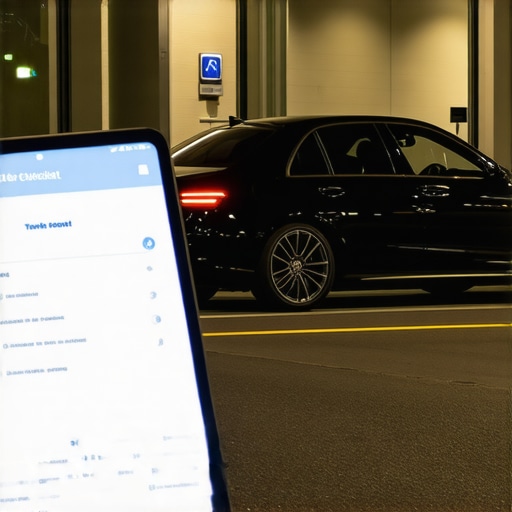
The future of secure human-centric transit
Looking ahead, I see a massive shift toward semi-autonomous fleets, but here is my prediction: the ‘human-in-the-loop’ dispatcher will become even more valuable. AI can drive a car, but it cannot navigate the social nuances of a dark airport terminal or provide the immediate security response of a vetted professional chauffeur. The demand for safety precision and reliable hourly reservations will only grow as automated services become more commoditized and less personal. To stay ahead of the curve, I encourage you to try my ‘Driver-Direct’ rule: never accept a booking unless you have a direct, non-app-based way to message your chauffeur at least 30 minutes before arrival. It is the single best way to ensure you are never left standing alone in the dark.
What I finally learned about the midnight risk tax
Over the years, I have realized that the biggest threat to your safety isn’t a lack of technology; it is a lack of intention. Many travelers pay a ‘risk tax’ every time they rely on a generic app at 2:00 AM, hoping that the closest driver is also the safest. One lightbulb moment for me was realizing that true security doesn’t happen on a screen—it happens when you establish a human connection with a professional service hours before you land. I’ve learned that safety precision and reliable hourly reservations are the only ways to remove the ‘variable’ of chance from your commute. Another lesson? The car that arrives ‘instantly’ is often the one that has been idling for six hours with an exhausted driver. Choosing a scheduled service means you are getting a fresh, prepared professional who treats your arrival as their primary mission.
The go-to toolkit for my midnight arrivals
I never travel without a specific set of tools that keep the ‘wait’ out of my late-night transit. First, I always have a direct dispatch number saved in my contacts—not just an app interface. I also rely on tail-number tracking rather than airline ‘arrival times’ to give my chauffeur the most accurate data. This level of coordination is why I believe ensuring safety first starts with the quality of your information. I also recommend using encrypted messaging to share your live location with family, as why real-time links save families peace of mind cannot be overstated when you are traveling alone in a new city. Finally, I use a physical checklist: license plate match, driver ID verification, and a quick scan of the tire treads to ensure the vehicle is as professional as the person behind the wheel.
Take back control of your next arrival
You don’t have to be at the mercy of a dark curb and a spinning digital icon. By shifting your mindset from ‘on-demand’ to ‘on-purpose,’ you transform your travel experience from a stressful gamble into a seamless transition. Prioritizing your well-being through safe and reliable hourly bookings isn’t just about getting home; it’s about arriving with your dignity and peace of mind intact. You deserve the certainty that comes with knowing exactly who is waiting for you when the rest of the world is asleep. Have you ever felt stranded at an airport after midnight because of a cancelled ride-share? Let me know your experience in the comments below.