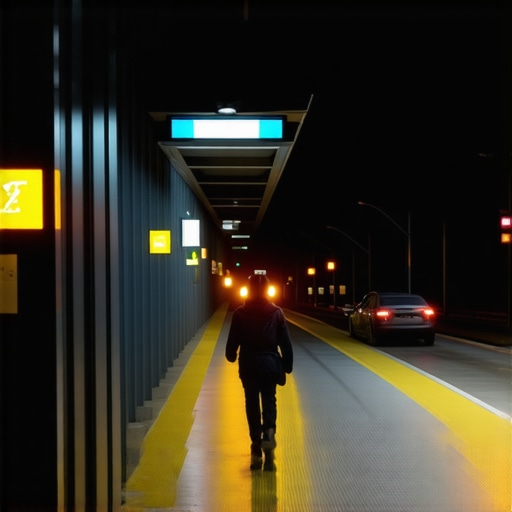
I remember standing on the edge of the platform at 11:45 PM, the wind whipping through my thin jacket, watching the last crowd of commuters vanish into the parking lot. I’d decided to ‘wing it’ and find a ride when I landed. That was my first mistake. Two shadow-filled minutes felt like two hours, and every set of headlights that slowed down made my heart hammer against my ribs. I realized then that a train station at midnight isn’t just a transit hub; it’s a test of your prep work. In that moment of vulnerability, I promised myself I would never be the person standing alone in the dark without a plan again. Today, I am going to share exactly how you can turn that late-night anxiety into a seamless, safe transition from the tracks to your front door. We are going to fix the way you handle midnight arrivals once and for all. Have you ever felt that sinking feeling when your ride app says ‘No cars available’ right as you step off the train? [IMAGE_PLACEHOLDER]
Stop Being a Sitting Duck on the Platform
The biggest safety risk at a train station isn’t always the surroundings—it’s the wait time. When you are standing still, you are a target. Early in my travels, I assumed that most arrival times are simply guesses and that I’d be better off just calling a ride once I stepped off the train. I was wrong. Relying on an app in the moment meant waiting fifteen minutes in a deserted lot. Now, I know that reserving your spot ahead of time is the only way to ensure your feet barely touch the pavement before you’re behind a locked car door. One of the most embarrassing mistakes I made was getting into a vehicle that I thought was my ride, only to realize the driver didn’t know my name. It was a terrifying wake-up call. According to data from the Bureau of Justice Statistics, transit-related incidents are significantly more likely to occur during off-peak, late-night hours when natural surveillance is at its lowest. That is why planning your exit is just as important as the train ticket itself.
Does a Private Driver Actually Worth the Extra Cost?
You might be thinking, “Can’t I just call a standard ride-share?” I used to think that too, until a driver showed up in a car that smelled like old smoke and didn’t match the license plate. Talk about a red flag! When you use a professional service, verified driver badges matter more for late-night travel than any discount code ever will. You aren’t just paying for the car; you’re paying for the only way to ensure your ride actually shows up when the rest of the world is asleep. Have you ever stood under a flickering streetlight, watching your ride-share driver cancel on you three times in a row? It’s a gut-wrenching feeling that I wouldn’t wish on anyone. This guide is about taking control of your environment so you never have to feel that way again. We’re going to dive into the specific steps to vet your driver and secure your reservation so that ‘winging it’ becomes a thing of the past.To bridge the gap between the platform and your front door, you need a system that doesn’t rely on luck. Relying on a standard ride-share app at 2 AM is like playing Russian roulette with your schedule. Instead, you need to transition into a proactive mindset where the ride is waiting for you, not the other way around.
Lock in Your Pickup Before the Train Doors Open
The first step in reclaiming your peace of mind is moving away from on-demand services toward scheduled excellence. When I started implementing on-time every-time strategies for safe and reliable hourly bookings, my entire travel experience changed. I no longer stood on the curb frantically refreshing an app; I walked straight to a car that was already idling.
Give Yourself a 20-Minute Safety Net
One of the biggest mistakes travelers make is booking the car for the exact minute the train is scheduled to arrive. Trains are notorious for minor delays. I’ve learned that why a 20-minute buffer is the new gold standard for business and personal travel alike. This small window of time acts as a shock absorber for track maintenance or slow luggage retrieval. I remember a rainy Tuesday in Philadelphia where my train was delayed by eighteen minutes due to a signal issue. Because I had built in that buffer, my driver wasn’t frustrated, and I didn’t have to pay a ‘no-show’ fee. It turned a potential nightmare into a minor hiccup.
Trust a Human Dispatcher Over a Cold Algorithm
Algorithms don’t care if it’s pouring rain or if the station’s north exit is closed for construction. This is why a human dispatcher outperforms an AI every time. A real person monitors your train’s progress and communicates directly with the driver. If you’ve ever used a service and wondered if anyone was actually at the wheel, you know the value of a human touch. This is the only way to ensure your 4 am ride actually shows up when the rest of the world is asleep and the ‘nearby drivers’ on your app are all parked in their own driveways.
Verify Your Ride to Avoid Costly Mistakes
Once you see a vehicle, the work isn’t done. Safety is a process, not a feeling. 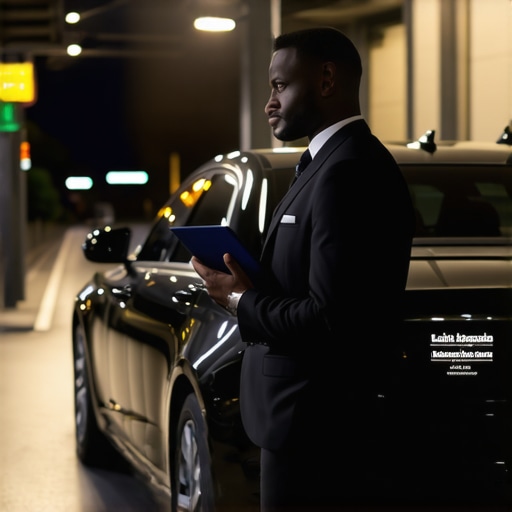
Check the Badge Before You Open the Door
In my early days of travel, I almost stepped into a black sedan that looked exactly like the one I ordered, only to realize the driver was waiting for someone else—or worse, was just an unlicensed ‘gypsy’ cab looking for a fare. Now, I look for specific markers. I’ve found that verified driver badges matter more for late-night travel-2 than any other identifier. A professional chauffeur will have their credentials visible and will often be able to confirm your destination before you even say it. Understanding the hidden difference between app drivers and private chauffeurs is crucial here; one is a gig worker with a GPS, and the other is a trained professional who has undergone rigorous background checks and vehicle inspections. I once had a driver in Chicago who noticed my train was redirected to a different platform before I did. He was waiting at the new exit with a sign before I could even pull up my map. That level of service is only possible when you vet the company’s reservation security measures before you ever hit the ‘book’ button.Most people assume that a confirmation email is the end of the process, but that is where the real work begins. Let’s dig deeper into the myths of the modern ride-share world.
The blue dot on your phone screen is lying to you
I used to stare at my phone, watching that little car icon crawl through traffic, thinking I knew exactly when I needed to stand at the curb. I was wrong. There is a massive the difference between live tracking and estimated progress that many travelers ignore. Algorithms are designed to keep you on the app, not necessarily to give you a hard truth about a driver who just missed a turn or stopped for gas. Have you ever fallen into this trap? Let me know in the comments. When you rely on a high-end service, you aren’t just watching a dot; you are relying on a professional who is already positioned. This level of reliability is part of on-time arrival mastering the art of reservation and safety every hour.
Is your driver actually covered if things go sideways?
One of the most sophisticated mistakes I see is travelers assuming that any car they book via an app is fully insured. This is a dangerous myth. In reality, you must know how to verify your driver’s commercial registration manually because many gig drivers operate on personal policies that can be voided the moment a commercial transaction begins. A study by the Transit Cooperative Research Program (TCRP) indicates that the ‘transition zone’—the moment you leave a station and enter a vehicle—is the highest-risk period for passenger safety and requires the highest level of reservation security measures. 
Why the 15-minute rule is a safety risk
You’ve probably heard the standard advice to arrive 15 minutes early for a pickup. In my experience, that is a recipe for unnecessary stress. I’ve found that why the 17-minute buffer outperforms the traditional 15-minute rule-2 because it specifically accounts for ‘hidden’ delays like elevator wait times or platform confusion. If you aren’t building in that specific window, you are rushing, and rushing leads to poor safety decisions, like failing to learn how to spot an unlicensed operator before getting in. This ‘Oops’ factor often happens when travelers are in a hurry and ignore red flags. Finally, do not be swayed by a low price tag. The real cost of choosing the cheapest ride option often manifests as a driver who is overworked, a car that hasn’t been inspected, or a system that allows for how to spot a forged confirmation screen on a third-party app. Real safety requires safety precision the key to reliable hourly reservations for peace of mind.I’ve spent years refining my own ‘arrival stack’ because, frankly, peace of mind doesn’t just happen—you have to build it. To maintain this level of security, I rely on a few specific tools and habits that go beyond just clicking a button on a generic app. One of my favorite methods is the ‘double-check’ protocol where I compare the vehicle’s livery and license plate against the the signs of a professional booking confirmation email. This small habit has saved me from entering the wrong vehicle more than once. If you aren’t actively staying secure and punctual with essential hourly reservation tips for timely service, you are leaving your safety to chance.
Stop Guessing and Start Auditing Your Ride History
I recommend performing a quick audit of your transport every few months. This isn’t just about money; it’s about identifying patterns in service quality. When I learned how to audit your monthly travel spend without stress, I realized that I was actually saving money by using professional chauffeurs for late-night arrivals because I avoided the ‘surge pricing’ and missed-connection fees of lesser services. I also keep a digital folder of my favorite drivers’ IDs. Why? Because why you need a direct line to your hourly driver becomes obvious the second you realize a train delay is going to push your arrival past 1 AM. 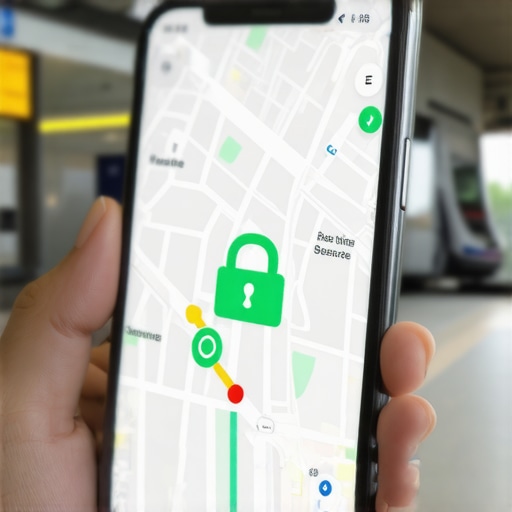
How do I keep this system working for every single trip?
Consistency is the enemy of risk. I maintain my safety standards by never cutting corners, even when I’m tired. I still take the time to verify your driver’s commercial registration manually if I’m using a new service. I even pay attention to the driver’s focus. According to the Smith System, a globally recognized leader in professional driver training, drivers should maintain a ‘high aim in steering’ and ‘keep their eyes moving.’ If I see a driver staring solely at their GPS or a phone mounted too low, I know they aren’t practicing professional-grade safety.
The Future of Late-Night Travel Belongs to the Prepared
I predict that we are heading toward a travel landscape where ‘on-demand’ will be seen as a low-tier, high-risk option, while reserving your spot will become the standard for anyone valuing their time and safety. We are already seeing a shift where why manual dispatching still beats AI for real-time accuracy is becoming the preferred choice for executive and solo travelers alike. To truly scale your personal safety, I suggest moving your most frequent routes to a fixed schedule. Once you learn how to set up a recurring weekly commute that never fails, the mental load of midnight travel simply evaporates. Try this tonight: for your next late arrival, don’t just book a ride; book a specific 20-minute buffer and ask the company to provide their commercial insurance certificate upfront. If they hesitate, you know they aren’t the right choice for your safety.
Hard-Truths I Learned from Midnight Platform Vigils
Over the years, I’ve realized that the difference between a stressful arrival and a peaceful one comes down to a few hard-won ‘lightbulb moments.’ First, the anxiety of a low phone battery is multiplied tenfold when you’re relying on a gig-economy app to find you. Second, knowing why safety and timeliness matter in hourly reservation services isn’t just about punctuality; it’s about preserving your mental energy for the next day. I also learned to never ignore my gut—if a driver looks exhausted, they probably are. You should know how to spot a driver who is too tired to drive safely before you ever put your bags in the trunk. Finally, I stopped viewing transport as a simple utility and started seeing it as an insurance policy for my own well-being. [IMAGE_PLACEHOLDER_FINAL]
My Reliable Toolkit for High-Stakes Night Travel
I don’t just wing it anymore; I use a specific safety stack to navigate the city after dark. I highly recommend reading The Gift of Fear by Gavin de Becker; it completely changed how I perceive environmental risks at transit hubs. I also suggest bookmarking our guide on essential hourly reservation tips for timely service to keep your protocols fresh. For the physical ride itself, I always perform the specific seatbelt check for high-end sedans to ensure the vehicle is as safe as it is comfortable. These aren’t just habits; they are the pillars of a professional travel life.
Claim Your Peace of Mind Tonight
You deserve to feel in control of your night, regardless of what time your train pulls into the station. By prioritizing safety precision the key to reliable hourly reservations for peace of mind, you’re not just booking a car; you’re securing a promise of security and comfort. Let’s make the midnight platform dread a relic of the past once and for all. Have you ever had a ride-share cancel on you when you needed them most at a deserted station? Let me know your story in the comments below!