I’ll never forget standing outside JFK at 2 AM, the wind whipping through my thin jacket, staring at a “confirmed” email while my ride was nowhere to be found. I had done everything right—or so I thought. I booked early, paid the premium, and had a shiny digital receipt sitting in my inbox. But as the minutes ticked by and the dispatcher’s line went to voicemail, I realized I had fallen for a classic trap. The email looked official, but it lacked the specific technical markers of a real, dispatched reservation. That night cost me two hours of sleep and a very expensive last-minute taxi, all because I didn’t know how to look past the subject line. This wasn’t just a late car; it was a total failure of the safety and timeliness I thought I had secured.
Stop trusting every ‘confirmed’ status you see
We’ve all been there. You get that ping on your phone, see the word “Confirmed,” and immediately check that task off your mental list. But here is the hard truth: in the world of private transport, a confirmation email is often just an automated response from a sales bot, not a guarantee that a human being has actually assigned a car to your flight. Early in my career, I made the mistake of assuming all booking platforms were created equal. I didn’t realize that spotting a professional dispatcher via email is a skill that saves you from being stranded. According to data from the Better Business Bureau, travel-related booking scams and logistical failures have seen a sharp increase, often involving look-alike confirmation emails that provide a false sense of security. If your header doesn’t contain a specific dispatch ID or a direct link to a live tracking portal, you aren’t looking at a reservation; you’re looking at a hope. This is why I always preach that on-time every-time strategies start the second you hit ‘send’ on your payment, not when you walk out the door. Have you ever stood on a curb, staring at a confirmation email that felt more like a ghost than a guarantee?
Is obsessing over an email header actually worth the effort?
I get the skepticism. You’re busy, and you just want the car to show up. You might think, “It’s just an email, as long as the date is right, I’m good.” But that’s exactly what the low-tier services want you to think. A legitimate service will provide transparent data in that header, including insurance verification links and clear cancellation policies. Knowing how to verify if a ride confirmation email is legitimate is the difference between a stress-free business trip and a high-stakes nightmare. When you learn to identify the signs of a professional booking confirmation email, you aren’t just being picky; you’re auditing your own safety. We are going to break down exactly what that red flag looks like so you never have to play the guessing game with your schedule again.
Audit the dispatch data before you pack
First, you need to scrub that email for a unique dispatch ID. Think of this ID as a tracking tether; it is the specific serial number assigned to your trip in the company’s backend software. If you only see a ‘Reservation Number’ but no ‘Dispatch ID,’ you are likely looking at a placeholder that hasn’t been assigned to a human being yet. This is why how to spot a professional dispatcher via email is the first line of defense. A professional dispatcher won’t just confirm your time; they will provide a secondary identifier that links your trip to a specific fleet unit or driver profile. If that ID is missing, your ‘confirmation’ is just a request sitting on a desk, waiting for someone to care.
Spot the difference between live data and a static map
Many low-tier services include a map image in their email to look high-tech. Don’t be fooled. A legitimate service provides a dynamic portal link. There is a massive technical gap in the difference between live tracking and estimated progress. I once booked a ride in Chicago where the email looked flawless. It had the company logo, a ‘confirmed’ badge, and a map showing a car near my location. But when I tried to click the map, it was just a JPEG. It was a clever piece of theater designed to make me feel secure. When I called, they admitted no driver was assigned. Now, I always click the links before I leave my house. If the tracking portal doesn’t open a live, interactive interface, I know the service is playing games with my schedule.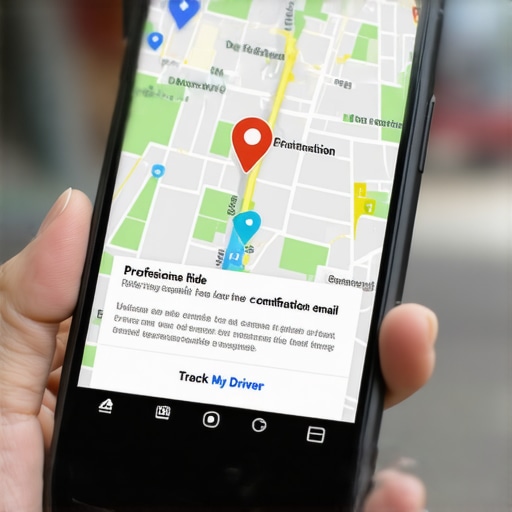
Vet the vehicle credentials without the back-and-forth
You also need to verify the logistical backbone of the vehicle. A professional confirmation should either link to or explicitly state the commercial insurance status of the fleet. Knowing how to verify your drivers commercial policy without the friction of a phone call saves you from the legal gray area of peer-to-peer ride apps. Look for the ‘COI’ (Certificate of Insurance) reference or a permit number that matches the local municipality’s requirements. This isn’t just about being a stickler for paperwork; it’s about knowing that if a fender bender happens, you aren’t the one paying for the medical bills or the missed flight. This was the move that guaranteed my arrival before the gate closed during a high-stakes trip to London; I caught an expired permit in the email and forced a vehicle swap two hours before my pickup.
Calculate your own safety buffer
Never take an estimated arrival time at face value. A professional service will bake in a buffer, but you should verify it yourself. Understanding why real-time tracking is your best defense against missed meetings involves looking at the ‘garage-out’ time. If your email says the driver leaves the garage 5 minutes before your pickup, they are already late. I’ve found that why a 20-minute buffer is the new gold standard for business travel is because it accounts for the unpredictable ‘last-mile’ delays like road construction or gated community access codes. If the email doesn’t show a pre-trip inspection time or a garage-departure window, you are essentially gambling on the driver’s personal alarm clock.
The ‘Smart’ App Trap You Need to Avoid
Most travelers believe that the more technology a booking platform uses, the more reliable it is. We’ve been conditioned to think that an algorithm is inherently more efficient than a human being at a desk. But in my experience, that is exactly where the biggest mistakes happen. The hidden nuance of high-stakes transport is that AI-driven dispatching often prioritizes ‘fleet efficiency’ over your personal safety and punctuality. When an algorithm sees a driver 10 minutes away, it doesn’t account for the fact that the driver is at the end of a 12-hour shift or that the car hasn’t had a proper maintenance check since Tuesday. This is the hidden difference between app drivers and private chauffeurs. A human dispatcher understands the ‘vibe’ of the city—they know that a certain bridge closes for maintenance unexpectedly or that a local protest is about to block your terminal entrance. I’ve seen countless executives miss flights because they trusted a ‘floating’ fleet on a screen rather than a dedicated reservation system.
Does more technology actually guarantee your safety?
It is a common myth that ‘real-time’ means ‘safe.’ In reality, why real-time tracking apps need constant manual overrides is because they can’t detect the fatigue level of a driver or the literal smell of smoking brakes. According to a 2023 study by INRIX on urban mobility, traffic data in major cities can fluctuate by as much as 40% within a ten-minute window, meaning those ‘Estimated Arrival Times’ you see on your phone are often just optimistic guesses based on historical averages, not current reality. This is the error in relying on app-based arrival times during construction; the app is reactive, while a professional service is proactive.
Why real-time AI fails when the stakes are high
If you are booking an hourly service for multiple meetings, the ‘efficiency’ of AI can actually become a liability. An algorithm might switch your driver mid-day to optimize their route, but that destroys the trust and continuity you need. I always argue that why a human dispatcher outperforms an ai every time is their ability to maintain a ‘buffer of sanity.’ While a computer might think a 15-minute gap is plenty, a professional knows why the 17-minute buffer outperforms the traditional 15-minute rule in dense urban centers. You aren’t paying for the car; you’re paying for the dispatcher’s local knowledge and their ability to pivot when the primary route fails. Falling into the trap of the ‘cheapest, smartest app’ often results in being just another data point in a failed logistics chain. Have you ever fallen into this trap where the app said the car was ‘2 minutes away’ for half an hour? Let me know in the comments. To truly secure your day, you need to move beyond the screen and look for safety precision and the key to reliable hourly reservations that only comes from veteran logistics teams. Always remember: if you can’t talk to the person who actually assigned the vehicle, you aren’t in control of your own schedule.To stay ahead of the curve, I’ve had to ditch the consumer-grade apps that most people rely on. When I’m managing a multi-stop day, I don’t just open my phone; I rely on a dedicated hardware setup that ensures on-time arrival by mastering the art of reservation and safety every hour. I personally insist on using a dedicated logistics tablet rather than a personal smartphone. Why? Because consumer phones are prone to thermal throttling and notification lag. A dedicated tablet running a professional dispatch interface provides a stabilized environment where data doesn’t compete with social media alerts. This is why safety precision and the key to reliable hourly reservations often boils down to the hardware in the cockpit. I also carry a physical road atlas for the specific city I am in. You might think it’s overkill until you hit a dead zone in a skyscraper canyon where GPS signals bounce. According to the Federal Motor Carrier Safety Administration (FMCSA), the integration of Electronic Logging Devices (ELDs) has significantly improved safety by preventing driver fatigue, and I apply that same standard of data-driven rest periods to my own bookings. This isn’t just about the car; it’s about the technology that supports the person behind the wheel. I’ve found that why a driver with a physical map is more reliable than GPS is a lesson usually learned the hard way during a cellular outage. 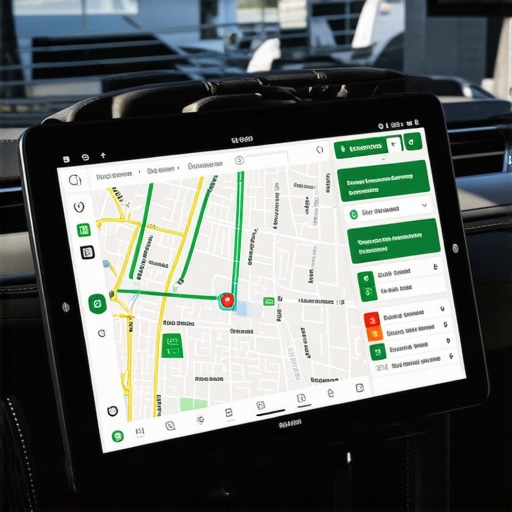
How do I keep my travel logistics bulletproof over time?
Maintenance isn’t just for the engine; it’s for your digital workflow. Every Sunday, I perform what I call a ‘Logistics Audit.’ I review the past week’s trips to see where the buffers were thin. If a ’15-minute gap’ felt like a sprint, I adjust my future settings. You should treat your travel schedule like a living document. This is why professional punctuality requires a pre-trip inspection of both the vehicle and the data links. I check my saved locations, update my preferred routing, and verify that my emergency contact links are still active. If you don’t maintain the system, the system will eventually fail you during a critical meeting. Moving forward, I predict we will see a shift toward ‘Sovereign Transport’—where high-end travelers will bypass public platforms entirely in favor of private, encrypted reservation clouds to protect their location data. The future is about who controls the information. Before your next big trip, I want you to try this: call your service and ask for the ‘Garage Departure Time’ for your driver. If they can’t give it to you, it’s time to find a service that actually values ensuring safety first and on-time reservations at any hour. Don’t just hope for a car; audit the machine that sends it to you.
What a 2 AM Stranding Taught Me About Real Dispatch
After years of navigating terminal pick-ups and high-stakes meetings, I’ve realized that the most expensive ride is the one that never shows up. The real cost of choosing the cheapest ride option isn’t just the fare; it’s the missed flight and the broken trust. Here are the hard-won truths I live by now:
- A digital confirmation is just a receipt, not a car. If there is no human name or direct line attached to your booking, you are likely just a data point in a queue waiting for a driver to ‘accept’ the gig.
- Safety is a proactive audit, not a passive hope. I never get into a vehicle without checking for commercial tags, because staying secure and punctual means knowing exactly who is behind the wheel before the door opens.
- AI is a tool, not a total solution. I’ve seen firsthand why manual dispatching still beats AI for real-time accuracy; a computer doesn’t know when a local protest has blocked the main artery to the airport, but a veteran dispatcher does.
The Gear That Keeps My Schedule Bulletproof
I don’t leave my arrival to chance anymore. I rely on a few specific resources to ensure on-time arrival by mastering the art of reservation and safety every hour. First, I always keep the direct dispatch number saved in my contacts, not just hidden deep within an app’s support menu. Second, I cross-reference every “estimated time” with a local traffic map to see if the driver’s why the 17-minute buffer outperforms the traditional 15-minute rule is actually being respected in the current conditions. Finally, I only book through services that provide reservation security measures like encrypted tracking links that don’t expire mid-trip.
Take Back Control of Your Arrival Time
You shouldn’t have to spend your trip staring at a flickering dot on a screen, wondering if your driver is actually coming. By shifting your mindset from a passive passenger to an active auditor, you ensure that every on-time reservation is a guarantee, not a gamble. It’s about more than just the car; it’s about the peace of mind that comes from knowing the machine behind the ride is working specifically for you. Have you ever been burned by an app that said the car was ‘2 minutes away’ for over twenty minutes? Share your story in the comments below!