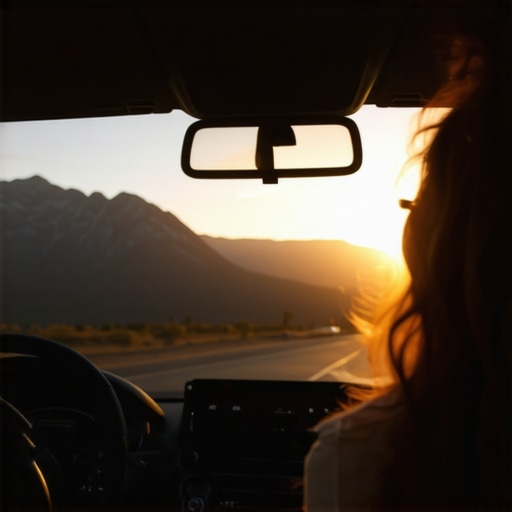
I’ll never forget that damp Tuesday in Chicago when I realized I was doing solo travel all wrong. I had booked a car to get back to my hotel, and when it pulled up, I instinctively climbed into the front passenger seat. I wanted to be “the friendly traveler,” you know? But as we merged onto the highway, I felt a knot in my stomach. I was too close to the driver’s personal space, I couldn’t see his eyes in the mirror, and I felt completely trapped. It was a classic “polite girl” mistake that could have ended poorly if the driver hadn’t been a pro.
Why I Stopped Sitting Up Front to Be Polite
For a long time, I thought sitting in the back made me look like an entitled brat. But after that night, I did my homework. Professional chauffeurs actually prefer you in the back; it’s a boundary that protects both of you. When you’re traveling solo, your primary goal is to maximize your safety and satisfaction by controlling your environment. Sitting behind the passenger seat—the “diagonal” position—is the gold standard. It gives you the widest field of vision and makes it impossible for a driver to reach you easily. Before you even get in, though, you have to verify the license plate match every single time to ensure you are entering the correct vehicle.
Is sitting in the back actually worth the social awkwardness?
I get it. You don’t want to seem cold or stuck-up. But here’s the reality: safety isn’t a personality trait, it’s a protocol. According to the National Safety Council, situational awareness is significantly hampered when you are in close physical proximity to a stranger in a moving vehicle. My early mistake was thinking that “friendliness” was a shield. It’s not. Real security comes from things like why real-time vehicle tracking is more than just a convenience for your peace of mind and staying alert. Have you ever felt that weird pressure to sit up front just to avoid an awkward silence?
The Diagonal Seat Strategy for Total Control
When you sit in the rear-right seat, you aren’t just being distant; you’re being tactical. From here, you can see the driver’s eyes in the rearview mirror without them staring directly at you. You also have a clear view of the road ahead, allowing you to ensure your driver knows the best back roads or notice if they are taking a suspicious detour. This position also allows you to exit toward the curb rather than into traffic—a small detail that matters when you’re in a rush. I always make sure I’ve used a secure payment portal before I even step near the curb, so there’s no fumbling with my wallet while I’m vulnerable. This setup sets the stage for a journey where you are the boss of your own space.
Plan Your Escape Before You Ever Leave the House
The biggest threat to your safety isn’t a bad neighborhood; it’s desperation. When you’re running late, your brain skips the safety protocols. I learned this the hard way at O’Hare last winter. I was so panicked about missing my flight that I almost jumped into a black sedan that wasn’t even mine. Now, I never leave my pickup to chance. I focus on reserving your spot how to guarantee safety and punctuality 24-7 so I can maintain my composure. Think of your reservation as a contract of care. If the car isn’t there when it should be, your risk-taking increases. I’ve found that why a 20-minute buffer is the new gold standard for business and personal travel alike. This extra time allows you to breathe, verify the vehicle, and walk away if something feels off without the fear of being stranded.
Stop Relying on App Arrival Guesses
Apps are notorious for optimism. They calculate the best-case scenario, ignoring the reality of double-parked delivery trucks or sudden lane closures. You have to account for the error in relying on app-based arrival times during construction which can turn a five-minute wait into a twenty-minute vulnerability. When you book a private car, you aren’t just paying for the ride; you’re paying for a driver who has already mapped out the detours.
The 60-Second Inspection That Saves Your Life
Before you touch the door handle, perform a visual sweep. This isn’t just about the license plate. You need to know how to verify your drivers commercial registration manually by looking for the specific stickers or placards required by your city’s transit authority. I once had a driver show up who looked like he hadn’t slept in forty-eight hours. His eyes were bloodshot, and he was fumbling with his phone. Because I wasn’t in a rush, I knew how to spot a driver who is too tired to drive safely and politely declined the ride. It cost me a few dollars in cancellation fees, but it likely saved my life.
Turn Your Phone into a Safety Beacon
Once you are inside and seated in that rear-right diagonal position, your phone becomes your most powerful tool. Don’t just stare at social media. Open your tracking link. This is why why tracking links should always be shared with a trusted friend. I have a group chat with two friends where I drop my live location the moment I’m in a car. It creates a digital trail that keeps everyone accountable. This simple move shifts the power dynamic; the driver knows you are being watched, and you know exactly where you are on the map, even in a city you’ve never visited before. Control isn’t about being bossy; it’s about being informed.Let’s dig deeper into the psychology of the ‘rush.’ Most travelers believe that the efficiency of an app—where a car appears in three minutes—is the pinnacle of modern travel. I’m here to tell you that it’s actually a massive safety liability. When you rely on on-demand services, you are rolling the dice on who is behind the wheel. There is a hidden difference between app drivers and private chauffeurs that goes beyond the car model. A chauffeur is a professional with a vetted history; an app driver is often just someone with a GPS and a deadline.
Why ‘On-Demand’ is often just a fancy word for ‘Unprepared’
The ‘oops’ factor usually hits when you realize that why most arrival times are simply guesses generated by an algorithm that doesn’t understand local construction or the driver’s fatigue level. According to a study by the American Psychological Association, high levels of time-pressure lead to ‘cognitive tunneling,’ where you focus so much on the clock that you stop noticing your surroundings. This is when you miss the fact that the car doesn’t have the right plates or the driver looks distracted. By ensuring safety first with on-time reservations, you remove that pressure.
Can an hourly booking actually save you money on a high-stakes day?
Many people think hourly rates are only for weddings or prom nights. In reality, why hourly rates provide better value for wedding day logistics and corporate marathons is about more than just the price tag; it’s about having a dedicated security partner. When you book by the hour, that driver is yours. They aren’t rushing to finish your trip to grab the next ‘surge’ fare. This creates a calm environment where you can actually perform the 4-point mirror check every executive traveler should perform without feeling like you’re bothering the driver. 
Commercial Paperwork Matters More Than Leather Seats
One advanced mistake I see is assuming a ‘luxury’ car automatically means ‘safe’ insurance. You must know how to verify your drivers commercial policy without the friction before you get comfortable. If they can’t show you their commercial credentials, they are effectively an amateur in a nice suit. Have you ever fallen into this trap of assuming a nice car meant a professional service? Let me know in the comments. Real security is about the paperwork, not the leather seats. It’s about staying secure and punctual with essential hourly reservation tips that put you back in the driver’s seat of your own safety.To keep this safety system working month after month, I treat my travel logs like a business expense. I’ve started using a specific ‘safety audit’ once a month where I look back at my trip history. It’s remarkably easy to audit your monthly travel spend without stress, but while I’m looking at the numbers, I’m also checking for driver consistency and punctuality. If a service starts slipping on their arrival times, I move on. I don’t give third chances when it comes to my security. I rely heavily on a ‘Digital Safety Stack’ which includes a mix of live-tracking apps and a direct line to a human dispatcher. I’ve learned that a human dispatcher outperforms an AI every time because they can anticipate the chaos of a city like Chicago or New York in ways an algorithm simply cannot.
My Digital Safety Stack for Every Ride
My primary tool isn’t a flashy app; it’s the habit of pre-scheduling everything. When you move from on-demand to scheduled service, you gain access to the punctuality habits of top-tier private chauffeurs who treat your 2:00 PM pickup as a hard deadline, not a suggestion. I also use a dedicated travel email alias for all my bookings. This prevents my personal data from being spread across multiple platforms and allows me to spot phishing attempts instantly.
How do I maintain high safety standards across hundreds of trips?
Consistency is the enemy of complacency. I follow the ‘Smith System’ of defensive driving principles, even as a passenger. Niche experts in fleet safety, like those at the Smith System, emphasize the importance of ‘Getting the Big Picture.’ For me, this means never getting so buried in my phone that I lose track of the route. I also keep a physical list of emergency contacts in my bag—not just on my phone—because if your battery dies, your safety tech goes with it. For high-stakes days involving multiple stops, I’ve found that hourly drivers provide the best security for high-value goods and personal peace of mind. It scales the safety protocol because the car stays with you, creating a mobile ‘safe zone’ throughout the city.
The Human Element Still Wins the Future
Looking ahead, I predict a massive shift away from fully autonomous app-based rides for executive and solo travel. While the tech is cool, it lacks the ‘protective intelligence’ of a professional human driver. We are going to see a return to high-touch, human-verified services where mastering the art of reservation and safety every hour becomes the luxury standard. People are realizing that convenience isn’t worth the risk of a non-vetted stranger or an unmonitored vehicle. If you want to level up your travel game right now, I highly encourage you to try the ‘buffer’ method: start booking your rides with a 20-minute lead time and see how much your situational awareness improves when the ‘rush’ is gone.
The Hardest Lessons I Learned on the Road
Reflecting on years of solo travel, the biggest shift wasn’t just about which car I booked, but how I viewed the relationship with the driver. I used to think safety was a ‘bonus’ of a good service, but I realized it is the entire foundation of a successful trip. Here are a few lightbulb moments that changed everything for me:
- The ‘Nice Car’ Illusion: Just because a vehicle is a late-model Mercedes doesn’t mean the driver is qualified or insured. I learned to look for the one physical marker that proves a vehicle is well-maintained before I even open the door.
- Politeness is Not a Safety Strategy: Professional chauffeurs respect a passenger who understands boundaries. They actually prefer when you sit in the diagonal rear seat because it clarifies the professional nature of the trip and maintains mutual comfort.
- Ratings are Only Half the Story: I stopped trusting generic app stars and started learning how to verify a private drivers professional rating independently to ensure they have a commercial track record.
My Personal Arsenal for High-Stakes Transit
When my schedule is packed with back-to-back meetings, I don’t leave my transit to an algorithm. I rely on a few specific resources to stay secure and organized. First, I always double-check my reservation security measures how to book safely and arrive on time to ensure no data is leaked. Second, I keep a digital map of the city downloaded for offline use to monitor routes even without a signal. Finally, I have a pre-set protocol for how to handle a late flight arrival with your car service so I am never left vulnerable at a terminal after midnight.
Take Back Control of Your Next Journey
You deserve to arrive at your destination without the lingering anxiety of an unvetted ride. By moving away from on-demand chaos and embracing safety-precision the key to reliable hourly reservations for peace of mind, you aren’t just buying a ride; you’re buying mental clarity. Let your next trip be defined by on-time every-time strategies for safe and reliable hourly bookings. Safe travels are a choice, not a lucky accident. Have you ever had a gut feeling that a driver wasn’t quite right—did you stay in the car or cancel the ride? Let me know in the comments below!