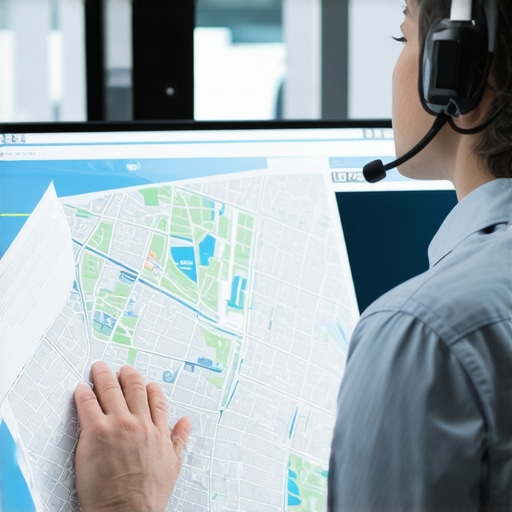
I’ll never forget standing on a rain-slicked corner in Chicago, staring at a frozen Google Maps screen while my passenger—a high-stakes executive—waited for a ride that looked like it was hovering in the middle of Lake Michigan. The GPS signal had completely vanished between the skyscrapers, and I felt like a captain without a compass. It was a visceral, sinking feeling. I made the mistake of relying 100% on that little blue dot early in my career, thinking tech was infallible. It wasn’t just embarrassing; it was a massive hurdle to ensuring safety first and managing on-time reservations at a critical hour. Today, I’m going to show you exactly how professional dispatchers and drivers keep your schedule on track even when the satellites stop talking to us. We’re moving beyond the app and back into the realm of real-world expertise.
Don’t Let a Dead Zone Kill Your Schedule
The reality is that the real reason your app’s ETA is often over-optimistic is because it assumes the signal is perfect. It isn’t. Between tall buildings, thick foliage, and remote mountain passes, GPS is surprisingly fragile. When I was starting out, I once spent twenty minutes circling a block because my phone thought I was on a parallel street. My passenger was furious, and rightfully so. That failure taught me that the difference between GPS routing and professional road knowledge is the difference between a stressed commute and a seamless arrival. Modern dispatchers don’t just stare at a screen; they use topographical awareness and pre-planned route backups. According to research from the National Institutes of Standards and Technology (NIST), GPS signals are susceptible to ‘urban canyon’ effects where signals bounce off buildings, creating errors of up to several hundred meters. That’s enough to miss a pickup entirely. Have you ever been left stranded on a curb because a driver couldn’t find your digital ‘pin’ even though you were standing right there?
Is a fancy app actually worth the hype?
Many people fear that without a constant live map, a driver is just guessing. I used to think the same until I realized that why on-time performance depends on local knowledge over GPS is a matter of professional survival. We use human dispatchers who know the rhythm of the city—the construction zones that aren’t on the map yet and the side streets that stay clear during a downpour. We aren’t just following a line; we are executing a plan that accounts for technical failure from the moment you book.
Look for These Red Flags Before You Open the Door
I remember a freezing Tuesday in Manhattan early in my career. I was exhausted, the rain was coming down in sheets, and I just wanted to get my passenger to their hotel. A black sedan pulled up, and I watched my client reach for the handle without a second thought. It wasn’t me. The driver looked more surprised than the passenger did. That close call taught me that the pre-trip verification that prevents scams is a non-negotiable safety step. Before you even touch the door, verify the license plate against your booking confirmation. A professional driver will always have their credentials visible, and they won’t mind the thirty seconds it takes for you to be sure. This isn’t just about safety; it’s about starting the reservation on the right foot so there are no awkward ‘wrong car’ delays.
Why the 15-Minute Buffer is Actually Your Zero Hour
In the world of high-end transit, being ‘on time’ is actually being late. We operate on a logic where the buffer rule that actually prevents tardy starts dictates a driver should be on-site and ready at least fifteen minutes before the scheduled pickup. I once had a pickup at a major tech hub where a sudden protest blocked the main artery three minutes before the scheduled time. Because I was already in the ‘buffer zone,’ I was able to communicate with the client and move to a side entrance before the gridlock became permanent. If you are booking an hourly reservation for a safe and reliable booking, ask your provider about their staging policy. If they aren’t planning to be there early, they aren’t planning for the unexpected. We prioritize why consistent arrival times matter more than the shortest route because predictability is the only thing that actually lowers a passenger’s blood pressure.
Dealing With the Infamous 30-Second Tracking Lag
One of the biggest sources of friction between passengers and drivers is the ‘ghost’ car on the map. You see the icon three blocks away, but the car is actually turning the corner in front of you. Understanding why your real-time tracking link might have a 30-second lag is crucial for managing your own timing. GPS data has to travel from the vehicle to a satellite, then to a server, and finally to your phone. In a dense city, this delay can be even longer. When I’m behind the wheel, I know my passenger is looking at that lag, so I make it a point to send a quick text when I’m one block out. This manual ‘ping’ overrides the tech and ensures you aren’t standing on a curb in the rain longer than necessary. Especially during late hours, the professional protocol for handling late-night pickups demands this extra layer of communication to ensure the passenger stays inside a secure building until the very moment the vehicle is physically present.Most people assume that the fastest route provided by a navigation app is the best route. In my experience, that is a rookie mistake that leads to unnecessary stress. I have seen drivers shave two minutes off a trip by taking a ‘shortcut’ through a narrow residential neighborhood, only to get stuck behind a garbage truck or a school bus. This is why consistent arrival times matter more than the shortest route. A professional knows that a main artery, even with heavy traffic, is predictable. According to the Texas A&M Transportation Institute’s Urban Mobility Report, unpredictable delays—like minor accidents or sudden weather shifts—account for over 50% of all traffic congestion. By sticking to vetted, high-capacity roads, we eliminate the ‘unknown unknowns.’ Have you ever had a driver take a ‘shortcut’ that turned into a nightmare? Let me know in the comments.
The Financial Trap of One-Way Bookings
Travelers often think they are saving money by booking individual legs, but why point-to-point booking fails for executive roadshows is simple: flexibility. If your meeting runs ten minutes over, you have lost your ride and are back at the mercy of an app. With an hourly reservation, you own the car’s time. It is not just a luxury; the math behind why hourly bookings save money during peak hours shows that you avoid surge pricing and the ‘cancel-and-rebook’ cycle that plagues busy tech hubs. When you calculate the cost of a missed flight or a late arrival to a keynote, the hourly rate is actually the cheaper insurance policy.
Can you actually trust a third-party booking site?
One of the biggest security risks I see today is the rise of sleek-looking travel aggregators. These sites look professional, but they often lack direct oversight of the actual drivers. You might think you are getting a vetted professional, but the security risks of booking a ride through a third-party broker involve a lack of accountability and high chances of your data being mishandled. Always spot a fake ride confirmation before you step outside by checking if the email comes from a verified corporate domain. If the confirmation looks like a generic text block with no license information, stay inside.
Don’t Trust Your Phone to Fill in the Blanks
The ‘oops’ factor usually hits when you trust auto-fill forms. I have seen high-stakes passengers accidentally book a pickup at their neighbor’s house or a previous office location because they were in a rush. This is the security flaw in auto-fill booking forms that can cause massive delays and leave you vulnerable on a street corner. Always manually verify your terminal door or specific entrance. Additionally, beware of the ‘cash’ request. We have seen the move to secure payments as a primary safety feature because it creates a digital paper trail for your protection. If a driver asks for cash under the table to ‘save you money,’ they are likely bypassing company insurance and safety protocols. 
Why the Best Drivers Stay Ten Minutes Away
Newer riders often get anxious when they see their driver ‘parked’ a block away on the map. They think the driver is being lazy. In reality, why most on-time drop-offs start with a 10-minute early arrival and staging is a strategic move. We stay just out of the immediate congestion of a hotel front drive or airport terminal so we can pull up the exact moment you walk out. This is the core of the buffer zone rule for picking up executive clients—it ensures we are ready but not clogging the lane or getting forced to move by security before you appear.
The Gear That Keeps Me On Track When Phones Die
Behind the wheel of a professional vehicle, the setup is more like a cockpit than a commuter car. I don’t just rely on a standard smartphone because I’ve seen them overheat or lose signal at the worst possible moments. Instead, I use an external GPS receiver like the GNS 2000 Plus paired with a dedicated tablet running dispatch software. This setup provides high-precision data even in those ‘urban canyons’ I mentioned earlier. For you, this means how to sync your calendar directly with your chauffeur isn’t just a convenience—it is a way to ensure my hardware is pre-loaded with your destination before you even sit down. We also utilize telematics systems like Samsara to monitor vehicle health and traffic patterns in real-time. According to the American Society of Safety Professionals (ASSP), implementing real-time telematics can reduce traffic-related incidents by up to 40% through increased driver awareness and proactive maintenance. When you see a driver with a clean, organized tech stack, you are looking at someone who takes your schedule seriously. 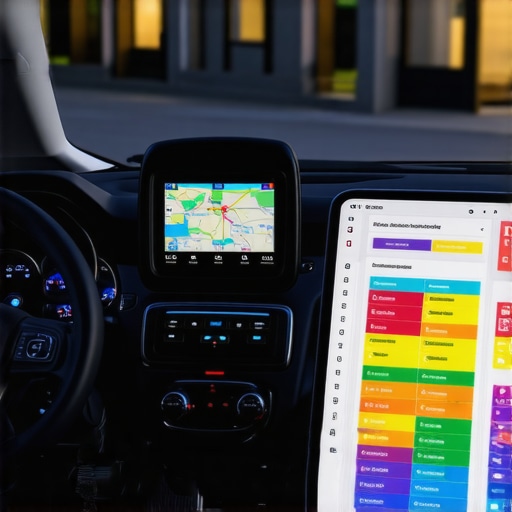
How do I keep my schedule sharp over the long haul?
Maintaining this level of precision isn’t a one-time setup; it is a daily discipline. I treat my vehicle and my software like a pilot treats a plane. Every Monday, I audit my route history to see where we lost seconds and why. This is why safety and timeliness matter in hourly reservation services—it is about constant refinement. I also suggest that clients learn how to audit your chauffeur’s permit without being rude because a driver who stays on top of their paperwork is usually a driver who stays on top of their timing. Professionalism is a habit, not an act, and it requires checking the ‘boring’ things like tire pressure and software updates every single morning.
The Next Frontier for Your Morning Commute
Looking ahead, the industry is moving toward V2X (Vehicle-to-Everything) communication. This means cars will eventually talk to traffic lights and other vehicles to optimize flow. While we aren’t fully there yet, we are already using AI-driven predictive modeling to guess where traffic will swell before it even happens. This is why the math behind choosing a fixed transit schedule is changing; we can now offer even tighter windows with higher confidence. If you want to stay secure and punctual with essential hourly reservation tips, I recommend trying this today: the next time you book, send your driver a screenshot of your internal itinerary. It bridges the gap between our tech and your reality, ensuring we are ready for the ‘meeting after the meeting’ before it’s even on our radar.
The Hardest Lessons from a Million Miles Driven
Over the years, I have realized that the most important part of the job isn’t the driving—it’s the anticipation. I spent years thinking a faster car or a better phone would solve everything, but the real secret lies in safety precision and reliable hourly reservations. Here are the lightbulb moments that changed my approach: First, always assume the tech will fail. If you don’t have a mental map of the current construction detours, you are already behind. Second, the ‘final 500 feet’ is where most drivers fail; finding the correct terminal door or side entrance is more important than hitting the speed limit on the highway. Lastly, trust is built in the silence between updates. If your passenger feels they have to check their phone to see where you are, you haven’t communicated enough through the proper channels.
The Toolkit That Keeps Me Sharp
I am often asked what I use to maintain such a high success rate even in the middle of a digital dead zone. I don’t gatekeep because better drivers make the roads safer for everyone. I highly recommend investing in an external GPS receiver like the GNS 2000 Plus; it bypasses the weak internal chips found in most smartphones and provides a lock even between skyscrapers. I also swear by testing the accuracy of your real-time tracking link before every major pickup to ensure the client sees exactly where I am in real-time. For scheduling, I use a custom integration with my calendar to ensure I never miss a beat. Finally, I always keep a physical atlas in the trunk. It sounds old-school, but when the towers go down in a storm, that paper map is the only thing that guarantees I can still deliver on ensuring safety and punctuality for any hour.
#IMAGE_PLACEHOLDER_E#
Punctuality is the Ultimate Luxury
At the end of the day, my goal is to give you back the one thing you can’t buy: time. When you don’t have to worry about the logistics, you can focus on your meeting, your family, or your flight. Mastery of safety, hourly, on time, reservation protocols isn’t just about a job—it’s about respect for your schedule and your peace of mind. I hope these insights help you navigate your next trip with more confidence, whether you are behind the wheel or in the passenger seat. Have you ever been left stranded by a GPS glitch or a driver who couldn’t find your location? Let me know your experience in the comments below!