
I stood there, staring at a ‘Ride Arrived’ notification while looking at a completely empty street at four in the morning. My heart sank. I’d used the ‘magic’ of browser auto-fill to rush through my reservation, and it had betrayed me. My browser had helpfully inserted my old apartment address from three years ago into the pickup field, and my driver was currently sitting ten miles away in a dark parking lot. It wasn’t just a missed flight; it was a glaring realization that my convenience had a massive security and punctuality cost. Today, I want to show you exactly how to close these gaps so you never have to experience that 4 AM panic.
Stop Trusting Your Browser with Your Pickup Address
We all do it because we are busy. We want that only way to ensure your 4 am ride actually shows up to be as frictionless as possible. However, auto-fill is notoriously clumsy. Early in my career, I made the amateur mistake of letting Chrome fill out my corporate billing info. Not only did it use an expired card, but it also leaked my home address into a public-facing comment field. It was a mess. Beyond simple errors, there is a technical danger here. According to researchers at Princeton University’s Center for Information Technology Policy, third-party scripts can stealthily harvest data from your browser’s auto-fill system without you ever clicking ‘submit.’ This means your sensitive travel details could be floating in the hands of data brokers before you even finish your booking. If you want to stay secure and punctual, you have to stop the automation habit.
Is Saving Three Seconds Worth a Security Breach?
It sounds like a small thing, but the implications for your privacy are huge. When you allow a form to populate itself, you lose the chance to verify the reservation security measures that protect your identity. I’ve learned the hard way that taking thirty seconds to type manually is the only way to guarantee accuracy and safety. Have you ever had an auto-filled form send your driver to the wrong zip code or, worse, use a payment method you thought was deleted? Tell me your horror stories in the comments because I know I’m not the only one who has been burned by ‘smart’ technology. By being more intentional, you can easily begin detecting fraudulent ride booking sites instantly rather than falling for the trap of ease over security.
Clean Your Digital Footprint Before Booking
To get this right, you have to treat your reservation like a legal contract, not a grocery list. Browsers are built for speed, but professional travel requires precision. I’ve started treating my booking process like a pre-flight checklist. The first thing I do is disable auto-fill specifically for my travel sites. It feels like an extra step, but manually typing your pickup location and terminal door ensures your brain actually processes the data. If you are serious about why safety and timeliness matter in hourly reservation services, you cannot leave the details to a machine that might still remember where you lived in 2019. This manual habit also forces you to look at the URL. Before you type a single credit card digit, check for the padlock icon and verify the domain. Knowing how to spot a secure payment portal before you book is the difference between a confirmed ride and a drained bank account.
Ditch the Apps for High-Stakes Travel
Apps are great for a cross-town pizza run, but they are built on a ‘best effort’ model. If a driver cancels, the algorithm just looks for the next closest person who might or might not be awake. When I had to get to a keynote speech in Chicago during a snowstorm, I realized the logic behind choosing a professional chauffeur over on-demand apps is about accountability. A professional service assigns a specific human to your reservation hours in advance. To execute this properly, always provide your flight number during the booking process. Why? Because why flight numbers are the best delay insurance for your ride isn’t just about the driver knowing when you land; it’s about the dispatch office tracking the plane’s tail number in real-time. If your flight is diverted, they know it before you do.
The Verification Dance Every Pro Knows
Once the car pulls up, the safety process isn’t over—it’s just moving into the physical phase. Never, ever ask a driver ‘Who are you here for?’ Instead, ask ‘Who are you picking up?’ This simple flip of the script forces them to provide the name on the manifest. I once had a driver nod ‘yes’ when I asked if he was my ride, only to realize three blocks later he was there for a ‘John’ and I am ‘James.’ It was an awkward, potentially dangerous mistake. Now, I always take five seconds to how to verify commercial vehicle tags before you step inside. Look for the commercial plates or the permit sticker in the window. If those aren’t there, the car isn’t insured for your protection. 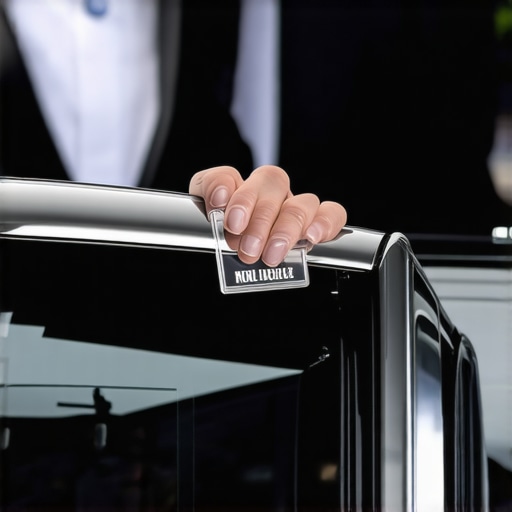
Identify the Badge Before the Body
A real professional won’t be offended if you ask to see their ID. In fact, the best ones have it displayed or ready. Learning how to read a drivers commercial badge for authentic credentials is a skill that takes thirty seconds to master but provides a lifetime of security. Check for the expiration date and the municipality’s seal.
The Buffer Rule That Saves Your Reputation
Punctuality is a math problem, not a matter of luck. I use the ’15-minute pivot’—I always schedule my pickup for 15 minutes earlier than I think I need. This isn’t just for traffic; it’s for the ‘human factor’ like a broken elevator or a forgotten briefcase. Most people don’t realize that why most on-time drop-offs start with a 10-minute early arrival is the industry standard for elite chauffeurs. They aren’t just ‘on time’; they are early so that you can be on time. By applying the buffer time secret for stress-free airport arrivals, you eliminate the frantic heartbeat that usually accompanies a 4 AM departure. You move from being a victim of the schedule to the master of it.Most travelers operate under the delusion that GPS is the final word on punctuality. In my years on the road, I’ve found that the ‘shortest route’ is often the most dangerous for your schedule. Algorithms prioritize distance, but professional dispatchers prioritize flow. This is why on-time performance depends on local knowledge over GPS. A study by the INRIX Global Traffic Scorecard highlights that urban congestion is often predictable, but navigating it effectively requires nuanced human intervention that a standard mapping app simply cannot replicate. If you are relying on a generic ‘Estimated Time of Arrival,’ you’re already behind. In fact, the real reason your apps eta is often over-optimistic is that it fails to account for the ‘last mile’ logistics—like terminal congestion or specific building security protocols that delay a driver’s approach.
GPS Isn’t the Ultimate Truth for Punctuality
One of the biggest traps is the ‘app-only’ mindset. We assume that because we see a car moving on a screen, we are safe. But the real reason your tracking link might be lagging is often due to poor local cellular towers or intentionally delayed data refreshes to mask a driver who is behind schedule. Have you ever fallen into this trap? Let me know in the comments because I see it happening to even the most seasoned executives. To truly ensure safety first with your guide to on-time reservations at any hour, you must look for the small, non-digital signs that indicate a professional operation. 
How Do You Actually Spot Fatigue Before the Car Moves?
This is where the amateurs get caught. Beyond the paperwork, you need to gauge the human behind the wheel. Learning the stealth way to confirm your driver is not fatigued involves a quick visual scan: are they maintaining clear eye contact? Is the cabin well-ventilated? Driver fatigue is a leading cause of late-night incidents, yet most riders only check if the license plate matches. If something feels off, knowing how to handle a sudden route change without stressing your driver becomes irrelevant because you shouldn’t be in that vehicle in the first place.
The Myth of the Cheapest Reservation
We often think we’re being savvy by shopping for the lowest hourly rate. However, the hourly rate myth that costs small businesses thousands is a hard lesson in quality control. Low-cost providers often cut corners on vehicle maintenance and rigorous driver vetting. Before you hit ‘confirm,’ check the digital trail. Look for the hidden red flag in your booking confirmation email header. If the email doesn’t come from a verified corporate domain or lacks a proper SSL-encrypted link, your financial data is at risk. For those moving across borders, don’t forget the 12-minute rule for international airport pickups—a standard that ensures your driver is positioned and ready well before you even clear customs. True reliability is about mastering these invisible layers of the travel industry.Maintaining this level of precision isn’t a one-time setup; it’s an ongoing discipline that separates the tourists from the travelers. I’ve transitioned to a system where I manually authorize my chauffeur service to pull data directly from my encrypted business calendar. When you learn to how to sync your calendar directly with your chauffeur, you effectively eliminate the ‘fat-finger’ mistakes that lead to drivers waiting at the wrong terminal or on the wrong day. It’s about creating a single source of truth. This is why business executives prefer dedicated drivers for multi-stop days; the driver’s tablet updates in real-time as your meetings shift, ensuring they are always one step ahead of your needs. I personally use this for roadshows because the mental load of relaying five different pickup times is too high when you are focused on a closing a deal.
How do you keep your travel security tight for the long haul?
Maintenance isn’t just for the car; it’s for your digital profile too. Every quarter, I go through a ‘logistics audit.’ I check my past ride history to see if there were any deviations from the planned path. You can actually how to audit your drivers route history for accuracy and safety by requesting a GPS playback log from most high-end services. If you see a pattern of ‘side-street shortcuts’ that weren’t authorized, it’s time to find a new provider. You also need to verify that your tracking links aren’t stale. I regularly perform the accuracy test for modern live tracking links by comparing the map icon to my actual location during the ride. If the lag is more than 30 seconds, the system is failing its primary job. Implementing on-time every-time strategies for safe and reliable hourly bookings requires this kind of proactive verification. 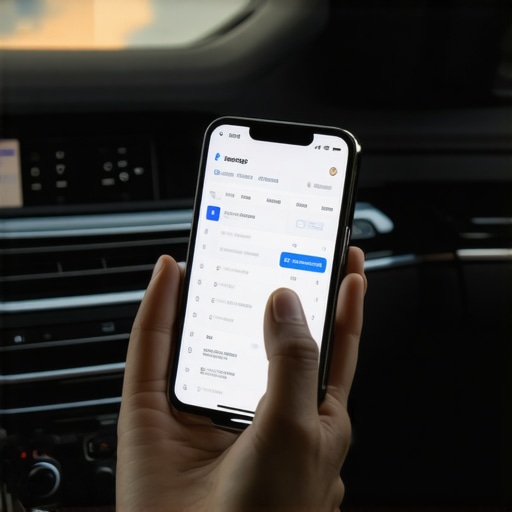
Prepare for the Shift Toward Biometric Vehicle Access
The industry is moving away from simple PIN codes and toward more robust identity verification. We are already seeing the early stages of ‘Zero Trust’ architecture being applied to private transport. According to the National Institute of Standards and Technology (NIST) in their SP 800-207 publication, the shift toward verifying every user and device regardless of their location is the only way to combat sophisticated social engineering. In the near future, your ‘key’ won’t be a text message; it will be a biometric handshake between your phone and the vehicle’s sensor. This is the logical evolution of why modern reservation systems use encryption for your credit card—the security is becoming part of the physical car itself. I challenge you to do one thing today: log into your primary booking site and delete every address you haven’t visited in the last twelve months. Clear the clutter and take back control of your 4 AM wake-up call.
Lessons from the Empty Street at 4 AM
Reflecting on that cold, empty curb, I realized that security isn’t a feature; it’s a discipline. The most successful travelers I know don’t just hope for a car to show up; they build systems that eliminate the possibility of failure. One of the biggest shifts I made was understanding why the best drivers prefer fixed schedules over on-demand pings. It is because a true professional wants to be prepared for you as much as you want them to be there. I’ve also learned that a quick physical inspection is mandatory every time. I never get into a car without performing the 3-point door handle check every passenger must perform to ensure child locks are disengaged and the door is fully functional. These tiny, intentional actions are what prevent a routine trip from turning into a security incident. Professionalism is a two-way street.
The Resources I Trust for High-Stakes Travel
If you want to move beyond basic booking, you need a toolkit that prioritizes data integrity over convenience. I rely heavily on the Zero Trust principles outlined in the NIST SP 800-207 publication, treating every digital interaction as potentially compromised until I see the commercial credentials. For my logistics planning, I always reference the real cost of choosing the cheapest reservation available when evaluating new providers. If the price is too low, the security infrastructure is usually non-existent. I also recommend keeping a physical list of your service’s dispatch numbers in your luggage. Technology is incredible until a battery dies or a tracking link fails, but a direct line to a human who knows your itinerary is the ultimate backup tool for any traveler.
#IMAGE_PLACEHOLDER_FINAL#
Own Your Journey Every Single Time
You now have the blueprint to transition from a vulnerable commuter to a high-precision traveler. By cleaning your digital footprint, verifying every credential, and respecting the math of punctuality, you reclaim your peace of mind. Implementing these on-time every-time strategies for safe and reliable hourly bookings isn’t about being paranoid; it’s about being professional with your own safety. Your time and your security are worth the extra thirty seconds of manual verification. Now that you know the secrets of the pros, how will you change your next booking? Have you ever had an auto-fill error or a digital glitch ruin your 4 AM travel plans? Let me know in the comments below!