
It was a humid Tuesday in Atlanta, and I was about three minutes away from blowing the biggest presentation of my career. I did what most of us do: I hopped into the back of my reserved car, buried my face in my laptop, and started frantically editing slide twelve. It wasn’t until we nearly clipped a cyclist that I looked up and realized my driver hadn’t adjusted his mirrors once since picking me up. In fact, his side-view mirror was angled so far down he was essentially tracking the pavement, not the traffic. I felt my stomach drop. I had prioritized my spreadsheet over my own security. We made it, barely, but that wake-up call changed how I travel forever. Since then, I’ve developed a quick, four-point ritual that ensures I am actually ensuring safety and punctuality before the wheels even turn. I’m sharing this because I don’t want you to learn the hard way like I did.
Check the Glass Before You Sit Down
Early in my career, I made the amateur mistake of assuming every professional driver was, well, professional. I once spent forty-five minutes in the back of a sedan where the rearview mirror was literally vibrating because it was loose. It’s a small detail, but it tells you everything about the vehicle’s maintenance and the driver’s mindset. When you see a driver who takes the time to calibrate their field of vision, you’re looking at the punctuality habits of top-tier private chauffeurs. They aren’t just driving; they are managing an environment. If those mirrors aren’t set, they are driving blind, and you are the one paying the price for that negligence. Have you ever caught yourself mid-ride realizing your driver was completely oblivious to their surroundings?
Does a simple mirror glance actually make you safer?
You might think I’m being a bit paranoid. After all, isn’t that what the insurance is for? But according to the National Safety Council, nearly 90% of all motor vehicle crashes are caused by human error, with visibility and distraction being leading factors. A mirror check is the fastest way to spot a driver who is too tired to drive safely or simply too distracted to care about the basics. It is a visual litmus test. When I see a chauffeur checking their blind spots via properly aligned mirrors, I see the visual signs of a chauffeur who values professionalism. It gives me the peace of mind to actually open that laptop and get to work, knowing the person upfront is actually in command of the vessel. Today, I’m going to walk you through exactly what to look for the next time that door is opened for you.
Look for the Plate Before You Reach for the Handle
The very first thing I do isn’t looking for the driver’s smile; it’s looking for the metal on the bumper. In the world of high-end transport, your safety starts with administrative accuracy. You should never grab a door handle until you have confirmed a match. I’ve seen people hop into random black SUVs just because they looked ‘limo-ish,’ only to realize they were in a stranger’s personal vehicle. This is why you must know how to verify commercial plates on a private hire before you even think about putting your luggage in the trunk. It’s the digital handshake that keeps you secure.
Verification keeps you out of the wrong backseat
Beyond the plate, I always check the driver’s digital credentials. If the person behind the wheel doesn’t match the profile or if the car lacks the proper decals, I stay on the curb. A legitimate service won’t mind the thirty-second delay. In fact, if you want to be extra thorough, you should know why you should never enter a vehicle without a license plate match. It’s not just about the ride you booked; it’s about the insurance and liability that only covers you when you are in the correct car.
Trust the 17-Minute Buffer Over the App’s Estimate
We’ve all been lied to by a GPS. It tells you twelve minutes, but it doesn’t account for the double-parked delivery truck or the sudden lane closure. When I have a flight to catch or a keynote to deliver, I ignore the “Estimated Time of Arrival” entirely. I’ve found that why most arrival times are simply guesses is because they rely on historical data rather than the chaos of the present moment. Instead, I live by a specific timing rule. I’ve discovered that why the 17-minute buffer outperforms the traditional 15-minute rule comes down to the margin for human error and the time it takes to actually navigate a terminal drop-off. If you aren’t building in that extra window, you’re essentially gambling with your schedule.
Why real-time tracking beats a static ETA
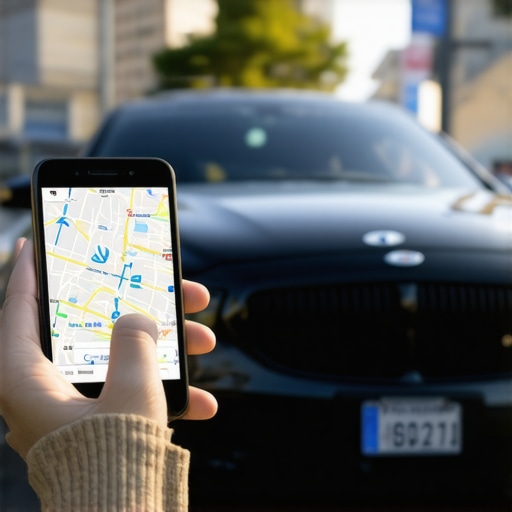
During a hectic Tuesday in Manhattan, I realized that seeing the little car icon move on my screen wasn’t enough. I needed to know the speed and the route choice. High-tier services provide links that offer deep transparency. Understanding why real-time tracking is your best defense against missed meetings changed my perspective on “waiting.” It turns the passive act of standing on a sidewalk into active management of your time. If a driver is looping a block or stuck in an alley, you know it instantly.
Give the Tires and Door Locks a Three-Second Audit
This sounds obsessive, but I always do a quick walk-around. I look at the tire tread. Bald tires on a rainy day are a recipe for a hydroplaning disaster. I also check the interior door handles. I once had a driver in Denver whose rear child-safety locks were permanently jammed, meaning I couldn’t get out unless he opened the door from the outside. That is a massive security risk. Identifying the hidden safety red flags in your car door locks is a skill every frequent traveler needs. It takes three seconds, but it ensures you aren’t trapped in an emergency.
The sleet storm lesson
I remember a night in Chicago during a nasty sleet storm. I saw my reserved car pull up, and my phone buzzed with the “Arrived” notification. But when I looked at the front tires, they were as smooth as a bowling ball. I refused the ride on the spot. The driver was frustrated, claiming he “drives in this all the time,” but I knew that why on-time performance is the only metric that matters only applies if the vehicle is mechanically sound enough to complete the journey. I requested a different vehicle, and ten minutes later, I saw that first sedan spun out against a guardrail three blocks away. My insistence was the move that guaranteed my arrival before the gate closed at O’Hare. Never prioritize a schedule over a safety red flag. If it feels wrong, or if you are riding after dark, remember the 5-point safety check for every nighttime ride to keep yourself protected from the unexpected.
Let’s dig deeper into the economics of your safety. Most travelers are conditioned to believe that booking individual legs of a trip is the most cost-effective strategy. However, I’ve found that why business travelers prefer hourly hires for high-stakes days is actually about risk mitigation rather than just convenience. When you book a single trip, you are at the mercy of a dispatch algorithm. If traffic spikes, a standard driver might cancel your ride to find a shorter, more profitable route elsewhere. By contrast, understanding how hourly rates protect you during unpredictable traffic means you aren’t just buying a ride; you are buying the driver’s undivided attention and commitment to your schedule. This is the crucial distinction that separates the amateurs from the professionals.
Stop Booking One-Way Trips if You Value Your Time
The ‘oops’ factor usually hits when you realize that your ‘confirmed’ ride doesn’t actually exist in reality until a driver manually accepts it. This is the error in relying on app-based arrival times during construction or peak hours. In my experience, why hourly rates are the only way to handle multiple client meetings is because it eliminates the dead-time between rides where most security breaches and delays occur. Have you ever fallen into this trap? Let me know in the comments.
The Confirmation Email Trap That Most Travelers Ignore
Not all digital receipts are created equal. I’ve seen passengers stand on a curb for twenty minutes because they didn’t know how to verify if a ride confirmation email is legitimate. A real service provides a comprehensive breakdown of the chauffeur’s credentials and a secure portal link, not just a generic message. Identifying the signs of a professional booking confirmation email is your first line of defense against digital scammers who prey on busy executives. It’s about the metadata, not just the subject line.
Can You Really Spot a Phony Insurance Document in Seconds?
This is where the nuances get technical. According to the Federal Motor Carrier Safety Administration (FMCSA), commercial insurance requirements for passenger carriers are significantly higher than standard personal policies, often requiring millions in coverage. If your driver cannot produce proof of this specific commercial status, you are effectively uninsured the moment you shut the door. Knowing how to spot a fake commercial insurance document or how to read the safety certification on a commercial vehicle is an advanced skill that ensures you aren’t just riding in a luxury car, but a legally protected one. Real professionalism isn’t just a clean suit; it’s why professional punctuality requires a pre-trip inspection and a verifiable paper trail that stands up to scrutiny.
The Digital Command Center That Saves My Sanity
I’ve realized that the difference between a stressed traveler and a relaxed executive is the quality of the tools they use before they even leave the house. I don’t just rely on the app provided by the service; I cross-reference everything with my own set of logistics benchmarks. For me, seeing the live location of my ride isn’t just about curiosity—it is about tactical awareness. Understanding why real-time vehicle tracking is more than just a convenience has allowed me to adjust meeting start times and coordinate with my team while I am still five miles out. It turns a commute into a mobile office that actually functions. This level of safety and precision is the only way to operate when your schedule is packed back-to-back.
Build a Commute That Survives Life’s Chaos
Maintenance of your personal safety shouldn’t be a daily chore; it should be a system. One of the most effective ways I’ve scaled my own travel is by moving away from the ‘on-demand’ mindset. I’ve mastered how to set up a recurring weekly commute that never fails by choosing a dedicated professional who knows my routes and my preferences. When you remove the variability of a new driver every day, you eliminate the learning curve that often leads to delays. It’s about reserving your spot and guaranteeing that the standard of care remains high, regardless of whether it is 4 AM or midnight.
Can you keep this level of safety for every single ride?
The short answer is yes, but it requires a shift in how you view the ‘dispatch’ side of the business. Many people assume that AI is the pinnacle of efficiency, but in the world of high-stakes logistics, why a human dispatcher outperforms an AI every time becomes clear the moment a road is closed for an unmapped protest or a water main break. A human can pivot; an algorithm can only recalculate. This human-led approach is ensuring safety first because it accounts for the unpredictable nature of urban life. As noted in the Intelligent Transportation Systems (ITS) Strategic Plan from the U.S. Department of Transportation, the integration of connected vehicle technology is meant to enhance safety, but it still requires high-level human oversight to navigate the ‘last mile’ of complex urban environments effectively.
The Future of High-Touch Transport
Looking ahead, I predict we will see a massive ‘flight to quality.’ As ride-share apps continue to struggle with driver retention and safety consistency, the trend is moving toward authenticated, hourly hires for high-stakes days. We are moving toward a future where ‘who’ is driving you is just as important as ‘what’ is being driven. I expect to see more passengers demanding how to verify your driver’s commercial policy without the friction, making transparency the primary currency of the industry. To keep your own travel budget and security in check, you must learn how to audit your monthly travel spend without stress. It reveals exactly where you are paying for quality and where you might be taking unnecessary risks.
Your 30-Day Logistics Challenge
I want you to try one specific advanced tip this week: The next time you book a high-priority ride, ask the service for a copy of their Certificate of Insurance (COI). A truly professional firm will have it ready in minutes. If they hesitate or offer excuses, take that as a clear signal to look elsewhere. It is the single most effective way to separate the amateurs from the elite professionals who actually value your life as much as your fare.
The Hardest Lesson I Learned About Blind Trust
After years on the road, I realized that my safety wasn’t the driver’s job alone—it was a partnership. I learned that why safety and timeliness matter in hourly reservation services goes far beyond a clean car; it is about the technical infrastructure behind the scenes. One lightbulb moment was discovering that a driver who uses a physical map as a backup is often more reliable than one glued solely to a glitchy GPS. Another was the realization that I should never feel ‘rude’ for asking to see credentials. Real pros expect you to be diligent.
I also stopped viewing transportation as a commodity. When I switched to strategies for safe and reliable hourly bookings, I stopped worrying about whether my driver would cancel for a better fare. The peace of mind that comes from a locked-in schedule is worth every penny of the investment. It turns a chaotic commute into a predictable extension of your office.
Tools That Keep My Travel Schedule Bulletproof
To stay ahead of the chaos, I rely on a few specific resources. First, I always cross-reference my booking with reservation security measures provided in the initial email. I also keep the FMCSA SAFER website bookmarked on my phone to check carrier safety ratings if I am using a new service. For my daily logistics, I trust the transparency found in safety and precision tracking links, which offer far more detail than standard consumer apps. Finally, I always keep a direct line to a human dispatcher saved in my contacts for those moments when technology inevitably fails.
Take Back Control of Your Next Commute
You do not have to be a victim of a bad algorithm or a poorly maintained vehicle. By applying these small audits and shifting your mindset toward professional, hourly service, you are ensuring safety first for yourself and your team. Travel is stressful enough—do not let the ‘how’ of getting there be the part that breaks your day. It is time to demand the high standard you deserve for every on-time arrival. Have you ever had a ‘gut feeling’ save you from a dangerous ride situation? Let me know in the comments below!