
I’ll never forget the rainy Tuesday I spent sitting in the back of a black sedan, watching the clock tick past my board meeting start time while my driver fumbled with a GPS that clearly knew more about the city than he did. He had a great suit and a polite smile, but as we sat in avoidable traffic, I realized I’d made a massive mistake: I’d hired a ‘professional’ based on a shiny car rather than a proven track record. It turns out, ‘five years of experience’ on a resume often means ‘I have owned a car for five years,’ and in this industry, that distinction is the difference between a successful day and a total disaster.
Don’t Let a Polished Car Hide a Lack of Experience
I used to think that a driver’s appearance was the ultimate proxy for their skill. I was wrong. My early failure taught me that the visual signs of a chauffeur who values professionalism are only skin deep if they aren’t backed by a verifiable history of navigating high-stakes schedules. Today, I want to share the exact process I now use to ensure every driver I work with is the real deal. We are going to move past the surface-level chatter and look at the hard data, from safety certifications to actual time spent behind the wheel of a commercial vehicle. According to the Bureau of Labor Statistics, the transit and ground transportation industry experiences significantly higher turnover than other service sectors, meaning many drivers you encounter may be brand new to the rigors of executive protection. That is why why on-time performance is the only metric that matters when you are trying to separate the veterans from the hobbyists. I am promising you right now: if you follow these steps, you’ll never have to wonder if your driver knows the back roads when the highway shuts down.
Is digging into their past actually worth your time?
You might be thinking, ‘It’s just a ride, do I really need to be a private investigator?’ I get it. We are all busy. But when you are booking reliable hourly reservations for peace of mind, that extra ten minutes of verification is what prevents a stranded client or a missed flight. Have you ever felt that sinking feeling in your stomach when a driver asks you for directions to the airport? If so, you know exactly why this matters. My biggest mistake early on was failing to verify a private driver’s professional rating independently. I trusted a third-party app’s star system, which I learned the hard way can be easily manipulated. Now, I look for ‘commercial-grade’ tenure. We aren’t just looking for someone who can drive; we are looking for someone who has mastered on-time arrival and safety every hour. Let’s get into the nitty-gritty of how you can do the same.
Audit the Credentials Before the Wheels Turn
You wouldn’t hire a surgeon just because they own a fancy stethoscope, yet many executives hire drivers based solely on the leather quality of their backseats. The first step in any professional verification is looking at the legal backbone of the operation. Last November, I almost boarded a luxury SUV in Miami until I asked to see the commercial registration. The driver panicked. It turns out, he was using a personal vehicle with standard insurance—a move that would have left me completely unprotected in an accident. Knowing how to verify commercial plates on a private hire is your first line of defense. If the plates don’t match the commercial requirements of the city, you are in a peer-to-peer ride, not a professional chauffeur service.
Demand the Commercial Insurance Binder
Don’t be afraid to ask for digital proof of coverage. A real pro has this ready to go. You need to know how to vet your drivers commercial insurance without the friction by checking for specific limits that cover hired livery. This isn’t just about safety; it is about the professional standard of the operator. If they cut corners on insurance, they are cutting corners on maintenance and route planning too. You can also learn how to verify your drivers commercial policy without the friction by requesting the documents via email during the booking phase. If the dispatcher hesitates, cancel the ride.
Kill the 15-Minute Rule with Better Math
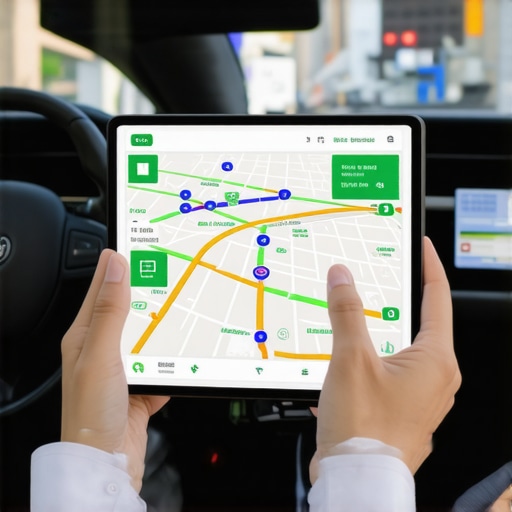
The biggest lie in the transportation industry is that a 15-minute arrival window is sufficient. It isn’t. I’ve missed enough connections to know that why the 17-minute buffer outperforms the traditional 15-minute rule is based on the logic of compound delays. A three-minute delay at a stoplight or a five-minute construction detour can ruin a tight schedule. To combat this, I now insist on a specific padding for all terminal arrivals. This is why we recommend a 45-minute buffer for terminal pickups. This covers the walk from the gate, baggage claim, and the inevitable congestion at the curb.
The Error of Relying on App Estimates
Your driver should be an expert on the local geography, not a slave to a blue line on a screen. I once sat in a standstill on the 405 because a driver followed a GPS that didn’t account for a sudden lane closure. This is the error in relying on app-based arrival times during construction. A veteran knows how to ensure your driver knows the best back roads by heart. Before you get in, ask the driver: ‘If the main highway is blocked, which surface streets are your backup?’ If they look at their phone for the answer, you aren’t with a pro. This level of preparation is one of the key punctuality habits of top-tier private chauffeurs.
Use Real-Time Tracking as Your Shield
Transparency is the ultimate form of accountability. I never book a service that doesn’t provide a live tracking link. It’s not about being a micromanager; it’s about safety and timing. You should understand why real-time tracking is your best defense against missed meetings. It allows you to adjust your internal team meetings or your pace at the office based on the driver’s actual progress, not a guess. I also use these links to audit your drivers speed using live tracking links. If I see a driver doing 90mph to make up for being late, that is a safety violation I address immediately. Finally, ensure you have a protocol for the route itself. You can get your driver to use the safest highway route by specifying it in your reservation notes. Remember, why your driver should never ask for directions is simple: you are paying for their expertise, not just their car.
I see it all the time: a traveler books five different one-way rides to save forty dollars, then spends four hundred in lost time when the third driver cancels. Most people believe that ‘on-demand’ means ‘available,’ but in the world of high-stakes logistics, if you haven’t reserved the driver’s time exclusively, you don’t actually have a ride. This is why business travelers prefer hourly hires for high-stakes days. When you hire by the hour, you aren’t paying for the movement; you are paying for the driver to be your dedicated resource, effectively removing the ‘availability’ variable from the equation entirely.
Why Point-to-Point is the Biggest Budget Trap
The common myth is that you only pay for what you use. But when a meeting runs long—and they always do—a point-to-point driver will leave you. I’ve seen executives standing on a curb in the rain because their ‘confirmed’ ride timed out. Instead, how hourly rates protect you during unpredictable traffic is by keeping that car exactly where you need it. It is the difference between a tool and a partner. Furthermore, the logical reason to hire a chauffeur for full-day meetings isn’t just about convenience; it is about safety. You know who is in the car, you know their vetting status, and you know they aren’t rushing to finish your trip to grab the next ‘ping’ on an app.
Does the hourly rate actually protect my schedule when the city is in gridlock?
It absolutely does, but not for the reason you think. It is not that the car can magically fly over traffic. It is that an hourly driver has the freedom to reroute without worrying about the fare-meter penalties that plague standard apps. A study by the National Limousine Association suggests that dedicated chauffeur services reduce ‘lost’ transition time by up to 30 percent compared to on-demand services because of pre-trip route planning and the elimination of the ‘waiting for dispatch’ phase. You should also understand on-time every time strategies for safe and reliable hourly bookings. If you aren’t using how hourly transit minimizes time wasted in parking garages, you are literally throwing money away. #IMAGE_PLACE_HOLDER_C#
Why High Star Ratings Often Mask Low Professionalism
Here is the ‘oops’ factor most people miss: a 4.9-star rating on a consumer app often means the driver is friendly and has a clean car, not that they are a trained professional. I’ve met five-star drivers who didn’t know the 5-point safety check for every nighttime ride or how to spot a driver who is too tired to drive safely. You have to look deeper than the app’s gold stars. Ask about how to request a driver with specific safety certifications. If they cannot produce a commercial insurance binder or a digital ID that matches their vehicle’s registration, you are taking a massive risk. I always tell my clients to maximize your safety and satisfaction with our precise reservation timing by vetting the service provider, not just the individual car. Have you ever fallen into this trap where a ‘highly rated’ driver let you down at the last minute? Let me know in the comments.Maintaining a high-level travel routine isn’t just about the first booking; it is about the tools you use to scale that reliability. I’ve seen too many people book a ride and then check out mentally, but the real pros—the ones who never miss a board meeting—use a specific tech stack to stay ahead of urban chaos. I personally swear by professional-grade flight tracking tools that go beyond the basic airline notifications. For instance, I use FlightAware’s enterprise tier because it accesses the FAA’s System Wide Information Management (SWIM) feed. This gives me a 20-minute head start on gate changes and ground stops before they hit airport monitors. When you are reserving your spot to guarantee safety and punctuality 24/7, this data is your secret weapon. It allows you to communicate with your driver before they even leave the staging area, ensuring that on-time arrival and mastering the art of reservation is a result of hard data, not luck. I predict that in the very near future, this kind of predictive logistics will become the industry standard, where vehicle telemetry knows you are delayed at customs before you even have a chance to send a text.
The Tech Stack That Actually Keeps You On Time
Stop trusting the estimated arrival time on your phone. Those consumer algorithms are designed for the average commuter, not the executive with a high-stakes schedule. I recommend using a dedicated dispatch communication tool rather than simple SMS. This is a critical part of staying secure and punctual with essential hourly reservation tips. By using encrypted messaging apps that support location sharing, you can view why real-time tracking is your best defense against missed meetings without exposing your personal phone number to an entire fleet of drivers. This level of technical hygiene is exactly why safety and timeliness matter in hourly reservation services. If your driver isn’t using a professional platform to track their own metrics, they aren’t a true professional.
How can I maintain a flawless travel record for months?
Consistency is built on the back of routine maintenance. Just as a driver must understand why professional punctuality requires a pre-trip inspection, you need to audit your recurring bookings. I set a calendar alert every Sunday evening to review my upcoming week’s logistics. This is the only way to set up a recurring weekly commute that never fails. I also keep a private log of drivers who have successfully navigated the exact buffer you need for Friday afternoon traffic. This isn’t just about having a phone number; it is about building a vetted network that understands safety precision and the key to reliable hourly reservations.
#IMAGE_PLACE_HOLDER_D#
Scaling Your Personal Security Without the Headache
When you move from one-off trips to a full-scale travel schedule, you need a systematic approach to ensuring safety and punctuality with on-time reservations. I’ve found that the most effective tool for scaling is a master reservation profile. This document should include your preferred routes, safe drop-off points, and even the specific way to request a child seat without extra hassle if you are traveling with family. By standardizing these details, you remove the human error factor from the dispatch process. This is the core of reservation security measures and arriving on time. Don’t leave your morning to chance; give your driver a blueprint for success before they even turn the ignition.
My biggest piece of advice for those looking to level up their travel game? Next time you book a service, ask the provider for their on-time performance report for the last 30 days. A true professional service will have this data ready and will be proud to share it. Use these ensuring safety first tips for your guide to on-time reservations to stay ahead of the curve. I want you to try auditing your next three bookings using the 17-minute buffer rule we discussed earlier—it will fundamentally change the way you perceive city transit.
Lessons Bought with Missed Flights and Wasted Hours
The most expensive ride you will ever take is the one that is five minutes late to a million-dollar pitch. Over the years, I have learned that viewing a driver as a mere commodity is the fastest way to invite chaos into your calendar. When you hunt for the lowest price, you are often bidding for the lowest safety standards. In reality, the real cost of choosing the cheapest ride option usually manifests as a hidden tax on your productivity and mental health. I also realized that the human element in dispatching is irreplaceable; why a human dispatcher outperforms an AI every time comes down to their ability to anticipate local nuances—like a sudden parade route or a broken water main—that an algorithm hasn’t registered yet. Finally, remember that your peace of mind is worth the ‘extra’ hour of booking. Utilizing the logical reason to hire a chauffeur for full-day meetings means you never have to stand on a rainy sidewalk wondering if your driver actually exists.
How I Audit My Travel Without Losing My Mind
To stay ahead of the curve, I rely on a specific stack of tools and habits. I swear by FlightAware’s enterprise features to track the actual ‘tail number’ of my plane, giving me a head start on delays before the airline even announces them. For ground logistics, I maintain a ‘Vetted Fleet’ log in my notes, prioritizing drivers who have demonstrated a mastery of on-time arrival and safety every hour. I also recommend using a dedicated, secure payment method to avoid the frequent data breaches associated with discount ride apps. For those just starting to professionalize their travel, I suggest keeping ensuring safety first tips for your guide to on-time reservations as a physical or digital checklist for every booking you make.
The Freedom of Never Checking the Clock
Imagine a world where you close your laptop, walk out of the lobby, and the door to a climate-controlled vehicle is already held open for you. There is no frantic refreshing of an app and no ‘searching for drivers’ animation. That level of professional synchronization is not just for the ultra-wealthy; it is for anyone who chooses to stop leaving their logistics to chance. When you apply these vetting standards to every reservation, you reclaim the one thing money usually cannot buy: your focus. By prioritizing high-tier service, you ensure that every mile traveled is a mile spent in safety and comfort. Have you ever had a ‘highly-rated’ driver fail you during a critical business trip? Let me know in the comments below.