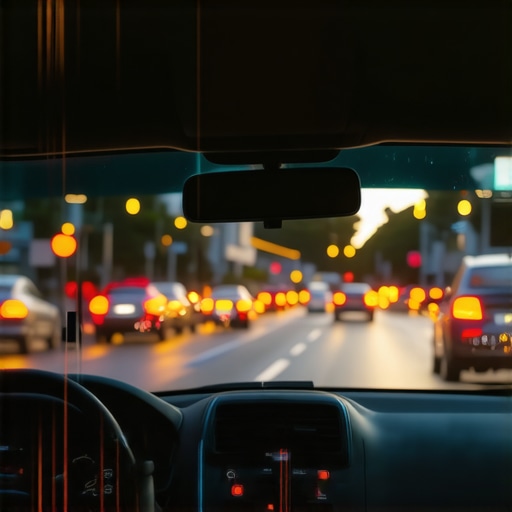
I’ll never forget the feeling of my left leg cramping on the brake pedal while staring at the same rusted bumper for forty-five minutes. It was the Wednesday before Thanksgiving. I’d done everything “right”—or so I thought. I checked my phone, it said the route was green, and I pulled out of the driveway feeling like a genius. Ten miles later, the map turned blood-red, and I was stuck. I missed the appetizers, the first toast, and about three hours of my life I’ll never get back. That was the day I stopped driving like an amateur and started learning the secrets of professional chauffeurs. Most people think traffic is an inevitable tax on our time, but the pros know it’s actually a puzzle with a predictable solution.
Stop letting a dashboard app ruin your holiday plans
The biggest lie we’re told is that real-time navigation is foolproof. Early in my career, I made the mistake of thinking my phone was smarter than my own eyes. I quickly learned that the error in relying on app-based arrival times during construction or holiday surges can cost you more than just time; it costs you your peace of mind. Professional drivers don’t just “go”; they engineer their arrival. According to the INRIX Global Traffic Scorecard, the average American driver loses over 50 hours a year to congestion, but for those of us who have seen how hourly rates stop the stress of traffic jams, that number drops significantly because it shifts the focus to strategy over speed. It’s about more than just finding a shortcut. It’s about understanding the “why” behind the gridlock. Have you ever found yourself trapped in a dead-stop jam, wondering why you didn’t just stay home? You aren’t alone, and today, I’m going to show you how to ensure that never happens again.
Is meticulous planning really worth the effort?
I get the skepticism. You might think, “It’s a holiday, everyone is on the road, there’s nothing I can do.” That’s exactly what the traffic wants you to think! But by using a specific Friday afternoon buffer and understanding local flow, you can bypass the madness. We are going to dive into the exact strategies used by executive chauffeurs to stay on schedule when the rest of the world is at a standstill. I’ll share the specific route-auditing habits that keep the pros moving while everyone else is reaching for the aspirin.
Build a route strategy that ignores the algorithm
The first thing you have to do is ditch the idea that your phone knows everything. I learned this the hard way in Chicago. It was a Tuesday, pouring rain, and I had a high-stakes client who needed to be at a merger meeting by 9:00 AM. Every app I checked suggested the highway, promising a 40-minute clear run. But I knew that stretch of the I-90. When it rains, the drainage near the 18th street exit fails, and traffic backs up for miles—something the apps often lag on reporting. I ignored the blue line and took the surface streets through the West Loop. We pulled up at 8:55 AM. Five minutes later, the highway was reported as a total standstill due to flooding. This is why on-time performance depends on local knowledge over gps. Algorithms are reactive; pros are predictive. To do this yourself, you need to audit your route history. Don’t just look at what the map says now; look at what it said yesterday at the same time. This is also the logic behind choosing a professional chauffeur over on-demand apps because a human brain can account for the nuance of a rainy Tuesday morning better than a server in a different time zone.
Build a cushion that actually works
Most people add five minutes and call it a ‘buffer.’ In the professional world, that’s a recipe for disaster. We use what I call the golden ratio of arrival. For any trip over thirty minutes, you need a minimum 20-minute gap. I’ve found that why a 20-minute buffer is the new gold standard for business travel specifically because it accounts for the ‘last mile’ variables—parking, security gates, or the elevator wait. Think of your travel time like a physical object; if it’s too tight, it will break under the slightest pressure. If you are booking a service, ensure they respect this. Some research shows why the 17-minute buffer outperforms the traditional 15-minute rule in urban environments, but regardless of the exact number, the principle is the same: time is your only real insurance policy.
Master the manual override
Technology is a great servant but a terrible master. If you see a tracking link jumping around or showing a lag, don’t trust it blindly. This is why real-time tracking apps need constant manual overrides. You have to be proactive. If I’m behind the wheel and I see a sea of brake lights that the GPS hasn’t flagged yet, I’m already looking for the next exit. This level of focus is what separates a ride from a reservation. In fact, why manual dispatching still beats ai for real-time accuracy comes down to the ability to process live human feedback. When you’re in the back seat, or even if you’re driving yourself, always maintain a secondary ‘escape route’ in your mind. Never commit to a single path without knowing exactly where the nearest parallel artery is. It’s not just about speed; it’s about maintaining the flow of movement. If you stop moving, you’ve already lost the game.
Most travelers assume that a massive tech company’s logo on a car door is a universal badge of safety. In my experience, that’s a dangerous assumption. In the professional world, we know that brand recognition is no substitute for a commercial permit. You’d be shocked how many people don’t know how to identify a genuine commercial chauffeur permit on sight, leaving them vulnerable to unlicensed operators who bypass the rigorous vetting of executive services. It’s a classic trap: prioritizing convenience over the high-level security that a private reservation provides. If you aren’t checking the credentials yourself, you’re essentially hitchhiking with an algorithm. Knowing how to spot an unlicensed operator before getting in is the first lesson any seasoned traveler should master.

Can you spot a forged booking in under five seconds?
The ‘oops’ factor usually hits right at the curb. I’ve seen sophisticated travelers get burned by looking at their phone screen instead of the person behind the wheel. Scammers are becoming incredibly adept at faking mobile interfaces to lure passengers into the wrong vehicle. Learning how to spot a forged confirmation screen on a third-party app is vital because a digital receipt does not automatically equal a vetted car. According to the AAA Foundation for Traffic Safety, nearly 10% of all crashes involve some form of driver fatigue, yet casual ride apps rarely monitor this as strictly as a private firm with dedicated dispatchers. This is why business travelers prefer hourly hires for high stakes days—you aren’t just buying a ride; you’re buying a professional whose livelihood depends on a flawless safety record rather than a quick payout.
Does a five-star rating actually guarantee your safety?
Ratings are the fool’s gold of the modern transport industry. A driver can maintain a high rating while operating without the correct insurance coverage for commercial passengers. You must know how to vet your drivers commercial insurance without the friction to protect yourself. A personal policy won’t cover you in a commercial setting, creating a financial nightmare if an accident occurs. Beyond the paperwork, there is the human element. You need to know how to spot a driver who is too tired to drive safely before you even close the door. Look at their eyes and the cleanliness of the cabin; a professional will always present a vehicle that passes the one physical marker that proves a vehicle is well-maintained. Have you ever fallen into the trap of picking the cheapest option only to regret it five minutes into the ride? Let me know in the comments. We’ve all been there, but the goal is to never go back. Understand the real cost of choosing the cheapest reservation available—it is often paid in unnecessary stress and safety risks.
Vetting the driver is only the first half of the battle. The second half is the actual infrastructure you use to maintain that safety over months and years of travel. I’ve found that the most reliable travelers don’t just hope for the best; they use a specific stack of tools to ensure their schedule remains untouchable. Personally, I never leave for a high-stakes meeting without a secondary verification of my route through a high-frequency update service. This is more than just checking a map; it is about active monitoring. If you’re managing a complex day, you need to know the secret to managing last minute pickup changes without a headache because life doesn’t happen in a straight line.
How do I keep my travel schedule bulletproof for years?
Consistency comes from a relentless commitment to the ‘boring’ details. I keep a digital log of every driver I’ve worked with, noting their vehicle’s condition and their adherence to my preferred routes. I call this my ‘Personal White-List.’ When you find someone who passes the visual signs of a chauffeur who values professionalism, you stick with them. I also perform a routine check of my own tech. I use a dedicated encrypted connection for all my bookings to ensure my data is never leaked to third-party scrapers. This is exactly how to secure your data when using public wifi to book a ride, a step most people skip until their identity is compromised.
Maintenance also extends to the vehicle you are sitting in. Even as a passenger, you have a role in the safety ecosystem. I always perform a quick check of the entry points. You’d be surprised how often a simple 3-point door handle check can save you from a mechanical failure during a quick exit. Furthermore, if the ride feels off, you must know how to handle a driver who attempts to take a faster unvetted route. A professional will always explain why they are deviating; an amateur will just do it, often putting you in a high-traffic or high-risk zone without your consent. According to the Federal Motor Carrier Safety Administration (FMCSA), driver-related factors are present in nearly 33% of all large truck and bus crashes, highlighting why your active oversight of the driver’s choices is statistically significant for your own survival.
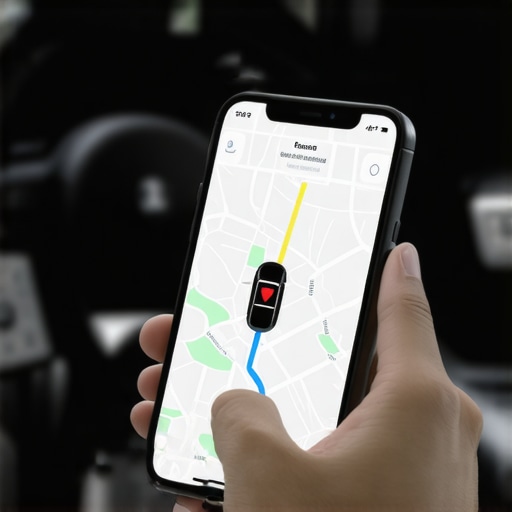
Looking toward the future, I predict we are going to see a massive pushback against ‘black box’ AI dispatching. While tech is getting faster, it’s also getting more disconnected from the reality of the pavement. I believe the premium market will return to 100% human-verified dispatching because why fixed schedules beat real-time ai during rush hour is becoming more apparent every time an algorithm sends a car into a dead-end street during a festival. The future belongs to those who use tech to inform their decisions, not to make them. If you want to scale your personal efficiency, start by implementing a on-time arrival strategy that prioritizes human intuition over a digital ETA. My advice for your next trip? Audit your booking confirmation tonight and look for the hidden red flag in your booking confirmation email header. Catching a mistake on paper is much easier than catching a flight you’ve already missed.
The Harsh Truth About Relying on Luck for Your Arrival
After a decade in this industry, the one thing I know for sure is that ‘hoping for the best’ is a strategy for failure. I’ve realized that why last minute reservations often result in poor quality isn’t just about bad cars; it’s about the mindset of the entire operation. When you rush the process, you invite chaos. I’ve learned to trust the person who asks too many questions rather than the one who says ‘no problem’ to everything. A true pro knows that details are the only things that keep us safe.
The second major realization was about legal protection. Most passengers assume they are covered, but I never take that for granted. I always advise people to learn how to verify your drivers commercial policy without the friction. It takes thirty seconds and can save your financial life. Finally, consistency is the ultimate luxury. Finding a service that delivers the same quality every single time is worth ten times the price of a discount ride.
My Personal Strategy for Bulletproof Bookings
I don’t just ‘book a car’; I build a contingency plan. First, I use historical data from traffic archives rather than live maps to predict my departure. Second, I always reference the principles in on-time arrival mastering the art of reservation and safety every hour because they provide a framework that works in any city. I also keep a digital and physical backup of my confirmation—never trust a single point of failure. Lastly, I rely on firms that prioritize human dispatchers over automated queues, as the human element provides a level of accountability that no software can match.
Elevate Your Travel Standards Today
You’ve spent your life working hard to be where you are; don’t let a poorly planned commute take away your momentum. Choosing to invest in professional transport isn’t about being ‘fancy’—it’s about respecting your own time and safety. When you understand why safety and timeliness matter in hourly reservation services, you stop seeing travel as a chore and start seeing it as an extension of your productivity. You deserve to arrive at your destination refreshed, prepared, and, most importantly, on time. #IMAGE_PLACEHOLDER_E#
Have you ever had a travel ‘horror story’ where a simple reservation could have saved the day? Let me know in the comments below!