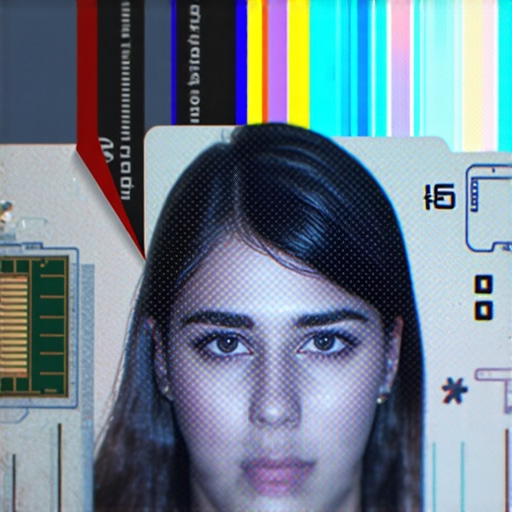
The rain was coming down in sheets, blurring the headlights of the black sedan idling at the curb. I was exhausted, ready to just sink into the leather seat and close my eyes. But as I reached for the door handle, I caught a glimpse of the driver’s ID hanging from the sun visor. Something felt off. The font was slightly blurry, and the photo looked like it had been printed on a home inkjet. I hesitated, remembering a time in Chicago when I ignored that same gut feeling and ended up in an unlicensed car with a driver who had no idea how to find my hotel. It was a safety reason I will never forget, and it is exactly why I have become obsessed with the details most people overlook. Today, I am going to show you how to look past the fancy plastic and verify the credentials that actually keep you safe during your hourly reservation. Have you ever felt that split-second of doubt when a car pulls up and the driver just does not look like the professional you expected?
Your Safety Starts Before You Sit Down
When I first started booking professional transport, I made the classic rookie mistake: I assumed a suit and a clean car meant the driver was legitimate. I did not realize that how to identify a genuine commercial chauffeur permit on sight was a skill I needed to survive the city. A real badge is more than just a name and a photo; it is a legal document that confirms the driver has passed background checks and carries the correct commercial insurance. If you cannot read that badge, you are essentially gambling with your security.
Can a badge really be that easy to forge?
It is a common misconception that all official-looking IDs are secure, but with a basic laminator and some stock card, a fraudster can create something convincing enough for a quick glance. However, genuine commercial badges, such as those issued by the NYC Taxi and Limousine Commission or London’s Transport for London, contain specific holographic elements and security watermarks that are nearly impossible to replicate with consumer-grade equipment. These physical markers are your first line of defense. By learning to spot these tiny details, you ensure that your on-time arrival is matched by the peace of mind that only comes from knowing your driver is fully vetted and authorized to be behind the wheel.
Once you’ve confirmed the badge isn’t a cheap knockoff, you need to match it to the vehicle itself. Think of this like checking the VIN on a used car before you hand over the cash—it is the only way to be certain the asset you are entering is the one covered by the policy. I remember a humid night in Miami where the car looked pristine, but the driver’s eyes were bloodshot. I used the stealth way to confirm your driver is not fatigued by asking a quick question about their shift start time and watching how they manipulated the GPS. That small interaction saved me from a potentially dangerous high-speed drift on the I-95 later that night. Verifying a driver’s state of mind is just as critical as checking their paperwork.
Match the Face to the Credentials Every Time
The first physical step in your safety protocol is the visual cross-reference. As the car pulls up, do not just look at the license plate. Instead, perform the specific driver verification move that prevents identity theft: approach the passenger side window and wait for the driver to acknowledge you. Look for a matching ID on the dashboard or hanging from the rearview mirror. This ID must match the person behind the wheel and the photo provided in your booking confirmation. If there is a discrepancy, do not get in. Fraudsters often use a legitimate driver’s account to pick up passengers, bypassing the background checks that why safety and timeliness matter in hourly reservation services so much to professional travelers.
Locate the Insurance Decal in Under Five Seconds
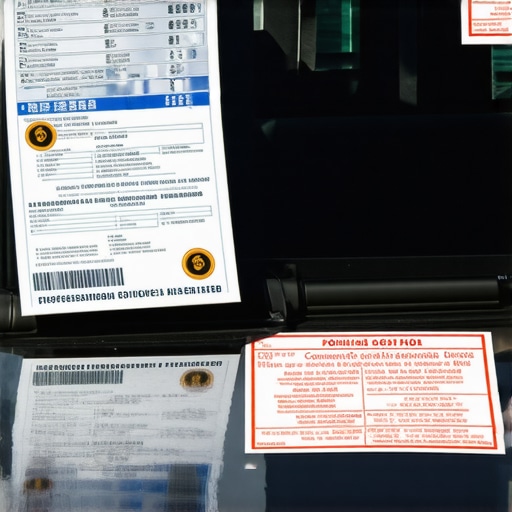
Commercial vehicles are required to display proof of insurance, often in the form of a specific sticker on the windshield or a document kept in a visible permit holder. Knowing how to verify a private vehicles commercial insurance in seconds is a skill that separates the pros from the victims. In most major cities, this is a distinct, color-coded decal that changes annually. If you don’t see it, or if the date is expired, you are riding in a vehicle that might not cover your medical costs in the event of an accident. I once refused a ride in San Francisco because the insurance decal was curled at the edges and a year out of date. The driver tried to tell me it was ‘in the mail,’ but in this industry, ‘in the mail’ is a synonym for ‘uninsured.’
Perform the Pre-Entry Mechanical Audit
Before you even touch the door handle, do a quick lap of the vehicle. You aren’t looking for scratches; you are looking for safety indicators. Check the tires—are they bald? Check the lights—is a headlight out? Use the 3-point door handle check every passenger must perform to ensure the child locks aren’t engaged and the handle is sturdy. Then, look for the one physical marker that proves a vehicle is well-maintained: the cleanliness of the brake rims. Excessive black dust often points to worn pads and a neglected maintenance schedule. A driver who ignores their brakes is likely ignoring other safety protocols that ensure an on-time arrival.
Spot Distraction Before the Door Even Opens
A driver who is juggling three phones or has a tablet mounted directly in their line of sight is a liability. You need to know how to spot a driver who is distracted before you get in. If they are wearing noise-canceling headphones or are deeply engrossed in a personal call as they pull up, they are already failing the professionalism test. Once inside, immediately check that your why real-time tracking is your best defense against missed meetings is active and that the driver is following the pre-arranged route. This level of scrutiny isn’t about being paranoid; it is about maintaining a standard of transit that guarantees you arrive not just on time, but in one piece.
Most travelers believe that a high rating on a ride-sharing app is the ultimate seal of approval, but that is a dangerous oversimplification. In my years of navigating corporate logistics, I have found that a five-star rating often just means the driver was polite and had a clean car, not necessarily that they are trained in defensive driving or route contingency planning. Real safety is found in the nuances of the reservation itself. One of the most common myths is that GPS is the final word on navigation. In reality, why on-time performance depends on local knowledge over GPS is a lesson I learned the hard way in London during a sudden road closure. While the algorithm was telling my driver to head straight into a gridlocked protest, an experienced chauffeur knew the back alleys that kept us moving. Relying solely on a screen is a rookie mistake that can cost you a flight.
The GPS Trap That Even Pros Fall Into
People often assume that if the app says the car is ten minutes away, it will arrive in ten minutes. This is where the error in relying on app-based arrival times during construction becomes a major liability. According to a study by the Texas A&M Transportation Institute, non-recurring events like construction or minor accidents account for nearly 50% of all traffic delays. A software-based arrival estimate rarely accounts for the actual time it takes to navigate a specific ‘blocked’ turn or a temporary one-way restriction. This is exactly why business travelers prefer hourly hires for high-stakes days; you aren’t just paying for a seat, you are paying for a driver who has already scouted the disruptions.
Why does my tracking link show the car is two blocks away when it’s already at my door?
It is a question I get asked constantly by frantic clients. The reality is that why your real-time tracking link might have a 30-second lag often comes down to data polling rates between the vehicle’s hardware and the server. If you are waiting until the dot on the map hits your house to walk outside, you are already behind schedule. This is a classic ‘oops’ factor. High-end services mitigate this by having the driver send a manual ‘on-site’ notification, but if you’re relying on a third-party app, that 30-second delay in a high-traffic zone can mean the difference between a smooth pickup and the driver being forced to circle the block. 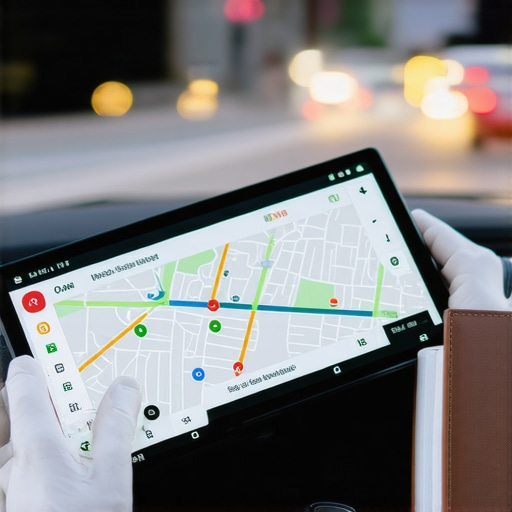
The 15-Minute Buffer is a Recipe for Disaster
We’ve all heard the advice: ‘Leave fifteen minutes early.’ But in the world of professional transit, that’s actually a trap. I’ve found that why the 17-minute buffer outperforms the traditional 15-minute rule is rooted in the psychology of urban congestion patterns. Those extra two minutes are usually the difference between catching a green-light cycle at a major intersection or being stuck for an entire light rotation. If you are reserving your spot to guarantee safety and punctuality 24/7, you need to demand a more rigorous buffer than the standard suggestions found on travel blogs. Have you ever fallen into this trap where a ‘safe’ arrival time evaporated the moment you hit the first red light? Let me know in the comments. Using the buffer you need for Friday afternoon transit schedules specifically requires a 25% increase in your lead time, yet most people try to treat a Friday at 4:00 PM the same as a Tuesday at 10:00 AM. It’s these hidden nuances that separate a stressful trip from a seamless experience.Building a bulletproof travel routine isn’t a one-off event; it is an ongoing maintenance project. When I am managing multiple stops, I do not just hope the driver’s phone works. I use professional-grade tools like FlightAware’s data feeds for real-time positioning. Why? Because the standard airport ‘Arrivals’ board is often several minutes behind the actual status. This level of safety precision allows me to adjust my on-time arrival strategy before the driver even hits the terminal loop. According to technical documentation from the Global Positioning System (GPS.gov), consumer-grade GPS can have a margin of error up to 16 feet under open skies, which significantly increases in ‘urban canyons’ due to signal reflection. This is why real-time tracking apps need constant manual overrides to be truly effective for high-stakes meetings.
Go Beyond the Map with Professional Data Tools
I have moved away from standard consumer apps for my stress-free corporate transportation planning. Instead, I maintain a digital ‘go-bag’ of tools. For example, I prefer Signal or other encrypted platforms for all driver communications because why most secure booking systems fail often comes down to unencrypted SMS being intercepted or personal data being leaked. If a luxury service does not offer a secure way to communicate, I consider that a significant red flag.
How do I keep my travel safety from slipping over time?
The secret is a quarterly audit of my booking habits. I review my past month of trips and look for ‘near-misses’—times when a driver was almost late or a vehicle felt slightly off. This is how I maintain the punctuality habits that keep my schedule intact across different cities. I also check that my preferred services still use secure payment gateways. If they have switched to a cheaper, less secure processor, I move my business elsewhere to protect my financial data. 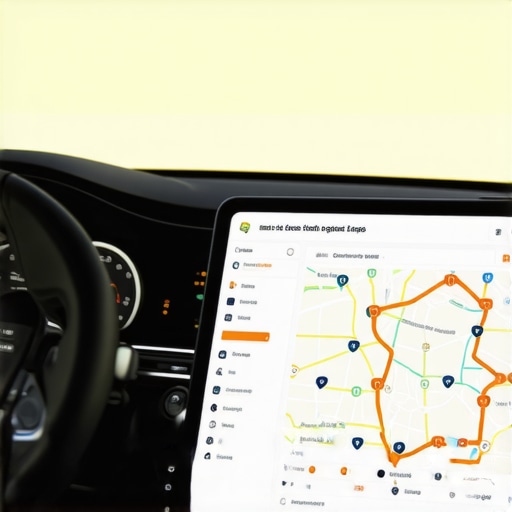
The Future of High-Stakes Transit is Manual Oversight
Looking ahead, I predict we will see a massive push toward ‘AI-driven’ routing, but for those of us who prioritize security, we will double down on human-led dispatching. AI is great at averages, but it fails at exceptions like sudden protests or unmapped construction. A human dispatcher knows that a parade is starting three blocks away even if the map hasn’t updated yet. This is why manual dispatching still beats AI for true reliability in dense urban centers. Take action today: Before your next reservation, look at the vehicle license plate on your confirmation and compare it to the physical plate the moment it arrives. If they do not match, walk away—no matter how late you are. It is the only way to ensure the system works for you rather than against you.
The Reality Check Most Travelers Ignore Until It Is Too Late
In my decade of managing corporate logistics, the hardest lesson I learned is that luxury is a feeling, but safety is a framework. It is easy to get lulled into a false sense of security by a leather interior, but the most expensive mistake you can make is assuming that a high price tag equals a vetted driver. I once missed a keynote speech because I trusted a ‘premium’ app’s arrival estimate instead of looking at the local road closure maps myself. Now, I never book without confirming why business travelers prefer hourly hires for high-stakes days over on-demand pings. Here are the lightbulb moments that changed how I travel:
- The ‘Clean Car’ Illusion: A polished exterior does not mean the brakes have been serviced. Always check for that black carbon dust on the rims.
- Data Over Vibes: If a driver cannot explain their route without looking at a screen, they lack the local knowledge necessary for true safety precision.
- The Power of the Walk-Away: The moment a driver asks you to ‘cancel the ride and pay cash,’ your insurance and safety protocols vanish. Never compromise on the booking platform.
A Few Tools to Keep You Ahead of the Curve
I don’t just rely on hope; I rely on a specific stack of resources to ensure my on-time arrival is guaranteed. First, I always check how to confirm your secure booking link is using https before entering any credit card data. I also keep a bookmark for official licensing portals—like the NYC TLC license lookup—to verify driver credentials in real-time. For communication, I insist on encrypted channels to prevent data leaks, as the truth about secure payment gateways is that they are only as strong as the person using them. These aren’t just ‘pro tips’; they are the standard operating procedures for anyone who values their time and their life.
Your Safety Is the Ultimate Luxury
At the end of the day, a successful trip isn’t just about getting from point A to point B; it is about the peace of mind you maintain throughout the journey. By taking an extra sixty seconds to audit your driver and vehicle, you aren’t being difficult—you are being professional. You deserve a service that respects your schedule as much as you do. When you prioritize a high-value on-time, hourly reservation for safety, you are investing in your own productivity and well-being. Don’t be afraid to set a higher bar for the people behind the wheel. Have you ever spotted a red flag that made you cancel a ride on the spot? Let me know in the comments below.