
I stood on the corner of 5th and Main, staring at my phone as the little car icon on the screen spun in circles. My next meeting started in six minutes. The app told me my driver was ‘approaching,’ but in reality, he was stuck three blocks away behind a garbage truck. That was the day I realized that ‘on-demand’ is just another word for ‘hopefully-maybe.’ I felt that familiar pit in my stomach—the one where you know you’re about to walk into a boardroom late, out of breath, and looking completely unprofessional. If you’ve ever had your schedule fall apart because a ride-share driver canceled at the last second, you know exactly what I’m talking about. Today, I’m going to show you why those of us who live and breathe high-stakes schedules have stopped gambling with apps and started choosing professional chauffeurs instead. We are going to dive into the math, the safety, and the sheer sanity of having one person dedicated to your day.
The Day My $10,000 Schedule Collapsed
I’ll be the first to admit it: I used to be cheap. Early in my career, I thought I was being a savvy fiscal hero by booking the lowest-cost rides for my multi-stop city tours. I once missed a massive contract because my driver got lost in a construction zone and didn’t have the experience to pivot. I learned the hard way that the real cost of the cheapest ride isn’t the fare—it’s the lost opportunity. When you have four meetings in four different neighborhoods, you don’t just need a ride; you need a mobile base of operations. This is why business travelers prefer hourly hires; it transforms transportation from a logistical hurdle into a competitive advantage. You gain back the time to prep your notes, make calls in private, and actually arrive with your dignity intact. I no longer have to worry about where the car is because I know it is exactly where I left it.
Is a dedicated driver really worth the extra cost?
It’s a fair question. Why pay for a car to sit and wait for you when you could just call a new one later? The answer lies in the friction of the ‘re-book.’ Every time you end a meeting and hit ‘request,’ you are resetting the clock on your safety and punctuality. A 2023 report from the Global Business Travel Association (GBTA) highlights that nearly 40% of business travelers cite transit delays as their primary source of work-related stress. By booking one driver for three separate errands or meetings, you eliminate the 15-minute wait times that eat up two hours of your day. This is the secret to stress-free corporate transportation planning. Have you ever found yourself checking the app every thirty seconds, praying the driver doesn’t pull a U-turn? Let me know in the comments if you’ve ever been burned by a ‘ghost’ driver during a busy workday. We’re going to explore how hourly rates stop the stress of traffic jams and keep your data secure while you work on the move. Once you experience the peace of mind that comes with a 20-minute buffer and a driver who knows the back roads, you’ll never go back.
Stop Betting on Guesswork and Start Verifying Your Rides
The biggest mistake people make with executive travel is assuming the car will actually show up just because the app says so. In reality, why most arrival times are simply guesses often comes down to algorithmic optimism that ignores local reality. To take control, you need to look for the signs of a professional booking confirmation email the moment you finish your reservation. A real pro service provides a vehicle ID, a chauffeur name, and a direct contact. If you are staring at a screen that just says ‘finding your driver,’ you aren’t booked; you’re just on a waiting list. I learned this the hard way during a 4 AM airport run in a snowstorm. The app kept ‘searching’ while the minutes ticked by. Now, I know the only way to ensure your 4 am ride actually shows up is to have a locked-in reservation with a human dispatcher behind it. Knowing how to spot a professional dispatcher via email can save your entire travel day before it even begins. 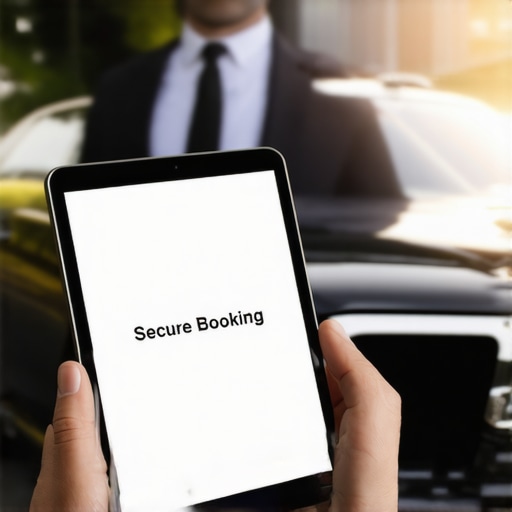
How an Hourly Rate Eliminates Your Traffic Anxiety
Think of an hourly driver like a mobile office that stays in your orbit. Instead of treating every leg of your journey as a new transaction, an hourly booking keeps the same professional at your side. This is vital because how hourly rates stop the stress of traffic jams isn’t just about the money; it’s about the psychology of the driver. When a driver is paid by the hour, they aren’t rushing to dump you at the curb to catch the next ‘surge.’ They are incentivized to take the safest, most efficient route. I once had a day with six stops across downtown Manhattan. In an app-based car, I would have spent thirty minutes cumulatively just waiting on street corners. With my dedicated driver, those gaps became productive work sessions because why you need a direct line to your hourly driver is to facilitate seamless, on-the-fly adjustments. This is the logical reason to hire a chauffeur for full-day meetings—it buys you back the mental bandwidth usually wasted on logistics.
The Three-Step Protocol for Getting in the Right Car
Safety isn’t a feature; it’s a protocol. Before you even touch the door handle, you must verify the person behind the wheel. I always start with the 3-point door handle check every passenger must perform to ensure the vehicle is secured and the child locks aren’t being misused. Next, look for the permit. You need to know how to identify a genuine commercial chauffeur permit on sight, which is usually displayed in the lower corner of the windshield or on the rear bumper. This small step confirms the driver has passed the rigorous background checks that on-demand apps often bypass. Finally, why you should never enter a vehicle without a license plate match is about more than just getting in the wrong car; it’s the specific driver verification move that prevents identity theft and physical risk. To be truly thorough, ask the driver for their name first rather than giving yours, and take ten seconds to how to vet your drivers commercial insurance without the friction by checking for the commercial registration plates. This isn’t being paranoid; it’s being professional. Remember that why professional punctuality requires a pre-trip inspection means a real chauffeur has already checked the tires and fluids before they ever pulled up to your door.Everyone assumes that real-time GPS is the gold standard for punctuality, but in my experience, why a driver with a physical map is more reliable than GPS often comes down to the algorithm’s inability to predict sudden, localized infrastructure failures. I’ve seen too many executives fall into the trap of the error in relying on app-based arrival times during construction. While your phone shows a clear blue line, the actual road might be blocked by a single utility truck that hasn’t registered on the server yet. This is where the ‘pro’ nuance kicks in: why manual dispatching still beats AI for real-time accuracy is because a human dispatcher is listening to local police scanners and checking city-specific transit alerts that an API simply misses. A recent study by the Inrix Global Traffic Scorecard highlights that ‘predictive AI’ in consumer navigation often underestimates urban delays by up to 18% during peak congestion because it lacks this micro-context. 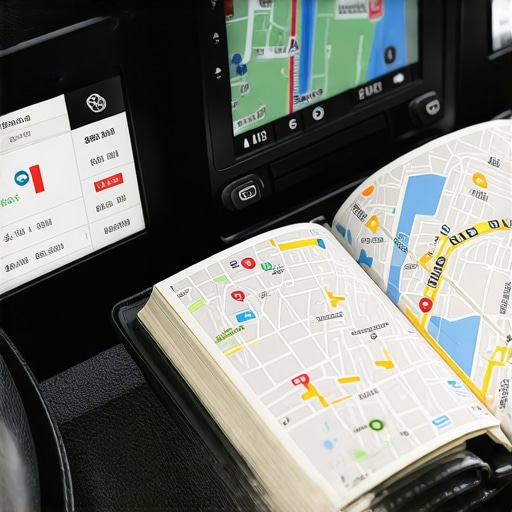
Does hourly booking actually protect my data better than per-trip rides?
This is the advanced question most travelers forget to ask. When you use a standard ride-share app, your data—your home address, your office location, and your patterns—is a product being tracked by a massive corporate entity. By contrast, staying secure and punctual with essential hourly reservation tips involves using a closed system. For high-profile clients, the security benefit of booking under a corporate alias is a massive advantage that on-demand apps simply can’t offer. It keeps your physical movements separated from your digital identity. If you’ve ever had a driver try to look you up on LinkedIn after a ride, you know exactly why this boundary matters. Have you ever fallen into this trap where a ‘convenient’ ride felt like a privacy breach? Let me know in the comments.
Spot the fake confirmation before you step outside
The ‘Oops’ factor usually happens long before the car arrives. I’ve seen sophisticated scammers spoofing app interfaces to trick people into the wrong vehicles. You must know how to verify if a ride confirmation email is legitimate by checking the DKIM signatures and the sender’s domain. A real professional service will always provide a secure, encrypted link for ensuring safety first with on-time reservations at any hour. If the email looks slightly ‘off’ or the font is inconsistent, do not step out of your building. Furthermore, why real-time tracking apps need constant manual overrides is a lesson in humility for any traveler. Even the best tech can lag; a true professional chauffeur will call or text you directly to confirm they are physically at the landmark, not just ‘near’ the GPS pin. This attention to detail is the difference between a successful departure and a frantic search on a rainy street corner.Building a reliable transit system isn’t just about the car; it’s about the data you keep. I maintain what I call a ‘Transit Ledger’—a simple encrypted spreadsheet where I log every arrival time, driver name, and vehicle condition. This might sound like overkill until you realize that staying secure and punctual with essential hourly reservation tips often requires looking back at past performance to see which routes actually worked. I also use a dedicated notification channel on my phone that only pings for travel alerts. This prevents critical updates from getting buried under a mountain of junk mail. When you are reserving your spot to guarantee safety and punctuality 24/7, you need a system that alerts you the second a driver is dispatched. It ensures you are never the one standing on the curb wondering where your car is. 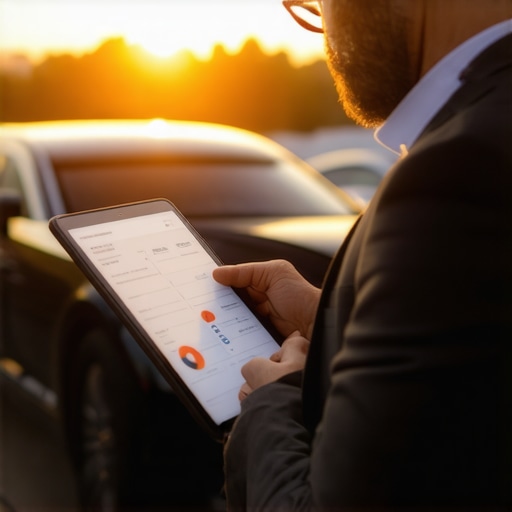
How do I maintain a perfect arrival record month after month?
It comes down to a strict audit of the machine and the man. I personally look for the one physical marker that proves a vehicle is well-maintained: the tire tread and sidewall condition. If a car looks shiny but the tires are balding, that driver doesn’t value safety as much as aesthetics. According to the National Safety Council (NSC), poor vehicle maintenance is a contributing factor in thousands of preventable road incidents annually. This is why professional punctuality requires a pre-trip inspection every single morning before the first client ever enters the vehicle. Beyond the car, I recommend setting up a recurring weekly commute that never fails. By having the same driver for the same route every Tuesday at 8 AM, you build a rapport where the driver knows your coffee order, your preferred route, and exactly which gate to pull up to. This consistency is how you maximize your safety and satisfaction with precise reservation timing.
What happens to personal transit in an automated world?
While everyone is talking about self-driving taxis, I predict the future of high-end travel will actually lean harder into human-driven, hourly services. Why? Because an algorithm can’t walk your bags to the door or wait an extra ten minutes when your meeting runs over without charging you a nuisance fee. The value is shifting toward the human element that handles the ‘last mile’ of service with grace. My final tip for you today is to stop being passive: next time you book, don’t just accept the default time. Use the ‘notes’ section to specify your exact preferred entry point at the building. It sounds small, but it’s the difference between waiting comfortably inside the lobby and hunting for a car on a rainy street corner. Try implementing this one specific instruction on your next trip and see how much stress it shaves off your morning.
3 Hard-Won Truths from a Decade of High-Stakes Travel
After years of balancing back-to-back meetings, I realized that why safety and timeliness matter in hourly reservation services goes deeper than just showing up on time; it’s about the mental load you shed when you trust the person in the driver’s seat. First, the ‘lowest fare’ is a mirage that often leads to a ‘no-show’ when you need it most. Second, a driver who knows your name is more accountable than a driver who only knows your GPS coordinate. Finally, on-time arrival is an art of reservation and safety every hour, not a lucky break. Professionalism isn’t just about the suit; it’s about the pre-trip planning that prevents a crisis before it starts. #IMAGE_PLACEHOLDER_E#
Where I Turn for Data When Logistics Fall Apart
To stay ahead of the curve, I don’t just trust the app’s automated receipts. I recommend keeping a digital log where you audit your driver’s route history for accuracy and safety. This helps you identify recurring traffic patterns that even Google Maps might miss. I also suggest reading the GBTA Business Travel reports to understand global transit trends and urban congestion shifts. Additionally, always take thirty seconds to check for hidden fees in your ride confirmation. These small habits turn a passive passenger into a commander of their own schedule.
It’s Time to Stop Settling for Transportation Luck
You’ve worked too hard to build your reputation to let a glitchy algorithm or a distracted driver ruin your big moment. Investing in a professional chauffeur is an investment in your own mental clarity and your team’s success. When you prioritize a reliable on-time and safe hourly reservation, you aren’t just buying a ride; you are buying the ability to be fully present for your work. Have you ever missed a high-stakes appointment because an app-based driver took a wrong turn? Let me know in the comments below.