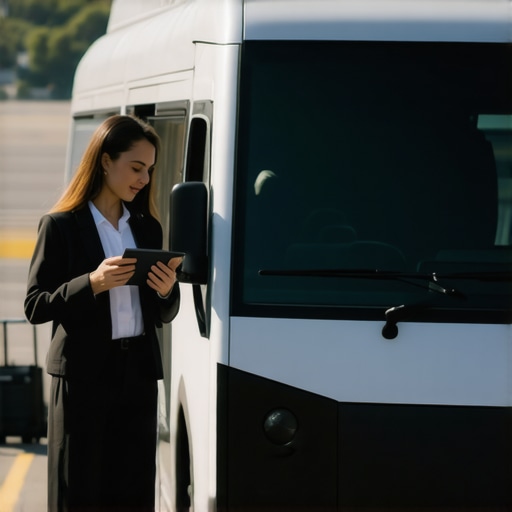
I remember standing outside a downtown hotel in the pouring rain, clutching a clipboard while twenty high-profile executives stared at me with growing impatience. I had timed the shuttle pickup to the exact minute of their meeting’s end. I thought I was being efficient. Instead, I was a disaster. One stalled delivery truck three blocks away turned my ‘perfect’ schedule into a logistical nightmare. That was the day I realized that in event planning, ‘on time’ is actually late.
Why Your Schedule Needs More Breathing Room Than You Think
If you are still booking pickups based on the exact moment your group steps out the door, you are playing a dangerous game with your professional reputation. I learned the hard way that the error in relying on app-based arrival times during construction can cost you more than just a few minutes; it costs you the trust of your clients. We often think of efficiency as minimizing idle time, but true efficiency is ensuring the wheels are turning the moment they are needed. This is why hourly booking is the secret to stress-free event planning. It gives you a dedicated asset that isn’t rushing from another gig. According to the INRIX Global Traffic Scorecard, urban congestion can fluctuate by as much as 25 percent within a single hour, making static pickup times nearly impossible to hit without a cushion. Today, I’m going to show you how to build a buffer that actually works, including why the 17-minute buffer outperforms the traditional 15-minute rule every single time.
Is paying for idle time actually worth the extra cost?
I get it. You have a budget to protect, and paying a driver to sit at a curb feels like burning cash. But have you ever calculated the cost of a missed flight for a dozen people or the lost productivity of a stranded sales team? Early in my career, I tried to save fifty dollars by skipping a buffer, only to end up paying four hundred in ’emergency’ surge pricing when my first plan fell through. A 20-minute buffer is the new gold standard for business travel because it accounts for the unpredictable human element—the attendee who forgets their bag or the last-minute bathroom break. Have you ever been the person standing on the sidewalk, praying for a black sedan to appear around the corner while your VIPs look at their watches? Share your nightmare stories below so we can all learn from them. This isn’t just about padding the clock; it is about building a wall of security around your event logistics.
How to Stop Chasing the Invisible ETA
The first step in taking control of your event logistics is admitting that an app’s ‘estimated arrival’ is actually a guess based on a perfect world that doesn’t exist. To guarantee your schedule holds firm, you need to transition from ‘on-demand’ thinking to a ‘reservation-first’ mindset. When reserving your spot, you aren’t just buying a ride; you are securing a commitment that the vehicle is physically present before you need it. True logistics mastery requires moving away from hope and toward confirmation.
Lock in Your Spot for Total Peace of Mind
I’ve seen too many planners wait until the last minute, hoping the algorithm favors them. That is a recipe for a 45-minute wait in a hotel lobby while your VIPs look at their watches. Instead, start by booking at least 24 hours in advance. This forces a dispatcher to assign a specific vehicle and driver to your route, rather than leaving it to the nearest available car. It is the only way to ensure why on-time performance is the only metric that matters to your provider.
Ditch the Surge and Keep Your Budget Intact
Dynamic pricing is the enemy of a clean event budget. By shifting to an hourly model, you stabilize your costs regardless of what the weather or the local stadium traffic is doing. This is why fixed schedules beat dynamic pricing every time. You pay for the time, and the driver stays dedicated to you, eliminating the risk of being ghosted during a peak-hour rush. This dedicated service means the driver isn’t rushing to finish your trip to get to the next one; their only job is your itinerary. 
The Hands-On Check for Every Vehicle You Board
Safety isn’t just about the driver’s temperament; it is about the legal and mechanical backbone of the service. I once had a driver show up in a car that looked great but had expired tags. I had to make the tough call to send him away and pay for a last-minute replacement because my client’s safety was on the line. Now, I always teach my team how to verify your driver’s commercial registration manually before the wheels even turn. Check the license plate and the livery stickers; if they don’t match your confirmation, do not get in.
Look for the Dispatcher Behind the Curtain
A professional service isn’t just a guy with a car; it’s a managed network. You can tell a lot about the quality of your ride before it arrives by looking at the communication. One of the best filters is knowing how to spot a professional dispatcher via email. If the confirmation is vague or lacks a direct contact number, that’s a red flag. Last November, I managed a six-stop investor tour across three different ZIP codes. Instead of rolling the dice with six different apps, I booked one driver for the whole day. When a protest blocked the main artery to the fourth meeting, my driver—who knew the back roads because he was a local pro—pivoted instantly. We arrived four minutes early. That’s how hourly rates stop the stress of traffic jams. A 20-minute buffer is the new gold standard for business, and it starts with the human oversight of a real dispatcher who can adjust to real-world chaos in real-time. This level of coordination is what separates a simple ride from a professional logistics solution.The common wisdom tells you to trust the blue line on your smartphone. I’m here to tell you that’s a rookie mistake. In high-stakes logistics, that blue line is a suggestion, not a fact. I’ve seen more schedules ruined by a blind faith in technology than by actual mechanical failure. Here is the secret: the hidden difference between app drivers and private chauffeurs is that a true chauffeur knows the city’s pulse, while an app driver just knows the algorithm. I’ve had moments where the GPS insisted on a highway route that was a parking lot, but my driver knew a side-street cut-through that wasn’t even on the map. This is why a driver with a physical map is more reliable than GPS in certain urban canyons where signal reflection makes your position jump three blocks away. This phenomenon—where tall buildings deflect GPS signals—is a technical reality that the 2023 Urban Mobility Report from the Texas A&M Transportation Institute highlights as a primary cause for ETA inaccuracy in dense downtown hubs. Furthermore, why GPS lag can ruin your meeting schedule isn’t just about the signal; it’s about the time it takes for the software to recalculate after you’ve already missed the exit. 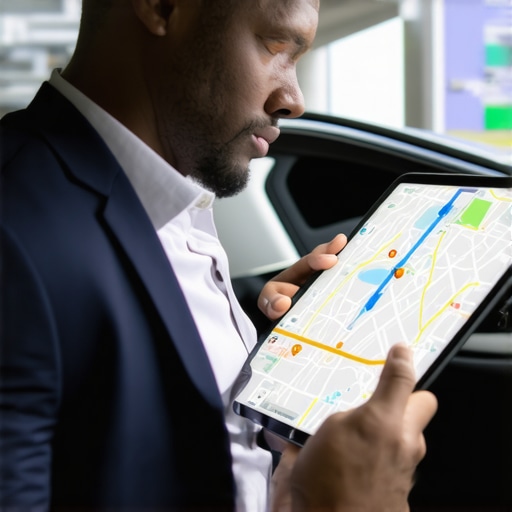
Why Your Driver Should Never Ask for Directions
If your driver starts the trip by asking, ‘Which way do you prefer?’, they aren’t being polite; they are often being unprepared or under-trained. A professional has already mapped the route, checked the latest 511 traffic feeds, and knows exactly where the city has placed temporary construction barrels. This is a core part of the essential hourly reservation tips for timely service. You aren’t just paying for a seat; you are paying for the removal of the cognitive load of navigation. One ‘Oops’ factor many planners overlook is the secondary verification at the curb. I once saw a VIP get into a vehicle that looked right, but because they didn’t check the plates, they ended up in a random car that happened to be the same color. Always remember why you should never enter a vehicle without a license plate match. It sounds like a small detail until you’re in the wrong car heading to the wrong terminal.
Can you trust the digital rating on your screen?
We’ve been conditioned to think a 4.9-star rating is a guarantee of quality. It’s not. In the gig economy, ratings can be gamed, accounts can be shared, and histories can be reset. For high-profile events, you need to know how to verify a private driver’s professional rating independently. This means looking beyond the app. Ask about their commercial driving history or how long they have been with a specific livery service. Real professionals don’t hide behind an app’s aggregate score; they have a track record you can verify with a phone call to a human dispatcher who knows their performance personally. For those handling sensitive itineraries or high-net-worth clients, there is also the security benefit of booking under a corporate alias to keep your VIPs off the digital radar entirely. This adds a layer of anonymity that standard apps simply don’t offer. Have you ever fallen into the ‘but the app said’ trap only to find yourself stuck? Let me know in the comments. We are here to make sure you stay on-time and secure no matter what the algorithm thinks.To move from an amateur event planner to a logistics pro, you have to stop relying on the same consumer apps everyone else uses. I stopped trusting airline notifications years ago. Instead, I shifted to using professional-grade data feeds. For my high-stakes airport transfers, I rely on tools that integrate with FlightAware’s FlightXML. This isn’t just a fancy map; it pulls directly from the FAA’s System Wide Information Management (SWIM) system. This gives me a 10-minute head start on gate changes and touchdown times before the general public even sees a delay on the terminal monitors. When you are managing twenty executives, those ten minutes are the difference between a smooth exit and a chaotic search for a missing passenger. This is why real-time vehicle tracking is more than just a convenience; it is your primary defense against the unknown.
Stop Guessing and Start Tracking with Professional Data
Managing the human element is the hardest part of the job. I’ve found that even the best drivers can benefit from a second set of eyes. This is why I always insist on a service that provides a dedicated dispatcher. According to Dan Lewis, a logistics technology expert and former CEO of Convoy, the ‘human-in-the-loop’ model is still the most resilient way to handle urban ‘edge cases’ like unmapped street closures or sudden police activity. When I book for a full day, I don’t just want a driver; I want a team. That’s why a human dispatcher outperforms an ai every time. They can see the ‘macro’ traffic view while the driver focuses on the ‘micro’ task of safe navigation.
How do I maintain this level of precision as my events grow larger?
Scaling your logistics requires moving away from one-off bookings and toward a system of repeatable habits. I maintain my standards by performing a ‘digital dry run’ 24 hours before every event. This includes checking for any local permits that might block curb access. It’s also about maintenance of the relationship. I always send a direct message to the dispatch desk to confirm they’ve assigned a driver who has performed a pre-trip inspection. This is why professional punctuality requires a pre-trip inspection; you don’t want to find out about a faulty AC or a low tire when the CEO is stepping into the vehicle. 
Why the Future of Executive Travel Isn’t an Algorithm
Looking ahead, I predict a massive ‘flight to quality’ where corporate teams abandon the gig-economy apps entirely. As cities become more congested and data privacy becomes a bigger concern, the value of a closed, secure network will skyrocket. The trend is moving toward ‘Concierge Logistics’ where your driver isn’t just a pair of hands on a wheel, but a security-vetted professional. This is the secret to stress-free corporate transportation planning. By locking in your rates and vehicles early, you insulate yourself from the volatility of the modern street. If you are dealing with a changing itinerary, knowing how to handle a late flight arrival with your car service through a direct communication line is far more effective than shouting into a customer support chat box. I challenge you to try this for your next event: instead of booking individual legs, try a four-hour ‘as-directed’ reservation. You will immediately see how the essential hourly reservation tips for timely service change the entire energy of your travel day from frantic to focused.
The Hardest Realities I Learned from High-Stakes Planning
After a decade in the trenches, I’ve realized that the biggest mistake is treating transportation as a commodity. It’s actually the backbone of your guest’s experience. If you haven’t yet, you need to check the checklist for every late-night private car hire to see what you might be missing. I’ve learned that silence from a driver is a warning sign, and a dispatcher who knows your name is a gold mine. The most important takeaway for me has always been the difference between saving money and protecting value. A budget is a living document; if you spend a bit more on a dedicated service, you often save the entire cost of a failed executive meeting.
Another lightbulb moment? Trusting your gut is good, but why safety and timeliness matter in hourly reservation services goes beyond instinct—it’s about data. Always verify the tech and the human behind it before you commit your VIPs to the ride. Real control comes from the ability to pivot before the client even realizes there is a problem.
The Toolkit That Keeps Me Ahead of the Chaos
You don’t need to be a tech wizard, but you should know how to verify the commercial validity of a transit schedule. I personally trust local 511 feeds and specialized logistics apps over consumer-grade navigation. I also swear by FlightAware for tracking specific tail numbers and the INRIX Scorecard for understanding long-term city congestion patterns. These tools, combined with why real-time vehicle tracking is more than just a convenience, give you the oversight needed to manage multiple VIPS without breaking a sweat. #IMAGE_PLACEHOLDER_E#
Your Path to Bulletproof Event Logistics
It’s time to stop being a victim of the algorithm. By choosing a dedicated hourly model, you are reclaiming your time and your professional reputation. Focus on on-time arrival mastering the art of reservation and safety every hour. Your clients will notice the difference, and more importantly, so will your stress levels. Let’s make ‘late’ a thing of the past and build a standard that actually holds up under pressure. Have you ever been stranded because an app’s ETA was a total fantasy? Tell me about your closest call in the comments below.