
I remember standing on a freezing curb in downtown Chicago three winters ago, the wind whipping off the lake while my phone screen flickered with a 4.5x Surge notification. I just wanted to get home. That ride, which usually cost me fifteen dollars, was suddenly quoted at seventy. I sat there, teeth chattering, wondering if I should wait ten minutes for the price to drop or just suck it up and pay the algorithm’s ransom. That was the moment I realized the convenience of dynamic pricing is actually a trap. It pits your wallet against the clock, and when you are in a rush, you almost always lose. Today, I am going to show you how moving away from these fluctuating costs toward a fixed, scheduled approach can save your budget and your sanity.
Stop Letting Algorithms Gamble With Your Schedule
Dynamic pricing sounds like fair-market economics, but in reality, it is just high-stakes stress delivered through a shiny app. When you choose hourly booking instead of ride-hailing apps, you are buying certainty rather than a lottery ticket. I used to think I was being flexible by not booking ahead, but that was a mistake that cost me dearly. Once, I actually missed a close friend’s wedding toast because I assumed I could just grab a car when I was ready. The surge pricing was astronomical, but the wait time was even worse—twenty-five minutes for a driver who eventually canceled on me. By reserving your spot early, you remove the ‘if’ from your commute. It is the difference between hoping you’ll get there and knowing you will.
Is a flat rate actually worth the extra cost?
It is a fair question, and one I get from my neighbors all the time. Most people assume that a flat rate or an hourly reservation is a luxury they cannot afford, but the math behind hourly chauffeurs tells a very different story. You aren’t just paying for the miles; you are paying for an insurance policy against chaos. According to a study by the Brookings Institution, dynamic pricing often lacks transparency and leads to significant consumer frustration during peak hours due to ‘asymmetric information.’ This is why hourly logistics save more time and money in the long run. You avoid the hidden fees of waiting in traffic and the sudden spikes that happen just because it started to drizzle. Have you ever been stranded by a surge price that made absolutely no sense for the distance you were traveling? I would love to hear your experiences. We are about to dive into the practical steps of how you can lock in your schedule without overpaying.To break the cycle of surge-pricing anxiety, you need a system that values your time more than a computer algorithm does. The first step is reclaiming the lead time. I learned this the hard way during a mid-winter blizzard when I had a 5:00 AM flight to catch. While my neighbors were frantically watching ‘No Cars Available’ icons spin, I was already sipping coffee in the back of a pre-scheduled sedan. That morning taught me that why a 4 AM reservation needs extra planning—it is about moving the variables into your control. When you are reserving your spot at least 24 hours in advance, you aren’t just asking for a ride; you are securing a professional commitment.
Lock in Your Schedule Before the World Wakes Up
Think of an hourly reservation like a doctor’s appointment rather than a walk-in clinic. You would not show up for a major surgery hoping a surgeon is ‘nearby’ on an app, so why do it for a high-stakes business meeting or a flight? The trick is to stay secure and punctual by setting your pickup window ten minutes earlier than you think you need. This ‘buffer logic’ is how we guaranteed an on-time arrival for a 5-am flight even when the roads were literal ice rinks. By scheduling the hour, you ensure the driver’s only priority is your itinerary, not chasing the next ping in a different neighborhood.
Verify Your Driver Like You Are Guarding a Gold Vault
Safety is not just about a seatbelt; it is about the person behind the wheel. When your car arrives, do not just look for the make and model. You need to follow the protocol for verifying your chauffeur’s permit and check for commercial registration. This is non-negotiable. I always make it a point to learn how to verify commercial plates on a private hire before I even open the door. It signals to the driver that you are an informed passenger, and it ensures you are covered by professional insurance, not just a personal policy. 
Mastering the Art of Multi-Stop Efficiency
If your day involves more than one location—say, a lunch meeting, a site visit, and then the airport—stop booking individual rides. That is the fastest way to lose an hour of your life to ‘ETA drift.’ Instead, why hourly booking is the best move becomes obvious the moment you realize the car stays with you. You can leave your laptop or heavy coat in the vehicle, knowing the driver is waiting right where you left them. For anyone handling complex schedules, learning the best way to organize multi-stop trips via hourly hire is like having a mobile office. You can even use the downtime to decompress, perhaps by using the protocol for requesting a silent ride to gather your thoughts before the next big presentation. Finally, always know how to verify your driver is not exhausted by checking their alert demeanor during your initial greeting. Your safety is a partnership, not just a service.Everyone tells you that real-time GPS is the gold standard of modern travel. In my experience, relying solely on that flickering icon is the fastest way to miss a flight. It creates a ‘digital comfort zone’ that isn’t always anchored in reality. I call this the ‘GPS Mirage,’ where you assume that because you can see a car on your screen, it will arrive on time. The truth is more complex. A study published in the Journal of Navigation highlights that ‘urban canyons’—those narrow streets surrounded by skyscrapers—can cause GPS errors of up to 50 meters and significant time lags. This is exactly why refreshing your tracking app might give you false arrival times. If you are banking your entire morning on a 4-inch screen, you are playing a dangerous game. Have you ever stood on a corner watching a ‘ghost car’ on your app that never actually arrived? Let me know in the comments.
Stop Trusting the Little Blue Car on Your Screen
The most common mistake I see seasoned travelers make is neglecting the manual check. We’ve become so reliant on automation that we forget why GPS lag can ruin your meeting schedule. When I book an hourly reservation, I don’t just look at the map; I look for a text confirmation from a human dispatcher. This is because why manual reservation checks outperform automated bots comes down to human accountability. A bot doesn’t know there is a parade blocking Main Street, but a local dispatcher does. Falling into the danger of relying on verbal confirmations for important travel is a rookie move. Always demand a digital or physical receipt that outlines your specific pickup window.
How do you know if your driver is actually safe or just tired?
This is the advanced question most people forget to ask. A driver can have a clean record but still be a risk if they’ve been behind the wheel for fourteen hours straight. When my car pulls up, I perform a quick mental audit. I’ve learned how to verify your driver is not exhausted by simply engaging them in a brief, two-way conversation. If their responses are delayed or they seem glazed, that is a red flag. Furthermore, you should know how to ensure your driver is not fatigued during a late night trip by checking for erratic speed changes or frequent lane adjustments. Your safety isn’t just about the car’s mechanics; it’s about the driver’s cognitive state.
The One Tiny Detail That Exposes a Bad Driver Instantly
Here is my favorite ‘pro’ tip: look at the floor mats. It sounds ridiculous, but the floor mat check is the most reliable proxy for overall vehicle maintenance. If a driver cannot be bothered to shake out the mats, they likely haven’t checked the tire pressure or the brake fluid recently either. It is a window into their professional discipline.  While you are at it, do not ignore the hidden safety red flags in your car door locks or the state of the windshield wipers. These small elements tell a story of whether the fleet is truly commercial-grade. You must also how to verify the commercial validity of a transit schedule to ensure the company isn’t just a ‘gig’ operation masquerading as a professional service. True reliability is found in the details that most passengers walk right past.Building a personal safety net means moving from individual rides to a managed system. Over the years, I have stopped looking at transportation as a series of one-off events and started viewing it as a logistical architecture. I rely heavily on two specific digital tools: a secondary device for secure communication and high-fidelity tracking software. I’ve found that why real-time vehicle data is more accurate than estimated times becomes clear when you see the raw telemetry from a professional fleet rather than the smoothed-out, laggy animations of a consumer app. When I am traveling with my family, I even go as far as setting up custom alerts. I’ve learned why geofencing is the best way to keep your family safe during transit because it removes the need for constant ‘where are you?’ texts. Instead, I get a ping the moment the car enters the airport perimeter.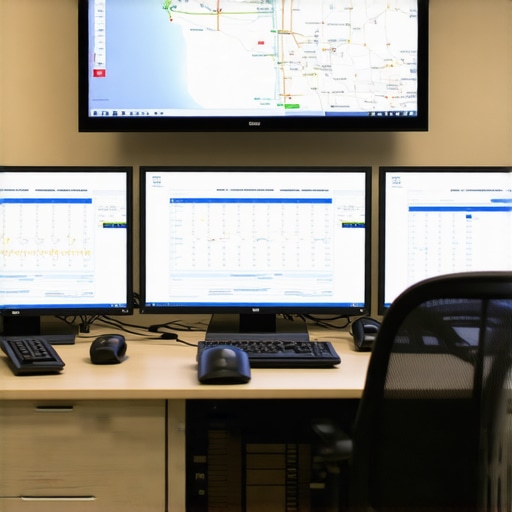
How do I maintain a stress-free travel routine year-round?
Consistency is not an accident; it is the result of a rigorous audit process. Once a quarter, I sit down and review my travel logs. I use how to audit your final ride bill for hidden fees as a template to ensure my providers are staying honest with their pricing. Maintenance also means staying updated on reservation security measures. If a company hasn’t updated their payment gateway in a year, I move on. According to Dr. David Schrank of the Texas A&M Transportation Institute, ‘travel time reliability’ is more critical than sheer speed in urban environments. This confirms my belief that the prep work—checking the weather, verifying the route, and having a direct line to a dispatcher—is what actually gets you there on time, not the driver’s lead foot. If I am handling a larger group, I apply these same principles on a larger scale, often researching how to coordinate a 10-vehicle convoy without losing anyone to keep the logic consistent across the entire party.
The Shift Toward Human-Centric AI Dispatch
Looking toward the horizon, I predict we are entering an era of ‘hybrid dispatch.’ We are going to see AI handle the heavy lifting of traffic prediction, but the ‘final mile’ of accountability will return to human hands. This is why manual reservation checks outperform automated bots even today; a machine can’t sense the urgency in your voice or understand that a specific terminal entrance is currently under construction. The future isn’t about more apps; it’s about better integration between technology and professional human judgment. I urge you to try one specific advanced tip this week: call your transport provider 12 hours before your next big event and ask for a ‘verbal confirmation of the vehicle’s maintenance status.’ It’s a simple move that immediately sets the expectation of high-standard service and ensures your reservation is top-of-mind for the fleet manager.
Hard-Won Truths from a Decade of Urban Commuting
Over years of navigating chaotic city centers, I have realized that the ‘cheapest’ ride is often the most expensive when you factor in the psychological cost of uncertainty. The biggest lightbulb moment for me was realizing that technology is a tool, not a savior; if the human element is missing, the system will eventually fail you. I have learned that why on-time performance is the only metric that matters when your reputation is on the line. Furthermore, I never assume a car is ‘just around the corner’ simply because an app says so. Real reliability comes from a contract, not a calculation. #IMAGE_PLACE_HOLDER_E#
The Professional Traveler’s Resource Stack
To keep my transit seamless, I rely on a few key pillars that go beyond simple booking apps. I constantly refer to the Texas A&M Transportation Institute for objective data on urban congestion to plan my lead times accurately. For my personal safety, I always run through the checklist for every late-night private car hire before the sun goes down. I also maintain a dedicated digital vault for my itineraries because I’ve discovered why you must demand a physical copy of your trip reservation to prevent disputes. Finally, before I trust a new provider, I use how to background check your private transport company in minutes to ensure they meet commercial standards.
Taking the Wheel of Your Own Daily Logistics
The shift from reactive ride-hailing to proactive planning is more than just a budget move; it is a lifestyle upgrade. By implementing a the 3-minute buffer that saves you from missing the train, you transform from a stressed passenger into a master of your own time. You deserve a journey that is as professional as the destination you are heading toward. Start small by booking your next critical appointment as an hourly reservation and feel the immediate weight off your shoulders. The peace of mind that comes with knowing your driver is already committed to you is worth every penny. Have you ever had a ‘digital ghost’ car fail you right when you needed it most? Share your story in the comments below.