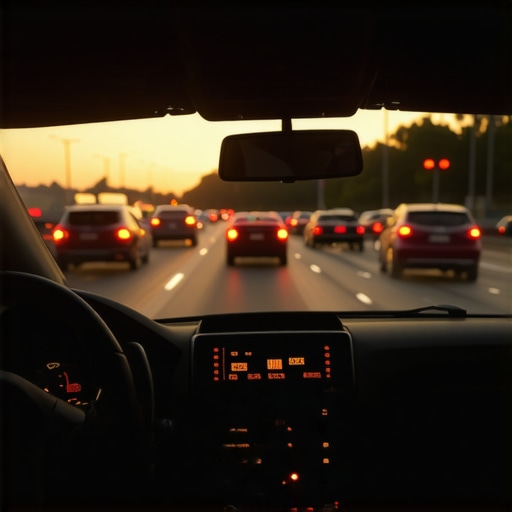
I was sweating through my best suit. The taxi meter was clicking like a countdown clock while we sat motionless on the FDR Drive, the air conditioning struggling against a humid July afternoon. I could literally see my flight’s departure time inching closer on my phone, and the driver kept sighing, checking a GPS that was bleeding red. That was the day I realized that getting there isn’t just about the distance; it’s about who owns the clock. I had made the classic error of trying to save a few bucks with a standard ride-hail, only to realize that the reason shared mobility apps are failing corporate teams is their inability to handle real-world chaos. Today, I want to show you how shifting to an hourly mindset can turn a gridlocked nightmare into a mobile office—or a mobile sanctuary.
Stop Paying for the Stress of Every Red Light
We’ve all been there—staring at the back of a delivery van, watching the minutes bleed away while your heart rate climbs. When you book a standard ride, the driver is incentivized to get you out of the car as fast as possible to grab the next fare. But when traffic hits? Everyone loses. I used to think hourly booking was just for weddings or high-flying CEOs, but I was wrong. Once I switched to an hourly model, the traffic tax on my mental health simply vanished because the clock was already on my side. I learned the hard way that how hourly rates protect you during unpredictable traffic isn’t just about the money; it’s about the psychological shift of knowing your driver isn’t looking for the nearest exit. It allows for why hourly drivers offer better mental clarity for busy executives who need to focus on a presentation rather than the brake lights ahead. [image_placeholder]
Won’t an hourly rate just cost me more in the long run?
It’s a fair question, and honestly, I was a total skeptic myself for years. One of my biggest mistakes early on was choosing the absolute cheapest option for a three-stop afternoon in the city. I ended up stranded between meetings because my previous driver had already vanished to a different borough. I quickly learned that the real cost of choosing the cheapest ride option isn’t the fare; it’s the missed connections and the sheer panic of wondering if you’ll be left on a curb. By using the logic behind booking one driver for three separate errands, you create a buffer that traditional apps can’t match. According to the Texas A&M Transportation Institute, the average urban commuter loses over 50 hours a year to traffic delays. When you have an hourly reservation, those hours belong to you, not the traffic gods. Have you ever felt that sinking feeling in your chest as the minutes tick by in a deadlocked street? We are going to fix that. Now, let’s look at the actual strategies for on-time every time strategies for safe and reliable hourly bookings so you never have to sweat through a suit again.
Why a 20-Minute Buffer is Your New Best Friend
Think of your schedule not as a series of blocks, but as a chain. If one link snaps because of a delivery truck double-parked on a narrow street, the whole day falls apart. I used to book my rides exactly when I thought I needed to leave, which is a recipe for disaster. Now, I follow why a 20-minute buffer is the new gold standard for business. This isn’t just wasted time; it is an insurance policy. In fact, some pros argue why the 17-minute buffer outperforms the traditional 15-minute rule because it accounts for that weird last-mile friction where GPS often fails. I remember a rainy Tuesday in Chicago where my meeting ran over by ten minutes. Because I had that buffer, my driver was already circling the block, and I did not have to stand under a leaking awning frantically refreshing a ride app. It is about reserving your spot how to guarantee safety and punctuality 24-7 so the world adapts to you, not the other way around.
Spot the Red Flags Before You Step Inside
Safety is not just about a driver’s rating; it is about the legal paperwork that keeps you protected in an accident. You would not fly on an unlicensed plane, so why get into a car that is not properly vetted? I make it a habit to perform the routine for inspecting your ride before boarding every single time. It takes thirty seconds but saves a lifetime of regret. Start by checking the plates. Learning how to verify commercial plates on a private hire is the first step in weeding out ghost drivers. If those plates do not match the registration, I do not get in. Period. You should also know how to spot a fake commercial insurance document. Professional outfits will have these ready to show or available via their dispatcher upon request. 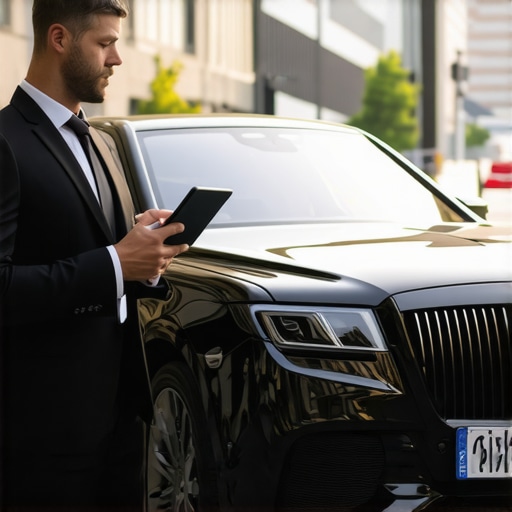
Ditch the AI for a Real Human Connection
The biggest failure point in transportation is the black hole of communication between the booking and the pickup. This is why a human dispatcher outperforms an AI every time; they can sense the nuance of a flight delay or a sudden road closure. I always insist on having a direct connection. Knowing why you need a direct line to your hourly driver changed the way I travel. During a trip to London, my flight landed early, but the terminal was a total maze. A quick text to my driver—not an automated bot—allowed us to coordinate a specific pillar for pickup in seconds. This level of safety precision the key to reliable hourly reservations for peace of mind is what separates a simple ride from a professional service. You are not just a passenger; you are a partner in the logistics. This was the move that guaranteed my arrival before the gate closed during a holiday rush, allowing us to pivot routes the moment the radio reported a highway shutdown.
Stop Trusting the App’s Fairy Tale Arrival Time
We’ve been conditioned to believe that a glowing number on a smartphone screen is a contract. It isn’t. In fact, after years of navigating city grids, I’ve learned that most arrival times are simply guesses based on historical averages that don’t care about the double-parked delivery truck or the sudden lane closure on your street. Everyone says that AI-driven routing is the future, but in my experience, a human dispatcher with local knowledge beats a satellite every single time. The biggest ‘trap’ I see travelers fall into is the ‘Just-in-Time’ fallacy—booking a ride to arrive exactly when the app says it will. This is exactly why why most arrival times are simply guesses and why you need a strategy that doesn’t rely on a best-case scenario. When you transition to an hourly model, you aren’t just paying for the car; you’re paying for the driver to be stationary and ready, which is why hourly booking is more reliable than ride-hailing apps during peak hours.
Is your driver actually focused or just chasing the next surge?
This is the question most passengers never ask until it’s too late. The hidden nuance of safety isn’t just the car’s brakes; it’s the driver’s cognitive load. Standard app drivers are often working 12-hour shifts across multiple platforms just to break even. This is where how to verify your driver is not exhausted becomes a life-saving skill. Research from the National Sleep Foundation indicates that drowsy driving can be as dangerous as driving under the influence, yet most people prioritize a $5 savings over a well-rested professional. For high-stakes days, why business travelers prefer hourly hires for high-stakes days comes down to the fact that their driver isn’t rushing to finish your ride to grab another fare. They are focused entirely on your itinerary. 
The Secret to Stress-Free Corporate Planning
If you are managing a team, the ‘Oops’ factor usually happens during the handoff. I’ve seen entire million-dollar deals delayed because a team relied on a ‘standard’ ride that got caught in a 10-minute GPS lag. Using the secret to stress-free corporate transportation planning involves moving away from on-demand chaos and into reserved certainty. This isn’t just a luxury; it’s a productivity hack. It allows for better safety precision the key to reliable hourly reservations for peace of mind. I once watched a colleague lose a client because his ‘quick’ ride-hail hit a construction zone that the app didn’t see. He didn’t know about the error in relying on app-based arrival times during construction until he was thirty minutes late. Have you ever fallen into this trap of trusting the app’s timer more than your own gut? Let me know in the comments. By shifting to an hourly mindset, you gain on-time arrival mastering the art of reservation and safety every hour, ensuring that the only thing you have to worry about is your presentation, not the pavement.
Verify Everything Before You Even Close the Door
The real magic of a professional service isn’t just the leather seats; it is the data that keeps you safe. I have a ritual now. Before I even buckle my seatbelt, I ask about the telematics. Professional fleets use advanced software to monitor vehicle health and driver behavior in real-time. According to the Federal Motor Carrier Safety Administration (FMCSA), proactive vehicle maintenance is the number one factor in preventing mechanical-related accidents. This is why I always look for how to verify the commercial validity of a transit schedule. If a company can’t show you their inspection routine, they aren’t playing for keeps. I also perform how to verify your drivers commercial policy without the friction by requesting a digital copy of the insurance binder during the booking process. It sounds like overkill until you realize that standard personal insurance won’t cover you in a commercial accident.
How do I maintain this level of precision for every trip?
The secret is a monthly audit. I don’t just book and forget; I look back at my patterns. I use a simple spreadsheet to track my pick-up times versus my actual arrival times. This process of how to audit your monthly travel spend without stress helped me realize that my Tuesday morning commutes were consistently five minutes late because of a specific school zone. Now, I adjust. If you are serious about your time, you need to learn how to build a custom transit schedule for your office that accounts for these micro-delays. I also recommend using how to audit your drivers speed using live tracking links. If I see a driver consistently speeding to make up for a late start, that is a red flag for safety, and I won’t book them again. It is about on-time arrival mastering the art of reservation and safety every hour by being an active participant in the process. 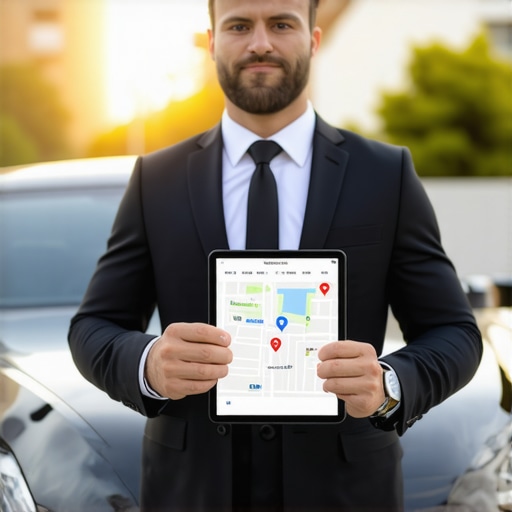
The Future belongs to Human-in-the-Loop Logistics
I predict we are going to see a massive shift away from ‘pure AI’ routing. We’re already seeing it in the corporate world where safety precision the key to reliable hourly reservations for peace of mind is becoming more valuable than the cheapest fare. The future is ‘Human-in-the-loop’—where a human dispatcher uses AI as a tool but makes the final call based on local intuition. This is the tracking accuracy test for private hire car services 2 that most apps fail: they can’t ‘see’ the parade or the unmapped construction. To scale this for your own life, I suggest you how to set up a recurring weekly commute that never fails. By locking in a professional for the same time every week, you build a rapport that no algorithm can replicate. Stop being a ‘user’ and start being a client. I challenge you to try this for your next high-priority meeting: book a driver for two hours instead of just a point-to-point ride and see how much your stress levels drop when the car is already there waiting for you.
The Hardest Lessons I Learned While Watching the Meter Run
After a decade of navigating international hubs and local gridlock, I’ve realized that the most expensive ride is the one that leaves you waiting. My biggest lightbulb moment came when I stopped viewing a driver as a commodity and started seeing them as a logistical partner. I once thought I was being savvy by booking back-to-back point-to-point rides, but I quickly realized that the punctuality habits of top-tier private chauffeurs involve preparation that starts hours before they reach your door. Another key takeaway? Always sit behind the passenger seat; it is the safest spot and gives you the best exit angle in a rush—it’s just one part of ensuring safety first during every journey.
My Personal Toolkit for Seamless Transit
To keep my schedule watertight, I rely on a few non-negotiables. First, I always cross-reference my booking with how to check for hidden fees in your ride confirmation to ensure there are no surprises at the end of a long day. Second, I prioritize platforms that emphasize reservation security measures over flashy app interfaces. I also keep a physical copy of my itinerary; in the rare event of a tech failure, having your driver’s direct number and the dispatch office’s contact info is a lifesaver.
Reclaim Your Focus and Let Someone Else Drive
The shift from frantic app-tapping to a calm hourly reservation isn’t just a travel choice; it’s a lifestyle upgrade. When you know you have an on-time arrival guaranteed by a professional who values your safety as much as their own reputation, your brain finally switches from ‘survival mode’ to ‘productivity mode.’ Follow these essential hourly reservation tips for timely service and watch how the chaos of the city simply fades into the background. You deserve to arrive at your destination refreshed, prepared, and, most importantly, exactly when you said you would. Have you ever had a ride-hail app fail you at the worst possible moment? Share your story in the comments below!