I remember standing on a rain-slicked curb in downtown Chicago, clutching my briefcase and staring at a black sedan that looked exactly like the one I had reserved. I was already five minutes late for a presentation that could make or break my quarter. My gut told me something was off—the driver didn’t make eye contact, and there was a strange, faint rattling from the rear axle—but I hopped in anyway because I was desperate to be on time. Ten minutes later, we were pulled over because the vehicle lacked the proper city permits. I didn’t just miss my meeting; I realized I’d put my physical safety in the hands of a total stranger without verifying a single thing. It was a wake-up call. I had ignored the most basic safety protocols because I was in a rush, a mistake I see travelers make every single day. Today, I am going to show you how to identify the ‘safety token’—that crucial bit of physical and digital verification—that separates a professional service from a dangerous gamble. We are going to fix your booking habits so you never have to choose between being punctual and being protected ever again.
Stop Betting Your Life on a Shiny Mobile App Icon
I used to think that as long as a car showed up through a reputable app, I was covered. I was wrong. The reality is that the hidden difference between app drivers and private chauffeurs often comes down to the rigorous background checks and commercial insurance that many casual platforms skip. When you book a ride, you aren’t just buying a seat; you are entering a legal and safety contract. Early in my career, I made the amateur move of not checking for commercial plates. I just assumed the driver was ‘vetted.’ Now, I know that how to spot an unlicensed operator before getting in is the first skill every executive traveler needs. This isn’t just about avoiding a ticket; it’s about knowing that if an accident happens, you are actually insured. A startling report by the National Safety Council suggests that distracted driving is a leading cause of incidents in ‘for-hire’ vehicles, yet passengers rarely the routine for inspecting your ride before boarding seriously. You have to be your own advocate. Have you ever felt that ‘gut feeling’ that something was wrong when a car pulled up, but got in anyway because you were worried about your schedule?
Does this tiny verification really matter when you are in a rush?
Many people tell me they feel awkward asking a driver for their credentials or double-checking the vehicle’s status. They worry about being ‘that passenger.’ But let me tell you, a true professional will never be offended by your diligence. In fact, on-time arrival mastering the art of reservation and safety every hour means having the confidence that your transport is legitimate before the wheels even turn. I once lost a deposit because I tried to how to change a pickup time without losing your deposit with a fly-by-night company that didn’t even have a physical office. It was a mess. That experience taught me that the ‘safety token’—the verifiable proof of identity and insurance—is the only thing that actually guarantees peace of mind. We’re going to dive into exactly what that token looks like and how you can spot it in under thirty seconds.
How to vet your ride before you touch the door handle
The ‘safety token’ is not a physical object you carry; it is a mental checklist that you execute with the precision of a pilot. It begins long before the car pulls up to your curb. You have to think of your reservation like a bridge—if one bolt is loose, the whole structure is at risk. The first thing I do when I book is audit the digital trail. I look for the signs of a professional booking confirmation email, which should include a clear breakdown of the vehicle type, the driver’s name, and, crucially, the company’s license number. If I get a vague text from a personal cell phone number without these details, my alarm bells start ringing. Professionalism isn’t just about a suit; it’s about the data they provide to ensure you feel secure.
Look for the digital paper trail first
Don’t just glance at the time and date. You need to see the infrastructure behind the screen. I once had a situation where a dispatcher sent a car that wasn’t even in their fleet. Because I knew how to verify your drivers commercial registration manually, I was able to spot that the car was a personal lease, not a commercial vehicle. This meant that if we hit a pothole or, heaven forbid, another car, I would have zero insurance coverage. The ‘safety token’ here is the commercial permit displayed on the windshield or the plates. I spent five minutes arguing with a driver in Midtown Manhattan about this very issue once; he insisted he was ‘legal,’ but his plates were standard consumer issue. I refused the ride. It’s better to be late and alive than on time and unprotected.
Check the metal before you trust the driver
Once the car arrives, your inspection moves from the digital to the physical. You aren’t just looking for a clean car; you’re looking for a safe one. I follow the routine for inspecting your ride before boarding every single time. Check the tires for tread, and look for those specific commercial markers. Knowing how to verify commercial plates on a private hire is the easiest way to tell if the service is cutting corners. Professional plates often have distinct letter combinations or colors depending on your city. 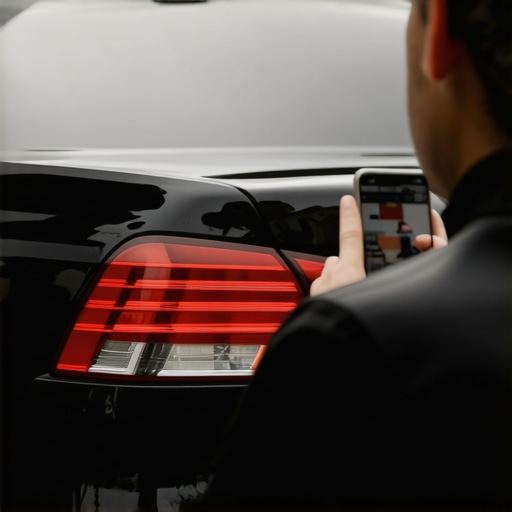
Master the timing to eliminate desperation
Desperation is the enemy of safety. When you are rushing, you overlook red flags. This is why I have completely abandoned the ’15-minute rule.’ Through trial and error, I discovered that why the 17 minute buffer outperforms the traditional 15 minute rule 2 comes down to the psychological breathing room it gives you. If your car is two minutes late, you don’t panic and jump into the first sedan that looks vaguely like your ride. You have the time to check the driver’s ID. Furthermore, for high-stakes days, I’ve found that why hourly booking is the secret to stress free event planning is unmatched. It removes the ‘rush’ entirely because the driver is already yours, waiting on your command, rather than racing to finish your fare to grab the next one.
Spot the behavioral red flags in seconds
Finally, observe the driver before you even sit down. Do they look alert? Are they focused on the road or their phone? Learning how to spot a driver who is too tired to drive safely 2 is a life-saving skill. Look at their eyes and their response time when you ask a simple question. If they seem sluggish or confused, do not get in. Your life is worth more than the awkwardness of saying ‘no’ to a ride. This isn’t about being picky; it’s about maintaining a standard of reservation security measures how to book safely and arrive on time that ensures you reach your destination without incident.
The efficiency trap that actually slows you down
Most travelers believe that booking individual point-to-point rides is the most cost-effective way to manage a busy day. In my experience, this is the quickest way to end up stranded on a sidewalk. The common belief is that ‘available nearby’ means guaranteed service, but why hourly booking is more reliable than ride hailing apps becomes clear the moment a driver cancels your 8:00 AM pickup because they found a higher fare elsewhere. When you book point-to-point, you are a transaction; when you book hourly, you are a priority. I’ve seen executives lose thousands in potential contracts because they tried to save fifty dollars by not securing a dedicated driver. The reality is that why business travelers prefer hourly hires for high stakes days 2 isn’t about luxury—it’s about the mathematical certainty of having a car at your door regardless of surge pricing or driver shortages. Have you ever fallen into this trap of thinking a quick ‘hail’ was safer than a reserved hour? Let me know in the comments.
Can a 4.9-star rating hide a dangerous lack of insurance?
This is the question that keeps professional dispatchers up at night. We’ve been conditioned to trust the ‘star system’ as a proxy for safety, but a high rating only measures how polite a driver was, not how legal their operation is. An ‘Oops’ factor I see constantly is the failure to distinguish between personal and commercial coverage. If you are in a vehicle with a driver who only carries a personal policy, your health insurance provider may deny claims if an accident occurs during a ‘for-hire’ trip. According to a report by the Insurance Information Institute, the gap between personal auto limits and commercial requirements is massive, yet most passengers never think to ask. You need to know how to verify your drivers commercial policy without the friction to protect your financial future. 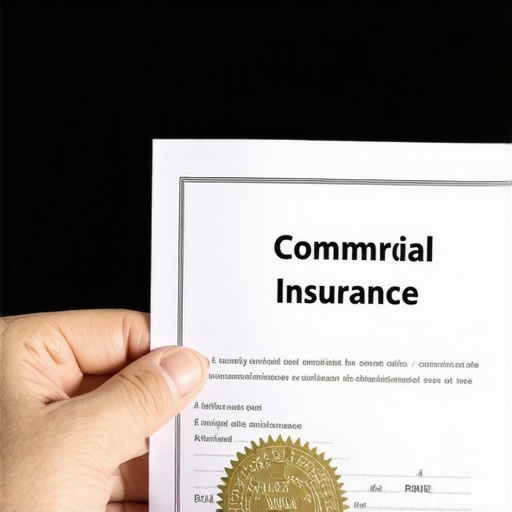
Why the cheapest ride is often the most expensive mistake
We often focus on the upfront price, but we ignore the ‘hidden friction’ of low-tier services. This is where most people get the ‘on-time’ logic wrong. They assume a 10-minute ETA means they will arrive in 10 minutes. It doesn’t. Real punctuality requires a why professional punctuality requires a pre-trip inspection and a deep knowledge of local bottlenecks that GPS often misses. I’ve found that why a driver with a physical map is more reliable than gps isn’t about the paper itself, but the preparation it represents. A driver who relies solely on a live-updating app is reactive; a professional driver is proactive. Furthermore, you must consider your digital safety. Using the security benefit of masking your phone number with your driver and knowing how to secure your personal data when booking airport transfers are advanced moves that separate seasoned travelers from amateurs. If you aren’t auditing the signs of a professional booking confirmation email, you are leaving your schedule—and your personal data—to chance. Stop guessing and start verifying.Building a personal travel stack is the only way to scale your efficiency without losing your mind to logistics. I stopped relying on a single app’s ecosystem years ago because they are designed for the company’s profit, not my schedule. Instead, I use a combined approach of human-led dispatch and manual auditing. I have found that why a human dispatcher outperforms an ai every time is because a human can anticipate that a specific tunnel is closed for maintenance before the GPS even registers the slowdown. For my own tracking, I avoid battery-draining apps and instead use SMS-based location pings. Knowing how to track your drivers real time progress without an app keeps my phone available for actual work while giving me the exact coordinates of my ride. I also recommend referencing the FMCSA Safety Measurement System (SMS) to check a carrier’s historic safety data; it is the same technical documentation professional fleet managers use to vet their own partners.
How do I maintain these high standards over dozens of trips?
Consistency is built on the back of the audit. Every month, I sit down for twenty minutes to review my travel logs. I look specifically for how to audit your final ride bill for hidden fees and check if the wait times were actually my fault or a driver’s lack of preparation. If I see a pattern of ‘reactive’ driving, I shift my bookings. This is why I advocate for how to build a custom transit schedule for your office, ensuring that every executive on my team is using the same vetted pool of drivers. 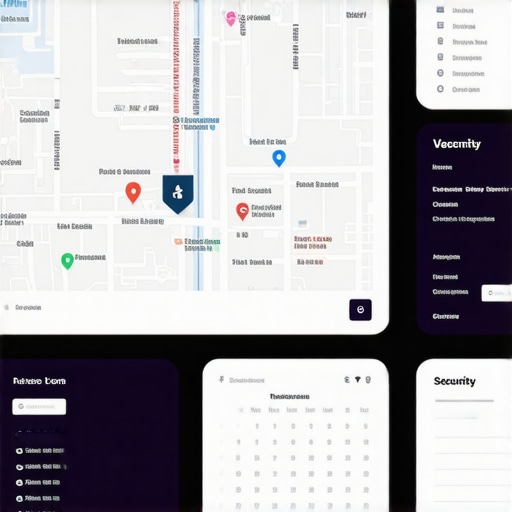 In the near future, I predict we will see a shift toward ‘Sovereign Mobility,’ where high-net-worth travelers use private, encrypted booking channels to bypass the data-harvesting of major ride-hailing platforms. We are already seeing the early stages of this with on time every time strategies for safe and reliable hourly bookings that prioritize privacy over ‘convenience.’ My challenge to you today: Take your last three ride receipts and check the ‘commercial insurance’ surcharge. If it is not there, or if the math doesn’t add up, you are likely riding in a vehicle that puts you at financial risk. Start auditing your ‘safety token’ today and stop leaving your protection to chance.
The Invisible Friction That Almost Cost Me Everything
Reflecting on years of travel, the biggest shift wasn’t in the apps I used, but in my refusal to accept ‘good enough’ when it came to my life. I learned that the real cost of choosing the cheapest ride option is often paid in stress and missed opportunities. Safety isn’t just a badge on an app; it’s the result of rigorous systems. One lightbulb moment for me was realizing that how to verify your driver is not exhausted is a better use of my time than checking my social media feed while waiting. I stopped viewing myself as a passenger and started acting like a logistics manager for my own life.
My Go-To Arsenal for Secure Transit
To move through the world with total confidence, I rely on a few non-negotiable tools and habits. First, I always ensure why a human dispatcher outperforms an ai every time by choosing services that offer a direct line to a real person. Second, I’ve moved past the standard timing; I’ve found that why the 17 minute buffer outperforms the traditional 15 minute rule 2 provides the perfect psychological safety net for urban delays. I also keep the FMCSA Safety Measurement System bookmarked on my mobile browser for quick fleet checks when I’m in a new city.
#IMAGE_PLACE_HOLDER_E#
Take the Wheel of Your Own Security
You have the power to transform every journey from a gamble into a guaranteed success. By implementing these ensuring safety first your guide to on time reservations at any hour, you aren’t just getting to a meeting—you are protecting your most valuable asset: yourself. Don’t wait for a close call like mine to change your habits. Start demanding the ‘safety token’ of verification every time you make a reservation to ensure you arrive on time and fully intact. Have you ever noticed a red flag in a car service but ignored it to stay on schedule? Let me know in the comments below.