
I stood on a curb in Chicago three years ago, watching my ‘5-star’ driver pull a U-turn into oncoming traffic just to save thirty seconds of navigation time. My heart skipped. It was a visceral wake-up call: those little gold icons on my smartphone screen were essentially meaningless pixels. I had spent years assuming that because someone was listed on a major platform, they were a vetted, top-tier professional. I was wrong. That night, I realized that if I wanted to guarantee my safety and reach my high-stakes meetings without a panic attack, I had to stop being a passive passenger. I needed to learn how to do the homework myself. Today, I am pulling back the curtain on the specific methods I now use to vet every single ride I book. I’ll show you exactly how to verify a driver’s professional standing independently so you can book with total peace of mind. Have you ever felt that sudden pit in your stomach when a supposed ‘pro’ driver starts acting like an amateur behind the wheel?
Look Past the Five-Star Illusion
When I first started hiring private transport for my business trips, I made the classic rookie mistake of trusting a slick website and a high rating. I didn’t realize that there is a massive hidden difference between app drivers and private chauffeurs that goes far beyond the make of the car or the bottled water in the door. True professionals hold specific permits and commercial certifications that the average gig-economy driver doesn’t even know exist. I once failed to check if a driver was legally registered to operate in a specific city, only to be delayed for an hour when he couldn’t access the secure airport terminal properly. I was embarrassed, late, and frustrated. Now, I always follow the protocol for verifying your chauffeurs permit before I even think about opening the car door. It takes me less than three minutes, but it has saved me from countless potential headaches. It is a surprising fact that while most apps require very little, the National Limousine Association notes that professional chauffeured services often involve fingerprint-based background checks and specific livery insurance requirements that offer significantly higher protection for the passenger.
Is this extra vetting actually worth your time?
You might think this sounds like a bit of overkill for a simple ride across town. I get it; we are all busy and looking for the path of least resistance. But when you are booking for a high-stakes event, a 4 AM flight, or a late-night arrival in an unfamiliar city, that extra layer of independent verification is your only real insurance policy. You can actually gauge the quality of a service long before the car arrives; for example, knowing how to spot a professional dispatcher via email can give you an immediate red flag about their internal operations. Learning the steps for how to verify your drivers commercial registration manually isn’t just about being a difficult customer—it is about ensuring that the person behind the wheel is a career professional who respects your time and safety as much as you do. I’ve found that the peace of mind is worth every second of the check. In the next few paragraphs, I’m going to walk you through the exact three-step process I use to check a driver’s rating without relying on the app’s potentially biased data.
Read the Plates Before You Open the Door
Most people use license plates just to find their ride in a crowded terminal, but I use them as a legal filter. Professional vehicles in major cities are required to carry specific commercial identifiers—like TCP numbers in California or specialized livery plates in New York. Knowing how to verify commercial plates on a private hire is your first line of defense. I remember standing outside a hotel in Miami, waiting for a ‘luxury’ pickup I’d booked through a discount site. The car that arrived was a clean SUV, but it lacked the required ‘Y’ or ‘Z’ designations on the plate. When I asked the driver about his commercial registration, he looked at his feet and admitted he was just using his personal car for the weekend. I didn’t get in. That simple check saved me from a ride with zero commercial insurance coverage. 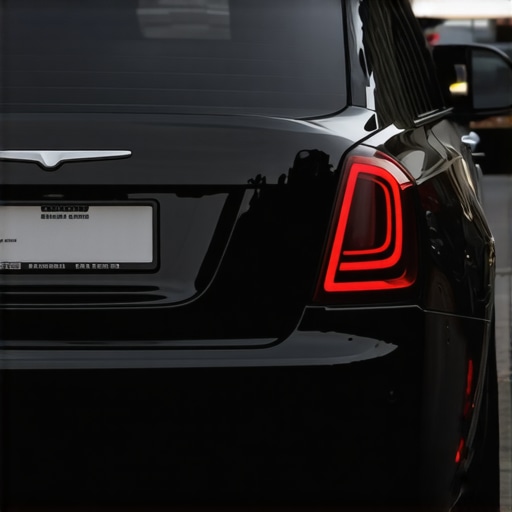
Test Your Dispatcher’s Competence
Your safety audit starts the moment you receive your booking confirmation. I’ve found that why a human dispatcher outperforms an ai every time becomes crystal clear when you have a specific request. I always send a quick follow-up email asking about the specific route or terminal drop-off nuances. A professional service will provide a detailed, human response, often mentioning that how we verify every drivers identity before they reach you is a standard part of their internal safety protocol. If you get an automated ‘ticket number’ with no personality, it’s a sign that the company is a volume-based operation rather than a safety-first service.
The 30-Second Physical Inspection
Once the vehicle arrives, don’t rush to throw your bags in the trunk. I take thirty seconds to walk around the car. It isn’t about being picky; it’s about spotting negligence. I look for the visual signs of a chauffeur who values professionalism, which starts with the vehicle’s maintenance. Is there significant body damage? Are the tires balding? A company that skips basic maintenance is likely skipping the deep-background checks, too. I always follow the routine for inspecting your ride before boarding, which includes checking that the door handles function correctly and the interior is free of clutter that could become a projectile in a sudden stop.
Trust Real Data Over App Guesses
Stop trusting the little car icon dancing on your screen. Those animations are often smoothed over by algorithms to make the wait feel shorter. I’ve learned that why real-time vehicle data is more accurate than estimated times is a lesson best learned before you are late for a board meeting. If a service can’t give you a direct link to the vehicle’s actual GPS feed, they are likely hiding a delay or a ‘stacked’ booking. I once had an app tell me my driver was ‘2 minutes away’ for fifteen minutes straight while I stood in the snow. Now, I only book with services that provide transparent tracking. Additionally, a professional driver will proactively discuss the journey, and learning how to identify a safe drop-off point in an unfamiliar city with them can ensure you aren’t left on a dark corner. This direct communication is the hallmark of a true pro.Most travelers think that booking individual rides from point A to point B is the smartest way to save money and stay flexible. I used to be one of them, but I’ve learned that this is often a dangerous misconception. The reality is that point-to-point reservations frequently force drivers into a ‘volume’ mindset where they are racing to finish your ride to catch the next one in the queue. This is why hourly booking is more reliable than ride-hailing apps—when you book a driver by the hour, you are buying their undivided attention. In my experience, how hourly rates protect you during unpredictable traffic is the most overlooked safety feature. The driver isn’t stressing about a lost fare if a bridge is closed; they are focused on your comfort and safety.
The 20-Minute Rule Beats the 15-Minute Buffer
The biggest mistake I see even seasoned travelers make is falling into the ’15-minute’ trap. We’ve been conditioned to think a quarter-hour is plenty of breathing room. It isn’t. I now advocate for a more robust margin. According to research from the Texas A&M Transportation Institute on urban mobility, travel time reliability is so volatile that a minor incident three miles away can increase your commute time by 40% in seconds. This is why a 20 minute buffer is the new gold standard for business. If you aren’t building in that specific window, you are essentially gambling with your professional reputation. I’ve seen why most arrival times are simply guesses when companies don’t account for real-time volatility. 
What happens if the route changes while I’m in the car?
A sophisticated traveler knows that plans are fluid. If you are mid-trip and your destination shifts, you need to know how to handle a route change mid trip without confusion. With a gig-worker, this often leads to dangerous phone-fiddling while driving. A true pro, however, has already mapped out the ‘back roads’ and can pivot without breaking their stride. This is the reliable way to ensure you arrive first for the keynote even when the main artery is blocked. Furthermore, use these moments of interaction to evaluate your driver’s condition. Learning how to spot a driver who is too tired to drive safely is a critical skill; look for slow verbal responses or frequent blinking. I’ve found that why business travelers prefer hourly hires for high stakes days often comes down to this: the driver is rested and dedicated solely to your itinerary. Beyond just the car, there is a psychological layer to safety. I’ve found that why hourly drivers offer better mental clarity for busy executives is because they handle the why professional punctuality requires a pre trip inspection long before they arrive, ensuring the vehicle is perfect. Have you ever fallen into the trap of thinking a 5-star app rating was enough to skip your own vetting? Let me know in the comments.
Audit Your Ride Like a Pro
I’ve spent hundreds of hours in the back of vehicles, and I’ve realized that the ‘set it and forget it’ mentality is exactly how you end up stuck in a terminal at 2 AM. To maintain a truly reliable travel routine, you need a toolkit that doesn’t just rely on what an app tells you. For my high-stakes trips, I rely on a combination of real-time flight data and direct dispatcher communication. I’ve found that learning how to track your drivers real time progress without an app is the only way to avoid the ‘ghost car’ phenomenon. By cross-referencing your driver’s location with local DOT traffic cameras, you gain a level of transparency that most travelers never even consider. This isn’t just about being tech-savvy; it is about taking control of your arrival time.
The Dashboard I Use for High-Stakes Travel
Whenever I book an hourly reservation, I maintain a digital folder for that specific trip. It includes the driver’s commercial insurance scan, the dispatcher’s direct phone number, and a pre-calculated list of secondary routes. I always make sure to define the exact distance to request for a smooth event drop off to avoid the chaos of the main entrance. This proactive planning is why I never find myself scrambling at the last minute. Furthermore, the Federal Motor Carrier Safety Administration (FMCSA) strictly regulates Hours of Service (HOS) for commercial drivers, and knowing these limits is your secret weapon. If my driver has been on the clock for twelve hours straight, I know my safety is compromised regardless of their rating. 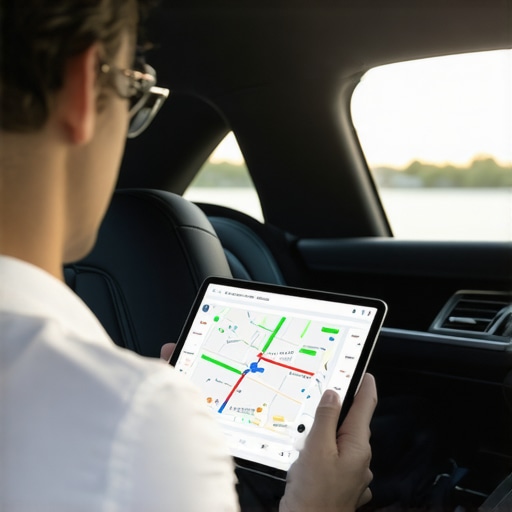
How do I keep my travel logistics bulletproof every single month?
Consistency is the byproduct of systemization. I treat my transportation like a business operation. Every Monday, I review my upcoming schedule and how to set up a recurring weekly commute that never fails for my regular office runs. This takes the decision-making fatigue out of the equation. Once the ride is over, I don’t just walk away; I take two minutes to audit your final ride bill for hidden fees. Many services sneak in ‘fuel surcharges’ or ‘administrative tolls’ that weren’t in the initial quote. By catching these early, you train the service provider that you are an observant, high-value client who expects professional honesty.
Predicting the High-End Transport Landscape
I believe we are moving toward a ‘verification-first’ era. As automated platforms continue to struggle with quality control, the value of a vetted, human-centered service will skyrocket. This is why a human dispatcher outperforms an ai every time when navigating complex urban environments. In the next five years, the most successful business travelers will be those who prioritize why reliable schedules are better for your sleep cycle over the minor cost savings of a discount ride. Precision and safety are becoming the new ultimate luxuries. My challenge to you this week: for your next major meeting, call the dispatch line and ask them specifically about their driver’s rest requirements—the answer you get will tell you everything you need to know about the company’s culture.I stood on a curb in Chicago three years ago, watching my ‘5-star’ driver pull a U-turn into oncoming traffic just to save thirty seconds of navigation time. My heart skipped. It was a visceral wake-up call: those little gold icons on my smartphone screen were essentially meaningless pixels. I had spent years assuming that because someone was listed on a major platform, they were a vetted, top-tier professional. I was wrong. That night, I realized that if I wanted to guarantee my safety and reach my high-stakes meetings without a panic attack, I had to stop being a passive passenger. I needed to learn how to do the homework myself. Today, I am pulling back the curtain on the specific methods I now use to vet every single ride I book. I’ll show you exactly how to verify a driver’s professional standing independently so you can book with total peace of mind. Have you ever felt that sudden pit in your stomach when a supposed ‘pro’ driver starts acting like an amateur behind the wheel?
Look Past the Five-Star Illusion
When I first started hiring private transport for my business trips, I made the classic rookie mistake of trusting a slick website and a high rating. I didn’t realize that there is a massive hidden difference between app drivers and private chauffeurs that goes far beyond the make of the car or the bottled water in the door. True professionals hold specific permits and commercial certifications that the average gig-economy driver doesn’t even know exist. I once failed to check if a driver was legally registered to operate in a specific city, only to be delayed for an hour when he couldn’t access the secure airport terminal properly. I was embarrassed, late, and frustrated. Now, I always follow the protocol for verifying your chauffeurs permit before I even think about opening the car door. It takes me less than three minutes, but it has saved me from countless potential headaches. It is a surprising fact that while most apps require very little, the National Limousine Association notes that professional chauffeured services often involve fingerprint-based background checks and specific livery insurance requirements that offer significantly higher protection for the passenger.
Is this extra vetting actually worth your time?
You might think this sounds like a bit of overkill for a simple ride across town. I get it; we are all busy and looking for the path of least resistance. But when you are booking for a high-stakes event, a 4 AM flight, or a late-night arrival in an unfamiliar city, that extra layer of independent verification is your only real insurance policy. You can actually gauge the quality of a service long before the car arrives; for example, knowing how to spot a professional dispatcher via email can give you an immediate red flag about their internal operations. Learning the steps for how to verify your drivers commercial registration manually isn’t just about being a difficult customer—it is about ensuring that the person behind the wheel is a career professional who respects your time and safety as much as you do. I’ve found that the peace of mind is worth every second of the check. In the next few paragraphs, I’m going to walk you through the exact three-step process I use to check a driver’s rating without relying on the app’s potentially biased data.
Read the Plates Before You Open the Door
Most people use license plates just to find their ride in a crowded terminal, but I use them as a legal filter. Professional vehicles in major cities are required to carry specific commercial identifiers—like TCP numbers in California or specialized livery plates in New York. Knowing how to verify commercial plates on a private hire is your first line of defense. I remember standing outside a hotel in Miami, waiting for a ‘luxury’ pickup I’d booked through a discount site. The car that arrived was a clean SUV, but it lacked the required ‘Y’ or ‘Z’ designations on the plate. When I asked the driver about his commercial registration, he looked at his feet and admitted he was just using his personal car for the weekend. I didn’t get in. That simple check saved me from a ride with zero commercial insurance coverage.
Test Your Dispatcher’s Competence
Your safety audit starts the moment you receive your booking confirmation. I’ve found that why a human dispatcher outperforms an ai every time becomes crystal clear when you have a specific request. I always send a quick follow-up email asking about the specific route or terminal drop-off nuances. A professional service will provide a detailed, human response, often mentioning that how we verify every drivers identity before they reach you is a standard part of their internal safety protocol. If you get an automated ‘ticket number’ with no personality, it’s a sign that the company is a volume-based operation rather than a safety-first service.
The 30-Second Physical Inspection
Once the vehicle arrives, don’t rush to throw your bags in the trunk. I take thirty seconds to walk around the car. It isn’t about being picky; it’s about spotting negligence. I look for the visual signs of a chauffeur who values professionalism, which starts with the vehicle’s maintenance. Is there significant body damage? Are the tires balding? A company that skips basic maintenance is likely skipping the deep-background checks, too. I always follow the routine for inspecting your ride before boarding, which includes checking that the door handles function correctly and the interior is free of clutter that could become a projectile in a sudden stop.
Trust Real Data Over App Guesses
Stop trusting the little car icon dancing on your screen. Those animations are often smoothed over by algorithms to make the wait feel shorter. I’ve learned that why real-time vehicle data is more accurate than estimated times is a lesson best learned before you are late for a board meeting. If a service can’t give you a direct link to the vehicle’s actual GPS feed, they are likely hiding a delay or a ‘stacked’ booking. I once had an app tell me my driver was ‘2 minutes away’ for fifteen minutes straight while I stood in the snow. Now, I only book with services that provide transparent tracking. Additionally, a professional driver will proactively discuss the journey, and learning how to identify a safe drop-off point in an unfamiliar city with them can ensure you aren’t left on a dark corner. This direct communication is the hallmark of a true pro.Most travelers think that booking individual rides from point A to point B is the smartest way to save money and stay flexible. I used to be one of them, but I’ve learned that this is often a dangerous misconception. The reality is that point-to-point reservations frequently force drivers into a ‘volume’ mindset where they are racing to finish your ride to catch the next one in the queue. This is why hourly booking is more reliable than ride-hailing apps—when you book a driver by the hour, you are buying their undivided attention. In my experience, how hourly rates protect you during unpredictable traffic is the most overlooked safety feature. The driver isn’t stressing about a lost fare if a bridge is closed; they are focused on your comfort and safety.
The 20-Minute Rule Beats the 15-Minute Buffer
The biggest mistake I see even seasoned travelers make is falling into the ’15-minute’ trap. We’ve been conditioned to think a quarter-hour is plenty of breathing room. It isn’t. I now advocate for a more robust margin. According to research from the Texas A&M Transportation Institute on urban mobility, travel time reliability is so volatile that a minor incident three miles away can increase your commute time by 40% in seconds. This is why a 20 minute buffer is the new gold standard for business. If you aren’t building in that specific window, you are essentially gambling with your professional reputation. I’ve seen why most arrival times are simply guesses when companies don’t account for real-time volatility.
What happens if the route changes while I’m in the car?
A sophisticated traveler knows that plans are fluid. If you are mid-trip and your destination shifts, you need to know how to handle a route change mid trip without confusion. With a gig-worker, this often leads to dangerous phone-fiddling while driving. A true pro, however, has already mapped out the ‘back roads’ and can pivot without breaking their stride. This is the reliable way to ensure you arrive first for the keynote even when the main artery is blocked. Furthermore, use these moments of interaction to evaluate your driver’s condition. Learning how to spot a driver who is too tired to drive safely is a critical skill; look for slow verbal responses or frequent blinking. I’ve found that why business travelers prefer hourly hires for high stakes days often comes down to this: the driver is rested and dedicated solely to your itinerary. Beyond just the car, there is a psychological layer to safety. I’ve found that why hourly drivers offer better mental clarity for busy executives is because they handle the why professional punctuality requires a pre trip inspection long before they arrive, ensuring the vehicle is perfect. Have you ever fallen into the trap of thinking a 5-star app rating was enough to skip your own vetting? Let me know in the comments.
Audit Your Ride Like a Pro
I’ve spent hundreds of hours in the back of vehicles, and I’ve realized that the ‘set it and forget it’ mentality is exactly how you end up stuck in a terminal at 2 AM. To maintain a truly reliable travel routine, you need a toolkit that doesn’t just rely on what an app tells you. For my high-stakes trips, I rely on a combination of real-time flight data and direct dispatcher communication. I’ve found that learning how to track your drivers real time progress without an app is the only way to avoid the ‘ghost car’ phenomenon. By cross-referencing your driver’s location with local DOT traffic cameras, you gain a level of transparency that most travelers never even consider. This isn’t just about being tech-savvy; it is about taking control of your arrival time.
The Dashboard I Use for High-Stakes Travel
Whenever I book an hourly reservation, I maintain a digital folder for that specific trip. It includes the driver’s commercial insurance scan, the dispatcher’s direct phone number, and a pre-calculated list of secondary routes. I always make sure to define the exact distance to request for a smooth event drop off to avoid the chaos of the main entrance. This proactive planning is why I never find myself scrambling at the last minute. Furthermore, the Federal Motor Carrier Safety Administration (FMCSA) strictly regulates Hours of Service (HOS) for commercial drivers, and knowing these limits is your secret weapon. If my driver has been on the clock for twelve hours straight, I know my safety is compromised regardless of their rating.
How do I keep my travel logistics bulletproof every single month?
Consistency is the byproduct of systemization. I treat my transportation like a business operation. Every Monday, I review my upcoming schedule and how to set up a recurring weekly commute that never fails for my regular office runs. This takes the decision-making fatigue out of the equation. Once the ride is over, I don’t just walk away; I take two minutes to audit your final ride bill for hidden fees. Many services sneak in ‘fuel surcharges’ or ‘administrative tolls’ that weren’t in the initial quote. By catching these early, you train the service provider that you are an observant, high-value client who expects professional honesty.
Predicting the High-End Transport Landscape
I believe we are moving toward a ‘verification-first’ era. As automated platforms continue to struggle with quality control, the value of a vetted, human-centered service will skyrocket. This is why a human dispatcher outperforms an ai every time when navigating complex urban environments. In the next five years, the most successful business travelers will be those who prioritize why reliable schedules are better for your sleep cycle over the minor cost savings of a discount ride. Precision and safety are becoming the new ultimate luxuries. My challenge to you this week: for your next major meeting, call the dispatch line and ask them specifically about their driver’s rest requirements—the answer you get will tell you everything you need to know about the company’s culture.
The Hardest Lessons I Learned on the Road to Professionalism
One of the biggest shifts I made was moving away from the ‘hope for the best’ strategy. I realized that a high app rating doesn’t mean a driver has commercial insurance or a vetted background. I learned that why the 17 minute buffer outperforms the traditional 15 minute rule 2 is because it accounts for the small human delays—like navigating parking garages or slow terminal elevators—that algorithms simply can’t predict. Furthermore, I discovered that why safety and timeliness matter in hourly reservation services isn’t just about luxury; it’s about the driver’s focus. A chauffeur on an hourly rate isn’t rushing to the next fare, which significantly lowers the risk of accidents. Finally, I stopped being afraid to ask the tough questions. If a dispatcher cannot explain their vetting process, they don’t deserve my business.
My Personal Toolkit for Bulletproof Logistics
I never leave my arrivals to chance. Here are the three resources I rely on to ensure every trip is seamless: First, the FMCSA SAFER system, which allows you to check a company’s safety record using their DOT number. Second, I keep the 5 point safety check for every nighttime ride bookmarked on my phone for quick reference. Third, I always check how to check for hidden fees in your ride confirmation to ensure the service is transparent and honest from the start. These tools turn a stressful commute into a managed process. #IMAGE_PLACEHOLDER_E#
Take Back Control of Your Arrival Time
You don’t have to be a logistics expert to travel like one. It starts with the decision to stop being a passive passenger and start being an informed client. By prioritizing safety, on time, reservation, hourly bookings, you are not just buying a ride; you are buying the assurance that you will arrive at your destination ready to perform at your best. Don’t let a poorly vetted driver be the reason you miss a once-in-a-lifetime opportunity. Your time and your safety are worth the extra three minutes of homework. Have you ever spotted a red flag during a vehicle inspection that made you cancel the ride? Let me know your experience in the comments below!