
I was sitting in the back of a car, heading to a high-stakes meeting, when I realized I’d made a rookie mistake. I’d sent a group chat a live tracking link so they’d know when I arrived, but I forgot one thing: that link didn’t just show my arrival. It showed everywhere I’d been for the last hour and, potentially, where I was heading next. I felt a cold shiver. It’s that “oh no” moment we all want to avoid. We want the convenience of being on time and keeping everyone in the loop, but at what cost to our personal security?
Your Privacy is More Fragile Than You Think
Most of us hit the “share” button because we’re in a rush. We want our family to know we’re safe or our colleagues to see we aren’t stuck in traffic. But sharing a raw link can be like handing over the keys to your digital front door. Early on, I made the mistake of using unverified apps that didn’t expire the links. I essentially gave a permanent map of my habits to a third-party server. Understanding the difference between live tracking and estimated progress is the first step in reclaiming that control. Safety isn’t just about the physical ride; it’s about the digital trail you leave behind. If you’re using a professional service, you should look for features like masking your phone number to keep your identity separate from the tracking data. It’s about being smart, not just tech-savvy. According to a study by the Electronic Frontier Foundation, location data is uniquely sensitive because it reveals a person’s physical movements over time, which can be used to infer deeply personal details about their life.
Is sharing your location actually worth the security risk?
I get it. You’re worried that by trying to be safe, you’re actually making yourself a target. It’s a valid fear. If a tracking link falls into the wrong hands, someone knows exactly where you are in real-time. But here’s the thing: you don’t have to choose between being safe and being punctual. You just need to know how to lock down that data. Have you ever shared a tracking link and then realized hours later it was still active? It’s a gut-punch feeling, isn’t it? I’d love to hear if you’ve had a close call with your data privacy. Today, I’m going to show you exactly how to vet these links and ensure your reservation remains secure from start to finish.First, you need to treat every reservation like a high-security clearance. Most travelers assume the risk ends once they step out of the vehicle, but the hidden risk of using non-verified booking links is that these digital breadcrumbs often stay active long after your trip is over. It is effectively like leaving your front door wide open while you are at work. To prevent this, always check if your tracking link features an auto-expire setting. If it doesn’t, you are essentially providing a real-time feed of your movement patterns to anyone who happens to stumble upon that URL. 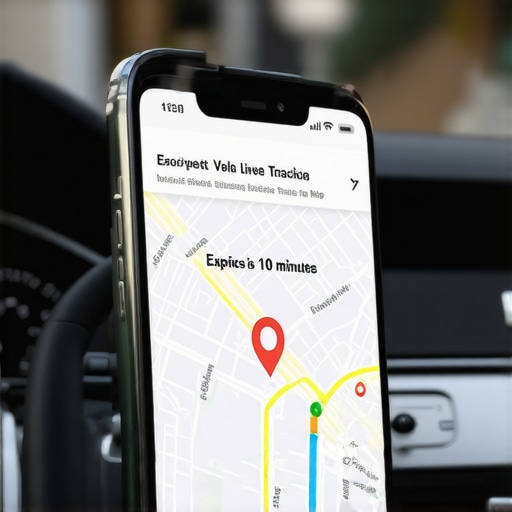 I once had a driver who kept his personal phone mounted on the dashboard, and I could clearly see my previous drop-off points still listed in his recent history. That was the moment I realized I needed to know how to audit your drivers speed using live tracking links and observe their data hygiene. It is not just about getting there; it is about how much of your personal life you leave behind on a third-party server.
Stop Giving Away Your Location History for Free
High-precision accuracy is a great tool, but why gps lag can ruin your meeting schedule is often tied to drivers relying on consumer-grade apps rather than professional, encrypted fleet management systems. When you book an hourly service, you are not just paying for the leather seat; you are paying for a secure, closed-loop environment. I make it a strict habit to learn how to verify the commercial validity of a transit schedule by checking the vehicle’s registration before I even think about putting my bags in the trunk. If the car’s physical paperwork does not match the reservation details in your app, do not get in. It might sound overly cautious until you realize how easily an unverified driver can spoof a legitimate-looking booking.
How I Handled a Security Tech Failure Mid-Trip
I remember a specific trip through downtown Los Angeles where I thought I had everything timed perfectly for a major presentation. Halfway there, the driver’s GPS froze, and he began panicking, trying to reset his personal phone while weaving through heavy traffic. That experience taught me that real safety is about technical redundancy. I now always ask if the vehicle has an integrated backup navigation system. It is a simple, direct question that immediately separates the amateurs from the professionals. If you want to be on time, you have to be the active manager of your own journey, not just a passive passenger waiting for the destination.
Why 15 Minutes Early is Actually Late
To remain truly on time every time strategies for safe and reliable hourly bookings require a psychological shift in how you view the clock. You must account for the ‘unseen’ friction—security checkpoints, sudden road construction, or the driver navigating a complex terminal. This is why we recommend a 45-minute buffer for terminal pickups. During a massive winter storm in Chicago last year, that buffer was the only reason I made my connection. My driver had to take three different detours because of sudden road closures. If I had not built that extra time into my initial reservation, I would have been stranded at a highway rest stop instead of sitting comfortably in my meeting. Security and punctuality are two sides of the same coin; you simply cannot have one without the other when the stakes are high.Everyone tells you to use ride-hailing apps because they are “efficient.” In my experience, that is the biggest myth in the industry. For high-profile meetings, the real cost of choosing the cheapest ride option isn’t just the money; it is the loss of control. I’ve seen executives lose millions in deals because they were waiting for a “nearby” driver who never showed up. This is why hourly logistics save more time than point-to-point—you are paying for availability, not just a seat. When you book hourly, the vehicle is reserved exclusively for you, eliminating the risk of being ghosted by an algorithm.
Real-time data beats a predicted ETA every single time
Most people trust the little blue line on their phone blindly. But here is the advanced truth: consumer apps use predictive modeling based on historical data, which often fails during unexpected events. According to a study by INRIX, urban traffic congestion is now so volatile that standard GPS algorithms can have a 20% margin of error during peak transition periods. This is why real-time vehicle data is more accurate than estimated times provided by a standard app. Professionals use telematics that track the actual car, not a projected simulation.  Have you ever fallen into this trap where the app says “5 minutes away” for twenty minutes? Let me know in the comments.
The security trap you probably don’t see coming
Here is the “oops” factor most travelers ignore: the cabin environment itself. You might think you’re safe inside a locked car, but your data is still flying through the air. One of the biggest mistakes is using the vehicle’s provided Wi-Fi to handle sensitive business. I always warn my clients about the wi-fi risk why you should never check your bank in a hired car. If the driver hasn’t secured the router, a “man-in-the-middle” attack is trivial for someone nearby. It is better to secure your personal data when booking airport transfers by using your own encrypted hotspot.
How can you tell if your driver is actually safe to drive?
It is not just about the car; it is about the person behind the wheel. An advanced traveler knows how to verify your driver is not exhausted just by looking for subtle cues. Does the car have a clean interior, or is there a pile of energy drink cans in the door pocket? I use the floor mat check a simple way to judge driver professionalism to see if they take pride in their workspace. If they can’t keep their car clean, they likely aren’t following how to ensure your driver is not using a personal phone while driving protocols. To stay on time and alive, you must vet the operator as much as the vehicle. Always look for how to request a driver with specific safety certifications to ensure you’re in professional hands.
The Hardware That Keeps Me Off the Radar
I don’t trust a driver who relies solely on a cracked smartphone hanging from a vent. For my most critical transfers, I look for vehicles equipped with dedicated, hardwired telematics systems. These professional units don’t just provide better GPS; they offer a secure, closed-loop environment where instant vehicle tracking is a requirement for modern business. When a driver uses a dedicated fleet tablet, the risk of app-switching lag or personal notifications distracting them vanishes. This is the only way to ensure our drivers never use unverified navigation apps that might sell your destination data to the highest bidder. If you’re serious about being on time, you need to demand hardware that prioritizes uptime over social media connectivity.
Scrub Your Digital Footprint Like a Pro
Most people think the transaction ends when the card is swiped, but the data lives on. I’ve started using a manual audit process for all my travel, specifically focusing on how the provider stores my PII (Personally Identifiable Information). According to the National Institute of Standards and Technology (NIST) Special Publication 800-122, the loss of PII can result in substantial harm to individuals, which is why I now only book with services that offer end-to-end encryption for trip logs. You need to learn how to store your trip data securely away from third-party apps. This isn’t just paranoia; it’s basic maintenance for your digital life. 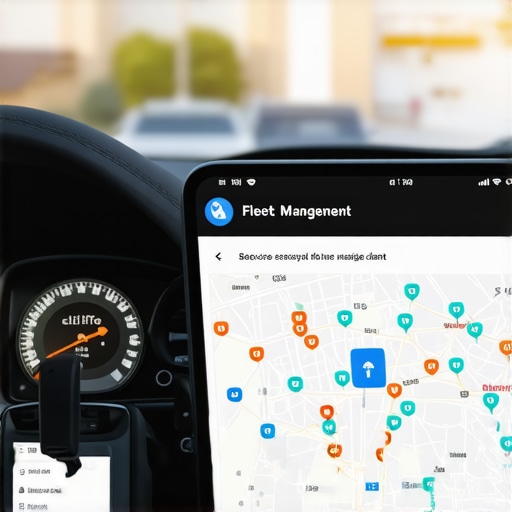
How do I maintain trip security over long-term bookings?
Consistency is the enemy of security. If you take the same route every Tuesday, you become predictable. I recommend rotating your pickup points slightly—perhaps one block over—and periodically using how to audit your monthly travel spend without stress to ensure no ghost profiles are linked to your account. In the next few years, I predict we will see the rise of decentralized reservation protocols which will make it impossible for a middleman to intercept your travel details without an encrypted key. Until then, stay sharp by realizing why manual reservation checks outperform automated bots. It takes five extra minutes, but it ensures your safety and punctuality 24/7. My challenge to you: before your next trip, check the provider’s privacy policy to see exactly how long they keep your GPS coordinates. If it’s more than thirty days, ask them why.
Lessons from the Back Seat That Changed My Security Habits
Reflecting on years of travel, the biggest shift wasn’t in the tech I used, but in my mindset. I stopped viewing travel as a passive experience and started treating every reservation as a tactical operation. First, I learned that why manual reservation checks outperform automated bots every time—machines don’t care about your safety, but a human dispatcher does. Second, I realized that true safety means being unpredictable; I never use the same corner for pickups twice. Finally, I discovered that the most reliable way to stay on time is to build a relationship with a trusted provider rather than rolling the dice on a random app.
#IMAGE_PLACEHOLDER_E#
The Gear That Keeps My Trips on Schedule
I never leave for a high-stakes meeting without my travel security stack. It’s not about being a tech-genius; it’s about having reliable backups. I always carry a printed version of my itinerary because why you must demand a physical copy of your trip reservation becomes clear the moment your phone battery dies in a dead zone. I also use encrypted messaging to communicate with my driver, ensuring that our coordination remains private. For navigation, I trust the community for real-time traffic, but I rely on my driver’s local knowledge for the best back-alley shortcuts. These tools together guarantee that I arrive refreshed and ready.
Take Back Control of Your Schedule and Safety
Navigating the world of hourly transport doesn’t have to be a gamble. By vetting your drivers, securing your data, and prioritizing punctuality, you transform from a target into a protected traveler. You deserve a service that respects your privacy as much as your schedule. It’s time to stop settling for the estimated and start demanding the guaranteed. Remember, safety and punctuality 24/7 isn’t just a luxury—it is a necessity. Go ahead, book with confidence, and know that your on time arrival is now entirely within your control. Have you ever spotted a red flag before getting into a car that made you cancel the trip? Let me know your experience in the comments below!