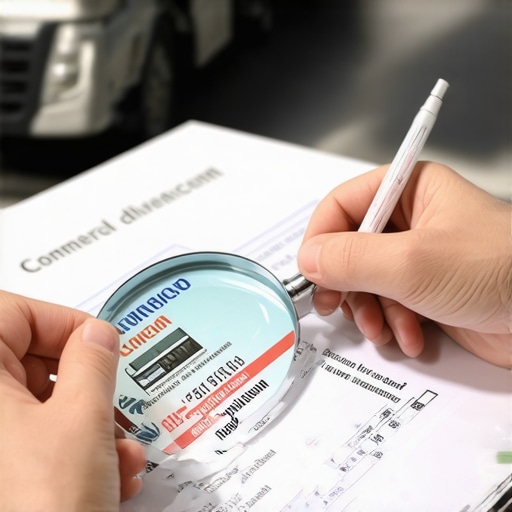
I’ll never forget the cold shiver I felt—and it wasn’t from the damp Chicago wind. I was sitting in the back of a black SUV I’d booked for a crucial meeting. The driver was professional and the car was clean, but as we pulled onto the Kennedy Expressway, I glanced at the registration sticker on the windshield. It was expired. Not by a day, but by three months. My heart sank. I realized that if we were involved in even a minor fender bender, I was essentially riding in an uninsured personal vehicle, not a protected commercial one. It was a massive oversight on my part. I’d spent so much time worrying about the precision of my reservation timing that I completely ignored the most basic legal safeguard: the driver’s commercial registration. [IMAGE_PLACEHOLDER]
Why You Can’t Just Trust the App Anymore
Early in my career as a frequent traveler, I fell into the trap of thinking technology was infallible. I assumed every “professional” driver on a platform had their paperwork in a pristine digital folder somewhere. I was wrong. I made the mistake of jumping into cars without a second thought, blinded by the convenience of a “confirmed” status. Today, I want to pull back the curtain and show you how to take control of your own safety by manually verifying a driver’s commercial status. It takes less than two minutes, but it can save you from a legal and financial nightmare.
Isn’t a Platform’s Verification Process Enough?
It’s a fair question. Why should you do the work that a multi-billion dollar company should be doing? The truth is, administrative lag is real. A driver’s commercial insurance might lapse, or their city permit could be suspended, and it might take days for the system to catch up. By checking for commercial plates and looking for specific physical indicators, you’re providing a redundant layer of security that an algorithm simply can’t match. Have you ever felt that “gut feeling” that something was off with your ride, even when the app said everything was fine?
The Secret Power of Manual Verification
When you know the protocol for verifying your chauffeur’s permit, you aren’t just being “difficult”—you’re being an informed consumer. Commercial registration isn’t just a piece of paper; it’s a guarantee that the vehicle has undergone more rigorous inspections than a standard car. According to the National Safety Council, commercial vehicles are subject to significantly higher insurance requirements and more frequent safety audits compared to personal vehicles. If your driver hasn’t kept this up to date, they are cutting corners that could affect your safety. I’ve since learned how to background check a transport company in minutes, and honestly, the peace of mind is worth the effort. In the next few paragraphs, I’m going to walk you through the physical markers you need to spot the moment that car pulls up to the curb.
Read the License Plate Like a Safety Label
The very first thing you should do isn’t opening the door; it’s looking at the rear of the car as it approaches. Think of the license plate as the vehicle’s nutritional label—it tells you exactly what’s inside. In most major metropolitan areas, commercial vehicles are legally required to carry specific plate designations. For instance, in New York, you’re looking for ‘TLC’ plates; in other regions, it might be ‘Livery’ or a specific alpha-numeric sequence that differs from standard passenger cars. I remember a rain-slicked evening in Manhattan when a ‘luxury’ SUV pulled up. The app was green, the driver waved, but the plate was a standard consumer-grade registration. I refused the ride. The driver was furious, claiming he was ‘between renewals.’ To me, ‘between renewals’ is just another way of saying ‘unprotected.’ Mastering the routine for inspecting your ride before boarding is your first line of defense against liability gaps. 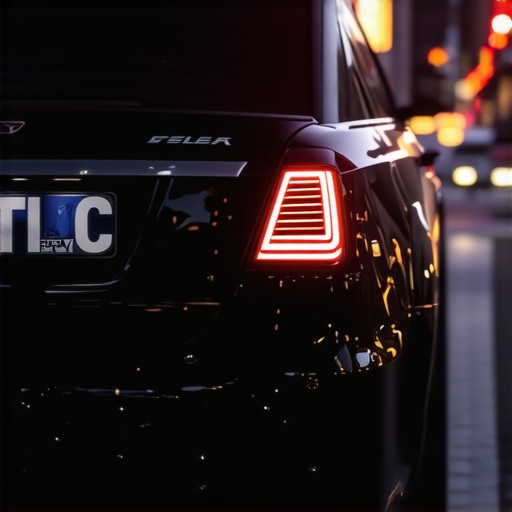
Identify the Professional Decals and Livery
Beyond the plate, look for the physical indicators of a fleet. A true professional vehicle will often have small, unobtrusive decals in the lower corner of the windshield or the rear side windows that list the company’s operating authority number. This isn’t just about branding; it’s about legal accountability. Knowing how to spot a professional vehicle fleet at a glance allows you to filter out the amateurs who are simply using their family car to make a few extra dollars on the side without the proper municipal oversight. If those stickers are missing or look like they were printed on a home inkjet and taped to the glass, you should be on high alert.
Find the Physical Permit Before You Sit Down
Once you open the door, but before you fully commit your weight to the seat, glance at the partition or the dashboard. In almost every regulated city, a driver’s commercial permit—complete with their photo and license number—must be clearly visible to the passenger. This is non-negotiable. This physical card is your assurance that the person behind the wheel is actually the person the company vetted. It’s a vital part of the checklist for every late night private car hire. I once entered a vehicle where the photo on the permit was clearly a decade younger and fifty pounds lighter than the person driving. When I questioned him, he admitted he was ‘covering a shift’ for his brother. That is an immediate safety breach.
The Digital Versus Physical Disconnect
Technology can be manipulated, but physical permits in a vehicle are much harder to fake on the fly. You need to ensure the driver’s identity matches the digital profile on your booking. This helps in how to verify your driver is not using a suspended account. If the app shows ‘Marcus’ but the physical permit says ‘Steven,’ the insurance policy for that trip is likely void. It doesn’t matter how polite the driver is; if the paperwork doesn’t align, you are effectively riding in an unmonitored vehicle. Reliability isn’t just about showing up; it’s about showing up with the right credentials, which is why on-time performance is the only metric that matters when it is backed by legal compliance.
The Dangerous Myth of the Exactly-On-Time Arrival
Most travelers believe that if a driver pulls up at exactly 8:00 AM for an 8:00 AM booking, the mission is a success. In my experience, that is actually a massive red flag. Real professionalism involves what I call the ‘pre-arrival stabilization.’ If a driver isn’t in position at least five to ten minutes early, they are likely rushing, which means they are prioritizing speed over your safety. I’ve seen far too many people maximize your safety and satisfaction with our precise reservation timing only to have it undermined by a driver who arrived ‘on the dot’ but was visibly stressed and driving aggressively to get there. Punctuality is a spectrum, not a binary, and why on-time performance is the only metric that matters only holds true when it’s paired with a calm, prepared operator.
Does Your Driver Actually Know the Route Before Starting the Engine?
Experienced travelers know that the ‘blue line’ on a navigation app is a suggestion, not a guarantee. One of the biggest nuances people miss is verifying that the driver has manually checked for local disruptions—like a sudden water main break or a political motorcade—that an algorithm might miss for several minutes. According to a study by the Texas A&M Transportation Institute, urban congestion can fluctuate by as much as 40% in minutes due to non-recurring incidents. This is why GPS lag can ruin your meeting schedule. A pro driver doesn’t just follow the phone; they have a mental map of alternatives. If you see your driver constantly squinting at a flickering screen, they aren’t driving with foresight; they’re driving with a crutch. 
The Fatigue Trap That Most Passengers Ignore
Here is the ‘oops’ factor that almost cost me a trip last year: I booked a car for a 4 AM airport run and was so impressed by the driver’s promptness that I didn’t notice his heavy eyelids. We often equate early morning availability with reliability, but we forget the human cost of those shifts. A ‘confirmed’ status doesn’t tell you if that driver just finished an eight-hour shift before picking you up. This is how to verify your driver is not exhausted: look for the ‘three-second scan.’ A rested driver scans their mirrors and the road ahead every three seconds; a fatigued driver stares straight at the bumper in front of them. Don’t be afraid to engage in a quick, brief conversation to gauge their alertness. If they seem slow to respond, you are in a high-risk situation regardless of how shiny the car is. This is a vital part of the checklist for every late night private car hire. Have you ever fallen into this trap and realized halfway through the ride that your driver was struggling to stay awake? Let me know in the comments.
Why the ‘Instant’ Culture Destroys Long-Term Safety
We’ve been conditioned to want everything instantly, but in the world of high-end transport, ‘instant’ is the enemy of ‘secure.’ When you book a ride seconds before you need it, you’re losing the ability to implement the 3-minute buffer that saves you from missing the train. A rushed booking means a rushed inspection. I always tell my clients that the best way to ensure a flawless experience is to move away from point-to-point thinking and embrace why hourly logistics save more time than point-to-point. It gives the driver the breathing room to be a guardian, not just a pilot. Have you ever felt that the rush for an ‘immediate’ car led to a lower quality vehicle or driver? I’d love to hear your stories.
Build Your Own High-Stakes Travel Dashboard
To maintain a flawless track record, I’ve had to move beyond the limitations of standard consumer apps. I don’t just rely on the ‘green circle’ spinning on my screen. I’ve built a personal protocol that uses professional-grade monitoring. For example, when I have a high-stakes meeting, I cross-reference the driver’s location using independent traffic data providers like the TomTom Traffic Index, because why real-time vehicle data is more accurate than estimated times often comes down to the refresh rate of the specific API being used. I also recommend using the Federal Motor Carrier Safety Administration (FMCSA) SAFER system to check a company’s ‘Carrier Snapshot.’ It’s a niche tool, but it’s the only way to see the real-world safety rating and crash history of a fleet before you ever step inside. This is how you perform a deep-dive background check on your private transport company in minutes.
How do I keep my travel safety standards from slipping over time?
Maintaining these habits is harder than starting them. The biggest risk to your safety is ‘convenience fatigue’—the moment you get lazy and stop checking for the driver’s ID or the vehicle’s commercial plates. I combat this by treating every ride like my first one. I keep a digital folder with the checklist for every late night private car hire pinned to my home screen. It forces me to slow down and look at the details, such as how to audit your online booking for hidden security vulnerabilities. Consistency is the only bridge between a one-time ‘lucky’ arrival and a lifetime of reliability. 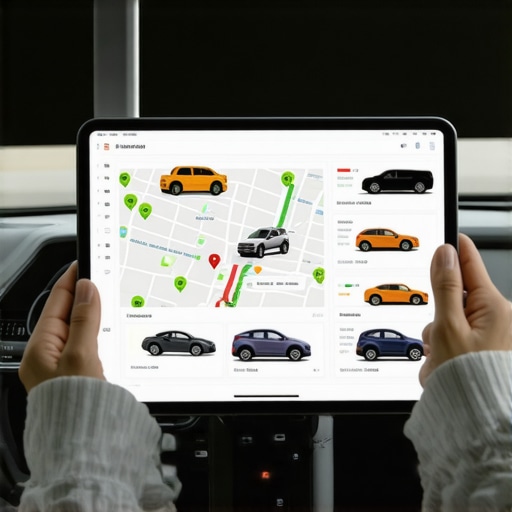
The Next Era of Premium Transport Is Predictive
Looking ahead, we are moving toward a world of V2X (Vehicle-to-Everything) communication, where your car will talk to the city’s traffic lights to ensure an on-time arrival. However, even with this tech, the human element remains the fail-safe. I’ve seen time and again why a human dispatcher outperforms an AI every time during a crisis. An algorithm can’t tell the driver to pull into a side alley to avoid a protest, but a human who knows the neighborhood can. This is the logic behind top tips for on-time reservations at any hour. We are entering an era where why instant vehicle tracking is a requirement for modern business will be non-negotiable. If your current provider isn’t offering real-time telemetry, they are already obsolete.
Stop Being a Passive Passenger
If you take one thing away from my experiences, let it be this: you are the supervisor of your own transport. Don’t wait for the app to tell you something is wrong. I challenge you to try one advanced tip on your next trip: open the FMCSA SAFER website and type in the USDOT number found on the car’s door. It takes thirty seconds and reveals exactly who you are trusting with your life. This level of reservation security measures is what separates the casual traveler from the true professional. When you master the art of reservation and safety every hour, you stop worrying about the ‘if’ and start focusing on the ‘when.’
The Most Expensive Lesson I Ever Learned on the Road
After a decade of navigating high-stakes travel, I realized that a shiny exterior is often a mask for administrative neglect. My biggest ‘lightbulb moment’ happened when I stopped looking at the car and started looking at the driver’s eyes. A polished SUV doesn’t guarantee a rested driver. I’ve learned that convenience fatigue is the greatest threat to your security; the moment you stop double-checking the basics is the moment you’re most vulnerable. It is vital to remember that why safety and timeliness matter in hourly reservation services goes far beyond just making your meeting—it’s about ensuring the person behind the wheel is legally and physically prepared for the task. Transitioning from a passive passenger to an active supervisor of your own transport is the only way to guarantee a truly professional experience.
[IMAGE_PLACEHOLDER]
My Personal Security Stack for Every Trip
To maintain my standards, I rely on a specific toolkit that goes beyond the standard booking app. I always have the FMCSA SAFER website bookmarked on my phone to run quick USDOT number checks. I also cross-reference my route using independent data providers because I’ve seen why real-time vehicle data is more accurate than estimated times when local congestion hits unexpectedly. Finally, I never leave home without my digital version of the checklist for every late night private car hire. These aren’t just ‘nice-to-haves’; they are the professional-grade layers of redundancy that separate a smooth trip from a logistical disaster. I trust these tools because they provide objective truth in an industry that is often clouded by marketing promises.
Take the Wheel of Your Own Commute
Don’t let the sleek interface of a smartphone app lull you into a false sense of security. You are the final authority on whether a vehicle is safe for you and your family. By taking two minutes to audit your online booking for hidden security vulnerabilities and verifying the physical credentials of your driver, you are reclaiming control over your travel experience. When you commit to mastering the art of reservation and safety every hour, you transform travel from a source of stress into a seamless extension of your professional life. Your safety is a choice, not a chance. Have you ever spotted a major red flag just as a driver pulled up to the curb? Let me know your stories in the comments below.