
The sky was dumping a cold November rain on my suit, and my boss was looking at his watch every thirty seconds. I’d booked us a series of ‘quick’ point-to-point rides to save the firm a few bucks, thinking I was being efficient. Instead, we spent forty minutes on a curb because our driver cancelled, and the next ‘closest’ car was stuck in a tunnel. That’s when the lightbulb finally flickered on: in the world of high-stakes roadshows, saving a few dollars on individual fares is actually the most expensive mistake you can make. Today, I’m going to show you why those ‘on-demand’ apps are actually your worst enemy when the schedule is tight and your reputation is on the line. Have you ever found yourself stranded between meetings because a driver ghosted you at the last second?
The Invisible Trap of Point-to-Point Logistics
I used to think that booking rides individually was the peak of modern flexibility. I was wrong. When you book point-to-point, you’re essentially asking a stranger to be exactly where you are, at exactly the moment you finish a meeting that might run over. It’s a gamble. I learned the hard way that why business executives prefer dedicated drivers for multi-stop days isn’t just about the leather seats; it’s about the security of knowing the car isn’t leaving. When you rely on a fresh booking for every leg, you lose the safety net of a driver who already knows your name and your next destination.
Is This Just an Expensive Luxury You Don’t Really Need?
You might be thinking that hourly rates are just for the C-suite elite with bottomless budgets. I thought so too, until I realized that the math behind why hourly bookings save money actually favors the company when you factor in missed flights or lost deals. According to the Global Business Travel Association (GBTA), nearly 40% of business travelers cite transit delays as their primary stressor, and nothing spikes that stress faster than a ‘driver cancelled’ notification.
Why Construction and Traffic Destroy Your App-Based Plans
The biggest failure point in point-to-point booking is the algorithm’s blind spot. An app doesn’t care that there’s a sudden protest or a water main break three blocks away. It just pings the nearest car, which might be trapped behind a barricade. I’ve seen it happen too many times—the error in relying on app-based arrival times becomes glaringly obvious when you’re watching a little car icon spin in circles on your screen while your 2:00 PM meeting starts without you. A dedicated hourly driver is already on-site, having scouted the perimeter while you were inside, ensuring you stay on-time and secure regardless of what the city throws at you.
Stop Hoping and Start Planning Your Buffer
Booking a ride shouldn’t feel like playing the lottery, yet that is exactly what we do when we tap a button and pray the ‘7 minutes away’ doesn’t turn into fifteen. To execute a flawless day of meetings, you need to implement what I call the ironclad buffer. This isn’t just about padding your schedule; it is about understanding that why on-time drop-offs start with a 10-minute early arrival is a fundamental law of professional transport. When I transitioned to hourly bookings, I realized the driver is paid to wait, not the other way around. This shifts the power dynamic in your favor. I remember a chaotic Tuesday in Chicago where my 1:00 PM meeting ran late, but because I had an hourly reservation, my driver was already staged at the side entrance. I didn’t have to look at my phone once. I simply walked out, and he was there. This is the core of on-time every-time strategies for safe and reliable hourly bookings. 
The 10-Minute Rule That Actually Works
Punctuality is a brittle thing if you don’t bake in a safety net. Most people think they are being efficient by timing their exit to the exact second the car arrives. In reality, the buffer rule that actually prevents tardy starts requires the vehicle to be stationary and ready at least ten minutes prior to your requested time. This allows for luggage loading, temperature adjustment, and route double-checking without the engine even being in gear yet. This small window is where professional drivers excel because why on-time performance depends on local knowledge over gps becomes apparent the moment a main artery is blocked by an unmapped delivery truck.
How to Pivot When Your Schedule Explodes
Business is fluid, and your transportation must be too. Last month, I had a client move our lunch location three miles across town while I was still in the elevator. If I had used a point-to-point app, I would have had to cancel, pay a fee, and wait another twelve minutes for a new car. Instead, I sent a quick text. Knowing how to modify your pickup location on the fly is the ultimate secret weapon for the traveling executive. My driver acknowledged the change before I even reached the lobby. It turned a potential logistical nightmare into a seamless transition that my client never even noticed.
Verify Your Driver Before You Touch the Door Handle
Safety isn’t just about the driving; it’s about the credentials. Every time a car pulls up, I perform a quick mental checklist. I never just hop in. You should use 7 tactics to verify your drivers commercial license in seconds to ensure you aren’t stepping into a liability trap. Check the commercial plates, look for the company decal, and confirm the driver knows your name before you offer yours. It’s a ten-second habit that protects your physical safety and your company’s data security.
The Algorithm is Lying to You
Most travelers treat an app’s Estimated Time of Arrival (ETA) as a digital contract, but after a decade in high-stakes logistics, I can tell you it’s closer to a optimistic guess. Everyone says AI is the future of transit, but in my experience, why on-time performance depends on local knowledge over gps is the single most important lesson you will ever learn. An algorithm sees a green line on a map; a professional driver knows that a particular intersection is currently blocked by a delivery truck that hasn’t moved in twenty minutes. This is why why your estimated arrival time is not a guarantee of service and should never be the basis of your morning board meeting. According to the Texas A&M Transportation Institute’s Urban Mobility Report, unexpected congestion accounts for nearly half of all traffic delays, something a ‘point-to-point’ app simply cannot account for in real-time.
Why does your 5-minute wait always turn into fifteen?
It’s called the ‘availability lag.’ When you book on-demand, the app assumes the driver is ready to move the second they accept. In reality, they might be finishing a phone call, fueling up, or stuck on a one-way street facing the wrong direction. This is the ‘Oops’ factor that ruins reputations. I’ve found that the secret to getting a smooth ride through construction zones isn’t about better tech; it’s about having a dedicated driver who has already physically driven the route before you even stepped out of your hotel. 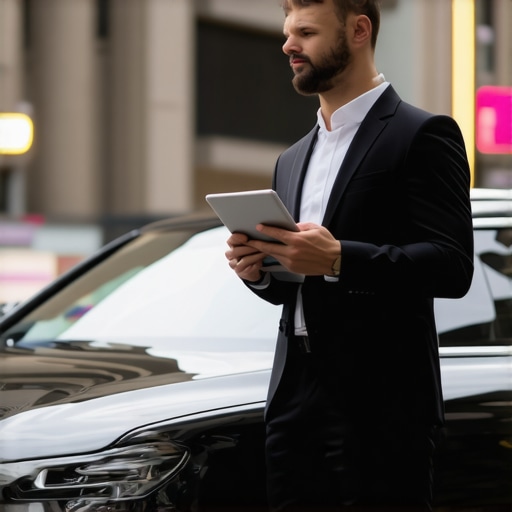
Spot the hidden risks in your booking chain
A common mistake advanced travelers make is assuming all ‘luxury’ sites are the same. Many are just digital storefronts for third-party brokers who have never met the driver. You must understand the security risks of booking a ride through a third-party broker before you hand over your corporate card. You aren’t just paying for a car; you are paying for a vetted chain of custody. This extends to your physical safety too. I always make it a point to how to read a drivers commercial badge for authentic credentials because a fancy suit doesn’t equate to commercial insurance. If you don’t know how to verify a private vehicles commercial insurance in seconds, you are taking a massive personal liability risk every time you close that door.
How to protect your digital footprint while in transit
We often focus so much on the physical arrival that we forget about our data. One of the biggest traps is using the ‘free’ Wi-Fi provided in some cars or sharing your status on social platforms. I’ve written extensively about the hidden risks of sharing your private ride location on social media because it creates a blueprint of your habits for anyone watching. True executive protection starts with discretion. Have you ever fallen into this trap or been burned by a ‘phantom’ ETA? Let me know in the comments.I have spent years perfecting a travel toolkit that ensures my schedule never implodes, and it isn’t just about having the right apps. It’s about a systematic approach to maintenance and verification. I personally swear by professional-grade flight tracking tools like FlightAware or FlightRadar24, not because I enjoy looking at tiny planes on a map, but because I can see a delay forming over the Atlantic three hours before the airline sends a notification. This allows me to provide the flexibility every business traveler needs for late flights by updating my hourly driver before they even leave for the airport. This proactive communication is the difference between a seamless pickup and standing on a curb at midnight.
How do I maintain this level of precision month after month?
The secret is consistency in your vetting process. Every quarter, I audit the services I use. I don’t just rely on past performance; I check for updated credentials. I make sure I am following the proper way to verify a chauffeurs work history to ensure the quality of service hasn’t dipped. Maintenance also means staying ahead of the tech curve. I always insist on using services that provide encrypted tracking links, but I never take them at face value. I frequently perform the tracking accuracy test for private hire car services by comparing the app’s location to a quick landmark check. It sounds paranoid until you realize that why real-time tracking apps need constant manual overrides is a reality of urban interference and GPS lag. I also keep a physical ‘Go-Bag’ with a secondary encrypted device, because why most secure booking systems fail if you share your password or lose your primary phone is a risk I am not willing to take.
The Tech I Trust to Stop the Stress
I don’t just use these tools for fun; I use them because they provide a layer of data that the driver and I can both see. When we are both looking at the same live traffic data, how hourly rates eliminate the stress of traffic jams becomes very clear—the driver isn’t rushing to finish the fare, and I’m not worried about a ticking meter. According to the National Highway Traffic Safety Administration (NHTSA), driver fatigue is a leading cause of transit accidents, which is why I always look for the stealth way to confirm your driver is not fatigued before I settle into the seat. 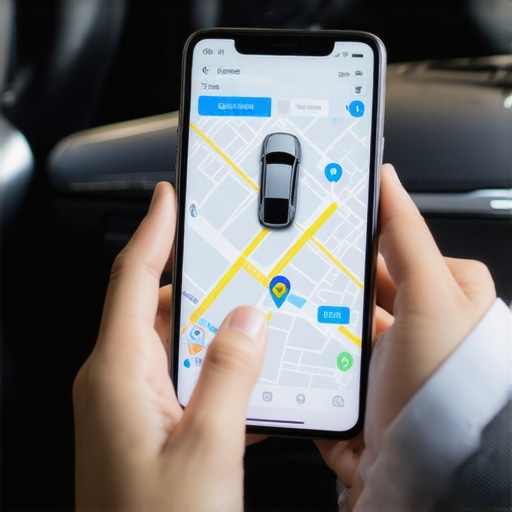
Why Human Intelligence Still Beats the Algorithm
Looking toward the future, I predict a massive shift away from fully autonomous ‘robocabs’ back toward highly skilled, human-led transit for the executive sector. Why? Because why manual dispatching still beats AI for real-time accuracy is a gap that software hasn’t bridged. An AI cannot talk to a doorman to find the secret freight elevator that skips a crowded lobby. It can’t anticipate a VIP’s need for a specific temperature or a silent cabin after a grueling board meeting. As we scale our travel, we need more ‘Human-in-the-Loop’ systems where tech assists the driver rather than replacing them. This is the only way to ensure on-time every-time strategies for safe and reliable hourly bookings. If you want to level up your travel game today, try this: the next time you book, don’t just check the license plate. Take ten seconds to read a drivers commercial badge for authentic credentials before you get in. It sets the tone for the entire trip.
The Hard-Won Clarity That Changed My Professional Commute Forever
After years of missing the start of keynote speeches and sweating through my suit on humid street corners, I realized that the true cost of a ride isn’t the number on the receipt—it’s the mental bandwidth you reclaim. I learned that the real cost of choosing the cheapest reservation available often includes your reputation and your peace of mind. When I finally stopped treating transit as a commodity and started treating it as an insurance policy for my schedule, everything changed. I stopped chasing the ‘closest car’ and started investing in a dedicated partner who was already parked outside before I even closed my laptop.
The shift was profound. I discovered that reliability is a physical presence, not an app notification. An hourly driver acts as a partner in your schedule, adapting to the fluid nature of high-stakes business. I eventually found that why hourly rates save more than money for business travelers is because they buy back the ability to focus on the next pitch rather than the car’s ETA. This mental clarity is the secret weapon of the world’s most successful executives.
My Fail-Safe Toolkit for Flawless Ground Logistics
I don’t leave my punctuality to chance, and neither should you. My personal travel stack consists of three layers: real-time aerial data, physical verification, and proactive vetting. While I use FlightAware to see the truth behind airline delays, on the ground, I rely on a strict verification process. You should know how to vet your drivers commercial insurance without the friction to ensure your coverage is as ironclad as your schedule. Additionally, I always keep a mental checklist on how to identify a genuine commercial chauffeur permit on sight so I am never guessing about the legitimacy of the vehicle I am entering. These tools turn a chaotic travel day into a choreographed performance.
Step Into Your Next Meeting With Unshakeable Confidence
Professional travel doesn’t have to be a series of ‘lucky breaks’ or stressful gambles. By shifting to a model of on-time arrival and mastering the art of reservation, you transition from a passive passenger to the director of your own time. The ultimate goal is to arrive not just at the physical destination, but in the right frame of mind to win. When you prioritize on time, safety, and an hourly reservation, you aren’t just booking a seat; you are securing your professional success. Have you ever missed a crucial opening statement because your ride was ‘2 minutes away’ for half an hour? Let me know your worst transit stories in the comments below.