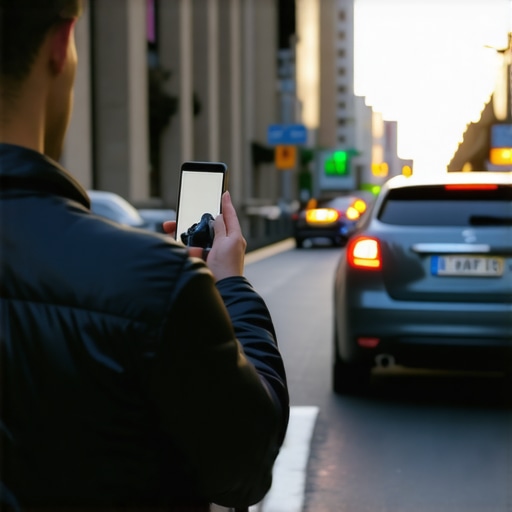
It was pouring rain, the kind of Chicago downpour that soaks through your supposedly waterproof jacket in seconds. I saw a black sedan pull up, and without a second thought, I yanked the door open and hopped in. “Hey, you’re late,” I grumbled, shaking off my umbrella. The driver turned around, stone-faced. He wasn’t my driver. He was just a guy waiting for his wife. I have never felt like more of a total amateur. That moment of laziness could have been a much bigger safety disaster than just an awkward apology. We have all been there—rushing to meet a schedule, focused on our phones, and assuming that every car with a driver is our car. But I learned the hard way that your personal safety depends on a few seconds of due diligence before you ever touch the door handle. Today, I am going to show you exactly how to stay secure and on track. [image_placeholder_1]
Stop Betting Your Safety on a Black Sedan and a Prayer
Most of us treat a car reservation like a drive-thru order. We see a vehicle that looks roughly like the one in the app and assume everything is fine. But I learned that on-time reservations don’t mean much if you are getting into a vehicle that isn’t actually yours. I once spent twenty minutes arguing with a “driver” who turned out to be a predatory scammer at a busy airport because I didn’t check the credentials. It happens more often than you think. This is why mastering the visual inspection every rider should do before boarding is your most important travel habit. According to the National Safety Council, passenger awareness is the final, most critical line of defense in ground transportation safety. Have you ever felt that nagging doubt when a car pulls up, but you got in anyway because you didn’t want to seem rude or difficult?
Is a quick glance really enough to keep you safe?
You might think you are being too paranoid, but early in my travels, I completely ignored 3 red flags to watch for when your car arrives just because I was worried about my meeting start time. The car smelled like old tobacco, the driver didn’t know the route, and the tracking wasn’t active. I made a promise to myself then: never again. I am going to walk you through how to verify your driver’s identity without being rude, ensuring you are actually in a professional’s hands and not a stranger’s. We are going to turn that nervous gut feeling into a solid protocol for every single ride you take.
Make the Driver Earn Your Trust Before You Step In
Most people make the mistake of being too polite when a car pulls up. They want to be the ‘easy’ passenger, so they volunteer their name first. Never do this. When that black sedan glides to the curb, stay on the sidewalk. I used to be the guy who would walk up and ask, ‘Are you here for Mark?’ That is an open invitation for any random driver or bad actor to simply say ‘Yes’ and lure you into a vehicle. Now, I stand back and ask, ‘Who are you here for?’ If they can’t provide your name and the details from your secure booking, do not touch that door handle. This is the foundation of the specific driver verification move that prevents identity theft and physical risk. I once had a driver in London get visibly annoyed when I made him show me his credentials, but after I checked 7 tactics to verify your drivers commercial license in seconds, he actually apologized and thanked me for being so thorough. It shows you value the professional relationship. 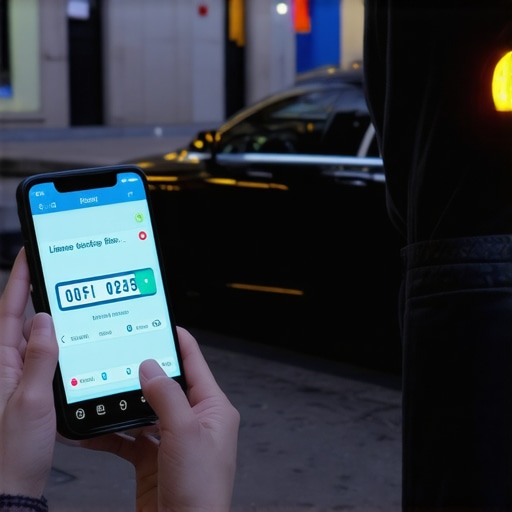
The Ten-Minute Rule That Saved My Meeting
I used to think arriving exactly on time was the goal. I was wrong. In the world of professional transport, on-time is actually ten minutes late. You need to implement the buffer rule that actually prevents tardy starts. This means your vehicle should be staged and ready at least ten minutes before your wheels-up time. Why? Because it accounts for the ‘last-mile’ chaos—the road construction on your street or the elevator delay in your building. When I’m booking for high-stakes scenarios, I always ensure we are reserving your spot how to guarantee safety and punctuality 24/7 by setting that early staging time. During a frantic morning in New York, that ten-minute cushion was the only reason I made a flight after my building’s service elevator broke down. If you are handling complex schedules, remember that why point-to-point booking fails for executive roadshows; you need a dedicated driver who understands the flow of your day.
Sit Behind the Driver for Maximum Leverage
This is a safety tactic that most passengers ignore because they want the legroom of the front seat or the view from the passenger side rear. Always choose the seat directly behind the driver. There is a very specific safety reason behind choosing the passenger seat behind the driver: it is the hardest place for a driver to reach if they have ill intentions, and it provides you with the best vantage point to see the driver’s mirrors and the road ahead. Before you settle in, perform the 3-point door handle check every passenger must perform to ensure the child locks aren’t engaged against your will.
Why Your Live Tracking Link is the Best Life Insurance
The moment you are inside, check the tech. A professional service will provide a way for you to monitor the progress of the trip. I always verify the link before the car even pulls away from the curb. Knowing how to test the accuracy of your real-time tracking link ensures that if the driver takes an unauthorized detour, you or your team will know instantly. I’ve been in situations where a driver tried to claim ‘traffic’ was the reason for a delay, but my live map showed he was just trying to take a longer route to pad the bill. By sharing your location the safest way to alert your team, you add a layer of accountability that keeps the ride professional and on schedule.It’s easy to look at a glowing blue line on a screen and assume it’s the safest path. However, there is a massive difference between GPS routing and professional road knowledge. Most algorithms optimize for distance, but they don’t see the dark alleyway or the construction zone that hasn’t hit the data feed yet. This is why on-time performance depends on local knowledge over GPS. I’ve seen countless travelers get stuck because they followed a ‘fast’ route into a dead end, or worse, into a high-crime area simply because the computer thought it would save two minutes. #IMAGE_PLACE_HOLDER_C#
Is the shortest route actually the most dangerous one?
In my experience, absolutely. Chasing the fastest ETA often forces drivers into aggressive maneuvers and unvetted side streets. A study by the Texas A&M Transportation Institute highlights that route reliability—knowing exactly how long a path takes regardless of ‘optimizations’—is the true gold standard for high-stakes arrivals. This is exactly why consistent arrival times matter more than the shortest route. If your driver insists on ‘shortcuts’ through residential areas, they might be compromising your security. You should always feel empowered to handle a driver who attempts to take a faster unvetted route by redirecting them to the main thoroughfares. In fact, knowing the simple reason your driver should never take side streets at night is a hallmark of an advanced traveler; main roads offer better lighting and more witnesses.
Beat the Algorithmic Pricing Trap
Another common myth is that on-demand apps are always cheaper for a busy day. They aren’t. When you look at the math behind why hourly bookings save money during peak hours, you realize you’re paying for the convenience of one dedicated professional rather than three separate, surge-priced rides. This also eliminates the ‘Oops’ factor of waiting on the sidewalk for a car that never arrives because of a sudden rainstorm. By maximizing your safety and satisfaction with our precise reservation timing, you bypass the unpredictability of the gig economy altogether.
Spot the Digital Red Flags Before You Step Outside
Finally, let’s talk about the most sophisticated trap: the ‘fake’ confirmation. I’ve seen phishing attempts that look exactly like a reservation email but lead to an unvetted third-party broker. Before you leave your house, knowing how to spot a fake ride confirmation before you step outside is a skill that saves your identity and your physical safety. Many people fall for the security risks of booking a ride through a third-party broker because the price looks slightly lower, but you lose the chain of custody for your data and your driver’s accountability. Have you ever fallen into this trap or felt like your GPS was taking you somewhere questionable? Let me know in the comments below.I’ve spent years refining my travel stack because, frankly, my sanity depends on it. After that Chicago incident, I didn’t just change my habits; I overhauled my entire digital workflow. The first thing I did was learn how to sync your calendar directly with your chauffeur. This isn’t just about convenience; it’s about removing the manual entry errors that lead to missed flights. When my calendar updates, the driver’s dispatch system updates automatically. No phone calls, no typos, no stress. It’s about creating a seamless loop between my planning and their execution.
Trust the Encryption Not the Sales Pitch
I also became obsessed with data security. I never book through a service that doesn’t use a dedicated, hardened platform. You need to know how to spot a secure payment portal before you book. According to the Cybersecurity & Infrastructure Security Agency (CISA) guidelines on Transport Layer Security (TLS), using outdated encryption protocols can expose sensitive travel data—like your home address and credit card number—to man-in-the-middle attacks. This is exactly why modern reservation systems use encryption for your credit card and personal details. I personally use a virtual credit card for every booking, adding another firewall between my bank account and the road. This layer of protection is often overlooked until something goes wrong. #IMAGE_PLACE_HOLDER_D#
Scale Your Safety by Auditing Your Digital Footprint
The secret to long-term success is a monthly ‘digital audit.’ Every 30 days, I check my saved locations and clear out any old tracking links. It sounds tedious, but it ensures that I stay secure and punctual the essential hourly reservation tips for timely service require. I also run the accuracy test for modern live tracking links every time I have a high-priority meeting. If the lag is more than 30 seconds, I’m on the phone with the dispatch team immediately. I have found that on-time arrival mastering the art of reservation and safety every hour isn’t a one-and-done deal; it’s a lifestyle of constant, small adjustments. I use a dedicated travel folder in my email with strict ‘read and delete’ rules for confirmations once a trip is complete, which significantly reduces my footprint for reservation security measures how to book safely and arrive on time.
How do I maintain this level of travel security month after month?
It comes down to habit stacking. Just like you check your tire pressure before a road trip, you should check your app permissions before a business trip. Looking ahead, I predict we are moving toward AI-driven ‘predictive dispatch’ where your car will automatically adjust its arrival time based on your biometrics or real-time flight telemetry. We are already seeing the early stages of this where systems anticipate delays before they even happen. It will fundamentally change why safety and timeliness matter in hourly reservation services, shifting the burden from the passenger to the algorithm. For now, I strongly recommend you try one advanced tip: the next time you book, ask the provider for their specific data retention policy. It’s a fast way to see if they understand the stakes or if they are just another app-based middleman.
Hard-Won Lessons from a Decade in the Backseat
After thousands of miles logged in private cars across three continents, I’ve realized that a high app rating is often the weakest link in your security chain. A true professional doesn’t just have a four-star profile; they exhibit the punctuality habits of the worlds best professional drivers that are evident the second they pull up. One of my biggest lightbulb moments was realizing that silence is actually a safety tool. By not volunteering my name first, I force a verification process that filters out scammers instantly. Furthermore, I’ve learned the hard way that why your estimated arrival time is not a guarantee of service is usually due to a lack of human oversight in the dispatch chain. Experience has taught me that a real-time connection to a human operator is worth more than any automated ETA.
My Private Arsenal for Stress-Free Travel
To keep my own schedule bulletproof, I have a specific toolkit I never deviate from. First, I always apply on-time every time strategies for safe and reliable hourly bookings for any trip involving more than two stops; it removes the ‘wait-and-see’ anxiety of on-demand apps. I also prioritize the logic behind choosing a professional chauffeur over on-demand apps because the liability and vetting standards are exponentially higher. Before I ever step into a new vehicle, I take thirty seconds to how to vet a chauffeur service before your first ride, which includes verifying their commercial insurance and checking the physical license plate against the digital booking. These aren’t just ‘tips’; they are the mandatory hurdles any driver must clear before they earn my trust.
Take Back Control of Your Transit
Your personal safety and your professional reputation are too valuable to leave to a random algorithm. By shifting your mindset from a passive passenger to a prepared traveler, you ensure that every journey is a seamless extension of your day. Remember that safety precision is the key to reliable hourly reservations for peace of mind. Don’t be afraid to set high standards and demand the verification you deserve. When you value your own time and security, the service providers you choose will follow suit. [image_placeholder_E]
Have you ever had a driver try to take an unvetted shortcut that made you feel uneasy? Share your story in the comments below.