
I remember sitting on a cold curb in downtown Chicago, frantically refreshing a ride-hailing app while my phone battery dipped into the red. I had a pitch meeting in fifteen minutes. I thought I was being the responsible business owner by booking individual, point-to-point rides to save a few bucks. Instead, a sudden street fair had caused every driver in a two-mile radius to cancel on me. I didn’t just miss the ride; I lost a five-figure contract because I showed up late, sweaty, and completely out of sorts. That day, I realized that the real cost of choosing the cheapest reservation available isn’t just the fare—it’s the massive ‘uncertainty tax’ we pay when our schedules fall apart. Today, I want to show you why that hourly rate you’ve been avoiding is actually your best friend for growth and peace of mind.
Stop Chasing the Lowest Number on Your Screen
For years, I operated under the delusion that paying for a car only when the tires were moving was ‘lean’ business. It felt efficient. But for anyone running a business, time isn’t just money; it’s reputation. When you book on-demand, you are at the mercy of algorithms that don’t care about your 2 PM meeting. I learned the hard way that why point-to-point booking fails for executive roadshows is the same reason it fails for a busy Tuesday: it lacks a safety net. According to the Texas A&M Transportation Institute, the average urban commuter loses dozens of hours a year to traffic delays, and for a small business owner, those lost hours translate directly into lost billable time or missed opportunities. When you look at the math behind why hourly bookings save money during peak hours, you start to see that having a driver on standby isn’t a luxury; it’s a strategic buffer.
Is an hourly booking really worth the extra upfront cost?
Most people look at a quote and see a bigger number, which triggers a reflex to hit the ‘back’ button. I made that exact mistake for the first three years of my consultancy. I ignored the fact that why most on-time drop-offs start with a 10-minute early arrival is only possible when a driver is dedicated to your clock, not a fleet’s dispatch. Have you ever been stranded by a ‘cheap’ ride right when you needed to look your most professional? It’s a gut-wrenching feeling that we can easily avoid by shifting how we value our time. I’ve spent hundreds of hours vetting these logistics so you don’t have to stay stuck on a curb like I did. We’re going to break down the hidden drains on your wallet and how to finally take control of your daily transit.To move from being a victim of the algorithm to a master of your own schedule, you have to treat transportation like a flight, not a pizza delivery. I learned this the hard way during a multi-stop trip in Houston. I thought I could hail a ride between meetings. I ended up waiting 25 minutes for a ‘5-minute’ arrival that never came. Now, I use a dedicated chauffeur because why business executives prefer dedicated drivers for multi-stop days is about total control over the clock.
Lock in Your Schedule Early to Bypass the Surge
Think of an hourly reservation as a private lane on a highway. When you book on-demand, you’re competing with thousands of other users for a limited supply of cars. By shifting to a fixed window, you ensure that why fixed schedules beat on-demand apps for business travel isn’t just a preference—it’s your insurance policy against peak-hour price gouging and unavailability.
Why Your App’s ETA Is a Beautiful Lie
We’ve all seen it: the little car icon on the map that says it’s two minutes away but hasn’t moved in five. The truth is the real reason your app’s ETA is often over-optimistic is that it doesn’t account for real-world nuances like double-parked delivery trucks or sudden lane closures. A professional driver with local knowledge anticipates these hurdles and adjusts the route before you even step outside. 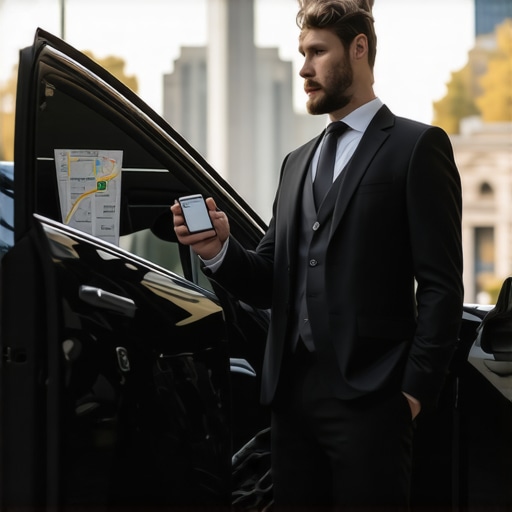
Master the Art of the Pre-Trip Verification
Safety isn’t just about the driving; it’s about the boarding process. Before I even touch a door handle, I perform a quick mental checklist. It’s not about being paranoid; it’s about being precise. You should know 7 tactics to verify your driver’s commercial license in seconds before you ever get in. This eliminates the ‘wrong car’ risk entirely.
Verify the Driver Without Making It Weird
I used to feel rude asking for credentials. Then, a friend told me about a near-miss where she almost got into a vehicle that wasn’t hers. Now, I treat it like checking into a high-end hotel. I look for the commercial badge or the vehicle’s livery. Understanding how to read a driver’s commercial badge for authentic credentials is the quickest way to ensure you’re with a vetted professional who respects your security.
Build a Buffer That Actually Works
If you are arriving ‘on time,’ you are actually late. For high-stakes days, I implement a buffer rule. It’s why I advocate for the idea that why most on-time drop-offs start with a 10-minute early arrival. This isn’t just about sitting in a car longer; it’s about having a quiet moment to review your notes or answer one last email so you walk into your meeting with zero adrenaline and total focus.
Handle Sudden Changes Without the Stress
Plans change. A meeting runs long or a flight gets diverted. When you have an hourly booking, you can how to modify your trip mid-route without penalty fees because the driver is already committed to your specific block of time. This flexibility is the ‘secret sauce’ for anyone who values their peace of mind as much as their bank account.People often tell me they don’t need a reserved driver because ‘Waze knows everything.’ In my experience, that is the single biggest myth in modern transportation. While algorithms are great at crunching historical data, they are notoriously bad at reacting to the ‘human element’ in real-time. For instance, a GPS can’t tell you that a specific hotel entrance is blocked by a delivery truck every Tuesday morning or that a local protest has shifted three blocks over. This is why on-time performance depends on local knowledge over gps. I have seen countless executives miss flights because they trusted a 15-minute estimate that failed to account for terminal-specific construction. According to the INRIX Global Traffic Scorecard, urban congestion patterns are becoming increasingly volatile, making static data less reliable than ever for tight schedules.
But can a professional driver actually beat a Google Maps ETA?
The answer isn’t about speeding; it’s about positioning. A veteran chauffeur isn’t just following a blue line on a screen; they are actively reading the city. One major ‘oops’ factor I see with frequent travelers is an over-reliance on live tracking technology. We often forget that the real reason your tracking link might be lagging is usually due to cell tower triangulation delays in high-rise districts. If you are standing on a curb waiting for a digital dot to move, you are already mentally behind. 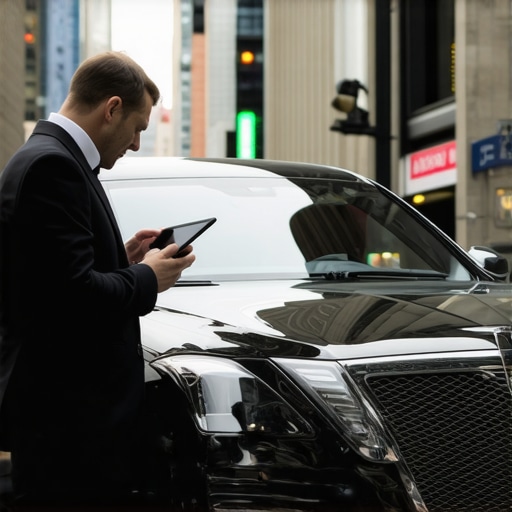
Don’t Trust the Glowing Dot Blindly
Beyond the clock, there is the ‘safety trap’ that most people fall into. Most passengers assume a high-end car is inherently safe because it looks clean. I always tell my clients to perform the 3-point door handle check every passenger must perform before they even sit down. It sounds obsessive until you realize how many unvetted ‘ghost’ cars operate near major transit hubs. When you understand why hourly rates save more than money for business travelers, you realize you are buying out the risk. You aren’t just paying for a seat; you’re paying for a vetted environment where the hidden factors that delay morning transit schedules have already been mitigated by a human who is personally accountable for your arrival. Have you ever fallen into the ‘GPS trap’ and ended up late for something critical? Let me know in the comments.Moving from a chaotic schedule to a streamlined one didn’t happen overnight; it required a shift in the tools I use. I stopped relying on manual texts and started using direct API integrations. I personally use a system that allows me to how to sync your calendar directly with your chauffeur, which means if I move a meeting on my Outlook or Google Calendar, my driver’s dispatch is updated in real-time. This isn’t just ‘techy’—it’s a safeguard against the human error of forgetting to send an update while you’re in the zone.
Look for the Wear Patterns on the Tires
Maintenance is the silent partner of safety. When my car pulls up, I do a five-second walk-around. I’m not looking for a car wash; I’m looking for the one physical marker that proves a vehicle is well-maintained: the tire tread and sidewall integrity. According to the National Safety Council’s ‘Check To Protect’ program, proactive vehicle maintenance is the backbone of active safety systems. If a driver is cutting corners on their rubber, they are likely cutting corners on their how to verify a private vehicles commercial insurance in seconds too. I treat these visual cues as a ‘go/no-go’ gauge for my personal security.
How do I keep my travel logistics running smoothly year after year?
Success in long-term travel management comes down to building a ‘logistics stack’ that works without you. I recommend performing the accuracy test for modern live tracking links once a month to ensure your provider hasn’t switched to a cheaper, laggier software. If your tracking link is consistently 30 seconds behind, that’s 30 seconds of missed communication during a pivot. 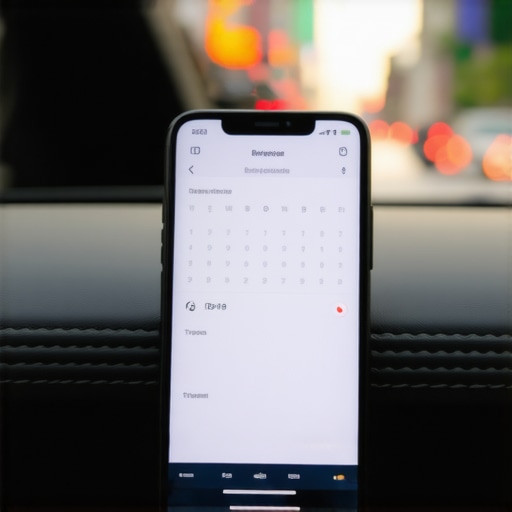
The Future of Predictive Pickup
We are moving toward an era where AI doesn’t just react to traffic but predicts it based on micro-events like local school graduations or unmapped utility work. However, no matter how advanced the tech gets, you still need the ‘human override.’ Being able to how to handle a sudden route change without stressing your driver is a skill developed through clear communication and mutual respect. I predict that the most successful travelers won’t be those with the fastest apps, but those with the most reliable human partnerships backed by automated scheduling. My challenge to you: Try this next time you book—ask the service if they can ingest an .ics calendar feed directly. It’s the single biggest leap you’ll take toward a truly stress-free week.
Why My Biggest Logistics Failures Became Your Best Guardrail
Reflecting on those years spent waiting for apps that never arrived, I’ve realized that the most expensive ride you can take is the one that doesn’t show up. I learned the hard way that consistency is a luxury that requires more than just a hope and a prayer. One of the biggest shifts in my perspective was realizing that why background checks are only the baseline for professionalism—it is the personal accountability of a reserved driver that truly secures your day. When you book an hourly block, you aren’t just paying for transit; you are paying for a human being who has a financial and professional stake in your punctuality.
- The ‘Second-Tier’ Myth: Never assume that a generic luxury app provides the same vetting as a dedicated service. You must know how to verify commercial vehicle tags before you step inside to ensure you’re in a properly insured, regulated vehicle.
- Reading the Room (or the Dashboard): I’ve developed a sixth sense for driver wellness. It’s vital to know the stealth way to confirm your driver is not fatigued before you settle in for a long haul.
- Maintain the Master Plan: If a driver tries to deviate from the planned route based on a ‘hunch,’ be prepared. Understanding how to handle a driver who attempts to take a faster unvetted route keeps you in control of your own safety.
The Tech and Tactics That Keep My Travel Stress-Free
I don’t leave my morning to chance anymore. I use a specific set of habits that act as an invisible safety net for every reservation. First, I always double-check the buffer time secret for stress-free airport arrivals, which usually involves a 20% time padding that most people ignore. Second, I only work with providers who offer direct calendar integration, as manual data entry is where most errors occur. Finally, I maintain a strict protocol for hourly, reservation, on time, safety standards that I share with my drivers beforehand, so there are no surprises when the tires are moving.
Stop Letting the Clock Win Every Morning
The transition from being a reactive traveler to a proactive one is the single greatest gift you can give your career. When you stop worrying about the ‘where’ and the ‘when,’ your mind is free to focus on the ‘why’ of your business. Embracing why safety and timeliness matter in hourly reservation services is more than a logistical choice; it is a commitment to your own peace of mind. You deserve to arrive at your destination feeling like the most prepared person in the room. Take the leap, book that dedicated block of time, and watch how much more you can achieve when the curb is no longer a place of anxiety. Have you ever missed a major event because of a ride-hailing delay? Let me know in the comments below.