
I was standing on the curb at O’Hare International at 4:30 in the morning, shivering in a suit that was too thin for the Chicago wind. My phone screen showed a little car icon spinning aimlessly. The 3 minutes away promise had just jumped to 11 minutes, and then came the dreaded notification: Your driver has canceled. I had a board presentation in three hours, and I was at the mercy of an algorithm that didn’t care about my career. That was the morning I realized that for business, on-demand isn’t a service—it’s a gamble. Today, I want to show you why ditching the request now button for a fixed, hourly schedule is the single best move you can make for your professional sanity.
My High-Stakes Bet on an App That Ghosted Me
The mistake I made early on was a classic one: I prioritized the illusion of convenience over the reality of certainty. I fell for the marketing that says transportation is just a tap away. But here is the cold truth—the logic behind choosing a professional chauffeur over on-demand apps isn’t about luxury; it’s about risk management. When you book a fixed schedule, you aren’t just buying a ride; you’re buying a guaranteed slot in a professional’s day that they are contractually obligated to fill. I once tried to save company money by using a standard ride-share for an executive roadshow, and it was a disaster. The driver didn’t know the area, the car was sub-par, and we missed two critical openings. Since then, I’ve learned that the best drivers prefer fixed schedules over on-demand pings because it allows them to maintain their vehicles and arrive early.
Is a pre-booked driver really worth the extra cost?
I get it. You see the higher price tag on a fixed reservation and your inner accountant starts screaming. I used to be that guy. However, according to data from Business Travel News, the indirect costs of travel friction—like missed meetings, lost productivity, and last-minute flight changes—far outweigh the nominal savings of cheaper, less reliable transport options. When you look at the math behind choosing a fixed transit schedule, you realize you’re paying for the elimination of stress. Have you ever found yourself staring at a spinning loading screen while your flight’s boarding call echoes through the terminal? I’d love to hear if you’ve faced that same frustration.
The Hidden Flaws in Real-Time Algorithms
The biggest issue with apps is that the real reason your app’s ETA is often over-optimistic is because it ignores human variables like driver fatigue or local traffic nuances that a pro already knows. By locking in a time, you force the system to work for you, rather than you working for the system. We are going to break down how to transition your travel habits to ensure you never miss a takeoff again.The transition starts with a mindset shift: you are no longer a passenger waiting for a ride; you are a client managing a professional service. To get off the app-dependency merry-go-round, you need to replace reactive tapping with proactive planning.
Stop Playing the Waiting Game with Your Schedule
The first rule of professional transit is the 24-hour window. While apps thrive on ‘now,’ true reliability is built on a lead time that allows for vehicle preparation. By reserving your spot how to guarantee safety and punctuality 24-7, you create a contract of accountability that no algorithm can match.
Make the 24-hour lead time your new standard
Booking a day ahead isn’t just about the car; it’s about the driver’s sleep schedule and route planning. I’ve found that applying the buffer rule that actually prevents tardy starts—specifically requesting a pickup 15 minutes earlier than you think you need—eliminates the cortisol spike of watching a clock.
Sync your life directly to the dashboard
Reliability is a two-way street. Don’t just give a time; give the context. Professional systems allow you to learn how to sync your calendar directly with your chauffeur. If your meeting runs over, your driver already knows because they are watching your itinerary, not just a ping on a map. For airport runs, why flight numbers are the best delay insurance for your ride becomes obvious the moment your flight is diverted and your driver is already at the new terminal waiting for you.
The Professional Protocol for Boarding
I remember a chaotic Tuesday in London during a major transit strike. I had four back-to-back investor meetings across the city. Using why business executives prefer dedicated drivers for multi-stop days as my guide, I hired an hourly chauffeur. While colleagues were stranded or paying 4x surge prices, my driver used ‘rat-running’ techniques known only to locals to bypass the gridlock. That experience taught me that why on-time performance depends on local knowledge over GPS is the difference between a successful day and a total loss. 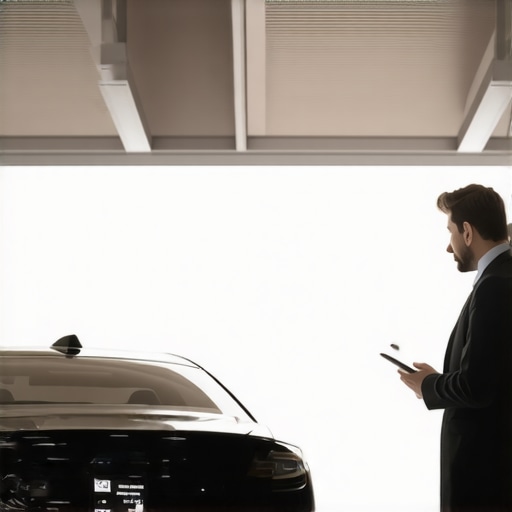
Verify identity without the awkwardness
Safety isn’t just about driving; it’s about the person behind the wheel. You should always know how to verify your driver’s identity without being rude. A professional expects you to ask for their credentials and will often have them ready before you even approach the door. This is part of the safety precision the key to reliable hourly reservations for peace of mind.
Check the vehicle for more than just a clean seat
Before you load your luggage, perform a quick scan. Follow the checklist for verifying a luxury sedan before boarding, which includes checking the tire tread and ensuring the commercial permit is displayed. These small details signal to the driver that you are a discerning client, which naturally elevates the service level. When you look at the math behind why hourly bookings save money during peak hours, the lack of surge pricing and the addition of expert navigation makes the decision purely logical.
The biggest myth in modern travel is that the shortest route is always the best one. We have been conditioned by consumer apps to chase the ‘blue line’ at all costs, assuming that shaved minutes equal success. But in the high-stakes world of executive transit, speed is a vanity metric. I’ve learned the hard way that a professional chauffeur will often choose a longer, predictable highway route over a ‘faster’ path through residential side streets. Why? Because why consistent arrival times matter more than the shortest route is the foundation of reliability. A two-minute delay on a side street caused by a delivery truck can snowball into a missed connection, whereas the highway offers escape lanes and steady flow. A study by the transportation analytics firm INRIX found that ‘incidental’ congestion—the localized events that GPS often fails to predict in real-time—accounts for nearly 40% of all travel delays. This is exactly why on-time performance depends on local knowledge over GPS.
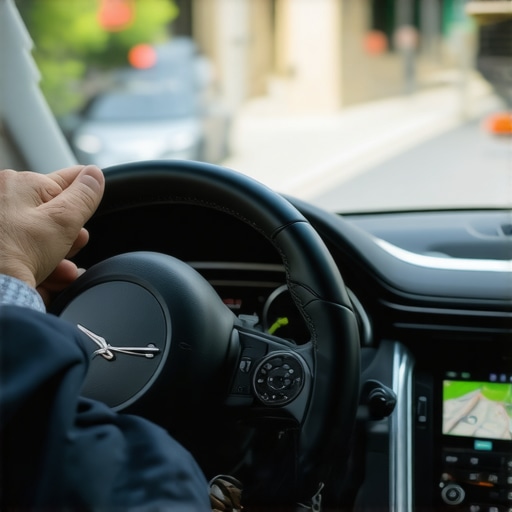
Then there is the ‘Oops’ factor of the digital age: over-reliance on the screen. The most common trap I see seasoned travelers fall into is trusting the ETA shown on their phone as an absolute truth. However, the real reason your app’s ETA is often over-optimistic is that it calculates a best-case scenario, ignoring the human variables of boarding, luggage handling, and terminal traffic. If you aren’t accounting for these micro-delays, you aren’t actually on time; you’re just late in slow motion. Have you ever fallen into this trap? Let me know in the comments.
How much lag is actually hiding in your live tracking link?
Many executives share their location with their teams and assume that visibility equals safety. But you need to be aware of why your real-time tracking link might have a 30-second lag. In a security situation or a tight transition between meetings, thirty seconds is an eternity. You should regularly perform the accuracy test for modern live tracking links to ensure the data your assistant is seeing matches your physical location. Reliability isn’t just about the car moving; it’s about the data integrity behind the movement.
Finally, we need to talk about the nuances of safety that go beyond a clean interior. Advanced travelers know the stealth way to confirm your driver is not fatigued. It’s in the eyes—watch the rearview mirror to see if they are scanning the environment or if their gaze is fixed and glassy. A professional driver stays alert because they are on an hourly schedule that prioritizes their well-being, unlike on-demand drivers who are often incentivized to push past their physical limits. When you transition to strategies for safe and reliable hourly bookings, you aren’t just paying for a seat; you are investing in a system designed to fail-safe when the unexpected happens.
Maintaining this level of reliability isn’t an accident; it’s a workflow. I personally build my travel schedule on three pillars: redundancy, integration, and verification. I don’t just trust the first confirmation email; I cross-reference every booking with FlightAware’s ‘Where Is My Plane?’ feature. By leveraging ADS-B transponder data to track the physical location of my incoming aircraft, I know when the wheels touch the tarmac before the airline even updates their app. This level of technical oversight is exactly why safety and timeliness matter in hourly reservation services—it allows for a seamless handoff from the terminal to the car. I have found that learning how to sync your calendar directly with your chauffeur is the best way to eliminate the ‘where are you?’ phone call. When the systems are integrated, your driver knows your meeting in Midtown is running twenty minutes long before you even have a chance to send a text. This proactive management is the core of why hourly rates save more than money for business travelers; they provide a dedicated human partner who is watching the same data you are. Every quarter, I also take a moment to look at how to audit your drivers route history for accuracy and safety. It’s a great way to ensure that the routes being taken are consistently the safest paths, rather than just the ones the GPS suggests at that moment.
How do I maintain this level of precision over time?
The secret to long-term results is a repeatable protocol that values security as much as speed. Before every trip, I am spotting a secure payment portal before you book to ensure my corporate billing info isn’t sitting on a vulnerable server. I predict that the future of travel will move toward hyper-personalization, where AI-driven scheduling meets human-led execution, but the foundation will always be strategies for safe and reliable hourly bookings. 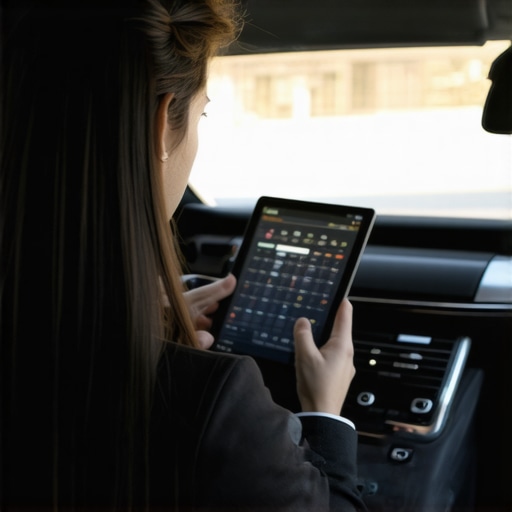
Sync your life to eliminate the manual errors
Manual data entry is the biggest point of failure in any travel plan. I’ve transitioned my habits to rely on essential hourly reservation tips for timely service, which include a strict 24-hour lead time for all major events. For those of you doing international work, you should never ignore the 12-minute rule for international airport pickups. It accounts for the friction of customs and baggage claim without forcing your driver to wait in a restricted zone. Reliability isn’t a gift you wait for; it is a habit you build through better tools and smarter reservations. My challenge to you is simple: for your next high-stakes meeting, try adding a 15-minute buffer to your pickup time and see how much your focus improves when you aren’t watching the clock.
The Hard Truths I Learned While Waiting on Sidewalks
After years of managing high-stakes travel, I’ve realized that reliability isn’t a feature—it’s a philosophy. One of my biggest lightbulb moments was realizing that why most on-time drop-offs start with a 10-minute early arrival is the standard, not the exception. If your driver isn’t there before you are, the system is already failing. I also stopped trusting shiny exteriors blindly; now, I perform the visual inspection every rider should do before boarding to ensure the vehicle matches the professional promise. Most importantly, I learned that the math behind why hourly bookings save money during peak hours isn’t just about the rate—it’s about the billable hours you gain back by working in the back of a quiet sedan instead of stressing over a GPS route.
The Digital Toolkit That Keeps My Schedule Bulletproof
To maintain this level of precision, I rely on a few key resources that elevate my travel strategy. First, FlightAware is indispensable for its ADS-B tracking, providing the raw data you need to adjust your pickup window in real-time. I always ensure my bookings are handled via spotting a secure payment portal for private car hires instantly to protect my corporate financial data from vulnerabilities. I also swear by Google Calendar integration; it is the most effective way of how to sync your calendar directly with your chauffeur so that your driver remains an extension of your team, not just a service provider. Finally, the book ‘The Checklist Manifesto’ by Atul Gawande changed how I view travel—it taught me that even the most elite professionals fail when they don’t have a repeatable protocol for their movements.
#IMAGE_PLACEHOLDER_FINAL#
Take Back the First Hour of Your Day
Your time is your most non-renewable resource. Stop letting a $30 app decision dictate the outcome of a $30,000 meeting. By mastering the art of on-time arrival mastering the art of reservation and safety every hour, you shift from being a passive passenger to an active architect of your day. It’s time to trade the stress of the app ‘ping’ for the calm of a pre-planned, professional schedule. What’s the one travel delay that almost cost you a major opportunity? Let me know in the comments below.