
I was sitting in the back of a black sedan at 3 AM, watching the battery icon on my phone flicker a desperate red. 2%. I had just sent my live tracking link to a group chat to show I was on time for my reservation, but I realized too late that I’d accidentally sent a raw, unencrypted version. Anyone with that link didn’t just see my car; they saw my home address as the final destination. My heart hammered against my ribs. I felt exposed, vulnerable, and honestly, a bit stupid. That was the night I stopped trusting standard GPS shares and started obsessing over the privacy benefits of anonymous vehicle tracking links.
Stop Giving Away Your Home Address for the Sake of Punctuality
We’ve all been there—trying to be the responsible traveler. We want to be ensuring safety and punctuality for ourselves and our families, so we hit that ‘share location’ button without a second thought. But there’s a massive difference between saying “I’m five minutes away” and handing over a digital breadcrumb trail that leads straight to your front door. Early on, I made the rookie mistake of thinking any link was a safe link. I learned the hard way that without anonymity, your travel habits are basically an open book for data brokers. A study by the Electronic Frontier Foundation highlights that location data is essentially a digital fingerprint of your life, often captured and stored in ways that can reveal your most private routines. By using anonymous links, you get the benefit of being tracked for safety without the risk of your personal data being harvested or leaked. Today, I’m going to show you how to test the accuracy of your tracking link so you can stay secure while keeping your schedule tight.
Isn’t any tracking link better than no tracking at all?
You might be thinking I’m being a bit too paranoid. After all, isn’t the whole point of a real-time tracking link to keep you safe? It is, but safety and privacy shouldn’t be a trade-off. When you use an anonymous link, the system generates a temporary, encrypted token that doesn’t tie back to your permanent profile or home address. It’s like using a burner phone for your GPS. Have you ever felt that sudden jolt of panic after hitting ‘send’ on a location link to someone you didn’t quite trust? I want to help you avoid that. We’re going to dive into how you can ensure your tracking link is only seen by friends and why an anonymous buffer is the only way to truly travel with peace of mind. It’s about taking control of your digital footprint before someone else does it for you.
Set Your Privacy Shield Before the Trip Starts
The first step in taking back control is moving past the default sharing settings on your device. Most of us just hit ‘share’ and assume the app knows best, but that is how your home address ends up in the wrong hands. You should start by checking the link generation settings. Many premium services now offer a ‘low-detail’ or ‘obfuscated’ mode. This gives the recipient the estimated time of arrival (ETA) and the general neighborhood without pinpointing your exact longitude and latitude. It is essentially the difference between saying ‘I am near the downtown station’ and ‘I am standing exactly at the corner of 5th and Main.’ If you want to ensure your real-time tracking link is only seen by friends, you need to manually toggle the audience permissions for every individual reservation you make. This prevents the link from being indexed or accessed by anyone who happens to stumble upon the URL.
Before you even step foot into the vehicle, you must confirm your secure booking link is using https. It sounds like a technicality for IT professionals, but for a traveler, it is your first line of defense. That ‘S’ at the end of ‘HTTPS’ means your location data is encrypted from your phone to the server. Without it, your movement data is traveling through the air like an open postcard that anyone on a public Wi-Fi network could potentially read. When I am traveling for work, I treat my location data like my credit card number—if the site isn’t secure, the ride doesn’t happen. 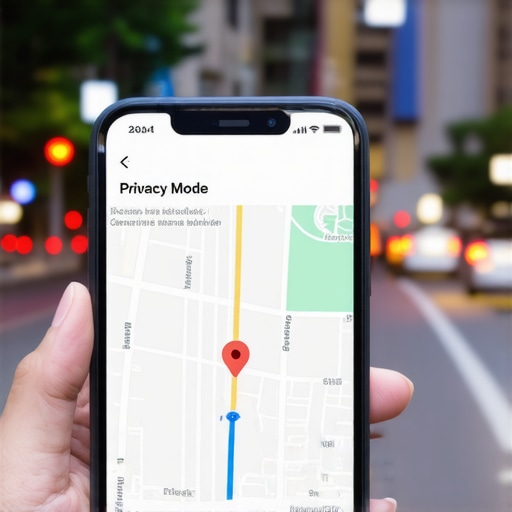
Run a Calibration Check to Avoid the 30-Second Lag
We have all seen that little car icon on the map jumping across the screen like a glitchy video game. That is rarely the driver’s fault; it usually happens because real-time tracking apps need constant manual overrides or better data signals. Often, your real-time tracking link might have a 30-second lag, which is an eternity when you are trying to coordinate a pickup on a busy street. To stay ahead, I always perform a quick ‘ping’ test while I am still standing at the curb. I open the shared link on my own mobile browser to see if the GPS marker matches where I am physically standing. You can test the accuracy of your real-time tracking link by walking just a few yards; if the icon on the screen remains static for more than ten seconds, you know the refresh rate is too low for high-stakes coordination.
How I Caught a Glitch During a New York Pickup
I remember a particularly chaotic evening in Manhattan where I had employed several strategies for safe and reliable hourly bookings. The app showed my driver was still five blocks away, but when I looked up, a car matching the description was pulling to the curb. Because I had run my calibration check, I knew the link was lagging behind reality. Instead of panicking or assuming it was a ‘ghost’ car, I used the secure messaging feature to verify the driver’s identity. If I had blindly trusted the lagging map, I might have waited on the curb for another five minutes, missing my window and compromising my safety. This is why you should always audit your driver’s route history for accuracy and safety after the trip. It lets you see if the ‘lag’ was a one-time network error or a pattern of poor connectivity that you need to report. Remember, why most on-time drop-offs start with a 10-minute early arrival—it is because the pros know that tech can fail, but preparation does not.
Most travelers make the mistake of treating their GPS as an infallible oracle. We’ve been conditioned to believe that the little blue line on our screens is the absolute truth, but here is the contrarian reality: relying solely on an algorithm is actually a major security risk. In my years of high-stakes travel, I’ve found that the difference between GPS routing and professional road knowledge is the gap between arriving safely and getting stuck in a dead zone. An algorithm doesn’t know that a particular street becomes a bottleneck due to local school runs or that a ‘faster’ route takes you through an area with zero cell service—a nightmare if you need to maintain that anonymous tracking link we discussed earlier.
Why does the ‘fastest’ route often compromise your safety?
It sounds counterintuitive, but the most direct path is often the most predictable and, therefore, the least secure for high-profile travelers. When you are on time every time, it is rarely because you took the main highway. It is because your driver understood the terrain. A study by researchers at the University of California, Berkeley, found that GPS-dependent routing can increase traffic congestion by funneling everyone into the same narrow corridors, creating predictable ‘trap’ points. I always prefer a driver who ignores the app’s primary suggestion in favor of a route that keeps us moving, even if it adds a mile. This is why on-time performance depends on local knowledge over GPS every single time.
The hidden trap of the over-optimistic ETA
Here is the ‘oops’ factor that catches even seasoned executives off guard: the ETA lag. We see ’12 minutes to destination’ and assume we have 12 minutes of breathing room. In reality, your app’s ETA is often over-optimistic because it fails to account for the ‘last 100 yards’—the time it takes to navigate a gated entrance, find a specific terminal door, or deal with a double-parked delivery truck. If you don’t build in a manual buffer, you aren’t just late; you’re rushed, which leads to poor security decisions like jumping out of the car before confirming it’s a safe drop-off point. Have you ever fallen into this trap? Let me know in the comments.

To combat this, I’ve adopted the buffer rule that actually prevents tardy starts. I never book a point-to-point ride for a tight schedule because point-to-point booking fails for executive roadshows where timing is fluid. Instead, I opt for hourly reservations. You might think it’s more expensive, but the real cost of choosing the cheapest reservation available is the loss of control when things go sideways. With an hourly booking, the driver is already ‘on the clock’ and waiting, eliminating the frantic search for a new ride if your meeting runs five minutes over. This is why hourly rates save more than money for business travelers—they buy you the luxury of situational awareness.
Finally, always be wary of where you are booking. I’ve seen colleagues lose thousands because they didn’t know how to go about detecting fraudulent ride booking sites instantly. If the site doesn’t have a clear, encrypted portal, you are essentially handing your itinerary to a stranger. The security risks of booking a ride through a third-party broker are simply too high when your physical safety is on the line. Stick to direct, verified platforms to ensure that your punctuality never comes at the cost of your privacy.
Maintaining this level of precision isn’t just about a single ride; it is about building a stack of tools that work together seamlessly. I personally rely on automated calendar integration to ensure my driver has my itinerary the second a meeting shifts. When you how to sync your calendar directly with your chauffeur, you eliminate the manual data entry that leads to typos and missed pickups. However, even with the best automation, you must remember why real-time tracking apps need constant manual overrides—technology is a powerful tool, but it is never a total replacement for your own situational awareness.
Protect your wallet and your data with every click
When you are reserving your spot how to guarantee safety and punctuality 24/7, you are essentially opening a digital door to your personal life. I always verify that the booking platform adheres to high-level cryptographic standards. For instance, the NIST Special Publication 800-175B provides federal guidelines for cryptographic mechanisms, and while that sounds like jargon, it is the gold standard for why modern reservation systems use encryption for your credit card. If a site looks like it was built in 2005, your data is likely as safe as a paper bag in a rainstorm.
Always keep your eyes open for verified credentials. You need to know how to spot a secure payment portal before you book because your physical safety starts with your financial security. I also prioritize services where why verified driver badges matter more for late night travel 2, as it adds a tangible layer of human accountability to the digital breadcrumbs. Looking toward the future, I expect the rise of Edge Computing to revolutionize this space by processing location data locally on nearby devices, virtually eliminating the 30-second lag we see today. This shift will make on-time arrival mastering the art of reservation and safety every hour even more effortless for the average traveler.
How do I maintain my safety standards over a lifetime of travel?
The secret is consistency. You cannot just be careful once; you have to turn these checks into a habit. I recommend a ‘monthly audit’ of your travel apps. Clear out old location permissions and check for updates that might have reset your privacy settings to ‘default.’ By implementing reservation security measures how to book safely and arrive on time into your routine, you ensure that you never become the low-hanging fruit for data harvesters. My challenge to you: Take five minutes today to audit the ‘Saved Locations’ in your favorite ride app and delete anything that is no longer essential. It is a small step that significantly shrinks your digital footprint.
The Invisible Friction That Keeps You Safe
Reflecting on my 3 AM panic in that sedan, I realized that true security isn’t just a setting—it’s a mindset. One of the biggest lessons I’ve learned is that ‘convenience’ is often a trap set by lazy developers. When you prioritize staying secure and punctual, you are essentially adding a layer of ‘good friction’ to your life. This means taking the extra ten seconds to verify a link or double-check a driver’s badge. It also means understanding that reservation security measures how to book safely and arrive on time are not chores; they are the protocols that keep your home address off the dark web. I’ve found that the best drivers actually respect you more when you perform these checks—it shows them you value their professionalism as much as your own safety.
The Gear That Separates Travelers from Targets
To keep my travel life airtight, I don’t just rely on one app; I use a curated stack of resources. First, I always keep the NIST cryptographic guidelines in my mental checklist as a reference point for any new service I try. Second, I only book through platforms that offer to maximize your safety and satisfaction with our precise reservation timing through direct, end-to-end encrypted portals. Finally, I recommend keeping a physical ‘backup’ of your destination address or a secondary offline map. It sounds old-school, but when your phone hits 1% and your anonymous link expires, that preparation is more valuable than the most expensive GPS on the market.
Demand More from Your Daily Commute
You deserve to arrive at your destination without feeling like you’ve traded away a piece of your identity. By mastering the art of the anonymous link and the hourly reservation, you aren’t just getting from point A to point B; you are reclaiming your right to privacy in a world that wants to track your every move. It is time to stop settling for ‘good enough’ when it comes to your travel. Whether you are heading to a high-stakes board meeting or a quiet dinner, remember that your on time arrival mastering the art of reservation and safety every hour is within your control. Have you ever spotted a privacy red flag while sharing your location or realized a tracking link was revealing too much? Let me know in the comments below.